


k laxma goud & the art of storytelling: how his works narrate life experiences
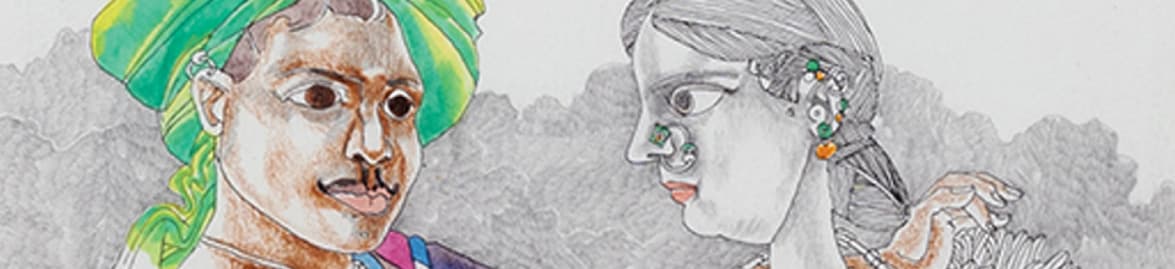
At the heart of K Laxma Goud’s art lies a masterful ability to tell stories—stories that are deeply personal, yet universally resonant. His works explore themes of rural life, sensuality, mythology, and the complex interplay of tradition and modernity. Let us delve into these themes to understand how they serve as narrative threads in his artistic tapestry.
1. Rural Life: A Celebration of the Vernacular
Goud’s art serves as a homage to the simplicity and vibrancy of village life. His depictions of rural landscapes, animals, and everyday activities celebrate the intrinsic beauty of a life closely connected to nature. Works such as his sketches of pastoral scenes or detailed etchings of village women portray not just the physical environment of rural India but its ethos—an existence imbued with rhythm, ritual, and resilience.
Through his intricate detailing and bold lines, Goud captures the essence of agrarian life. The cows, goats, and trees in his works are not mere props; they are integral characters in the stories he tells. His rural landscapes are alive with movement and emotion, evoking nostalgia for a world that is increasingly overshadowed by urbanization.
2. Sensuality and Eroticism: The Human Experience
One of Goud’s most defining artistic pursuits is his exploration of human sensuality. His works often depict the human form in a raw and uninhibited manner, celebrating the primal, instinctive aspects of life. These depictions, however, are far from vulgar; they are imbued with a sense of reverence for the human body and its connection to nature.
In his etchings, drawings, and paintings, Goud often portrays men and women in close communion with their surroundings. The figures are intertwined with elements of nature—trees, animals, and the earth—symbolizing the unity of human and natural forces. His exploration of eroticism is not confined to physical intimacy but extends to the emotional and spiritual connections that define human relationships.
3. Mythology and Folklore: Bridging the Past and Present
Goud’s works frequently draw on the rich repository of Indian mythology and folklore. By reinterpreting traditional stories through a modern lens, he bridges the gap between the past and the present. His use of mythical motifs, such as divine beings, animals, and symbolic elements, creates a layered narrative that resonates with audiences familiar with these tales.
For instance, his depictions of gods and goddesses often emphasize their humanity, making them relatable and accessible. By doing so, Goud invites viewers to see mythology not as distant and abstract, but as a living, breathing part of their cultural identity.
4. Tradition vs. Modernity: A Narrative of Tensions
Goud’s storytelling also reflects the tensions between tradition and modernity, particularly in the context of rural and urban dynamics. His works capture the evolving landscape of Indian society, where the old ways of life coexist—and sometimes clash—with new influences.
This duality is evident in his choice of mediums as well. While he employs traditional techniques such as etching and terracotta, he also experiments with modern forms like glass painting and printmaking. This interplay of the old and the new mirrors the broader societal shifts that Goud seeks to document.
Techniques & Mediums: Tools Of The Storyteller
K Laxma Goud’s storytelling is not confined to his thematic choices; it extends to the techniques and mediums he employs. His versatility as an artist is evident in his mastery of multiple mediums, each of which adds a distinct dimension to his narrative.
1. Etchings and Drawings
Goud is particularly renowned for his etchings and ink drawings, where his precise linework and intricate detailing come to the fore. These works often feature stark contrasts between light and shadow, lending a dramatic quality to his storytelling. The simplicity of black-and-white etchings allows Goud to focus on the essence of his subjects, stripping away distractions to reveal their core.
2. Watercolors and Pastels
In his watercolor and pastel works, Goud explores a vibrant palette that captures the vitality of rural life. The fluidity of these mediums allows him to convey movement and emotion, creating a dynamic narrative that draws viewers into his world.
3. Terracotta and Glass
Goud’s foray into terracotta and glasswork showcases his ability to adapt traditional crafts for contemporary storytelling. His terracotta pieces often feature rustic textures and earthy tones, reflecting the raw beauty of village life. In contrast, his glass paintings are more refined, employing bold colors and clean lines to create a modern aesthetic.
4. Printmaking
As a printmaker, Goud has experimented with a variety of techniques, including lithography and serigraphy. These mediums enable him to create multiple iterations of his stories, reaching a wider audience and ensuring the accessibility of his art.
Symbolism In K Laxma Goud’s Art
A key aspect of Goud’s storytelling is his use of symbolism. His works are replete with symbols that convey deeper meanings, often reflecting the complexities of human existence. For example:
Animals: Cows, goats, and birds frequently appear in his works, symbolizing fertility, sustenance, and the interdependence of life forms.
Trees and Vegetation: These elements often serve as metaphors for growth, resilience, and the cyclical nature of life.
Human Figures: The exaggerated features of his figures—such as large eyes or muscular limbs—emphasize their emotional states and their connection to the world around them.
Through these symbols, Goud creates a layered narrative that invites viewers to engage with his work on multiple levels.
Impact & Legacy: A Timeless Storyteller
K Laxma Goud’s contribution to Indian art extends beyond his individual works. As a storyteller, he has played a pivotal role in preserving and promoting the cultural heritage of rural India. His art serves as a visual archive of traditions and experiences that are rapidly fading in the face of modernization.
Moreover, Goud’s willingness to experiment with mediums and techniques has inspired a new generation of artists to push the boundaries of their creativity. His ability to seamlessly blend tradition with modernity has made him a role model for those seeking to create art that is both rooted and relevant.
Conclusion
K Laxma Goud’s art is a testament to the power of storytelling. Through his evocative depictions of rural life, sensuality, mythology, and societal tensions, he weaves narratives that are both deeply personal and universally resonant. His mastery of various mediums and his use of symbolism further enhance the storytelling quality of his works, making them a rich source of inspiration and reflection.
In a world where the fast pace of life often leads to a disconnect from tradition and nature, K Laxma Gouds art serves as a poignant reminder of the beauty and complexity of human existence. His paintings told through lines, colors and textures, continue to captivate audiences, ensuring that his legacy as a storyteller endures for generations to come.




