kangra paintings – the soulful art of himachal pradesh
.jpg&w=3840&q=75)
Kangra Painting – Miniature Art of Himachal Pradesh
Nestled in the serene valleys of Himachal Pradesh, where the Dhauladhar ranges kiss the sky, lies a treasure trove of artistic heritage that has quietly enchanted connoisseurs for centuries. The foothills of the Himalayas have long been fertile ground for cultural expression, nurturing traditions that blend devotion with aesthetic perfection. Among the many jewels in India's rich tapestry of regional art forms, one style stands out for its ethereal beauty and lyrical grace, a painting tradition that captures the very essence of romantic poetry in pigment and brush. Born from the confluence of Mughal sophistication and Pahari sensibility, this delicate art form transforms simple paper into windows of divine love and natural splendor. This is the enchanting world of Kangra painting, where every stroke whisper tales of Krishna's leela and every hue reflects the changing moods of the mountain landscape.
About Kangra Paintings
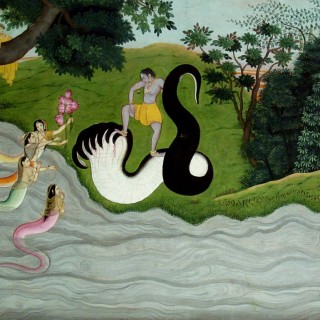 Kangra painting is a distinguished pictorial art form originating from the Kangra region, named after the former princely state located in present-day Himachal Pradesh, India. This artistic tradition reached its peak during the 18th and early 19th centuries, particularly under the patronage of Raja Sansar Chand (1775–1823). With the decline of the Basohli school in the mid-18th century, Kangra painting quickly gained prominence for its exceptional aesthetic quality and thematic richness. Its distinctive style and prolific output became so influential that the broader Pahari painting school came to be predominantly identified as Kangra paintings.
The most widely recognized alternative name for Kangra painting is Pahari painting, a term that describes a broader school of miniature painting from the hilly regions of North India, of which Kangra is the most celebrated and refined style. "Pahari" means "from the mountains", a term applied to miniature paintings from Rajput hill states like Guler, Basohli, Chamba and Kangra, which together form the Pahari school.
This exquisite art form represents the pinnacle of the Pahari (hill) school of painting, emerging when skilled artists from declining Mughal courts migrated to the hill states and blended their sophisticated techniques with local sensibilities. The style is characterized by its delicate brushwork, soft lyrical quality, graceful figures with elongated eyes and harmonious use of cool colors like blues, greens and gentle yellows.
Origin & Historical Background
The origins of Kangra painting can be traced back to the Guler State, a small principality in the Lower Himalayas, during the early 18th century. A family of Kashmiri painters, trained in the Mughal painting tradition, sought refuge at the court of Raja Dalip Singh (r. 1695–1741) of Guler. This period marked the emergence of Guler Paintings, regarded as the early phase of the Kangra style (i.e Kangra Kalam). Common motifs included lush landscapes, flowing brooks, and serene springs, rendered with delicate precision. The style later reached its artistic zenith under Maharaja Sansar Chand Katoch (r. 1776–1824), a fervent patron of the arts and a devoted follower of Lord Krishna. Maharaja Sansar Chand actively commissioned works depicting the life and romantic exploits of Krishna, which became a dominant theme of Kangra painting. His court attracted numerous accomplished artists, many of whom had previously served the declining Mughal empire. This convergence of talent infused Kangra painting with greater technical sophistication and a broader thematic repertoire.
Main Centers of Kangra Painting
The main centers of Kangra painting are considered to be Guler, Nurpur and Tira-Sujanpur. These locations are often specifically mentioned as the nucleus for the early development of the Kangra style in the 18th century. Guler, in particular, is regarded as the birthplace of this lyrical and naturalistic painting tradition, where artists first began experimenting with softer colors, delicate lines, and themes inspired by Hindu mythology, especially the love of Radha and Krishna. Nurpur and Tira-Sujanpur also played key roles in nurturing the early artistic techniques and setting the foundation for what would become the distinctive Kangra school of painting.
From these primary centers, the Kangra painting style gradually spread to other regions of the western Himalayas. Important areas influenced by the style included Mandi, Suket, Kullu, Arki, Nalagarh, and Tehri Garhwal. These regions adopted and adapted the Kangra style, contributing to its evolution and wider recognition. Over time, Kangra painting became synonymous with refined elegance, natural beauty, and devotional themes, supported by royal patronage and the rich cultural heritage of the region.
The Practitioners: Tribes and Communities
Unlike tribal community arts like Warli or Gond, Kangra painting was nurtured in royal courts. However, it was sustained by hereditary artisan families, many of whom migrated from Guler to Kangra. These painter families passed their skills across generations, creating a unique lineage of craftsmanship.
The Ritual Process
The paintings were executed on handmade paper prepared with a smooth coating. Natural pigments derived from minerals, plants, and shells were meticulously ground. Brushes were crafted from fine squirrel hair, enabling delicate detailing. The process was almost ritualistic, combining devotion with artistry.
Symbolism & Motifs
Kangra paintings draw heavily from devotional literature such as the Bhagavata Purana, Rasikapriya, and Jayadeva’s Gita Govinda. Symbolic motifs include flowering trees, flowing rivers, peacocks, lotuses, and moonlit skies. Central themes revolve around love and longing, particularly the divine romance of Radha and Krishna, symbolizing the union of the human soul with the divine.
Themes and Influences
Kangra paintings are predominantly centered on themes of Bhakti (devotion), especially the romantic and divine love of Radha and Krishna. The art form draws heavily from classical Indian literature and poetry, particularly Jayadeva’s Gita Govinda, the Bhagavata Purana, and works by poets like Bihari and Keshavdas.
Common themes include:
• Krishna’s Raslila (dance of divine love)
• Radha-Krishna in Vrindavan
• Seasons and moods (Ragamala and Baramasa)
• Scenes from Hindu epics like the Ramayana and Mahabharata
These themes are depicted with emotional sensitivity, capturing nuanced expressions of love, longing, and devotion.
Kangra Paintings Characteristics
Kangra paintings stand out for several aesthetic and technical features:
1. Naturalistic Style: Unlike earlier, more stylized forms, Kangra paintings portray human figures and landscapes with a heightened realism. Graceful figures with soft, rounded features and expressive eyes are a hallmark.
2. Lush Landscapes: Artists paid great attention to nature, often filling backgrounds with verdant trees, flowing rivers, and blooming flowers, creating a dreamlike setting that complements the romantic themes.
3. Delicate Brushwork: Fine lines and intricate detailing, particularly in costumes and jewelry, demonstrate the artists' meticulous craftsmanship.
4. Subtle Color Palette: Made from natural dyes and pigments, the colors are soft and harmonious, enhancing the emotional tone of the scenes.
Distinguishing Features
Kangra painting is distinguished by its delicate brushwork, naturalistic style, and lyrical themes centered on love and nature.
• Naturalistic Landscapes: Kangra art is celebrated for lush, verdant greenery, often rendered with multiple shades of green to show foliage, brooks, and flowering plants.
• Delicate Lines and Detailing: Artists use extremely fine lines and minuteness in decorative details, which are likened to the finesse seen in Ajanta cave paintings.
• Soft and Fresh Colors: Colors are derived from natural sources (plants, minerals, even shells) and applied in harmonious, subtle shades. Primary colors remain brilliant even centuries later.
• Graceful Figures: Female figures are portrayed with soft, gentle features, often with a sense of elegance and refined beauty.
• Thematic Focus: Most works explore devotional and romantic themes, especially stories of Radha and Krishna, as well as scenes from Hindu epics, music (ragamala), and changing seasons.
• Atmospheric Effects: Kangra paintings employ a sense of depth, distance, and even nocturnal or weather effects (like lightning and storms), with techniques like light pink hills for perspective.
• Use of Local Materials: Brushes were typically made from fine animal hair, and colors were mixed from regionally sourced ingredients, reflecting a strong connection to local craft traditions.
Materials and Techniques
Kangra paintings were typically created on Sialkoti paper, a special handmade paper prepared using cotton and bamboo, which provided a durable and smooth surface ideal for detailed miniature work. The artists used natural pigments derived from minerals, vegetables and precious stones to achieve the vibrant and lasting colors characteristic of Kangra art. Brushes were made from animal hair, allowing for precision in detailing. Gold and silver were occasionally used to embellish specific elements like jewelry or divine halos.
Famous Kangra Artists & Their Contributions
Though historical records seldom provide detailed biographies, a few prominent names and families have emerged as notable contributors to this artistic tradition. Below are some of the most famous Kangra painters, past and present, who have helped preserve and advance this iconic art form.
1. Nainsukh of Guler (c. 1710 – 1778)
Although technically from Guler, a neighboring kingdom, Nainsukh's contributions deeply influenced the evolution of Kangra painting. Trained in the family atelier under his father Pandit Seu, Nainsukh was a pioneering artist known for his realism, delicate brushwork, and expressive portraits. His works bridged the transition from the more rigid Basohli style to the softer, more romantic Kangra aesthetic. His influence extended to later generations of Kangra painters, including those in the royal courts of Kangra.
2. Manaku of Guler (c. 1700 – c. 1760)
Manaku, the elder brother of Nainsukh, also hailed from the Guler atelier and is known for his mythological works inspired by the Ramayana, Mahabharata, and Bhagavata Purana. His art laid the groundwork for the later Kangra style, with its heightened sense of drama and emotive color schemes. Though not directly from Kangra, his contributions shaped the artistic ecosystem of the region.
3. Fattu, Khushala, and Gaudhu (Sons of Nainsukh)
These three sons of Nainsukh were among the first generations of artists to be associated directly with the Kangra court. Fattu, in particular, is often credited with helping to establish the Kangra style in its classical form. His works, often romantic and lyrical, embody the softness and naturalism characteristic of Kangra painting. The brothers produced numerous artworks during the reign of Maharaja Sansar Chand, a great patron of the arts.
4. Purkhu of Kangra (Late 18th Century)
Purkhu is among the few Kangra painters whose name appears on a significant number of surviving artworks. Active during the golden age of Kangra painting under Maharaja Sansar Chand, he is known for his large-scale compositions, vivid depictions of court life, and religious themes. His work showcases a refined mastery of perspective, detail, and emotional expression.
5. Lalu and Harkhu (19th Century)
These brothers, believed to be descendants of earlier Kangra masters, carried forward the family tradition into the 19th century. While the royal patronage had begun to wane by this time, Lalu and Harkhu's efforts helped preserve the art form in smaller, private commissions and religious works. Their paintings show a continuity of style, though with occasional influence from Mughal and Company School styles.
Comparison With Other Tribal Arts
Kangra painting differs significantly from tribal arts like Warli and Gond. While tribal art emphasizes symbolic abstraction, community rituals, and bold patterns, Kangra miniatures are courtly, refined, and focused on naturalistic depictions. Both, however, share the purpose of expressing cultural identity and preserving heritage.
Preservation Efforts & Contemporary Practice
Though the popularity of Kangra painting declined after the fall of Maharaja Sansar Chand and the rise of colonial powers, its legacy lives on in museums, private collections, and art institutions. The National Museum in Delhi and the Government Museum and Art Gallery in Chandigarh house significant collections of Kangra miniatures.
Modern efforts by art historians, cultural institutions, and local artisans continue to revive interest in this art form. Workshops and exhibitions aim to keep the tradition alive, not just as a relic of the past but as a living, evolving heritage.
Conclusion
Kangra paintings represent more than just visual artistry. They are a celebration of poetic emotion, spiritual devotion, and natural beauty. In their romantic portrayal of divine love and lyrical landscapes, these paintings offer a timeless window into the soul of Indian aesthetics. As both art and cultural expression, Kangra paintings remain an enduring testament to India’s rich artistic legacy.
Image Credit:
“Kaliya's wifes and Krishna. Kangra c.1785-90. Painting of India”, Ismoon, via Wikimedia Commons
– Public Domain.