latika katt: chiseling through barriers in a mans art world
.jpg&w=3840&q=75)
Within the vast landscape of modern Indian art, few artists have challenged conventions with as much quiet determination and inventive courage as Latika Katt. Born in 1948 in Varanasi and raised in Dehradun, Latika Katt’s early life was shaped by observation and sensitivity. Accompanying her botanist father on trekking expeditions, she developed a habit of closely studying the natural world, an instinct that would later define her sculptural language.
Early Life and Education
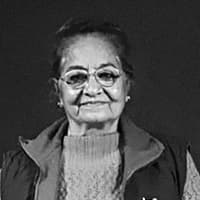 Latika Katt pursued her Bachelor of Fine Arts at Banaras Hindu University before moving to the Faculty of Fine Arts, M. S. University, Baroda, where she completed her Master’s degree in 1971. Notably, she belonged to the institution’s very first batch and became its first female gold medalist in sculpture, an achievement that subtly pushed against the gendered boundaries of the time. In 1981, she further expanded her artistic horizons with a research scholarship at the Slade School of Art in London, an experience that deeply influenced her experimental approach to materials and form.
Entering a Male Dominated Field: Challenges and Inspiration
However, Latika Katt’s journey was far from straightforward. Choosing sculpture, a field often perceived as physically demanding and ‘unsuitable’ for women was itself an act of defiance. During her time at BHU, she faced discouragement from faculty who believed women should avoid such labor-intensive practices. Yet, with encouragement from her mentor K. S. Kulkarni, she persisted. Kulkarni even enabled her to attend late-night sketching sessions at the Varanasi ghats, spaces typically reserved for male students thus expanding her experiential learning.
The 1970s marked a crucial turning point in her career. Faced with financial constraints, Katt began experimenting with unconventional materials, most notably cow dung. What began as a necessity evolved into a radical artistic statement. Her work challenged hierarchies of material and aesthetics, bringing attention to overlooked textures and organic processes. This bold experimentation caught the eye of then Prime Minister Indira Gandhi, who recognized her work at an exhibition, propelling her into wider public consciousness.
Latika Katt’s artistic evolution was also profoundly shaped by her encounter with the works of Auguste Rodin. Rodin’s sensitive treatment of the human form and his ability to evoke deep emotional resonance left a lasting impression on her. While her earlier works bore traces of exploration, this encounter marked a shift toward greater depth, nuance, and psychological intensity. Alongside Rodin, artists such as Dhanraj Bhagat and Suraj Ghai also influenced her journey.
Nature as the Real Influence
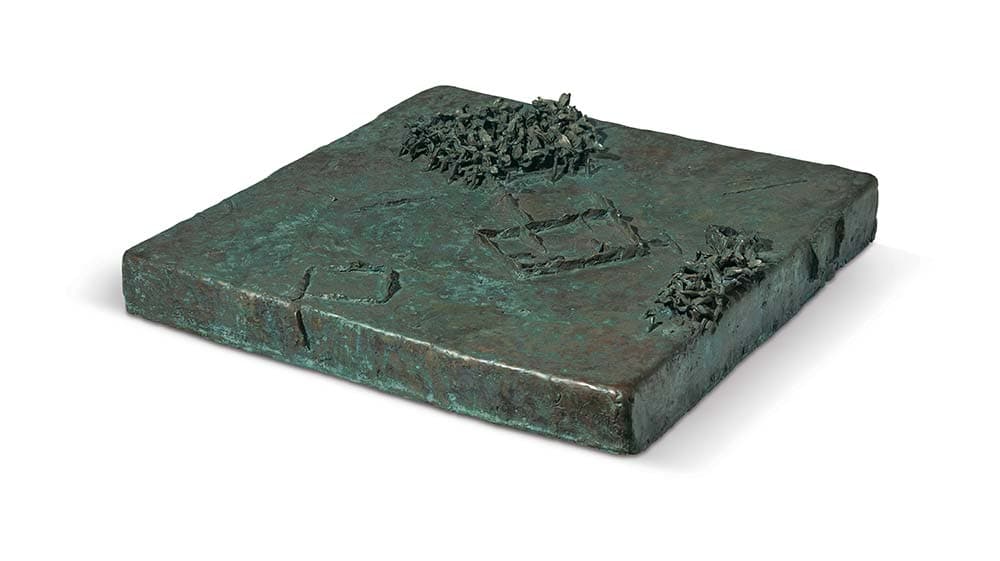 Nature, particularly the world of insects, became another enduring source of inspiration. For Latika Katt, insects represented a microcosm of existence, something that is fragile yet complex, often overlooked yet profoundly significant. Her sculptures capture these subtleties, translating the intricate rhythms of survival and coexistence into tactile, evocative forms. Through this lens, she invites viewers to reconsider the unseen narratives that unfold quietly around us.
Major Works and Recognition
Among her most powerful works is Sati (1993), a haunting response to the tragic Roop Kanwar Sati incident. Created using papier-mâché, white clay, bamboo, iron rods, and resin, the sculpture stands as a stark reminder of a practice that must never be repeated. In confronting such themes, Katt transforms art into a tool of resistance, echoing the idea that art should not merely reflect society but actively shape it.
Themes of death, decay, and transformation recur throughout her work, influenced in part by her early experiences in Varanasi. Witnessing funeral processions and the rituals at the ghats left a deep imprint on her psyche. This culminated in works like Makar Sankranti Snan on Dashashwamedh Ghat, a bronze sculpture that earned her recognition at the 4th Beijing Biennale in 2010. Here, life and death coexist in a single frame, reflecting the cyclical nature of existence.
Legacy and Recognition
Over the decades, Latika Katt has exhibited widely, including at the National Gallery of Modern Art, the Museum of Modern Art, and the Paris Biennale. Her contributions have been recognized with numerous accolades, including the National Award from the Lalit Kala Akademi.
Latika Katt’s legacy lies not just in her sculptures, but in her fearless reimagining of what sculpture can be. Through unconventional materials, socially charged themes, and an unwavering commitment to exploration, she has expanded the possibilities of contemporary Indian art. Her work stands as both a reflection and a force, quietly yet powerfully shaping how we see the world and ourselves within it.
Latika Latika Katt passed away on 25th January, 2025, in Jaipur, marking the end of a remarkable artistic journey that spanned decades and left an indelible imprint on contemporary Indian art. Her passing was not just the loss of a sculptor, but of a fearless thinker who consistently challenged conventions, expanded material possibilities, and used art as a means of social reflection and resistance.
Lesser Known Facts
Here are some of the lesser-known facts about the "Material Queen" of Indian sculpture:
1. She studied in an all-boys school - Latika Katt attended The Doon School, which was primarily an all-boys institution. Being one of the few girls there helped build her confidence and resilience early on.
2. She started with cow dung as a medium - Due to financial constraints, she initially created sculptures using cow dung. What began as necessity became a defining experimental approach in her art.
3. Indira Gandhi noticed her early work - Her talent was spotted by Indira Gandhi at an exhibition, and this encouragement played a role in shaping her sculpting career.
4. She was deeply influenced by nature through her father - Her father was a botanist, and this exposure nurtured her lifelong fascination with organic forms and natural structures.
5. She admired Auguste Rodin - Latika Katt drew inspiration from Auguste Rodin, especially his emphasis on realism and emotional intensity in sculpture.
6. She often sculpted people she knew - Instead of anonymous models, many of her works were based on friends, family, and students, giving her sculptures a deeply personal quality.
7. She studied human anatomy in an unusual way - She closely observed dead bodies, skin, and bone structures to better understand form and realism in her sculptures.
8. She was fascinated by insects and natural systems - Latika Katt studied termites and bees, intrigued by their structures and collaborative systems, which influenced her artistic thinking.
9. She treated sculpture as a physical act - She believed sculpting required full bodily engagement. For her, working with clay or wood meant “poking, scraping, kneading,” making the body part of the creative process.
10. She meticulously studied sites before creating public works - Before installing large sculptures, she would analyze wind direction, perspective, and even underground conditions, sometimes digging deep to understand the space.
11. She divided her life between Delhi and Varanasi - Her artistic sensibility was shaped by both urban and spiritual environments, especially Varanasi, which influenced many of her works.
12. She preferred sculpture over painting early on - She felt painting was “too simple” and lacked physical engagement, while sculpture demanded a deeper, tactile interaction with materials.