


marcel duchamp - biography, paintings, style & facts
Marcel Duchamp: The Chess Player Who Painted Motion
Marcel Duchamp was not only one of the most influential artists of the 20th century but also an avid chess player whose love for strategy deeply influenced his approach to art. Known for challenging traditional ideas of painting and sculpture, Duchamp focused on motion, mechanics, and thought itself. His ability to merge art with ideas much like a chess master anticipating moves changed the way the world understood creativity.
Early Life
Henri-Robert-Marcel Duchamp was born on July 28, 1887, in Blainville-Crevon, northern France. He grew up in a family that encouraged intellectual curiosity and artistic exploration. Surrounded by siblings who became artists, Duchamp found inspiration in both painting and puzzles interests that would later intertwine in his career.
Later Life
By the 1920s, Marcel Duchamp had shifted much of his energy from art to chess, playing in tournaments and devoting long hours to studying strategy. His retreat into chess puzzled critics, but Duchamp himself saw it as another kind of art form, a game of pure thought and motion across the board. Even while appearing to abandon painting, he quietly worked on secret projects, including his final masterwork, Étant donnés, which revealed itself after his death in 1968.
Family
Marcel Duchamp came from a distinguished artistic family: his brothers Jacques Villon and Raymond Duchamp-Villon were both well-regarded, while his sister Suzanne Duchamp became a painter associated with the Dada movement. He married twice, first to Lydie Sarazin-Levassor in 1927, and later to Teeny Duchamp in 1954, who remained with him until his passing.
Education
In 1904, MarcelDuchamp moved to Paris to study at the Académie Julian. Though not a devoted student, he immersed himself in the avant-garde art circles of the city, where movements like Cubism and Futurism influenced his experiments with depicting movement an interest that would define works such as Nude Descending a Staircase, No. 2.
Painting Style
Duchamp’s art was less about technique and more about ideas. He moved fluidly between Impressionism, Cubism, and Futurism before rejecting conventional painting altogether. His works often captured movement in fragmented, mechanical forms, resembling both chess pieces in motion and machines at work. In doing so, he questioned whether art was about visual beauty or intellectual engagement.
Famous Paintings
Below are some of Marcel Duchamp’s most famous paintings:
1. Sonata (1911)
A turning point in Duchamp’s career, "Sonata" depicts his three sisters engaged in a musical setting, with a subtle inclusion of their mother. This work blends Cubist techniques with a personal narrative and reflects Duchamp's early experimentation with form and composition.
2. Young Man and Girl in Spring (1911)
This painting features two androgynous figures interacting with symbolic and enigmatic elements such as a black circle containing smaller figures. It is often interpreted as relating to themes of separation, family, or potential offspring, and possibly a preparatory study for his later work "Étant donnés".
3. Portrait (Dulcinea) (1911)
Duchamp painted multiple images of the same woman, whom he observed walking her dog but never knew personally. This work demonstrates his interest in movement and the Cubist abstraction of forms rather than portraiture of specific individuals.
4. Portrait of Chess Players (1911)
Reflecting Duchamp’s lifelong passion for chess, this painting shows his brothers Raymond and Jacques playing the game. It captures the mental and psychological intensity of chess, with repetitive profiles symbolizing the players' thoughts.
5. Coffee Mill (1911)
Duchamp’s "Coffee Mill" moves away from figurative object depiction to portray the mechanism and movements within the device itself, showing his fascination with machines and motion, which prefigured works like "The Large Glass".
6. Nude (Study), Sad Young Man in a Train (1911)
Marked by Cubist influence and inspired by chronophotography, this painting uses linear parallelism to depict motion through distortion. The title references a mix of wordplay and psychological themes but was more about experimentation with motion depiction.
7. The King and Queen Surrounded by Swift Nudes (1912)
Following the success of his "Nude Descending a Staircase," this painting emphasizes speed, fluidity, and the depiction of masculine and feminine archetypes surrounded by nudes in motion, reflecting his interest in penetrating the nature of forms.
8. Tu m’ (1918)
Created later in his painting phase, "Tu m’" incorporates a mix of reality and illusion, with actual three-dimensional elements such as a bottle brush and safety pins sewn into the canvas. This piece showcases Duchamp’s playful intersection of art and objecthood.
Characteristic Features of His Paintings
• Exploration of motion and mechanics
• Emphasis on ideas over aesthetics
• Use of irony and intellectual play, much like chess strategy
• Breaking traditional artistic boundaries
• A fascination with paradox and ambiguity
Other Artistic Contributions
Marcel Duchamp’s most revolutionary contribution was the “readymade.” By designating everyday objects as art such as Bicycle Wheel (1913) or Fountain (1917), he redefined artistic authorship. These works were less about the object itself than about the move Duchamp made in presenting them just as in chess, where the choice of move matters more than the piece.
Controversy
Marcel Duchamp’s Fountain, a urinal presented as sculpture, sparked one of the greatest controversies in modern art. Critics dismissed it as nonsense, but Duchamp argued that his choice transformed the object into art. Much like a chess gambit, it was a bold and unexpected move that forced others to rethink the rules of the game.
Achievements
• Pioneered the foundations of conceptual art
• Influenced movements such as Dada, Surrealism, Pop Art, and Minimalism
• Expanded the definition of art from craft to intellectual play
• Excelled in chess, representing France in international competitions
Exhibitions
MarcelDuchamp first gained notoriety at the 1913 Armory Show in New York with Nude Descending a Staircase, which scandalized audiences. Throughout his career and beyond, his works have been displayed in major institutions such as the Museum of Modern Art and the Philadelphia Museum of Art, cementing his reputation as a visionary who painted ideas as much as images.
Conclusion
Marcel Duchamp was a master of moves on canvas and on the chessboard. His works challenged viewers to think differently about art, motion, and meaning. Like a skilled chess player, he anticipated the future of art by shifting the focus from aesthetics to ideas. His legacy endures not just in paintings but in the strategies he introduced for how art could evolve.
Lesser-Known Facts
• Marcel Duchamp competed in international chess tournaments and even wrote on the game.
• He once said, “I am still a victim of chess,” highlighting how deeply the game consumed him.
• His female alter ego, Rrose Sélavy, allowed him to explore identity and wordplay.
• He worked secretly for two decades on Étant donnés, leaving the art world stunned after his death.
• He saw chess and art as parallel pursuits both about anticipation, imagination, and the beauty of moves in motion.
Image Credit:
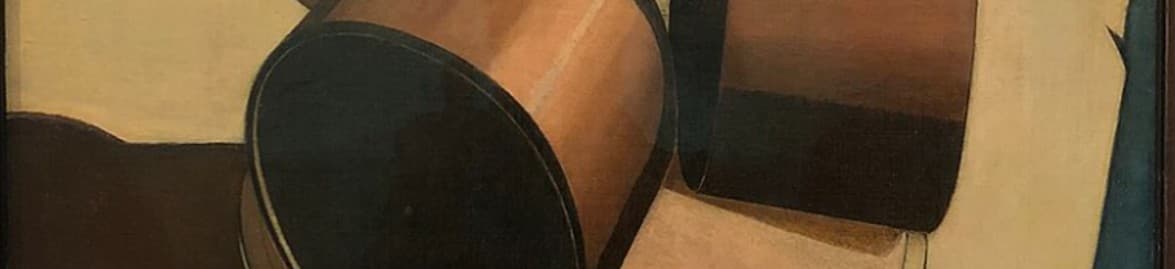
“Chocolate Grinder (No. 1)”, Unknown, via Wikimedia Commons
– Public Domain.




.jpg)