meera mukherjee - artist profile, history, art style & paintings
.jpg&w=3840&q=75)
Meera Mukherjee (1923-1998)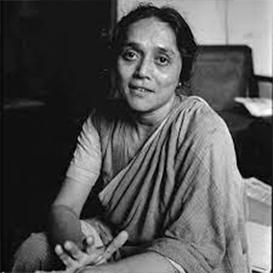 was one of India's most important modern sculptors whose work celebrated the beauty of ordinary life. Known for her expressive bronze sculptures, she infused life, movement and emotion into metal, making her one of India’s most respected modern artists. Her work was deeply influenced by the indigenous metal-casting techniques of the Dokra artisans of Bengal and Central India, which she reinterpreted through a contemporary lens. She not only excelled in the field of sculpting but also broke barriers as a woman in a male-dominated profession. This article delves into her life, artistic journey, and the profound impact she had on Indian art.
Early Life & Background
Meera Mukherjee was born in 1923 in Kolkata (then Calcutta), during a period of cultural awakening in Bengal. Her early life was deeply influenced by the rich cultural heritage of Bengal, which laid the foundation for her artistic journey. She began her formal training in arts at the Indian Society of Oriental Art of Abanindranath Tagore at the age of 14. Her early life was marked by a short-lived marriage in 1941, after which she resumed her artistic pursuits with renewed vigor.
Later Life
After her divorce, Meera Mukherjee dedicated herself to her art, eventually moving to Delhi for further education. She later worked as an art teacher in Kurseong and Kolkata before focusing fully on her sculpting career. Her works from this period, such as The Lamp, Fisherman’s Family, and Sanjha Chulha, exemplify her commitment to portraying humanist themes with intricate detail and dynamic forms. She also authored essays on art and ventured into children's literature, reflecting her multifaceted creative spirit. Meera Mukherjee's dedication to her art and her efforts to preserve and innovate traditional Indian sculpting techniques left a lasting impact on the Indian art scene. She continued her artistic pursuits until her passing in 1998, leaving behind a legacy that bridges traditional craftsmanship and modern artistic expression.
Family
Meera Mukherjee was born to Dwijendramohan Mukherjee and Binapani Devi. In 1941, Meera entered into marriage; however, the union was short-lived, leading to a divorce. Following this personal chapter, she immersed herself in further art studies, attending institutions such as the Government College of Art and Craft, Kolkata, and the Delhi Polytechnic (now known as Delhi Technological University), where she earned diplomas in painting, graphics and sculpture. Throughout her life, Meera remained unmarried after her initial brief marriage and did not have any children, dedicating herself entirely to her artistic pursuits until her passing in 1998.
Education
At 14, she began her formal training at the Indian Society of Oriental Art in Kolkata, immersing herself in the Bengal School's painting techniques. In 1941, she enrolled at the Delhi Polytechnic (now Delhi Technological University), where she earned diplomas in painting, graphic design, and sculpture by 1951. In the early 1950s, Mukherjee worked with the visiting Indonesian artist Affandi at Santiniketan, who became a significant early influence on her work. Her quest for deeper artistic knowledge led her to Germany in 1953 on an Indo-German Fellowship at the Akademie der Bildenden Künste (Academy of Fine Arts) in Munich. Initially focusing on painting, Mukherjee's exposure to European art circles and mentors like Toni Stadler inspired her to transition to sculpture, a medium through which she would later gain international acclaim.
Style
Meera Mukherjee's art style was marked by her use of bronze casting and her ability to capture the essence of everyday life in her sculptures. Her works often depicted ordinary people engaged in their daily activities, such as fishermen, weavers and women stitching. This focus on the common man gave her art a unique and relatable quality.
• Humanist Themes: Mukherjee's sculptures often depicted ordinary people engaged in daily activities, such as laborers, fishermen, and artisans. Her works imbued these subjects with elegance and dignity, highlighting the beauty in mundane tasks.
• Pastoral Scenes: She had a strong affinity for pastoral scenes, reflecting her interest in rural life and the simple pleasures of ordinary people.
• Lyrical Quality: Her sculptures possess a lyrical quality, combining traditional techniques with contemporary themes to create a unique visual perception.
Techniques
Meera Mukherjee was a master of the lost-wax casting technique, which she learned from the Dhokra artisans in Chhattisgarh. She innovated this method by sculpting her works in wax, adding surface decorations, and then casting them in bronze. This approach allowed her to achieve a delicate, organic finish in bronze, imbuing her sculptures with a unique lyricism and rhythm.
• Lost-Wax Casting (Cire Perdue): Mukherjee mastered the lost-wax casting technique, which she learned from the Dhokra artisans of Bastar. This method involved sculpting in wax, adding surface decorations, and then casting in bronze.
• Three-Phase Process: Her sculpting process involved creating an inner clay core, detailing the form with wax coils, and finally covering the wax mold with an outer clay body before casting.
• Terracotta and Stone Work: In addition to bronze, Mukherjee worked extensively with terracotta and stone, showcasing her versatility. Her terracotta pieces often displayed intricate carvings and surface textures that enhanced their visual appeal.
• Mixed Media: Mukherjee occasionally experimented with mixed media, combining different materials to create layered and complex sculptures that pushed the boundaries of traditional sculpting.
Themes
Meera Mukherjee explored a variety of themes in her sculptures, which were deeply rooted in her observations of everyday life, historical figures, and spiritual influences. Some of the key themes she explored include:
• Humanist Themes: Her sculptures often depicted ordinary people engaged in daily activities such as laboring, weaving, fishing, and construction work. These works celebrated the dignity and beauty in mundane tasks and the lives of common folk.
• Mass Movements and Social Commentary: Mukherjee's sculptures also touched on themes of mass movements and social issues, as seen in works like Andolan, which referenced student protests, and Queuing Before the Passport Office, highlighting everyday struggles.
• Historical Figures: She created sculptures inspired by historical figures, such as Ashoka at Kalinga, which depicted Emperor Ashoka's renunciation of violence after the Kalinga War.
• Spirituality and Music: Mukherjee was influenced by spiritual themes and classical music, often depicting musicians and spiritual figures in her work. Her sculptures of musicians, like the Santur Player, reflect her love for music and its impact on her art.
• Nature and Rural Life: Her sculptures sometimes captured rural scenes, such as Rain, which depicted people seeking shelter during a downpour, reflecting her connection to natural settings and the rhythms of rural life.
Artistic Journey & Development
Meera Mukherjee's artistic journey was marked by a significant shift from painting to sculpture. Her time in Munich and her exposure to the Dhokra metal casting tradition in Bastar, Chhattisgarh influenced her to adopt the lost-wax casting technique. Here, she learned the age-old lost-wax technique from tribal artisans, which she adapted into her own unique sculptural language. This method allowed her to create sculptures that were both delicate and robust, capturing the essence of everyday life in India. Her work often featured common people engaged in daily activities like fishing, weaving and laboring.
Characteristics Features of Her Sculptures
Meera Mukherjee's sculptures are renowned for their unique blend of traditional craftsmanship and modern artistic expression. Her work is characterized by several distinctive features that set her apart as a pioneering figure in Indian art.
• Celebration of the Ordinary
Mukherjee's sculptures often depict ordinary people engaged in everyday activities. She drew inspiration from the working class, including fishermen, weavers, and laborers, and celebrated their lives through her art. This focus on the mundane elevated her work to a celebration of humanism and a yearning for freedom.
• Use of Traditional Techniques
Mukherjee apprenticed with the Bastar sculptors in Madhya Pradesh, learning the ancient lost-wax or cire perdue method of bronze sculpting, locally known as Dhokra. She modified this technique to create large, life-size sculptures by building up the form in wax and adding surface decorations using strips and rolls. This method allowed her to retain the tactile nature of the material and imbue her sculptures with a sense of authenticity.
• Retention of Casting Imperfections
Her sculptures consciously retain the uneven surfaces and seams from the casting process. These imperfections reflect her distinction between classical metalwork and indigenous metal sculpture. This approach adds a sense of authenticity and a tactile quality to her work.
• Lyrical Quality and Rhythmic Elements
Mukherjee's sculptures possess a lyrical quality, often incorporating rhythmic elements that create a sense of movement and energy. She used Dhokra motifs, such as small beads or pellets, and thread-like lengths of bronze to create visual rhythm and directional energy, similar to brushstrokes or lines in a painting. This rhythmic pulse is also influenced by her training in Hindustani classical music.
• Large-Scale and Monumental Works
Many of Mukherjee's sculptures are large-scale and monumental, often depicting human figures in life-size or larger-than-life proportions. These works, such as "Ashoka at Kalinga" and "He Who Saw," are cast in sections and welded together, showcasing her mastery of the casting process.
• Social and Spiritual Themes
Mukherjee's work often carries social messages, highlighting the struggles and triumphs of everyday individuals. Her sculptures also reflect a deep spiritual connection, inspired by the worldview of the traditional craftsmen she studied.
• Unique Style and Modernity
Mukherjee developed a unique style that bridges tradition and modernity. Her sculptures combine the authenticity of traditional craftsmanship with contemporary artistic expression. This blend of old and new creates a visual language that is both timeless and modern.
Famous Sculptures
Some of her most acclaimed works include:
The Lamp – A symbol of inner light and resilience.
Fisherman’s Family – Portraying community life with dignity.
Sanjha Chulha – Celebrating the tradition of shared meals.
The Dancers – Expressing joy through rhythmic movement.
The Dancing Baul Sculptures by Meera Mukherjee
The Dancing Baul sculptures, created by Meera Mukherjee, depict Baul singers and dancers in a moment of ecstatic movement. The Bauls are a mystical Bengali sect known for their devotional songs and unconventional lifestyle. Mukherjee's choice to cast the sculptures in bronze lends it a sense of timelessness and gravitas. The rich, earthy tones of the bronze complement the Baul's connection to nature and the spiritual world. The medium also allows for intricate detail, evident in the depiction of the Baul's flowing robes, expressive face, and musical instrument.
The sculptures capture the dynamic energy of the Baul's dance, with the figure's limbs outstretched and torso twisting in a graceful arc. The sense of movement is further enhanced by the flowing lines of the robes and the suggestion of wind whipping through the hair. The faces are etched with a look of rapture, conveying the spiritual ecstasy that accompanies their music and dance. Executed using bronze, the figures stand testament to Mukherjee's mastery of form, her deep understanding of Indian culture, and her ability to capture the human spirit in all its complexity and beauty.
Meera Mukherjee’s Ashoka at Kalinga
The sculpture ‘Ashoka at Kalinga’ is widely regarded as one of Mukherjee’s masterpieces. The work represents Emperor Ashoka at the moment of reflection after the devastating Kalinga War, where he realised the futility of violence and sought the path of peace. The piece captures a profound emotional transformation, with Ashoka's gaze reflecting sorrow and remorse. The sculpture’s realistic detail, combined with its symbolic resonance, makes it a key work in the understanding of Mukherjee’s contribution to Indian sculpture.
Philosophy
Meera Mukherjee believed in the dignity of labor and the unity of art and life. Her sculptures reflected the essence of ordinary people—their struggles, joy and strength. She aimed to make art accessible and meaningful, rooted in Indian life and values while also carrying a universal appeal.
Accomplishments - Awards Won
The Government of India awarded Mukherjee the Padma Shri in 1992. She also received the President's Award for metal craftsmanship in 1968 and the Abanindra Prize in 1981 from the Government of West Bengal.
Contributions & Impact on Indian Art
Meera Mukherjee's contributions to Indian art are manifold. She not only modernized traditional sculpting techniques but also brought attention to folk art forms. Her work as an 'artist-anthropologist' helped document and preserve metal craftsmanship across India and Nepal. Her sculptures continue to inspire artists by celebrating the beauty in everyday life and the dignity of ordinary people.
Conclusion
Meera Mukherjee was more than a sculptor—she was a storyteller, a cultural preserver, and a modernist with deep respect for tradition. Her work gave voice to the voiceless, turned ordinary lives into extraordinary art, and ensured that India's rich folk heritage found a place in the modern art world. Her legacy continues to shine through the warmth and wisdom embedded in every piece of bronze she brought to life.