modern art | history, style, movement, artists
.jpg&w=3840&q=75)
Modern Art is a fascinating and transformative period in the history of art. It broke away from traditional norms and embraced innovation, experimentation, and a new way of interpreting the world. But is that all modern art is? Or is it something more? In this article, we'll explore the world of modern art by looking at its history, styles, movements, and notable artists that define it. By the end, you’ll understand what modern art is and what makes it unique.
I. Understanding Modern Art: Definition & Significance
•> What Is Modern Art? - Modern art is an art history period roughly spanning from the 1860s to the 1970s that marked a dramatic shift from traditional artistic conventions. It welcomed experimentation and individualism, creating a significant shift in art away from narrative and towards abstraction.
•> Modern Art Definition - Modern art can be defined as a transformative era in artistic expression that emerged in the wake of the Industrial Revolution. This period was marked by a significant modernization of art, driven by advancements in technology and the increasing interconnectedness of the global community. In light of these profound changes, artists sought to redefine their creative practices, moving away from rigid traditions that had long confined art to religious motifs and realistic portrayals. Embracing innovation, they harnessed art as a powerful medium for personal expression, intellectual exploration, and social commentary.
•> When Did Modern Art Begin? - Modern art officially began in the 1860s with the emergence of Impressionism, though some historians trace its roots to the Realist movement of the 1840s. The traditional date often cited is 1863, when Édouard Manet's "Le Déjeuner sur l'herbe" shocked the Paris Salon with its modern approach to classical themes.
•> How Did Modern Art Begin? - Modern art emerged as a response to artists' dissatisfaction with the traditional, rigid structures that had governed art for centuries. These structures were heavily influenced by institutions like the church and the aristocracy, which dictated what art should represent and who it should serve. Artists began to reject this static, old-world view, seeking to create something more dynamic and reflective of contemporary life.
The goal of modern art was not only to innovate but also to democratize art, making it accessible to the broader public rather than reserving it solely for the elite. By moving away from classical ideals and embracing experimentation, artists sought to capture the realities, emotions, and experiences of everyday people. Claude Monet's "Impression, Sunrise" is often credited with igniting this shift, encouraging artists to focus on capturing light and atmosphere rather than realistic depictions.
•> The Emergence Of Modern Art - The emergence of modern art was deeply influenced by the sweeping social, technological, and philosophical changes occurring in the mid-nineteenth and early twentieth centuries. Artists felt a need to abandon traditional approaches and sought fresh ways to capture the rapidly changing world.
•> Purpose Of Modern Art - The primary purpose of modern art was to explore new artistic languages that could convey the realities of modern life. It aimed to provoke thought, evoke emotion, and challenge viewers' perceptions.
II. History Of Modern Art
The history of modern art dates back to the Impressionist movement in the mid-19th century. This was followed by movements such as Post-Impressionism, Fauvism, Expressionism, Cubism, Surrealism, Dadaism, Bauhaus, Abstract Expressionism, Pop Art, Minimalism and Conceptual Art, each contributing to the evolution of modern art.
•> Modern Art Timeline - The evolution of modern art reflects a dynamic journey through various groundbreaking movements, each responding to cultural, social, and artistic shifts. Here’s a timeline capturing the transformative milestones:
• 1860s-1890s: The birth of modern art with movements like Impressionism and Post-Impressionism.
• 1900s-1910s: The rise of Fauvism, Expressionism, and Cubism.
• 1920s-1930s: The emergence of Surrealism, Dadaism, and Bauhaus.
• 1940s-1950s: The dominance of Abstract Expressionism.
• 1960s-1970s: The advent of Pop Art, Minimalism and Conceptual Art.
# Impressionism: Emerged in 1860s France, focusing on capturing light and its changing qualities. Artists painted outdoors with visible brushwork, emphasizing everyday scenes and fleeting moments. Key figures include Claude Monet, Pierre-Auguste Renoir, and Edgar Degas.
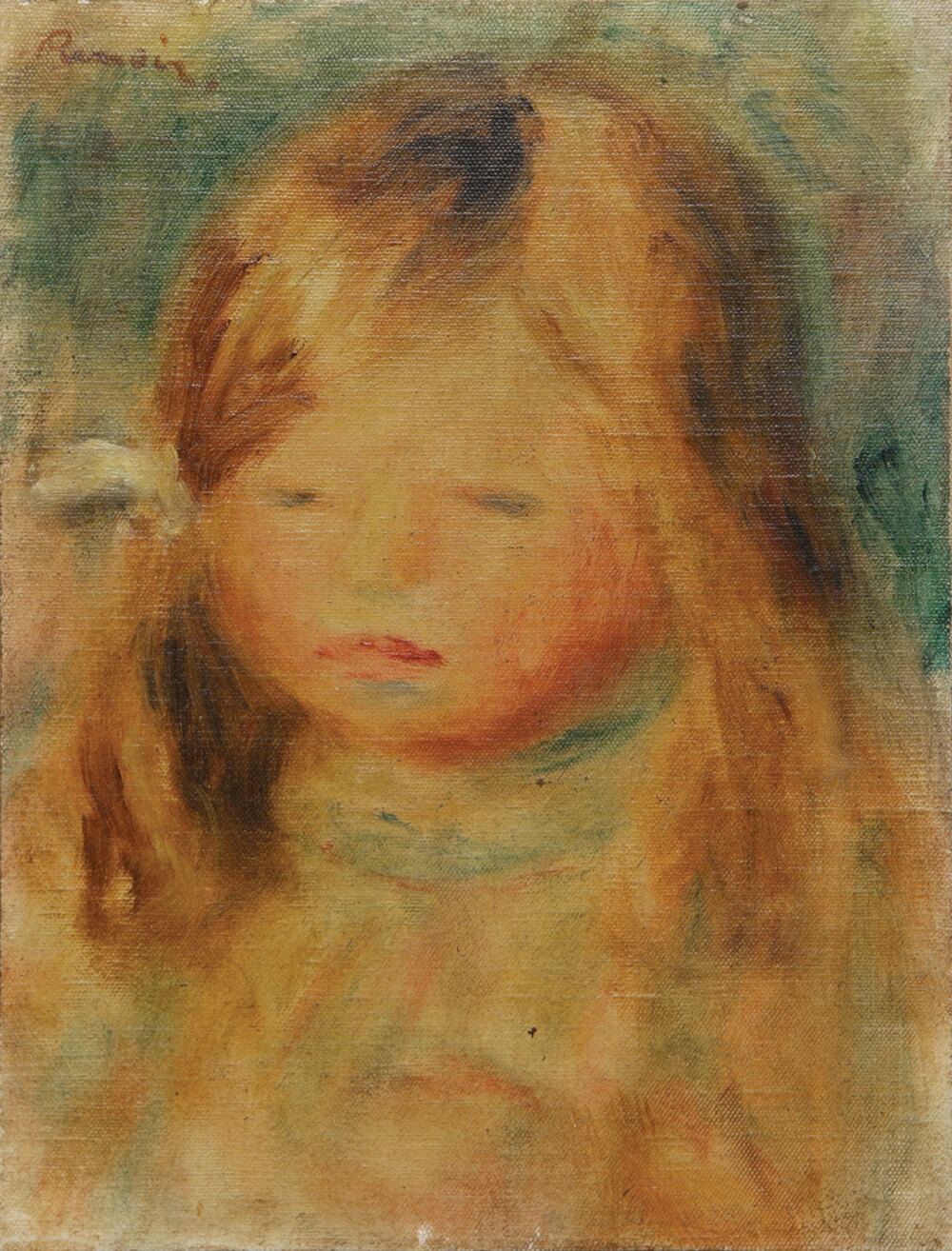
Etude Pour Le Portrait De Coco by Pierre Auguste Renoir, Oil on canvas pasted on board, 8.9 x 6.7 in.
# Post-Impressionism: Emerged in the 1880s as artists moved beyond Impressionism while building on its color innovations. Unlike Impressionists, Post-Impressionists emphasized geometric forms, symbolic content, and personal expression over optical effects. Key figures include Vincent van Gogh with his emotional brushwork, Paul Cézanne whose structural approach influenced Cubism, Georges Seurat who developed pointillism and Paul Gauguin with his flat decorative style and exotic subjects.
# Fauvism: Short-lived but influential movement (1904-1908) characterized by bold, non-naturalistic colors and simplified forms. Led by Henri Matisse and André Derain, Fauvist paintings emphasized expressive color over representational accuracy.
# Expressionism: Developed in early 20th century Germany and Austria, prioritizing emotional impact over realistic representation. Artists distorted forms and used vivid colors to convey subjective experiences and inner turmoil. Important artists include Edvard Munch, Ernst Ludwig Kirchner and Egon Schiele.
# Cubism: Pioneered by Pablo Picasso and Georges Braque around 1907-1914, breaking objects into geometric shapes and showing multiple perspectives simultaneously. This revolutionary approach to representation abandoned traditional perspective and laid groundwork for abstract art.
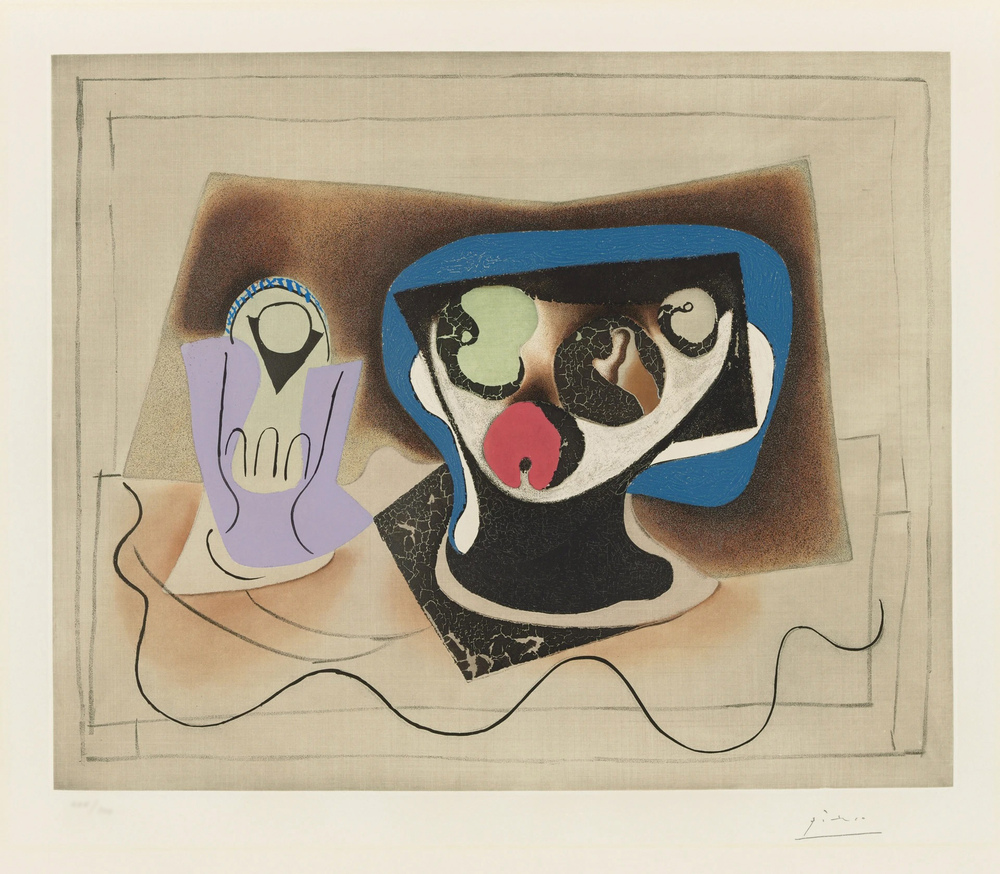
Nature Morte Au Compotier by Pablo Picasso, 1965, Etching with aquatint in colours, 24.8 x 32.7 in.
# Surrealism: Formed in 1924 by André Breton, exploring unconscious mind, dreams, and irrational juxtapositions. Surrealists like Salvador Dalí, René Magritte, and Joan Miró created dreamlike imagery that challenged conventional reality and celebrated the imagination.
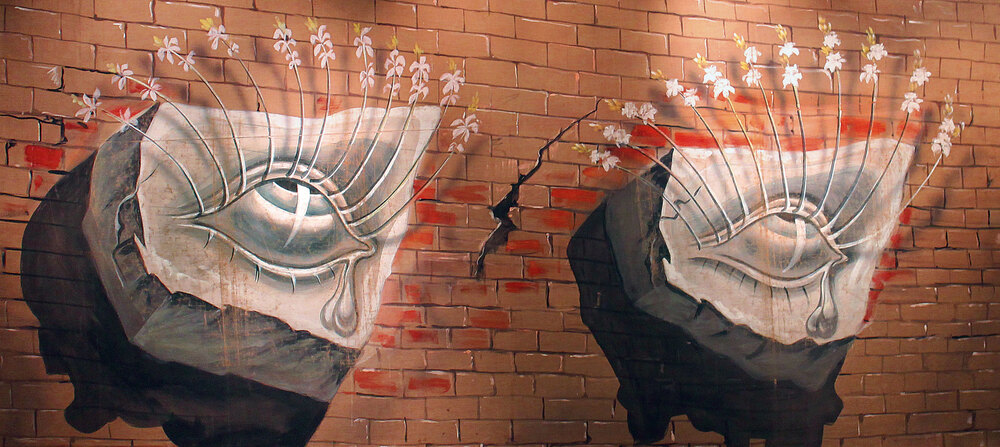
L’oeil Fleuri by Salvador Dali, 1944, Oil and tempera on canvas, 69.5 x 155.1 in.
# Dadaism: Emerged during World War I as an anti-art movement rejecting logic and aestheticism, embracing nonsense and irrationality as protest against the war. Marcel Duchamp's readymades and collage techniques by Hannah Höch exemplify Dada's provocative approach.
# Bauhaus: Founded by Walter Gropius in Weimar, Germany in 1920, this influential school combined fine arts, crafts, and design principles under the motto "form follows function." The Bauhaus promoted unity between art and industrial production, creating functional designs with clean lines and minimal ornamentation. Despite closing under Nazi pressure in 1933, its ideas spread globally through teachers like Wassily Kandinsky, Paul Klee, László Moholy-Nagy, and Marcel Breuer, profoundly shaping modern architecture, furniture, typography, and industrial design.
# Abstract Expressionism: Emerged in post-WWII New York during the 1940s-50s, emphasizing spontaneous creation and emotional intensity through non-representational forms. Artists valued individual expression, scale, and gestural techniques. Two main approaches developed: "action painting" by artists like Jackson Pollock, who dripped and splattered paint on canvases, and "color field" painting by Mark Rothko and others who created large expanses of color. Other key figures include Willem de Kooning, Franz Kline, and Clyfford Still.
# Pop Art: Developed in the 1960s in Britain and America as a reaction against abstract expressionism, celebrating popular culture and everyday objects. Artists appropriated imagery from advertising, comic books, and mass media, often using commercial techniques like screen printing. The movement blurred boundaries between high and low culture, commenting on consumerism and mass production. Notable artists include Andy Warhol with his Campbell's soup cans and celebrity portraits, Roy Lichtenstein with his comic-inspired works, and Claes Oldenburg with his oversized everyday objects.
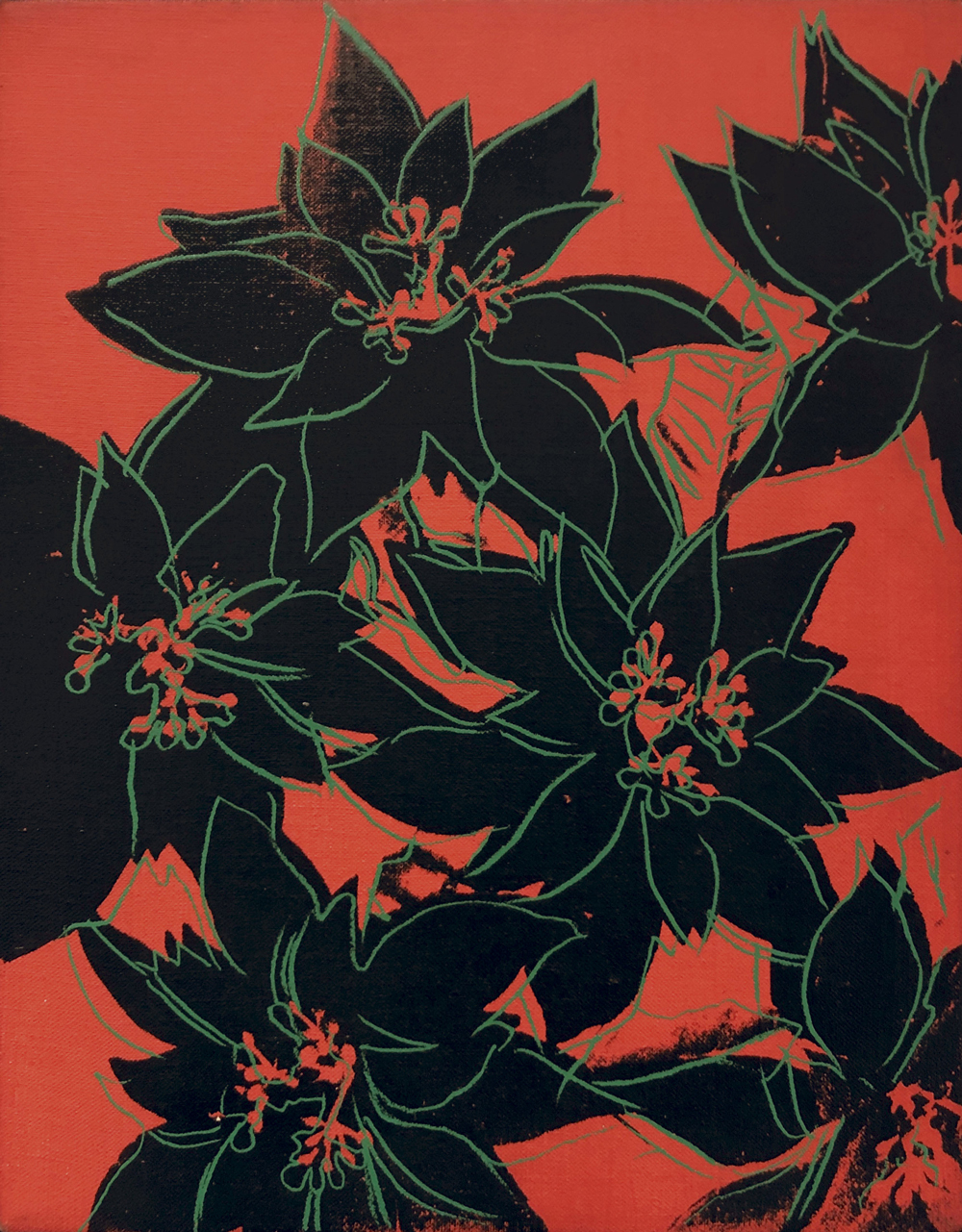
Poinsettia by Andy Warhol, 1982, Acrylic & silkscreen on canvas, 14 x 11 in.
# Minimalism: Developed in 1960s New York as a reaction against Abstract Expressionism's emotional intensity. Minimalist artists created simple, geometric works with industrial materials, emphasizing physical presence over representation or expression. Works by Donald Judd, Dan Flavin, Carl Andre, and Agnes Martin featured repeated forms, neutral surfaces, and systematic arrangements. The movement eliminated narrative content and celebrated literal space, influencing architecture, design, music, and fashion with its "less is more" philosophy.
# Conceptual Art: Emerged in the mid-1960s prioritizing ideas over aesthetic or material concerns. Conceptual artists like Joseph Kosuth, Sol LeWitt, and Lawrence Weiner challenged traditional art by presenting text instructions, documentation, ephemeral interventions, and everyday objects as art. Famous examples include Marcel Duchamp's readymades and Joseph Beuys' social sculptures. The movement expanded art's definition beyond visual objects to include systems, processes, and philosophical investigations, fundamentally changing how we understand art's purpose and production.
III. Themes Of Modern Art
Modern art encompasses a wide range of themes, reflecting the diverse experiences and perspectives of artists across different periods and cultures. Here are some of the key themes that have been prominent in modern art:
• Identity and Self-Expression: Exploring personal identity, emotions, and experiences. This theme often delves into issues of gender, sexuality, race, and cultural heritage.
• Social and Political Commentary: Addressing contemporary social issues, political events, and ideologies. Artists use their work to critique, challenge, or raise awareness about societal problems.
• Technology and Innovation: Reflecting on the impact of technology on society and art itself. This includes the use of new media and digital tools in artistic creation.
• Nature and Environment: Examining the relationship between humans and the natural world, often highlighting environmental concerns and the beauty of nature.
• Abstraction and Form: Focusing on the formal elements of art, such as color, shape, and line, rather than representational subject matter. This theme emphasizes the aesthetic qualities of the artwork itself.
• Everyday Life and Popular Culture: Depicting scenes from everyday life and incorporating elements of popular culture, such as advertising, media, and consumer goods.
• Memory and History: Exploring personal and collective memories, historical events, and cultural heritage. Artists often use art to preserve or reinterpret historical narratives.
• Spirituality and Philosophy: Investigating spiritual and philosophical questions, often drawing on religious or metaphysical themes to explore the human condition.
• Urbanization and Industrialization: Reflecting on the impact of urban development and industrialization on society and the environment.
• Globalization and Cultural Exchange: Examining the effects of globalization on cultural identity, exchange, and hybridity.
IV. Modern Art Styles
Modern art encompasses multiple styles characterized by:
• Rejection of traditional academic rules.
• Emphasis on experimentation and innovation.
• Movement toward abstraction.
• Focus on individual expression.
• Use of bold colors and forms.
• Simplified shapes and compositions.
V. Common Techniques Used In Modern Art
Modern artists employed a wide range of techniques, often experimenting with new methods:
• Impasto: Thick application of paint.
• Collage: Combining different materials on a surface.
• Drip Painting: Allowing paint to drip or splatter onto the canvas.
• Photomontage: Combining photographs to create a new image.
VI. Key Materials Used In Modern Art
Modern artists embraced a wide range of mediums, redefining artistic techniques:
• Traditional Media: Oil paints, watercolors, and charcoal.
• Unconventional Materials: Found objects and mixed media.
• Printmaking Techniques: Lithography and screen printing.
• New Technologies: Photography and film.
VII. Ten Famous Works Of Modern Art That Define The Modern Age
1. Édouard Manet's "Le Déjeuner sur l'herbe" (1863) - Marks the beginning of modern art.
2. Claude Monet's "Impression, Sunrise" (1872) - Defines Impressionism.
3. Vincent van Gogh's "Starry Night" (1889) - Iconic work of Post-Impressionism.
4. Pablo Picasso's "Les Demoiselles d'Avignon" (1907) - Pioneering work of Cubism.
5. Marcel Duchamp's "Fountain" (1917) - Defines Dadaism and conceptual art.
6. Salvador Dalí's "The Persistence of Memory" (1931) - Iconic Surrealist work.
7. Jackson Pollock's "No. 5, 1948" (1948) - Defines Abstract Expressionism.
8. Mark Rothko's "Orange, Red, Yellow" (1961) - Example of Color Field painting.
9. Andy Warhol's "Campbell's Soup Cans" (1962) - Iconic work of Pop Art.
10. Robert Rauschenberg's "Monogram" (1959) - Example of Combine painting.
VIII. Characteristics Of Modern Art
Modern art is distinguished by several key characteristics:
1. Abstraction: Moves away from realistic representation.
2. Experimentation: Exploring new materials and styles.
3. Individual Expression: Emphasizing personal perspectives.
4. Diverse Styles: Encompassing various movements.
5. Non-Traditional Techniques: Using unconventional methods.
6. Focus on Process: Emphasizing the act of creation.
7. Social and Political Commentary: Addressing contemporary issues.
8. Use of New Media: Incorporating photography and digital art.
9. Deconstruction of Traditional Forms: Challenging established norms.
10. Viewer Engagement: Encouraging active participation and interpretation.
IX. Who Is A Modern Artist?
A modern artist is typically defined as someone who worked during the modern art period (1860s-1970s) and embraced its principles of innovation, experimentation, and individual expression. Modern artists rejected traditional academic rules and sought new ways to represent their experiences and ideas about the world.
X. Famous Modern Artists & Their Artworks
• Vincent van Gogh - Sunflowers (1888)
• Marc Chagall - I and the Village (1911)
• Henri Matisse - The Red Studio (1911)
• Wassily Kandinsky - Composition VIII (1923)
• Georgia O'Keeffe - Cow's Skull: Red, White, and Blue (1931)
• Pablo Picasso - Guernica (1937)
• Frida Kahlo - Self-Portrait with Thorn Necklace and Hummingbird (1940)
• Salvador Dalí - The Elephants (1948)
• Jackson Pollock - Blue Poles (1952)
• Andy Warhol - Marilyn Diptych (1962)
XI. Who Is Considered As The Father Of Modern Art
Paul Cézanne is often considered the "Father of Modern Art" due to his groundbreaking approach to form, structure, and color which laid the foundation for many 20th-century art movements. His work marked a radical departure from traditional methods of painting, emphasizing the geometric forms underlying nature and simplifying objects into shapes like spheres, cones, and cylinders. This approach directly influenced movements such as Cubism, with artists like Pablo Picasso and Georges Braque crediting him as a key influence. Paul Cézanne's focus on breaking down objects into their basic forms and viewing them from multiple perspectives was a significant departure from traditional art, paving the way for the avant-garde. His innovations in form and color helped revolutionize painting and led to the development of modern art movements.
XII. Why Is Modern Art Important Today?
Modern art is important today because it challenges conventional perspectives, encourages creativity, and reflects contemporary social, political, and cultural issues. It serves as a medium for self-expression, allowing artists to explore new ideas, experiment with different materials, and push boundaries. Modern art also fosters critical thinking, inviting viewers to question and interpret meaning in diverse ways. Additionally, it influences design, fashion, and technology, shaping how we experience the world. By breaking traditional norms, modern art continues to inspire innovation and dialogue in today's society.
Conclusion
Modern art is, at its heart, a celebration of innovation, a challenge to convention, and a bold exploration of ideas beyond the visual. It serves as a powerful reminder that art is never static; it grows, shifts, and reshapes itself alongside the world it reflects. From radical experiments in form and color to deep explorations of emotion and society, modern art continues to push boundaries and redefine creativity. It is a living, evolving testament to human expression, one that remains as compelling and limitless as the imagination itself.
Did you find this article instructive? If yes, we recommend our other newsy article: Basic Tips To Be Kept In Mind Before You Buy Modern Art