modern indian artists and their faunal muses
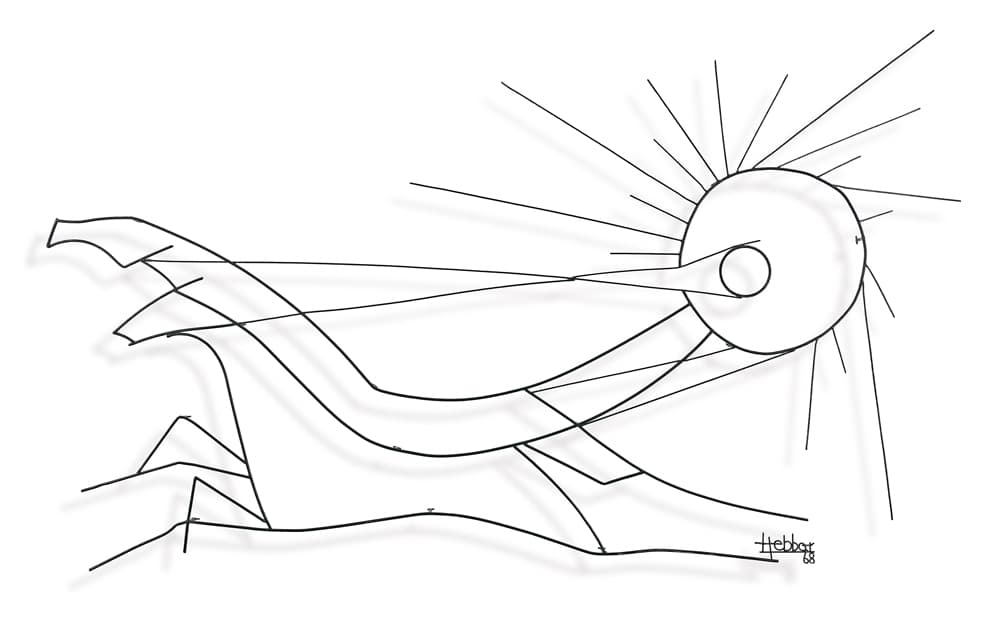
The interplay between art and nature has long been a recurring theme in Indian art, with fauna taking center stage as muses for many renowned artists. From the intricate realism of Raja Ravi Varma’s depictions to the surreal abstractions of Tyeb Mehta and the experimental works of contemporary artists like Bharti Kher, Indian painters and sculptors have captured the essence of the animal world across styles, mediums, and philosophies. This article explores the influence of fauna in the works of Indian artists, celebrating their ability to merge humanity with the natural world in evocative ways.
• Raja Ravi Varma - Raja Ravi Varma, often referred to as the father of modern Indian art, is celebrated for his fusion of Indian tradition with Western realism. Animals often made cameo appearances in his mythological and historical paintings, serving as symbols or companions to gods, heroes, and heroines. In works like Shakuntala or Damayanti and the Swan, the presence of animals—whether deer, swans, or elephants—emphasized innocence, divinity, or a connection to nature.
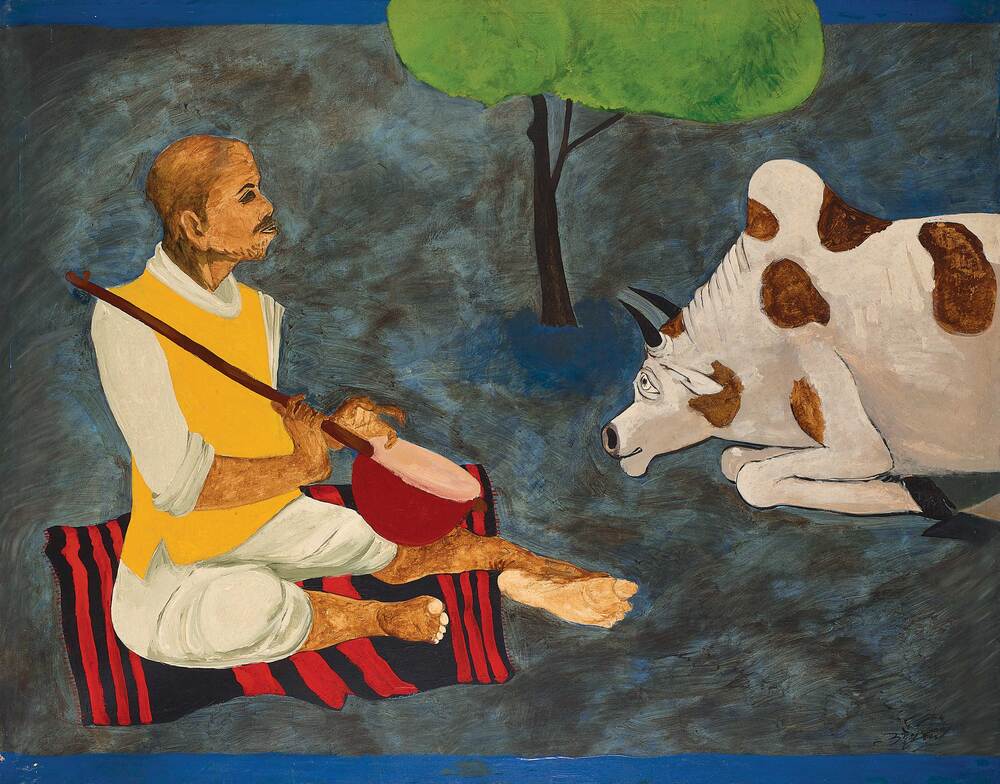
• Jamini Roy - Jamini Roy’s bold and stylized depictions of rural life frequently included animals, particularly oxen, cats, and birds. Inspired by Bengali folk art, his works like Three Cats with Flowers reflect a deep sensitivity toward animal forms, reimagining them in earthy tones and geometric patterns that celebrate their vitality and grace.
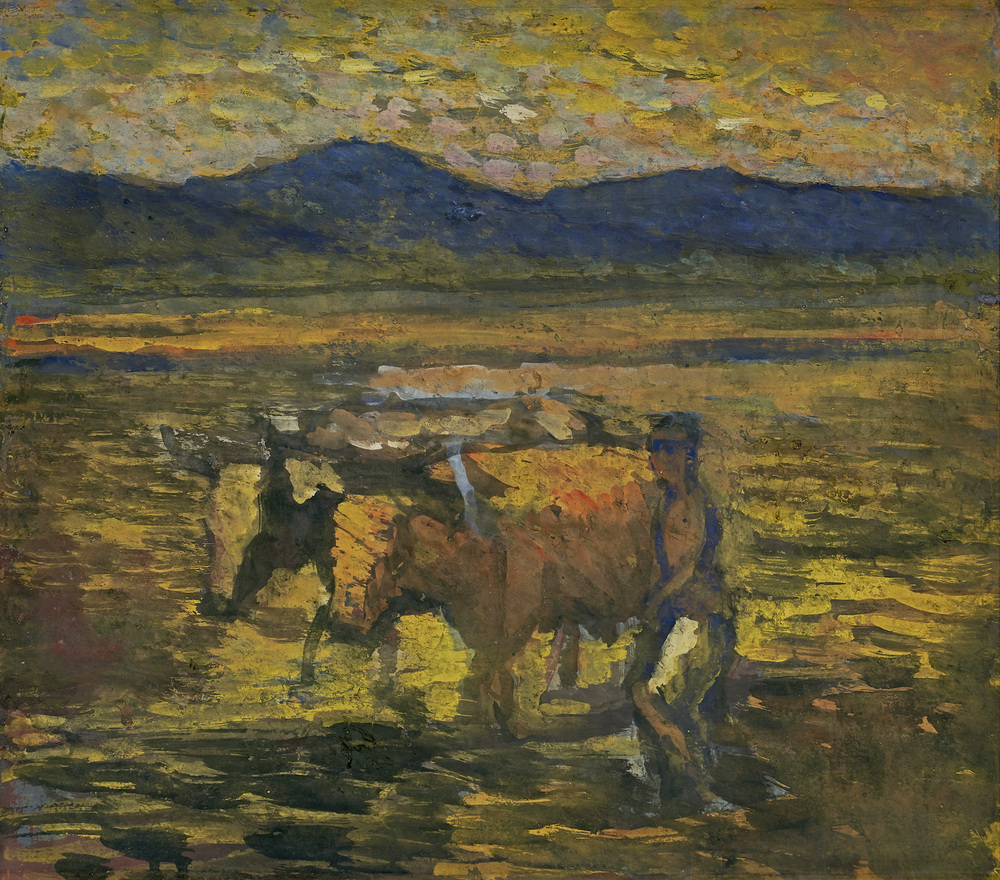
• Amrita Sher-Gil - Amrita Sher-Gil, known for her poignant explorations of Indian rural life, incorporated animals as part of her landscapes and narratives. While not her primary focus, her works subtly hint at the integral role animals play in the rhythms of village life, often evoking themes of symbiosis between humans and their surroundings.
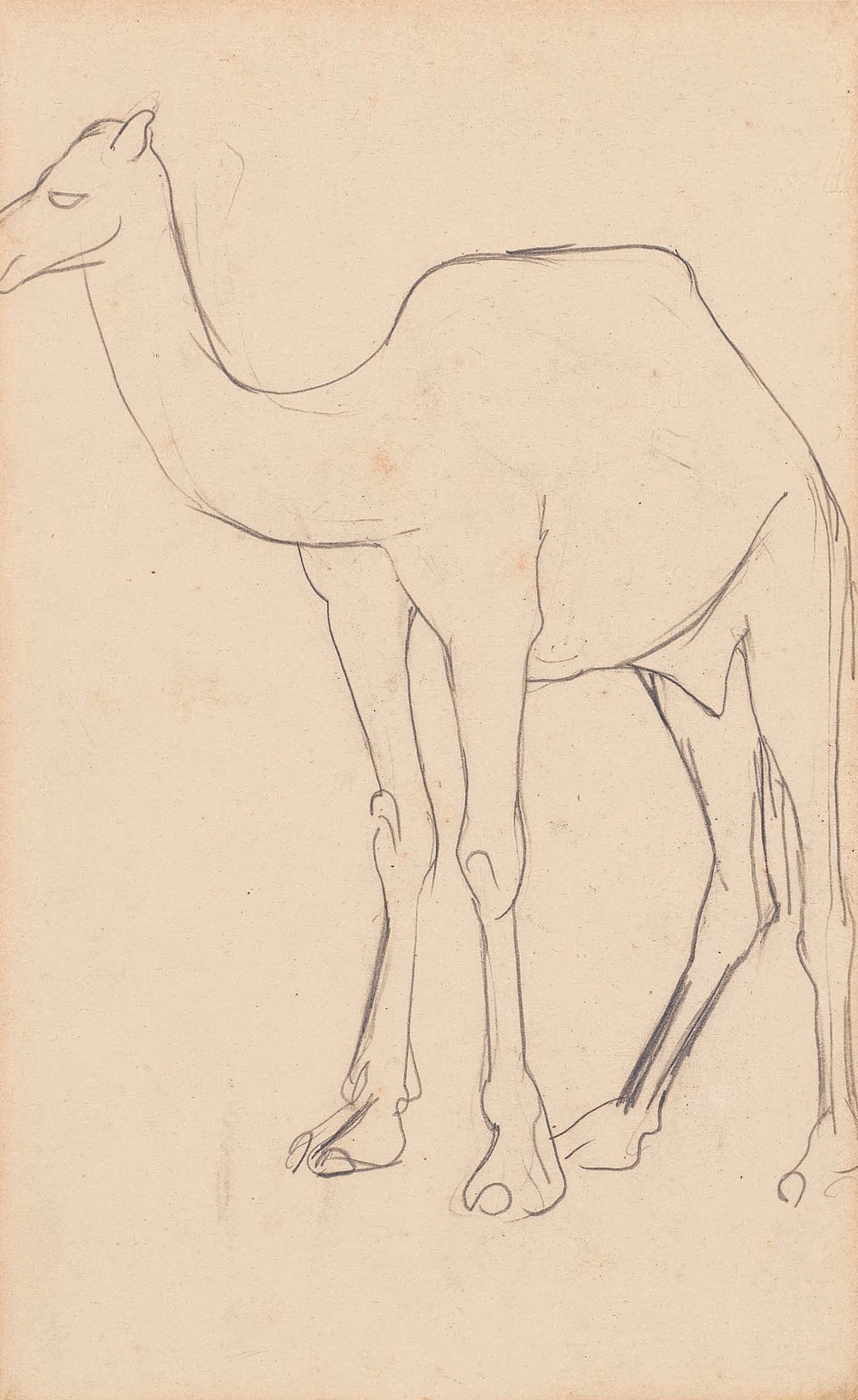
• Rabindranath & Abanindranath Tagore - Both Rabindranath Tagore and his nephew Abanindranath Tagore used animals symbolically in their works. Abanindranath, a pioneer of the Bengal School of Art, often depicted mythical creatures and animals with a spiritual resonance, blending Indian traditions with modernist sensibilities. Rabindranath, on the other hand, embraced a poetic abstraction in his sketches, where animals occasionally appeared as dreamlike presences, echoing his literary imagination.
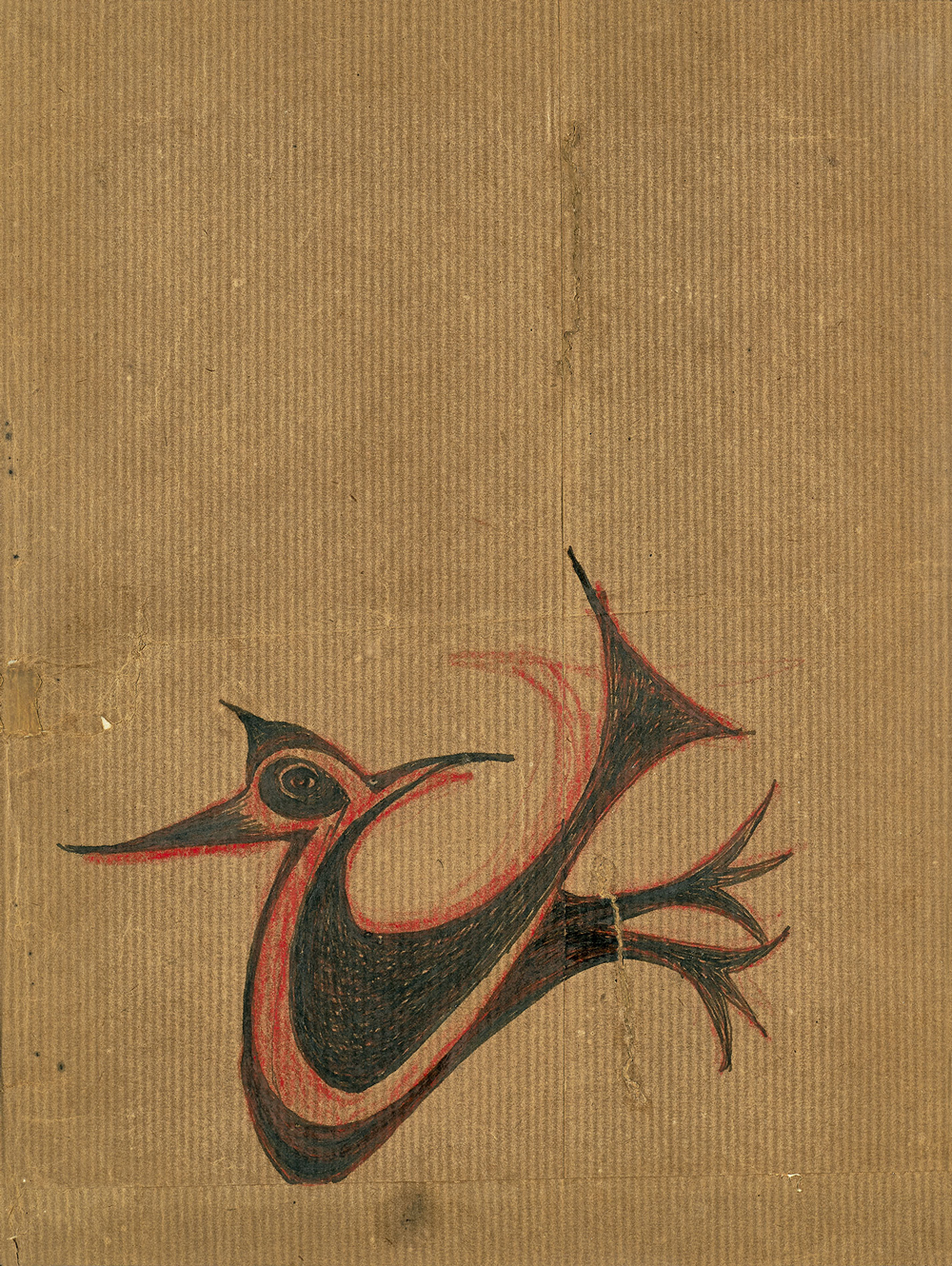
• Nandalal Bose - Nandalal Bose, a key figure in the Bengal School, was deeply inspired by nature, and animals frequently graced his canvases and murals. His Haripura Posters, created for the Indian National Congress, prominently featured animals like cows and elephants, celebrating their role in Indian rural and spiritual life. His works radiated a sense of reverence for all living beings, blending art with environmental consciousness.
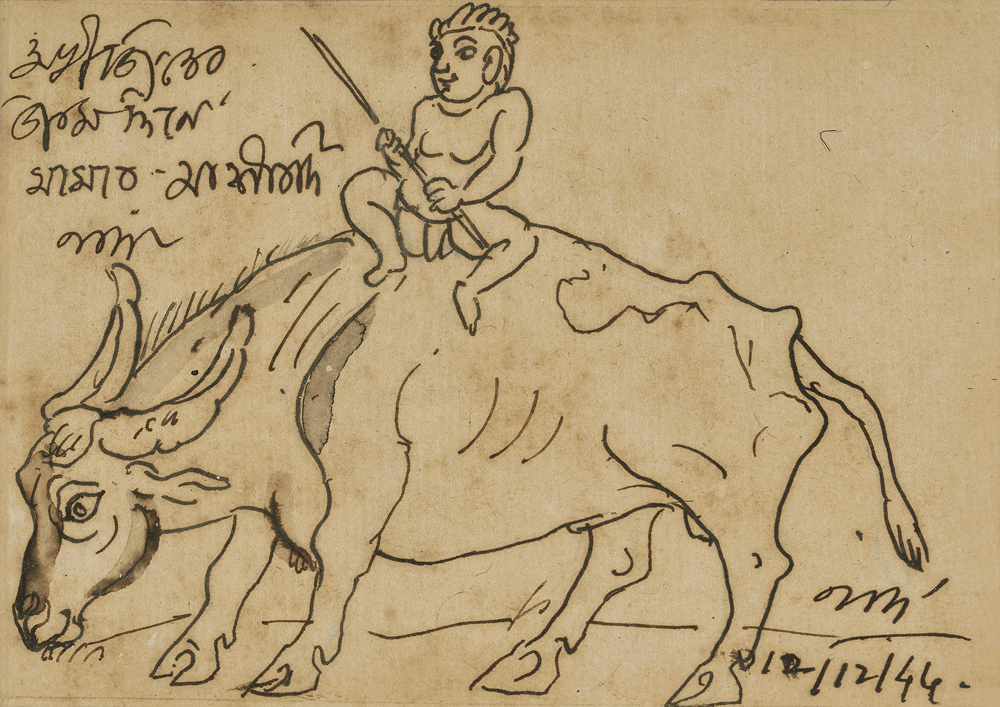
• Tyeb Mehta - Tyeb Mehta’s exploration of the bull as a central motif stands out in Indian modern art. In his iconic Mahishasura, the bull becomes a symbol of power, sacrifice, and violence, reflecting both mythological and existential struggles. His fragmented and expressionistic style lent a visceral energy to the animal, turning it into a metaphor for the turbulence of the human condition.
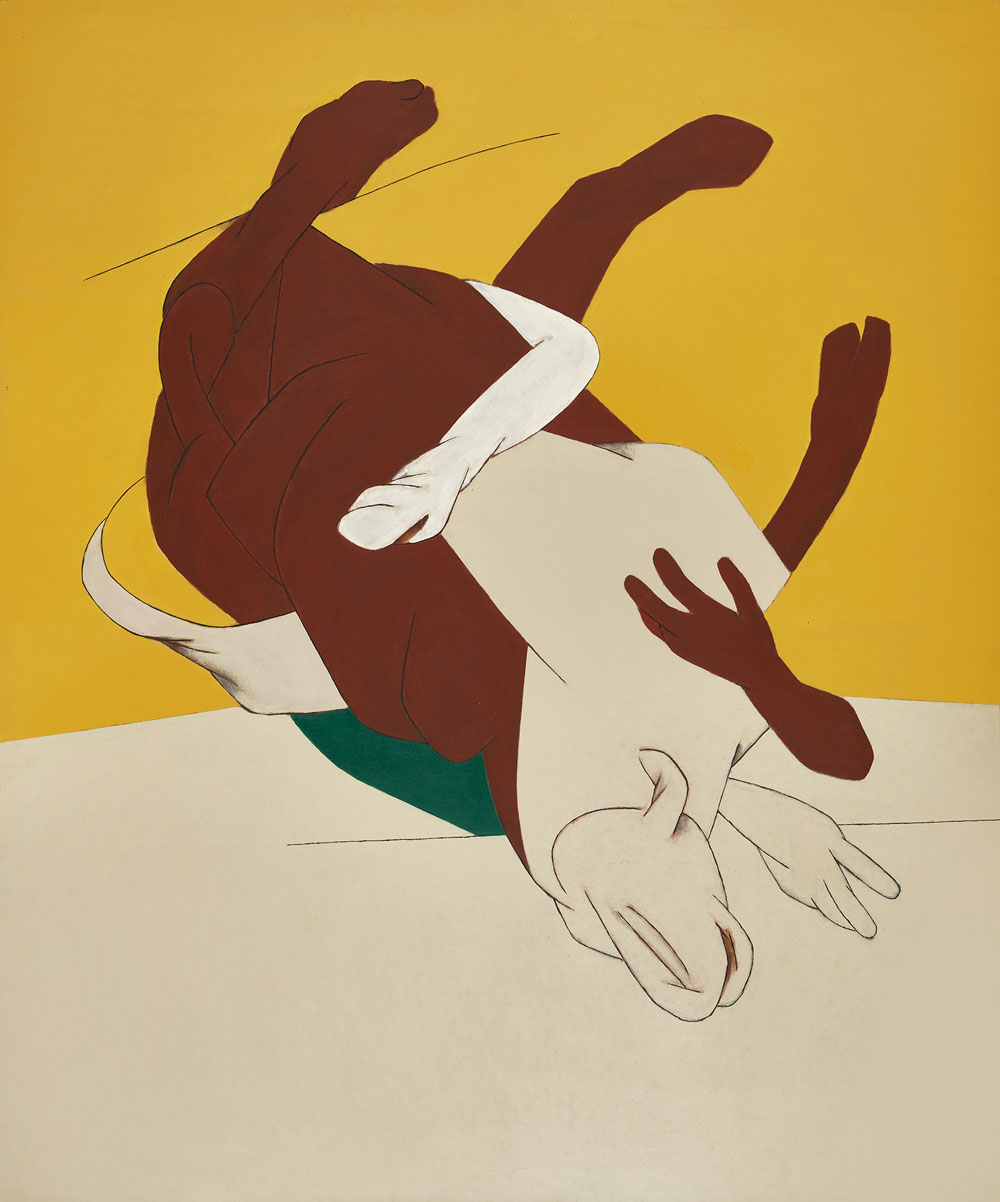
• Manjit Bawa - Manjit Bawa’s vibrant, minimalist paintings often feature animals like cows, birds, and goats, set against surreal, flat backgrounds. Deeply influenced by Indian mythology and spirituality, Bawa treated animals as sacred beings, creating a dreamlike harmony between the human and the natural. His works invite contemplation on coexistence and inner peace.
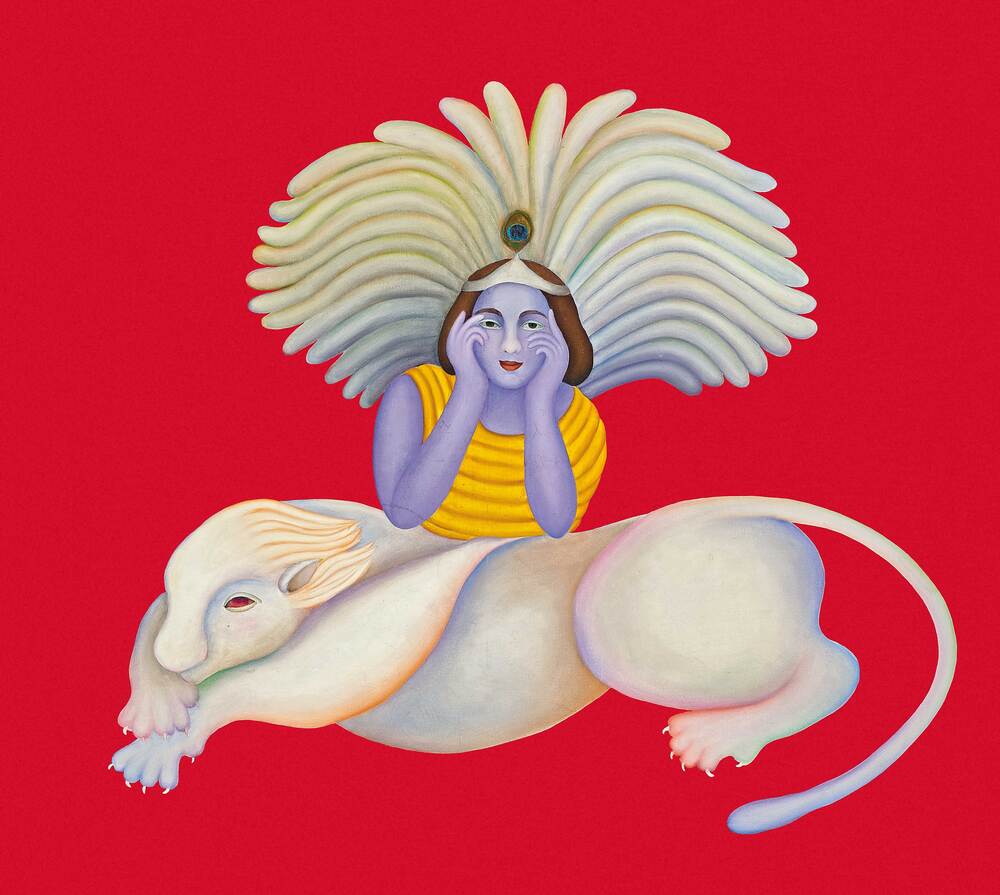
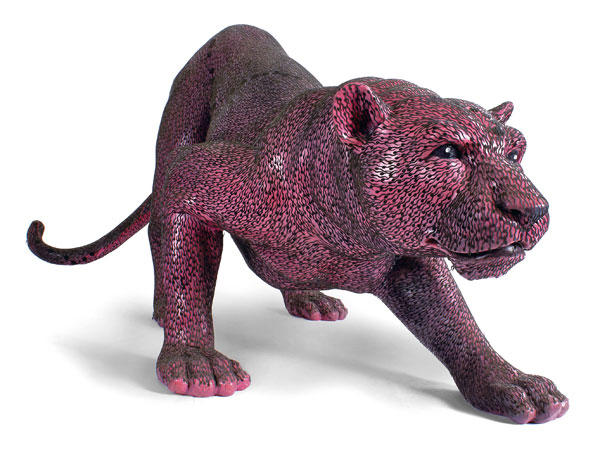
• Bharti Kher - Contemporary artist Bharti Kher often employs animals in her installations to explore themes of hybridity and identity. Her iconic work The Skin Speaks a Language Not Its Own features a life-sized sculpture of a reclining elephant covered in bindis, symbolizing both cultural transformation and the weight of tradition.
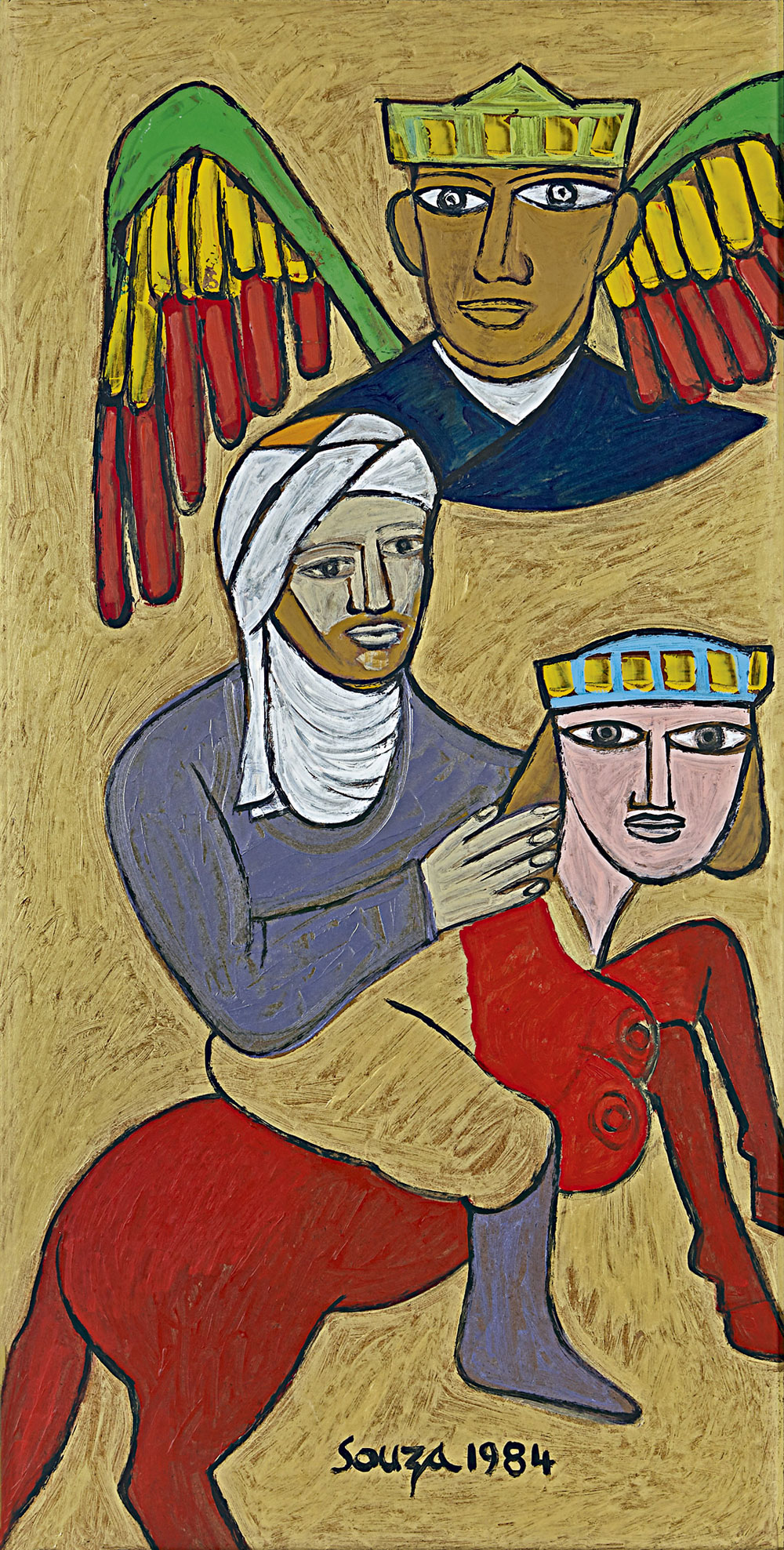
• F N Souza - Francis Newton Souza’s depictions of animals, like his human figures, were raw and unfiltered. His works often captured the primal, almost grotesque aspects of life, with animals serving as symbols of survival and instinct. His unflinching gaze transformed fauna into potent metaphors for societal and personal conflicts.
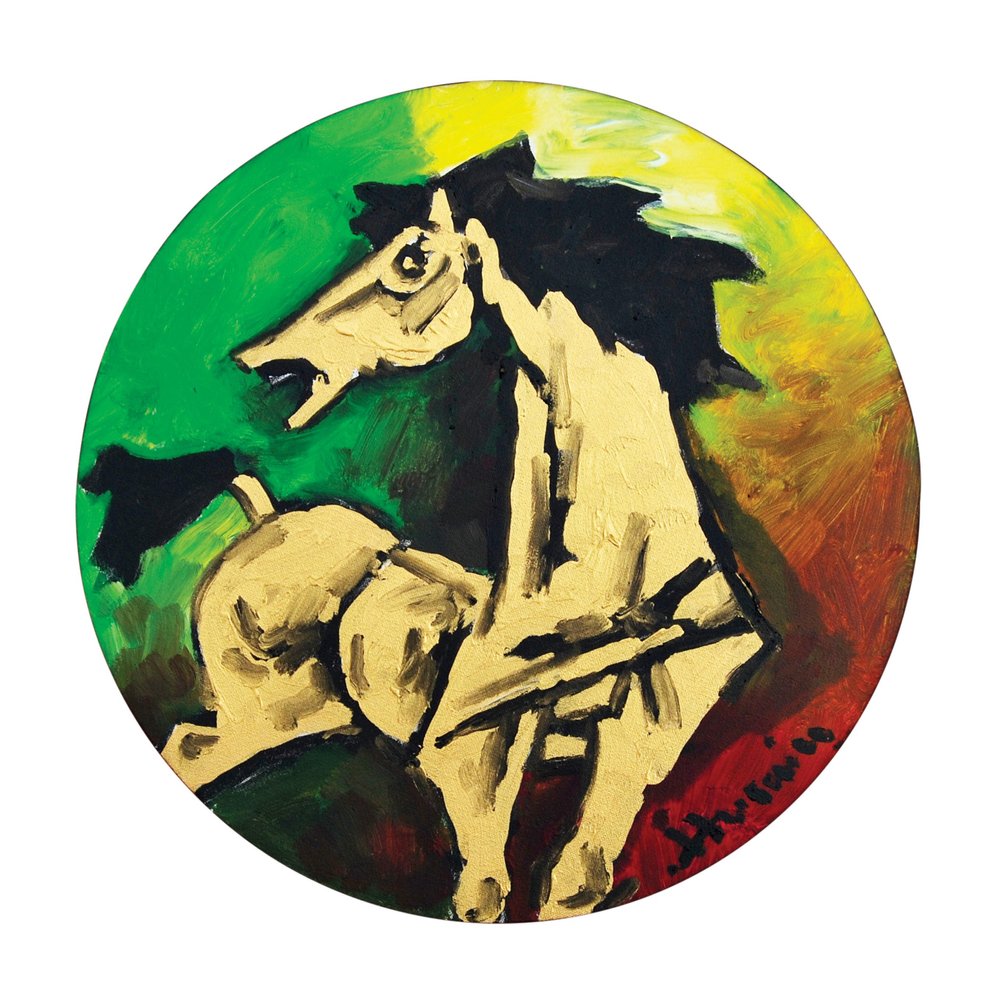
• Maqbool Fida Husain - M.F. Husain’s iconic horses gallop through Indian art history with unmatched dynamism. Symbolizing power, energy, and grace, Husain’s horses are influenced by his fascination with Chinese ink drawings and Islamic calligraphy. The flowing, almost kinetic quality of his lines transforms these animals into embodiments of vitality and transcendence.
• Jitish Kallat - Jitish Kallat’s works often explore the chaotic intersection of urban and natural life. Animals appear as metaphors for survival and adaptation in his paintings and installations, reflecting the tensions of contemporary existence. His art is a commentary on humanity’s impact on the animal world and vice versa.
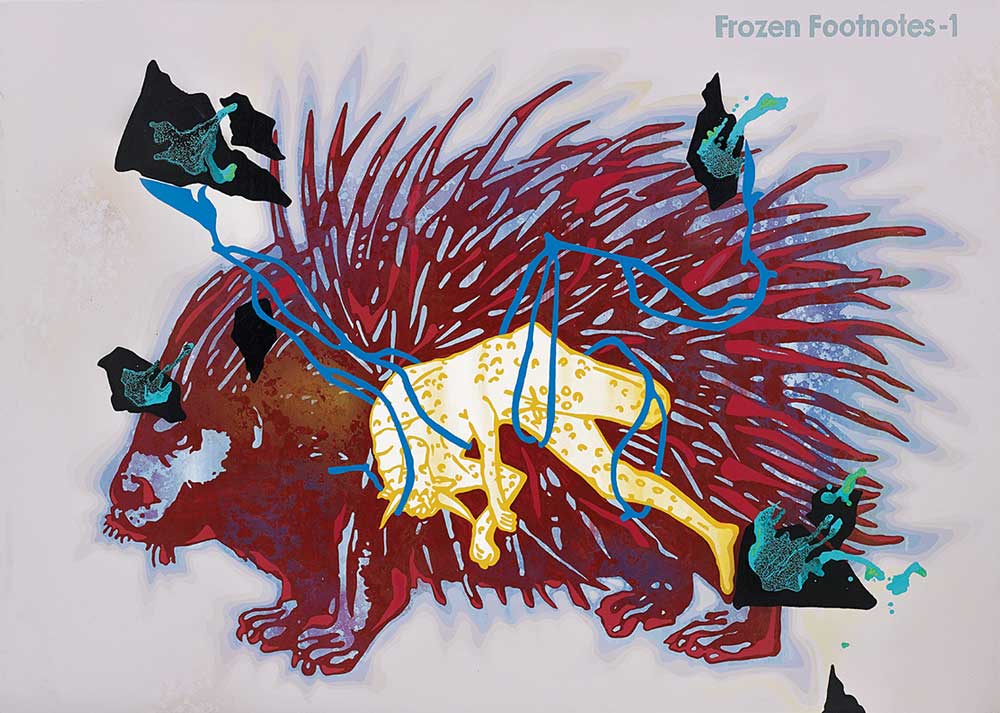
• Jagannath Panda - Jagannath Panda uses animals to explore themes of urbanization, identity, and change. His hybrid creatures—part animal, part human—reflect the dissonance between nature and development, creating a dialogue on coexistence in an ever-changing world.
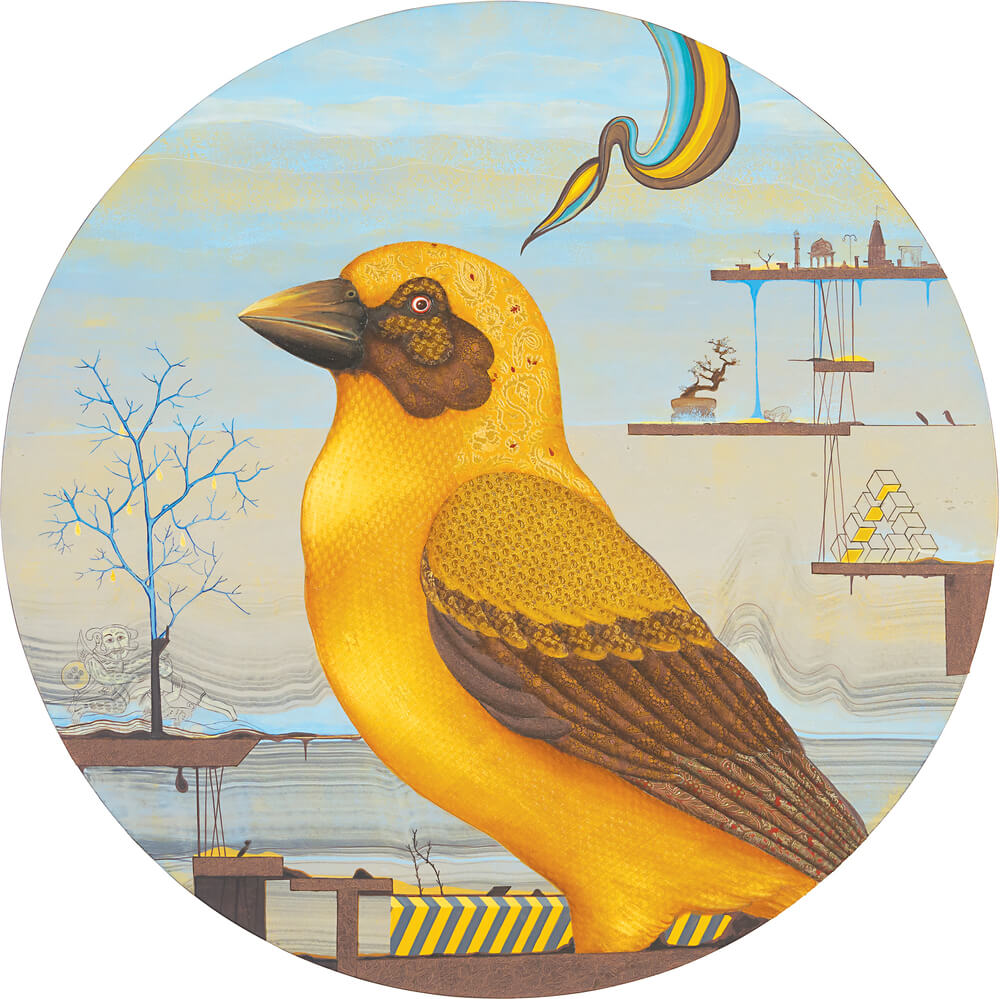
• K.K. Hebbar - K.K. Hebbar’s works are steeped in the rhythms of rural India, where animals like bulls and cows are depicted as integral to village life. His earthy tones and fluid lines celebrate the interconnectedness of humans, animals, and the land, emphasizing harmony and resilience.
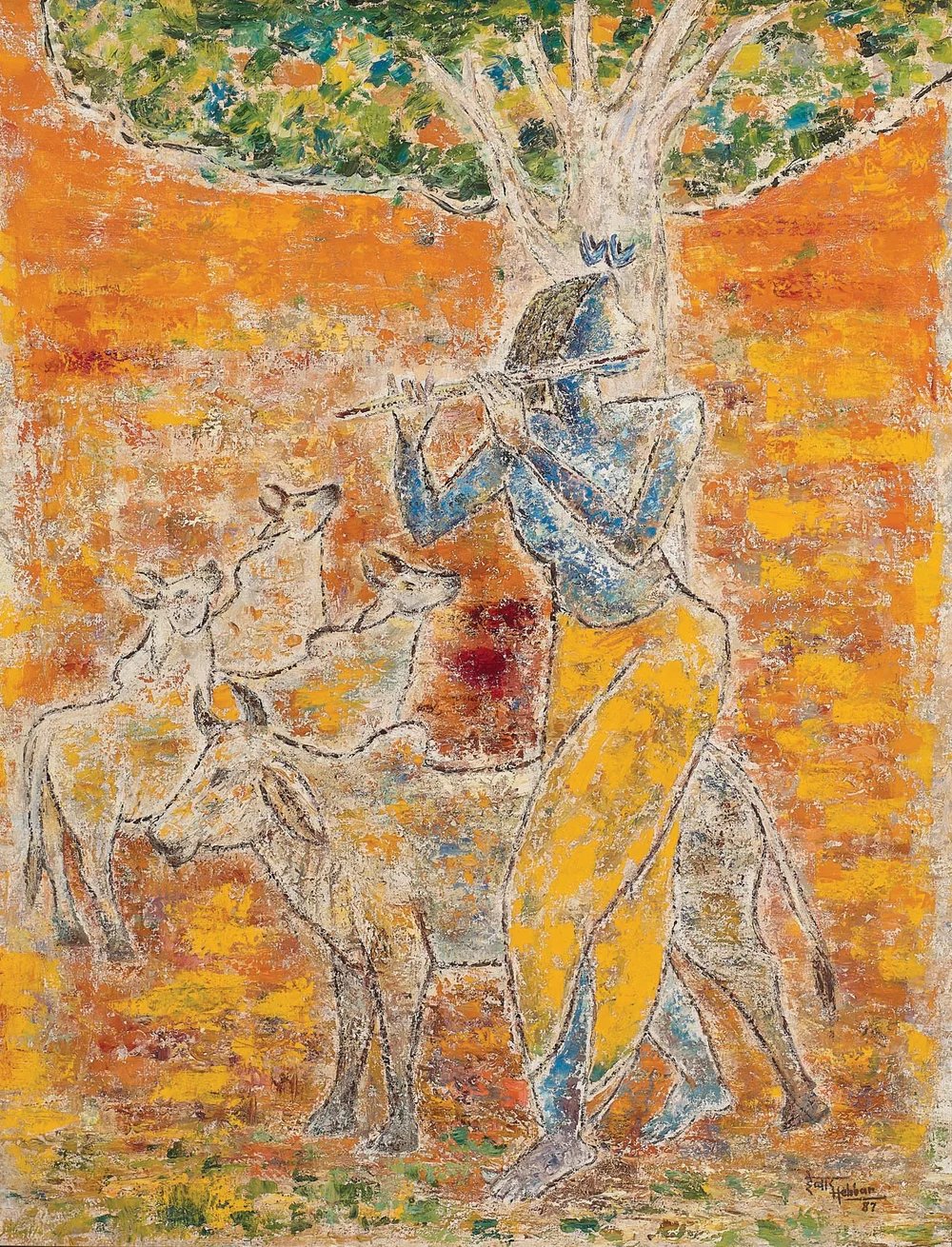
• Gieve Patel - Gieve Patel’s works often explore the fragility of life, with animals appearing as silent witnesses to human mortality. His paintings capture the poignancy of existence, where animals reflect the interconnectedness of all living beings in a shared narrative of life and death.
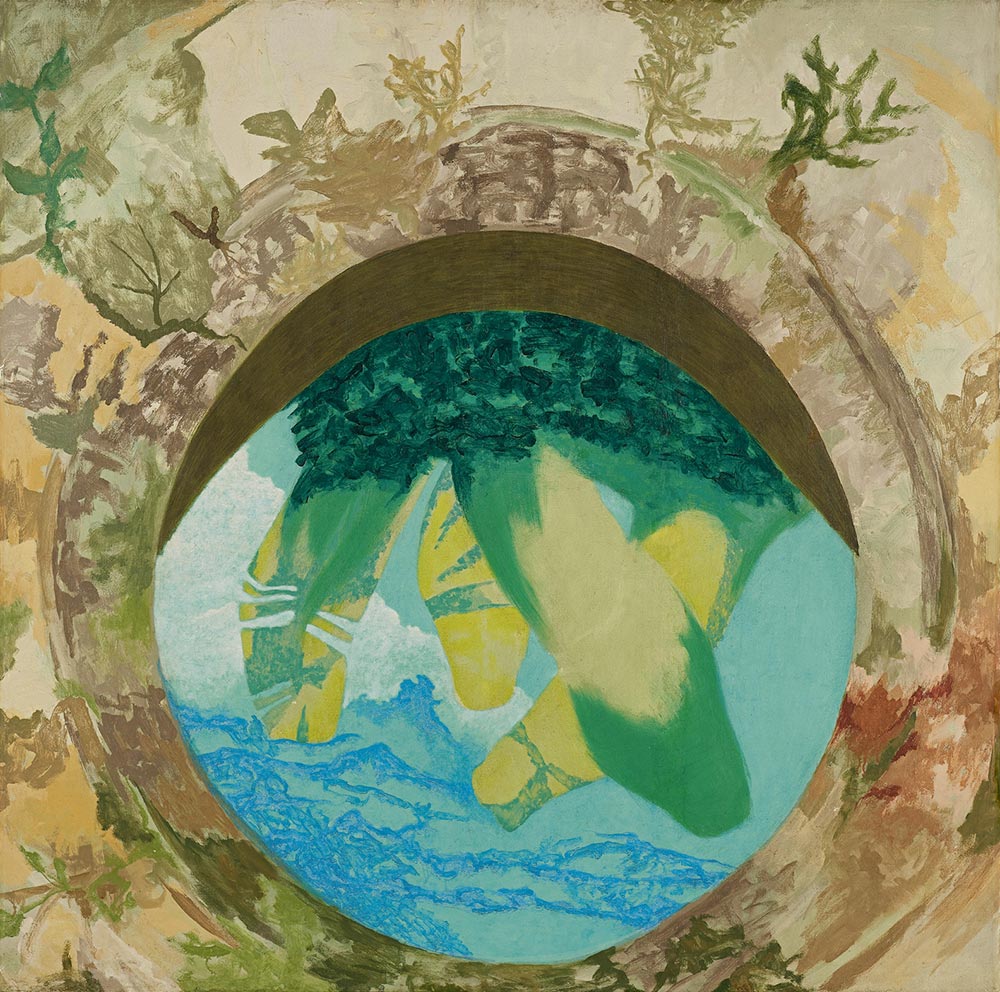
• Sobha Singh - Known for his depictions of Sikh gurus and religious themes, Sobha Singh occasionally incorporated animals to highlight spiritual teachings. His works exude a serene reverence, where animals symbolize virtues like patience, devotion, and service.
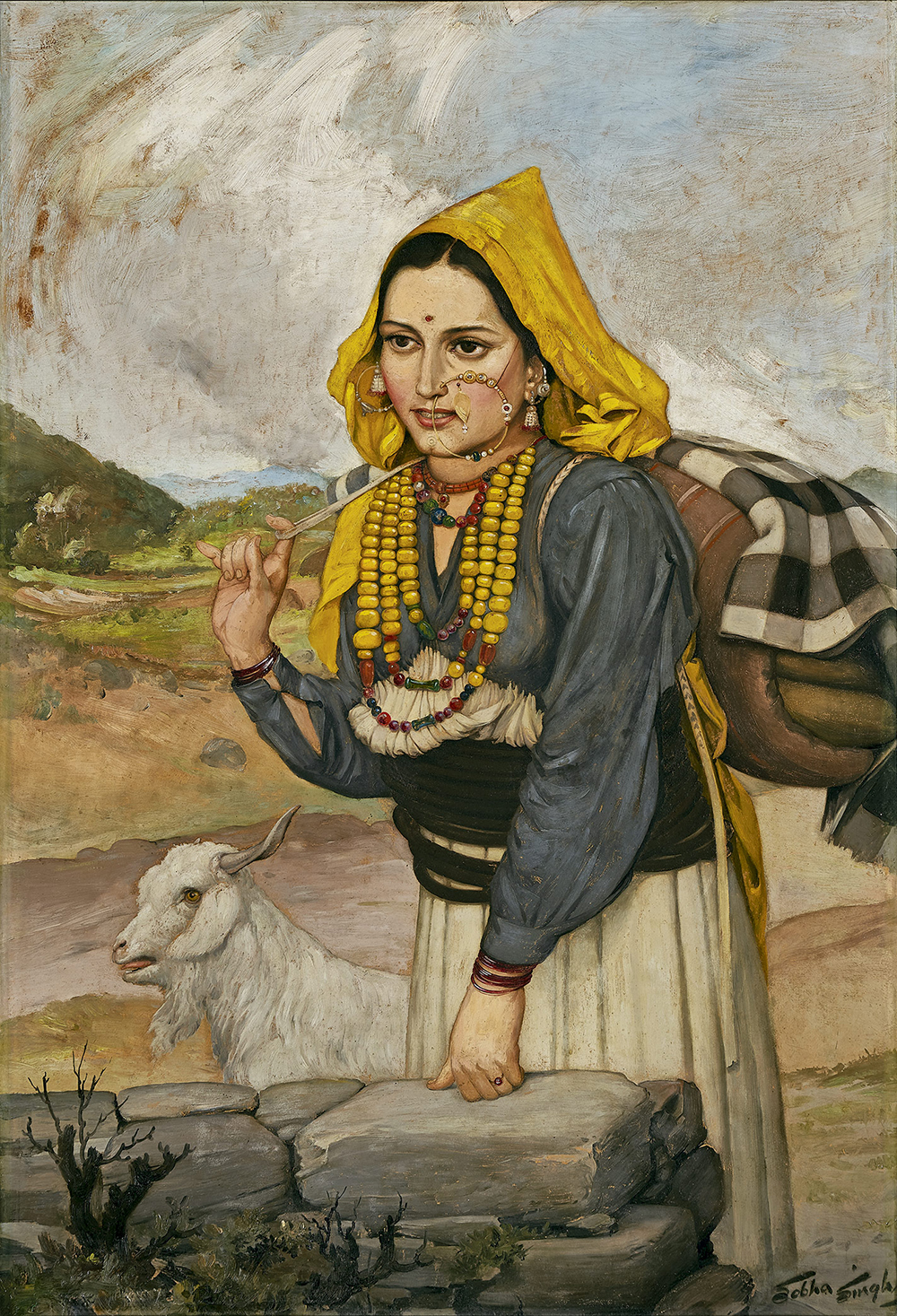
• Satish Gujral - Satish Gujral’s sculptures and murals frequently featured animals, emphasizing their dynamic forms and symbolic meanings. His creations often conveyed themes of strength, struggle, and the beauty of movement, reflecting his fascination with both natural and human-animal relationships.
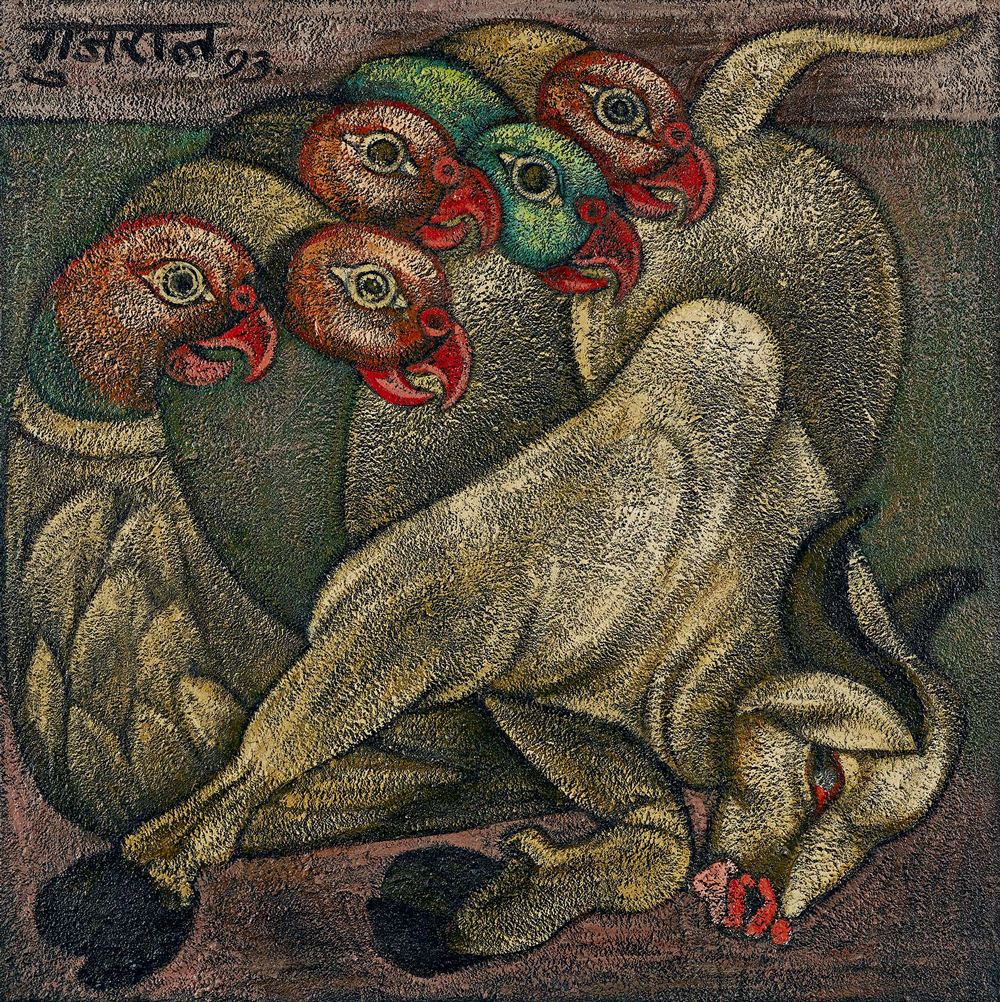
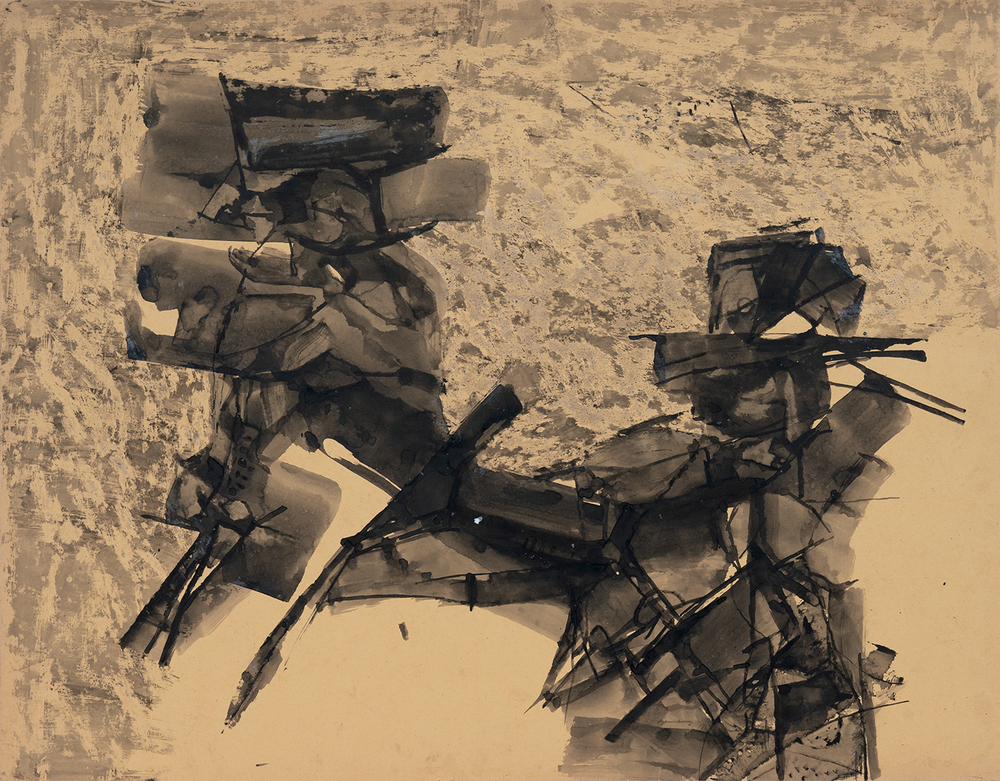
• Ram Kumar - Ram Kumar’s abstract landscapes sometimes include subtle references to animals, blending them into broader themes of solitude and introspection. His works invite viewers to reflect on the quiet presence of nature within human emotion.
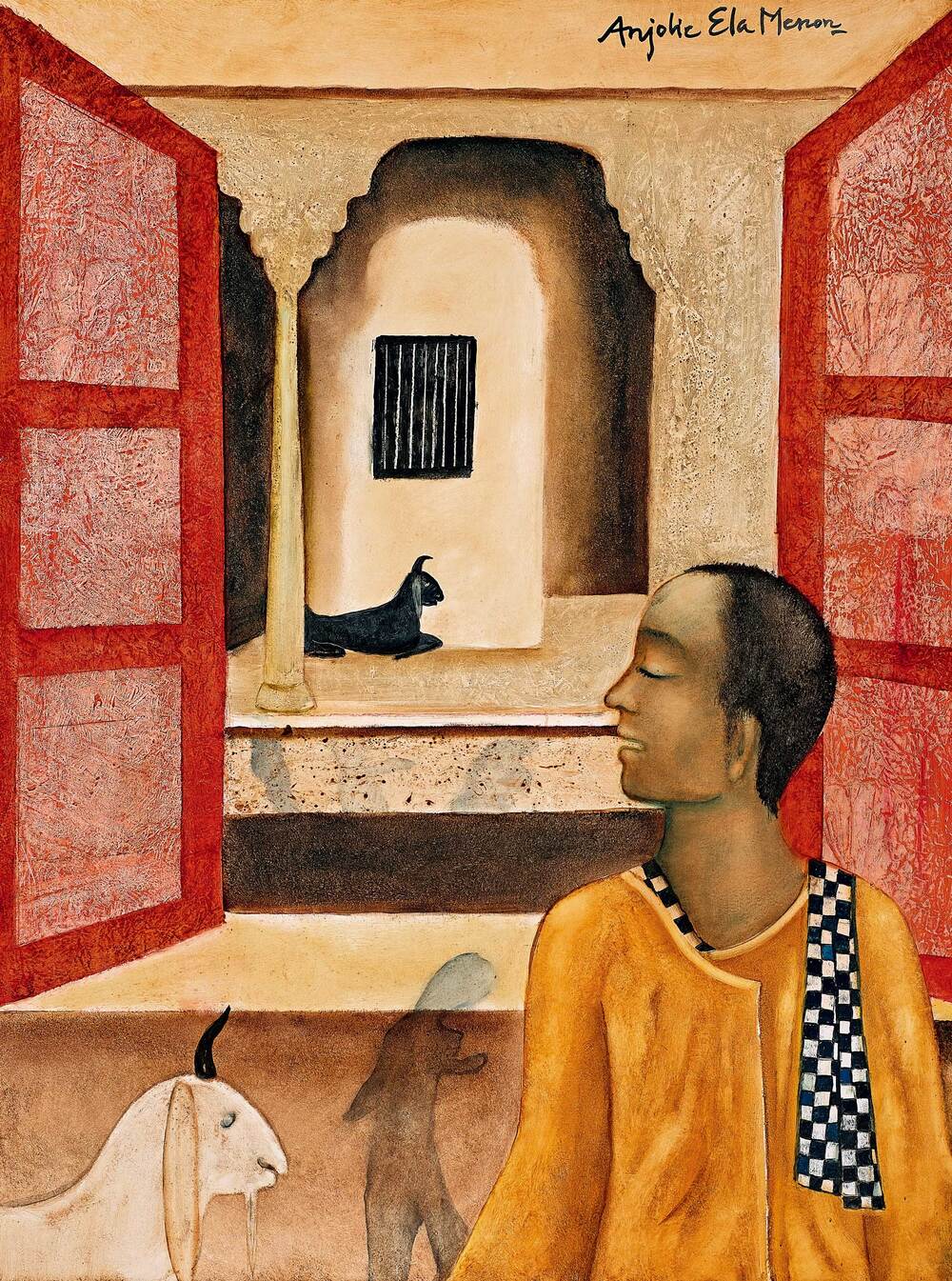
• Anjolie Ela Menon - Anjolie Ela Menon’s distinctive style, marked by muted palettes and textured surfaces, occasionally included animals in evocative, dreamlike settings. Her works often explore themes of memory, spirituality, and identity, where animals serve as silent, mysterious companions.
• Ganesh Haloi - Ganesh Haloi’s delicate, lyrical paintings often feature birds as recurring motifs, symbolizing freedom and fragility. His works capture the transient beauty of life, blending the natural world with human emotion in meditative compositions.
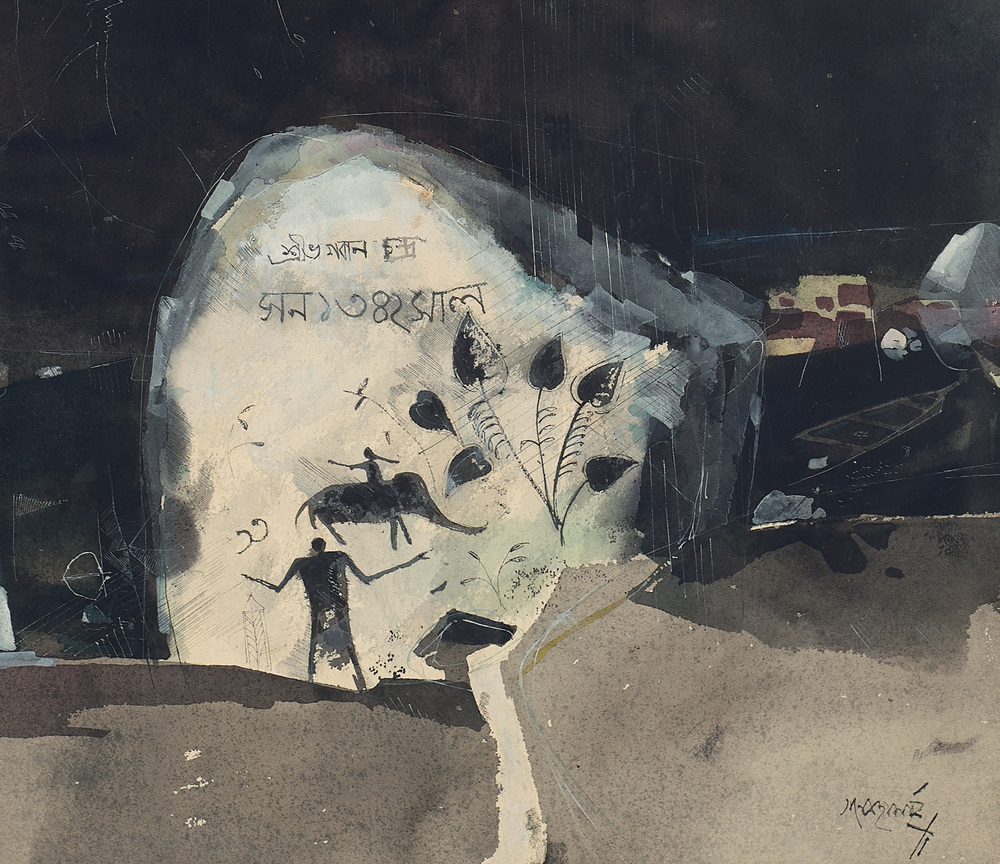
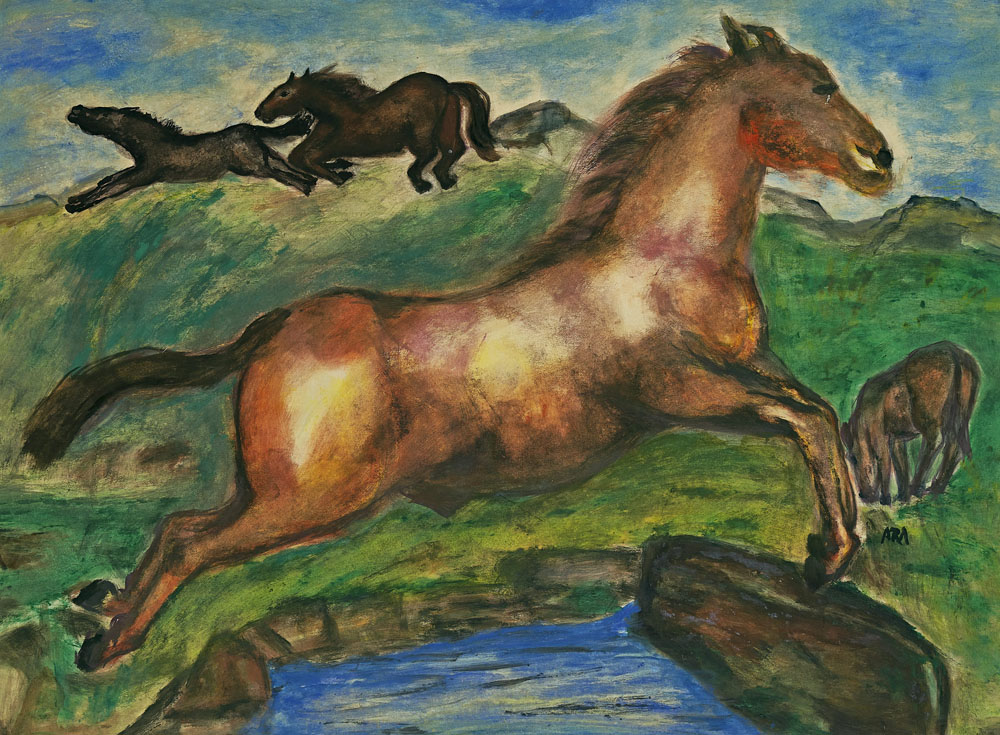
• K.H. Ara - Krishnaji Howlaji Ara, one of the founders of the Progressive Artists' Group, often depicted animals as part of his vibrant portrayals of everyday life. His works radiate warmth and vitality, capturing the joy and spontaneity of ordinary moments.
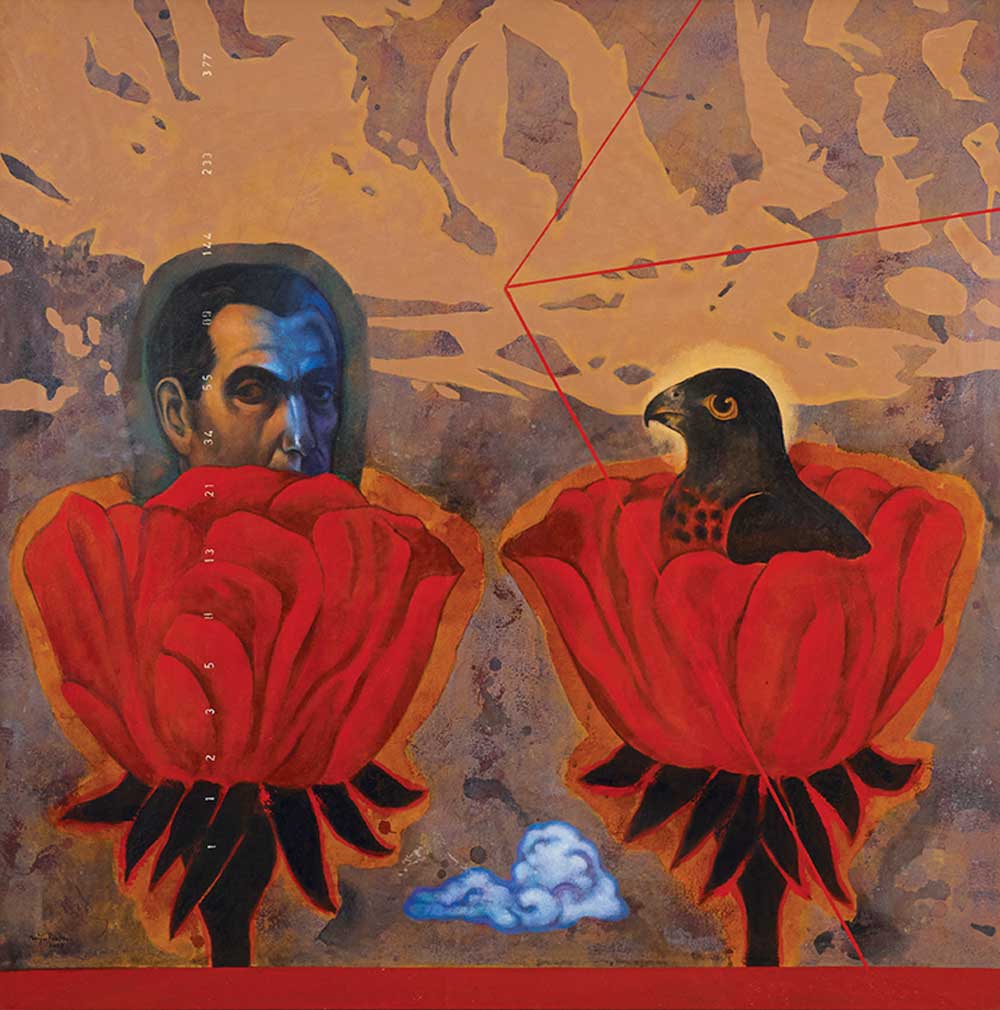
• Baiju Parthan - Baiju Parthan’s art bridges the mythological and the modern, often using animals as symbols of transformation. His works explore the intersections of technology, nature, and spirituality, creating a dialogue between the ancient and the futuristic.
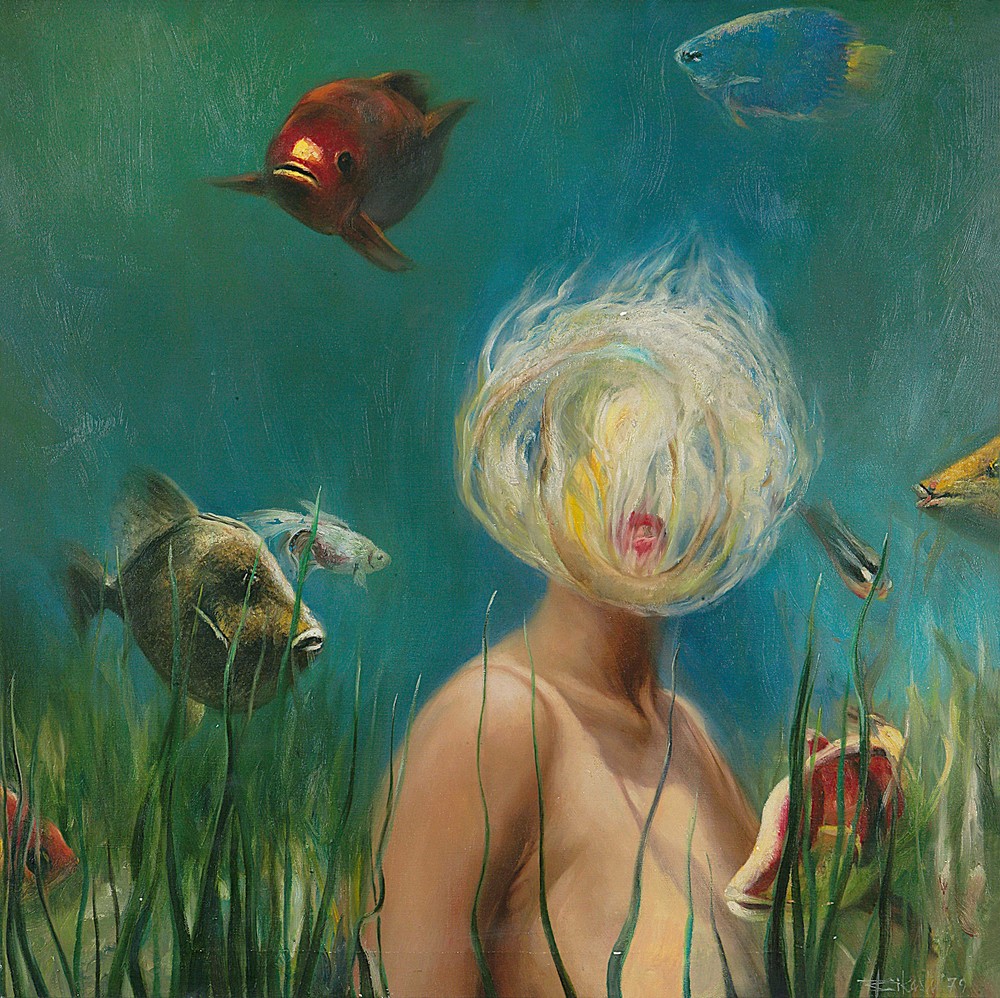
• Bikash Bhattacharjee - Bikash Bhattacharjee’s surreal and often haunting paintings occasionally feature animals as part of his narratives, adding depth to his explorations of societal and personal anxieties.
Indian art, rich in its diversity, continues to find inspiration in the animal kingdom. Across styles, generations, and philosophies, these artists have celebrated, questioned, and reimagined the relationship between humans and animals, creating works that resonate deeply with universal themes of life, coexistence, and transformation. Their faunal muses remind us of the enduring bond between art and nature, urging us to see the world through a lens of empathy and wonder.