12 famous abstract artists of all time who revolutionized art
.jpg&w=3840&q=75)
Abstract art emerged as one of the most revolutionary movements in art history, fundamentally transforming how we understand visual expression and artistic communication. The artists who pioneered and developed this movement created works that spoke directly to human emotion and consciousness through pure visual elements, abandoning the need for representational imagery. These visionary creators not only changed the course of art history but also influenced culture, design, and philosophy across the globe. In this article, we spotlight 12 of the most famous abstract artists of all time. Pioneers whose groundbreaking work not only revolutionized modern art but continues to inspire generations of artists and art lovers alike.
1) Wassily Kandinsky (1866-1944): The Father of Abstract Art
Wassily Kandinsky stands as the most pivotal figure in abstract art's development, widely credited with creating the first purely abstract painting around 1910. Born in Moscow and later working in Germany and France, Kandinsky's journey to abstraction was both intellectual and spiritual, driven by his belief that art could transcend material reality to express deeper truths.
Revolutionary Contributions: Kandinsky's theoretical writings, particularly "Concerning the Spiritual in Art" (1911), provided the intellectual foundation for abstract art as a legitimate artistic pursuit. He argued that colors and forms possessed inherent spiritual qualities that could communicate directly with the human soul without requiring representational content.
Artistic Evolution: His work evolved through distinct periods, from early semi-abstract landscapes to complex compositions exploring the relationship between color, form, and music. Kandinsky believed he experienced synesthesia, associating specific colors with sounds, which profoundly influenced his approach to abstract composition.
Famous Works: "Composition VII" (1913) represents the culmination of his pre-war period, featuring explosive colors and dynamic forms that suggest apocalyptic energy. "Yellow-Red-Blue" (1925) demonstrates his Bauhaus period's systematic approach to color theory and geometric organization.
Legacy: Kandinsky's influence extends beyond individual artworks to encompass the entire theoretical framework of abstract art. His ideas about art's spiritual purpose and the expressive power of pure visual elements continue influencing artists today.
2) Piet Mondrian (1872-1944): The Master of Geometric Abstraction
Piet Mondrian developed one of the most recognizable and influential styles in abstract art, evolving from naturalistic Dutch landscapes to geometric compositions that used only horizontal and vertical lines, primary colors, and black and white. His work represents the pursuit of universal harmony through mathematical precision and visual balance.
Artistic Philosophy: Mondrian believed that art should express universal truths through pure abstraction, eliminating all reference to the natural world. His Neoplasticism movement sought to create a universal visual language based on fundamental geometric relationships.
Technical Innovation: His grid-based compositions explored the dynamic tension between opposing forces horizontal and vertical, color and non-color, large and small. This systematic approach influenced not only painting but also architecture, design, and fashion.
Famous Works: "Composition with Red Blue and Yellow" (1930) exemplifies his mature style's perfect balance and harmony. "Broadway Boogie Woogie" (1942-43) represents his late period's response to New York's energy, incorporating small colored squares that suggest jazz rhythms and urban vitality.
Cultural Impact: Mondrian's influence extends far beyond fine art, inspiring everything from fashion design to architecture. His aesthetic principles continue informing contemporary design, from smartphone interfaces to corporate logos.
3) Jackson Pollock (1912-1956): The Action Painting Pioneer
Jackson Pollock revolutionized painting through his innovative drip technique, creating large-scale works that emphasized the physical act of creation over traditional composition methods. His approach made him the most famous Abstract Expressionist and helped establish New York as the international art world's center.
Revolutionary Technique: Pollock's drip paintings were created by laying canvas on the floor and dripping, pouring, and splattering paint from above. This technique allowed him to work from all sides of the canvas and incorporate his entire body in the creative process.
Philosophical Approach: He believed in unconscious creation, allowing the painting process to guide the final result rather than following predetermined plans. This approach aligned with contemporary interest in psychology and the unconscious mind.
Famous Works: "No. 1, 1950 (Lavender Mist)" demonstrates his mature drip technique's complexity and sophistication. "One: Number 31, 1950" showcases the monumental scale and energetic movement that characterized his most successful works.
Cultural Phenomenon: Pollock became the first American artist to achieve international celebrity status, featured on the cover of Life magazine in 1949. His dramatic painting method and tragic early death contributed to his legendary status in popular culture.
4) Mark Rothko (1903-1970): The Color Field Mystic
Mark Rothko created some of abstract art's most spiritually powerful works through his color field paintings, featuring large rectangles of luminous color that seem to breathe and glow with inner light. His work demonstrates abstract art's capacity for creating transcendent experiences through pure visual means.
Artistic Philosophy: Rothko viewed his paintings as spiritual experiences, intended to evoke profound emotions and contemplative states. He believed that large-scale color relationships could communicate universal human experiences more directly than representational imagery.
Technical Mastery: His paintings involved complex layering techniques using thin glazes of color that created depth and luminosity. He was extremely secretive about his methods, often working alone and destroying unsuccessful attempts.
Famous Works: The Seagram Murals (1958-59) represent his darkest and most introspective period, while "Orange, Red, Yellow" (1961) demonstrates his ability to create warm, enveloping color experiences.
Institutional Legacy: The Rothko Chapel in Houston, featuring fourteen of his paintings in an octagonal space designed for meditation, demonstrates abstract art's potential for creating sacred environments.
5) Willem de Kooning (1904-1997): The Master of Gestural Abstraction
Willem de Kooning bridged the gap between figuration and abstraction throughout his career, creating powerful gestural works that maintained references to the human form while embracing abstract freedom. His approach demonstrated that abstraction and representation could coexist within individual works.
Artistic Approach: De Kooning's paintings combined aggressive brushwork with subtle color relationships, creating works that were simultaneously violent and beautiful. He believed in maintaining tension between abstraction and figuration rather than choosing one approach exclusively.
Technical Innovation: His painting technique involved constant revision and reworking, sometimes spending years on individual canvases. He developed methods for keeping oil paint workable for extended periods, allowing for continuous modification.
Famous Works: The "Woman" series (1950-53) shocked the art world by reintroducing figurative elements into Abstract Expressionism. "Excavation" (1950) represents his purely abstract work's complexity and energy.
Influence on Later Artists: De Kooning's approach influenced generations of painters who sought to combine gestural freedom with sophisticated color relationships and compositional complexity.
6) Kazimir Malevich (1879-1935): The Suprematist Revolutionary
Kazimir Malevich founded Suprematism with his radical "Black Square" (1915), arguing that pure geometric forms could express fundamental artistic truths better than any representational imagery. His work represents one of abstract art's most extreme and influential developments.
Revolutionary Vision: Malevich believed that art should be liberated from all reference to the objective world, achieving "pure artistic feeling" through geometric forms and pure colors. His manifesto "The Non-Objective World" outlined Suprematism's theoretical foundations.
Geometric Innovations: His compositions explored the dynamic relationships between simple geometric forms; squares, circles, and rectangles in various combinations and orientations that suggested movement and cosmic forces.
Famous Works: "Black Square" remains one of art history's most radical statements, while "White on White" (1918) pushed abstraction to its absolute limit. "Suprematist Composition: Airplane Flying" (1915) demonstrates how geometric forms could suggest movement and technology.
Historical Impact: Despite Soviet suppression of his work, Malevich's ideas influenced abstract art development worldwide and continue inspiring contemporary artists exploring pure geometric abstraction.
7) Joan Mitchell (1925-1992): The Landscape Abstractionist
Joan Mitchell created large-scale abstract paintings inspired by landscape and memory, using gestural brushwork and vibrant colors to capture emotional responses to nature without literal representation. Her work demonstrates how abstraction can maintain connections to the natural world while remaining non-representational.
Artistic Approach: Mitchell painted from memory and emotion rather than direct observation, creating works that captured the feeling of landscapes, seasons, and times of day through abstract means. Her paintings often referenced specific places and experiences while remaining purely abstract.
Technical Mastery: Her brushwork combined spontaneity with sophisticated color relationships, creating paintings that were both emotionally direct and compositionally complex. She worked on multiple canvases simultaneously, allowing ideas to develop across related works.
Famous Works: "Ladybug" (1957) demonstrates her ability to create joyful, energetic compositions inspired by nature. The "Grande Vallée" series shows her mature style's combination of gestural freedom and landscape memory.
Recognition: Mitchell gained increasing recognition later in life and posthumously, with major museum exhibitions establishing her as one of Abstract Expressionism's most important artists.
8) Helen Frankenthaler (1928-2011): The Stain Painting Innovator
Helen Frankenthaler revolutionized abstract painting through her stain technique, pouring diluted paint directly onto unprimed canvas to create works where color and support merged organically. Her innovation influenced an entire generation of color field painters.
Technical Innovation: Frankenthaler's stain technique allowed colors to soak into canvas fibers, creating effects impossible with traditional painting methods. This approach eliminated the distinction between drawing and painting, creating unified color compositions.
Artistic Philosophy: She believed in maintaining spontaneity and freshness in painting, often working quickly and instinctively to capture initial creative impulses before self-consciousness could interfere.
Famous Works: "Mountains and Sea" (1952) launched the stain painting movement and influenced artists like Morris Louis and Kenneth Noland. "Blue Atmosphere" (1963) demonstrates her mature mastery of color relationships and composition.
Influence: Her technical innovations were adopted by numerous Color Field painters, making her one of the most influential artists in post-war American abstraction.
9) Donald Judd (1928-1994): The Minimalist Pioneer
Donald Judd created abstract three-dimensional works that challenged traditional boundaries between painting and sculpture. His "specific objects" used industrial materials and mathematical progressions to create works of pure visual and spatial experience.
Conceptual Approach: Judd rejected traditional artistic categories, creating works that were neither painting nor sculpture but something entirely new. His objects existed as pure visual experiences without metaphorical or symbolic content.
Material Innovation: He used industrial materials like aluminum, steel, and plexiglas, often having works fabricated by specialists rather than making them himself. This approach challenged traditional notions of artistic craftsmanship.
Famous Works: His wall-mounted boxes and floor pieces at the Chinati Foundation in Marfa, Texas, demonstrate how abstract art can transform architectural spaces and create contemplative environments.
Theoretical Contributions: His writings, particularly "Specific Objects" (1965), provided crucial theoretical foundation for Minimalism and influenced contemporary art's development.
10) Agnes Martin (1912-2004): The Contemplative Minimalist
Agnes Martin created subtle grid paintings and drawings that explored themes of perfection, nature, and spirituality through minimal means. Her work demonstrates how the simplest visual elements can create profound emotional and spiritual experiences.
Artistic Philosophy: Martin believed in art's capacity to express joy, innocence, and spiritual truth through pure visual harmony. Her grids and lines were inspired by nature's patterns and rhythms rather than geometric theory.
Technical Precision: Despite their apparent simplicity, her works required extraordinary precision and patience. She drew thousands of lines by hand, creating surfaces of remarkable subtlety and sensitivity.
Famous Works: "The Tree" (1964) and her later grid paintings demonstrate her ability to create transcendent experiences through minimal means. Her late works on paper show continued exploration of line, color, and spiritual content.
Spiritual Dimension: Martin's work is often interpreted in spiritual terms, with her grids suggesting meditation, contemplation, and the search for perfection in imperfect materials.
11) Frank Stella (1936-present): The Shaped Canvas Pioneer
Frank Stella challenged traditional painting formats through his shaped canvases and systematic compositions, exploring the relationship between painting and sculpture while maintaining commitment to abstract principles.
Innovation in Format: His shaped canvases eliminated traditional rectangular formats, creating works whose physical form related directly to their visual content. This innovation influenced countless contemporary artists.
Systematic Approach: Early works like the "Black Paintings" followed systematic rules for composition, while later works became increasingly complex and three-dimensional.
Famous Works: "Die Fahne Hoch!" (1959) exemplifies his early systematic approach, while his later "Moby-Dick" series demonstrates his evolution toward sculptural complexity.
Ongoing Influence: As one of the few major abstract artists still active, Stella continues exploring new possibilities for abstract art in the 21st century.
12) Cy Twombly (1928-2011): The Gestural Poet
Cy Twombly created abstract works that combined gestural mark-making with cultural references, developing a unique visual language that suggested writing, drawing, and painting simultaneously.
Unique Approach: Twombly's work incorporated elements of graffiti, automatic drawing, and classical references, creating abstract paintings that maintained literary and historical associations.
Technical Methods: He used unconventional materials and methods, including crayons, pencils, and house paint, often working on floors and incorporating accidental marks and stains.
Famous Works: "Lemon Yellows" (2007) and the "Bacchus" series demonstrate his late style's explosive color and gestural freedom.
Cultural Impact: His work bridged American Abstract Expressionism and European cultural traditions, influencing contemporary artists who seek to combine abstraction with cultural content.
Contemporary Voices: Living Masters
• Gerhard Richter (1932-present)
Richter's abstract works, particularly his "squeegee paintings," demonstrate continued innovation in abstract painting. His systematic approach to chance and his exploration of painting's fundamental properties have made him one of contemporary art's most influential figures.
• Julie Mehretu (1970-present)
Mehretu creates large-scale abstract paintings that incorporate architectural and cartographic elements, demonstrating how abstract art can address contemporary global concerns while maintaining non-representational approaches.
• Kara Walker (1969-present)
While known primarily for her silhouette works, Walker's abstract paintings explore color, gesture, and historical content through pure abstract means, showing how contemporary artists continue developing abstract art's possibilities.
The Enduring Legacy
These famous abstract artists collectively transformed not only art but also our understanding of visual communication, spiritual expression, and creative possibility. Their innovations continue influencing contemporary artists, designers, and thinkers who seek to express complex ideas through pure visual means.
From Kandinsky's spiri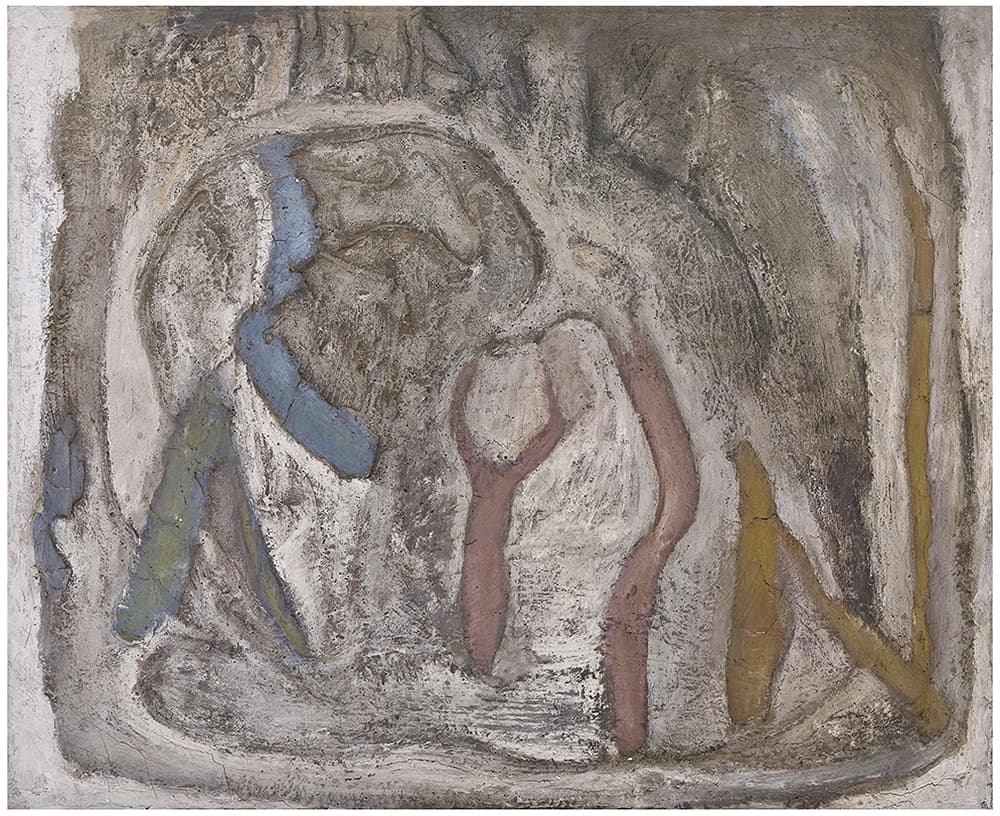 tual abstractions to contemporary digital works, these masters demonstrated that abstract art's power lies not in representing external reality but in creating new realities through the infinite possibilities of color, form, line, and composition. Their legacy ensures abstract art's continued relevance as one of humanity's most vital forms of creative expression. The fame of these artists extends beyond art history to encompass their influence on popular culture, design, architecture, and contemporary visual communication. Their works continue commanding record prices at auction while inspiring new generations of artists who seek to push abstract art's boundaries even further.
Understanding these famous abstract artists provides insight not only into art history but also into the human capacity for innovation, spiritual expression, and the continuous search for new forms of visual communication that speak directly to consciousness and emotion.