mukul chandra dey - visionary artist behind iconic mythological paintings

Mukul Chandra Dey (23 July 1895 – 1 March 1989) is not a name that many people would immediately mention, but to those familiar with the world of Indian art, he is responsible for very important and enduring work. Most of Dey's contributions stand out, for it is indeed with visionary techniques related to mythological painting that this great master brought to life some of the most iconic figures and stories of Indian mythology. His work blended both realism and the ethereal, investing figures like gods, goddesses, and legendary characters with a soul that could be best construed as both traditional and modern. Mukul Chandra Dey's paintings were not only a commentary on religious or mythological themes but also a cultural journey into the very heart of India's ancient stories. Watercolours and oils were arguably mastered by him, so to break free from conventions would, for Dey, almost be a small accomplishment in becoming one of the top artists in the genre.
Early Life & Artistic Journey
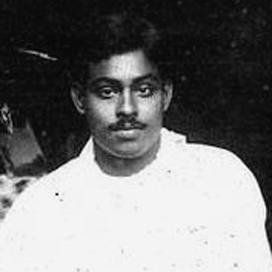 Mukul Chandra Dey was born in 1895 in Murarai, which is located in the 24 Parganas district of Bengal (now part of West Bengal, India). The 24 Parganas district is situated on the eastern side of the Hooghly River, near Kolkata, and is historically significant for its cultural contributions. Though Murarai is more specifically associated with the Birbhum district today, it was once part of the larger 24 Parganas region. Mukul Chandra Dey’s early life in this area likely influenced his artistic development, though he would go on to gain much of his training and recognition in Kolkata and abroad.
His family believed that the arts were sacred; Mukul Chandra Dey was encouraged to paint as soon as he could remember. He joined the Government College of Art and Craft in Kolkata (then known as Calcutta), one of the premier art institutions in the country, to refine his skills and understand the traditional techniques under which the full benefit of modern style could be enjoyed. It is easy to see Dey as one who managed to successfully merge classical Indian art with influences that began arriving from the West. This fusion turned out to be the hallmark of his style, especially in his treatment of light, composition, and form. Influenced immensely by the works of European artists, he never abandoned his Indian roots, particularly the rich tapestry of mythology and religious symbolism that characterised much of Indian visual culture.
In the period when Dey was still a student and a young artist, Indian myths and legends had an odd fascination for him. These were tales passed down from generation to generation, and he found himself deeply intertwined within them. His art often revolved around characters and tales taken from epic texts such as the Mahabharata, the Ramayana, and the Puranas. He gradually developed a style of painting that was strongly rooted in the cultural and spiritual traditions of India.
A Visionary Approach To Mythological Art
The mythological paintings by Mukul Chandra Dey are remarkable for their great presentations of divine figures and mythical beings. Instead of merely symbolising the iconography that had been established over centuries, Dey sought to reinterpret these characters and breathe new life into them with a fresh perspective. He was interested not in idealised, static gods and goddesses but in their emotional depth and what lay behind their actions.
Dey depicted his mythological subjects in an intimate, expressive way. He excelled at portraying the characters and emotions of the gods, transcending their conventional roles as emblems of authority or divinity. His vision of the divine was distinctly human, making these figures more immediate to viewers, while still inspiring a sense of the sacred.
For instance, the god Vishnu is not only a being of great power but also a being in a more vulnerable and contemplative state. A fluid, moving line and vivid colours capture a moment of cosmic stasis, when the divine and the human are united briefly. Dey was also a modernist in his treatment of goddesses. His depiction of Durga shows the goddess as an active, dynamic woman rather than a remote figure. She is portrayed in the midst of battle, confronting the demon Mahishasura. What stands out in Dey’s representation is not just the dramatic action, but the expression on Durga’s face—serene, confident, and determined. This portrayal made the goddess more accessible, humanising her while still preserving her divine power.
The Use Of Light, Colour & Symbolism
Mukul Chandra Dey made excellent use of light and colour in his mythological canvases. His palette was restrained yet vibrant, creating both the material and spiritual worlds through colour. His brilliant reds and golds were rich in meaning and not simply used for ornamentation. These colours conveyed concepts such as power, purity, or the divine sphere itself.
The use of lighting was another hallmark of his art. The contrasts between light and shadow created dramatic shifts in his paintings, giving static scenes a sense of depth and movement. Light appears to emanate from the figures in most of his mythological works, implying the divine. This effect was achieved through Dey's understanding of colour theory and his skillful use of contrast and shading.
Symbols also played a prominent role in Dey's paintings. Most of his work contained animal and landscape symbolism. For instance, the serpent represented the eternity and cyclical nature of time. In Durga's battle, the lion represents strength and power and ultimately good over evil. With Dey, every element in his paintings carried its own message. With every viewing, one could find deeper meanings in the works, which remained undiminished over time.
Bridging Tradition & Innovation
In the case of Mukul Chandra Dey's artwork, there is a delicate balance between the established and the innovative. His paintings were deeply rooted in Indian mythology and religious themes, yet they were also contemporaneous in their handling of form, composition, and emotional expression. Dey was one of the key participants in the Bengal Renaissance, a movement that made a concerted effort to restore Indian art in modernised forms without offending its classical roots.
Philosophy also found its expression in his art. Many of his contemporaries believed that art was not just about painting the world around us, but the world within. Through Mukul Chandra Dey's brush, mythical paintings became a canvas for meditation on the divine, the eternal, and the cyclical nature of life itself.
'River Life' Etching
Mukul Chandra Dey’s "River Life" etching stands as a testament to his versatile artistic vision, extending beyond the mythological themes for which he is widely known. This work captures the vibrancy of life along the riverbanks of Bengal, an essential element in the region’s culture. Through the medium of etching, Dey beautifully illustrates the bustling activities of fishermen, boatmen, and women carrying water, all of which evoke the rhythm of daily life. The Hooghly River, central to Bengal’s identity, serves as a backdrop for these dynamic scenes, showcasing Dey's deep connection to nature and its influence on the people living along its banks. His use of the mezzotint technique adds remarkable texture and depth, bringing movement and atmosphere to the scene, much like the flowing water itself.
While his mythological paintings are iconic, works like River Life etching demonstrate his broader artistic range. In this etching, Dey moves away from traditional narrative depictions of mythological stories and instead highlights the simplicity and beauty of everyday activities. His focus on the intimate relationship between people and their natural environment reflects his broader artistic philosophy of celebrating the essence of Bengal in all its forms. The “River Life” etching is a remarkable example of Dey’s technical skill and his ability to translate the spirit of the people and landscape into art.
Legacy
Mukul Chandra Dey's mythological paintings have left a lasting legacy in the Indian art world—a world where the ancient coexists with the modern, and the divine seems sublime alongside humanity. His paintings are now part of many private collections and museums, where they continue to serve as sources of inspiration for those seeking emotional depth and spiritual insight.
Along with being works of art in their own right, Dey's legacy has also been in inspiring the generations that followed him. Thousands of young artists have learned to look at traditional subjects with fresh eyes, finding new ways to depict the divine. In terms of colour, light, and symbolism, he was a model for many contemporary artists. The emotional depth conveyed by his figures continues to resonate in the works of artists who were inspired by him.
Mukul Chandra Dey was not just an artist and chronicler of Indian mythology, but also a visionary, breathing life into these ancient stories. He invited us to look deeper into the figures and myths that have shaped Indian culture for centuries, to see them not as distant deities but as mighty symbols of life, love, and the human spirit.
Conclusion
In conclusion, Mukul Chandra Dey’s legacy as a master of original paintings continues to resonate through his stunning body of work, which includes beautiful paintings that have captivated art enthusiasts for generations. His canvas paintings, particularly his oil paintings, reflect an intricate blend of technique and emotion that has earned him recognition in both local and international art circles. Today, his prints are highly sought after, with many finding their way into prestigious auctions, where his paintings fetch impressive prices. The enduring appeal of Dey’s art ensures that his works remain invaluable treasures in the world of fine art, and his contribution to Indian art continues to inspire collectors and artists alike.
As you’ve explored the layers of Mukul Chandra Dey's creative expression, we invite you to step even closer and experience the vivid emotions captured in each stroke. Visit the collection here and let each piece tell its own unique story—one that continues to unfold with every viewing.