n. s. bendre: master craftsman of landscape painting
N. S. Bendre: Landscape Artist Par Excellence
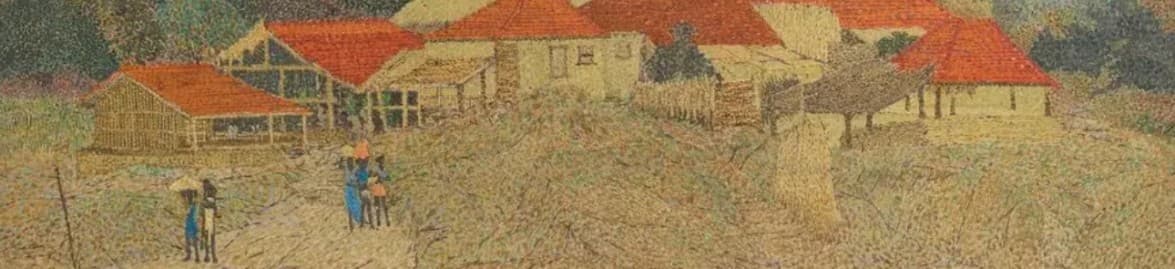
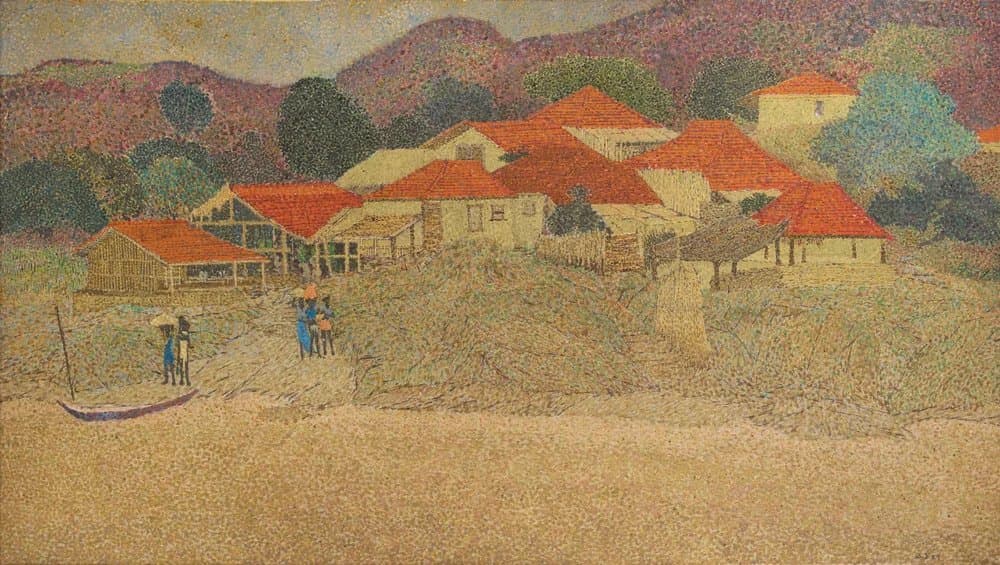
N. S. Bendre (1910–1992) carved a distinct niche in Indian modern art as a master landscape painter whose work animated the natural world with vibrant color and inventive form. Early in his career, Bendre drew inspiration from the Indore School’s academic and impressionist traditions, traveling across India to capture vast rural vistas and intimate village scenes. His landscapes are celebrated for their lyrical quality, where everyday moments such as fisherfolk at work or dappled sunlight on trees are rendered with expressive brushwork and a keen eye for light and color. Instead of simply replicating reality, N S Bendre infused his landscapes with a poetic sensibility that celebrates the Indian environment’s richness.
Early Life
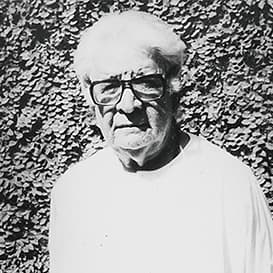 Narayan Shridhar Bendre was born on 21 August 1910 in Indore, Madhya Pradesh, India. From an early age, he showed an affinity for art, drawing inspiration from the rural life and landscapes of his surroundings. His early exposure to Indian culture and nature provided a rich wellspring of inspiration that would remain a central theme in his later work. Motivated by his passion, Bendre pursued formal education in art, determined to make his mark in the evolving Indian art world.
Later Life
In 1950, Bendre moved to Baroda (now Vadodara) to become the first Reader and Head of the Department of Painting at the Faculty of Fine Arts. He remained there until 1966, during which he became Dean of the Faculty in 1959. Bendre's tenure at Baroda was marked by his efforts to modernize art education and encourage experimentation among students. He continued to paint prolifically, gaining both national and international acclaim.
In his later years, he became a mentor to younger generations of artists, fostering a spirit of experimentation and modernism while retaining a deep respect for Indian traditions. He passed away in 1992, leaving behind a vast and inspiring body of work.
Family
Narayan Shridhar Bendre was born into a Deshastha Rigvedi Brahmin family in Indore, Madhya Pradesh. His family, originally from Pune, had settled in Indore in the late 19th century. While working as an art director in Chennai, N S Bendre met his future wife, Mona. The couple married in 1942, forging a partnership that provided both personal support and encouragement throughout his distinguished artistic career.
Education
N S Bendre began his educational journey at Holkar College in Indore, where he completed his early studies in 1929. He went on to earn a Bachelor of Arts degree from Agra University in 1933, reflecting his broad academic interests. Passionate about the arts, Bendre pursued a diploma in painting from Indore’s State School of Art, graduating in 1934.
N S Bendre’s formal art education began at the Sir J. J. School of Art in Mumbai, one of India’s most prestigious art institutions. Here, he was exposed to both traditional Indian techniques and European modernist approaches, allowing him to develop a unique style that merged the two worlds. His education at J. J. School of Art became a pivotal foundation for his later experimentation in form, color and abstraction.
Santiniketan Connection
In 1945, Bendre spent time as an artist-in-residence at Santiniketan, where he engaged directly with some of the finest Indian artists of the era, including Nandalal Bose, Ramkinkar Baij, and Binode Behari Mukherjee. This period deeply influenced his artistic outlook as he was exposed to diverse Indian artistic philosophies and approaches rooted in tradition yet embracing modernism.
At Santiniketan, Bendre debated and observed contrasting artistic practices, such as Nandalal Bose’s emphasis on “painting from memory” versus his own preference for direct, realistic depictions of lived experiences. The cultural and intellectual environment of Santiniketan encouraged him to deepen his exploration of Indian themes while integrating elements of Western modernist movements like post-impressionism and cubism. The creative exchanges and field excursions around Santiniketan and nearby rural areas inspired Bendre’s later focus on the Indian landscape and human form, infusing his work with a renewed sense of naturalism and stylized expression. Through Santiniketan’s influence, Bendre moved beyond strictly academic style to contribute to the evolving language of Indian modernism in art.
Artistic Influences
Narayan Shridhar Bendre was notably affected by the impressionistic works of Amrita Sher-Gil, which he saw for the first time in Mumbai. This exposure to Amrita Sher Gil’s bold and expressive style likely influenced Bendre’s own predilection towards impressionism and modernist experimentation. Their artistic paths often intersected in the vibrant Bombay art scene of the 1930s and 1940s, where both artists were competing for recognition, including the prestigious Bombay Art Society Gold Medal which Sher-Gil won in 1937, while Bendre received it the following year.
Bendre’s visit to Santiniketan and his interaction with the modernist art world were further encouraged by the impact of Sher-Gil’s pioneering fusion of Wes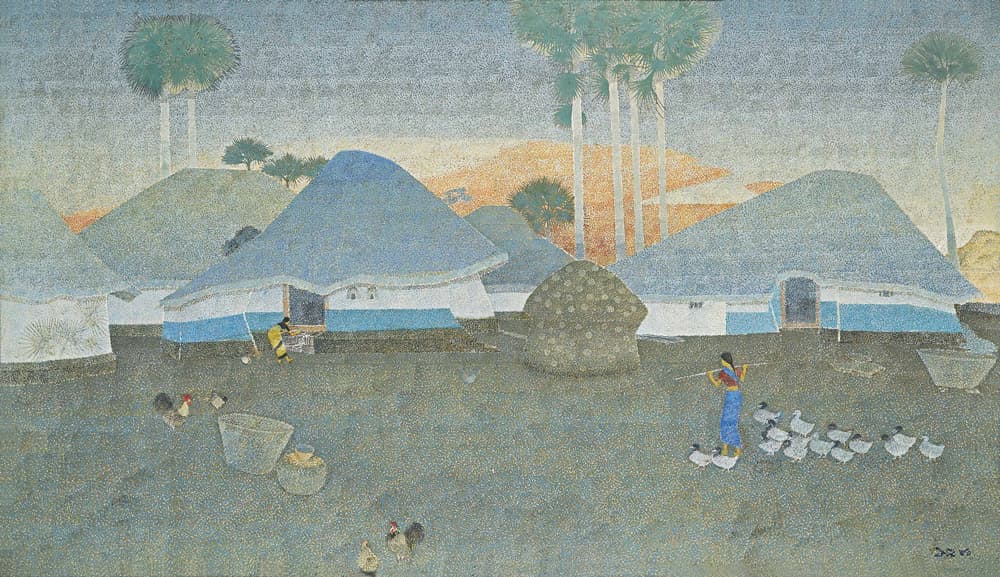 tern and Indian styles. Inspired by her example, he embraced new artistic languages, gradually moving away from strict academic realism to develop a unique synthesis of traditional Indian and Western modernist techniques. This fusion became a hallmark of his mature style and positioned him as a key innovator in Indian modern art.
Painting Style
N S Bendre's painting style evolved over the years, characterized by a dynamic interplay of color, form, and texture. His early works were influenced by Impressionism and academic realism, focusing on landscapes and portraits. In the 1950s, he experimented with Cubist and Expressionist tendencies, producing works that integrated geometric shapes and vibrant colors. Bendre's later works reflected a synthesis of traditional Indian aesthetics with modernist techniques, showcasing his versatility and innovation as an artist.
Famous Paintings
Some of N S Bendre's most celebrated paintings include:
• Thorn (1955): An oil on canvas painting depicting a rural woman removing a thorn from her foot, rendered in geometric planes and sepia tones.
• The Sunflower (1955): A vibrant depiction of a sunflower, showcasing Bendre's mastery in capturing the essence of nature.
• The Parrot and the Chameleon: A work that reflects his exploration of color and form, integrating elements of Indian symbolism.
• Gossip (1988): An oil on canvas painting portraying three women engaged in conversation, highlighting Bendre's focus on human interactions and expressions.
 Characteristic Features of His Paintings
• Bold use of Color: His works feature rich, vibrant color palettes that evoke emotion and atmosphere.
• Expressive Forms: Figures are often depicted in a stylized, abstract manner but retain strong emotional impact.
• Indian Subject Matter: Rural landscapes, tribal figures, and village life dominate his themes.
• Fusion of Styles: His work represents a fine balance between realism and modern abstraction, making his style unique and timeless.
Contribution in Indian Art
N S Bendre was a key figure in the Indian modern art movement. As one of the founding members of the Bombay Progressive Artists’ Group, he contributed to shifting Indian art away from colonial academic styles toward a more contemporary, independent voice. He championed artistic freedom, encouraged experimentation, and introduced a distinctly Indian perspective to modernist trends. His role as Vice-President of the Lalit Kala Akademi helped institutionalize support for modern Indian artists, fostering their growth and recognition.
Enduring Legacy & Impact
Bendre’s legacy continues to influence Indian artists and the art world at large. His integration of Indian themes into modernist techniques paved the way for future generations of artists to explore their cultural identity while engaging in global artistic dialogues. His ability to capture the essence of Indian life with bold colors and innovative forms remains inspiring to contemporary artists and art historians alike.
Exhibitions
Throughout his career, N S Bendre participated in numerous national and international exhibitions. His works were exhibited in major art shows in India, Europe, and the United States, helping to bring Indian modern art to a global audience. Retrospectives of his work have been held posthumously in prestigious galleries, cementing his status as a major figure in Indian art history.
Awards
N S Bendre's contributions to Indian art were recognized with several prestigious awards:
• Padma Bhushan (1992): One of India's highest civilian honors, awarded posthumously for his exceptional contributions to the arts.
• Padma Shri (1969): Awarded for his significant contributions to the arts.
• National Award (1955): For his painting "Thorn".
• Kalidas Samman (1986–87): Conferred by the Madhya Pradesh state government.
• Aban-Gagan Award (1984): Conferred by Visva Bharati University.
Conclusion
N S Bendre remains an iconic figure in Indian art, celebrated for his visionary approach that bridged tradition and modernity. His works whether evocative landscapes, expressive portraits, or abstract compositions continue to speak across generations, reflecting a profound empathy for Indian life and a mastery of artistic innovation. His legacy as an artist, educator, and cultural leader endures, inspiring artists to this day.
Lesser-Known Facts
• N. S. Bendre was known to sketch prolifically, often capturing fleeting moments of village life in quick studies.
• He had a deep interest in tribal art and frequently drew inspiration from the folk traditions of central India.
• He was deeply interested in various art forms, including calligraphy and printmaking, which he incorporated into his work.
• Despite his modernist approach, Bendre remained deeply spiritual, often viewing his art as a meditative practice rather than just an aesthetic endeavor.