nature & femininity in a. ramachandran’s lotus pond paintings

A. Ramachandran (1935–2024) was one of India’s most distinguished contemporary artists whose work deeply engaged with both nature and the human form, especially through his recurring motif of the lotus pond. Over decades of artistic practice, the lotus pond emerged as more than a landscape. It became a symbolic world where nature and femininity intertwine with cultural meaning and mythic resonance.
The Lotus Pond as a Living Ecosystem
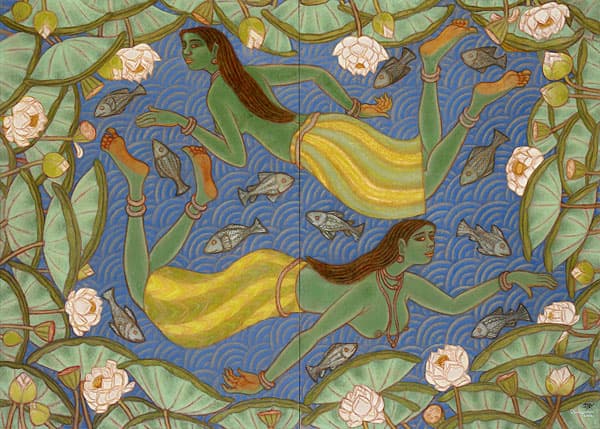 For A Ramachandran, the lotus pond was not a static scene but a vibrant, self-contained universe. Drawn from real environments around places such as Obeshwar and Eklingji near Udaipur, these ponds teemed with lotus flowers, leaves, insects, birds and other forms of life, all captured in intricate and rhythmic compositions. His approach was rooted in direct and sustained observation, absorbing the shifting hues, movements and moods of the pond before translating them into visual form.
This richly layered natural setting allows for broader metaphorical interpretation. The lotus pond becomes a visual embodiment of renewal, purity and the cyclical rhythms of life. In Indian thought, the lotus symbolizes emergence from mud into bloom, suggesting transformation, resilience and spiritual awakening.
Femininity as an Extension of Nature
Ramachandran’s lotus pond paintings frequently include female figures rendered with lyrical grace. While early readings of these works addressed the artist’s engagement with the male gaze, the presence of women within the lotus pond goes beyond physical representation. These figures often appear integrated into the environment itself, moving fluidly through water, leaves and blossoms, or echoing the organic forms surrounding them.
In these compositions, femininity is not separate from nature but deeply connected to it. The female body mirrors the vitality, fertility and expressive energy of the pond. This association draws from long-standing Indian artistic traditions in which the feminine principle represents life force, creativity and connection to earth and water.
 Myth, Tradition and Emotional Resonance
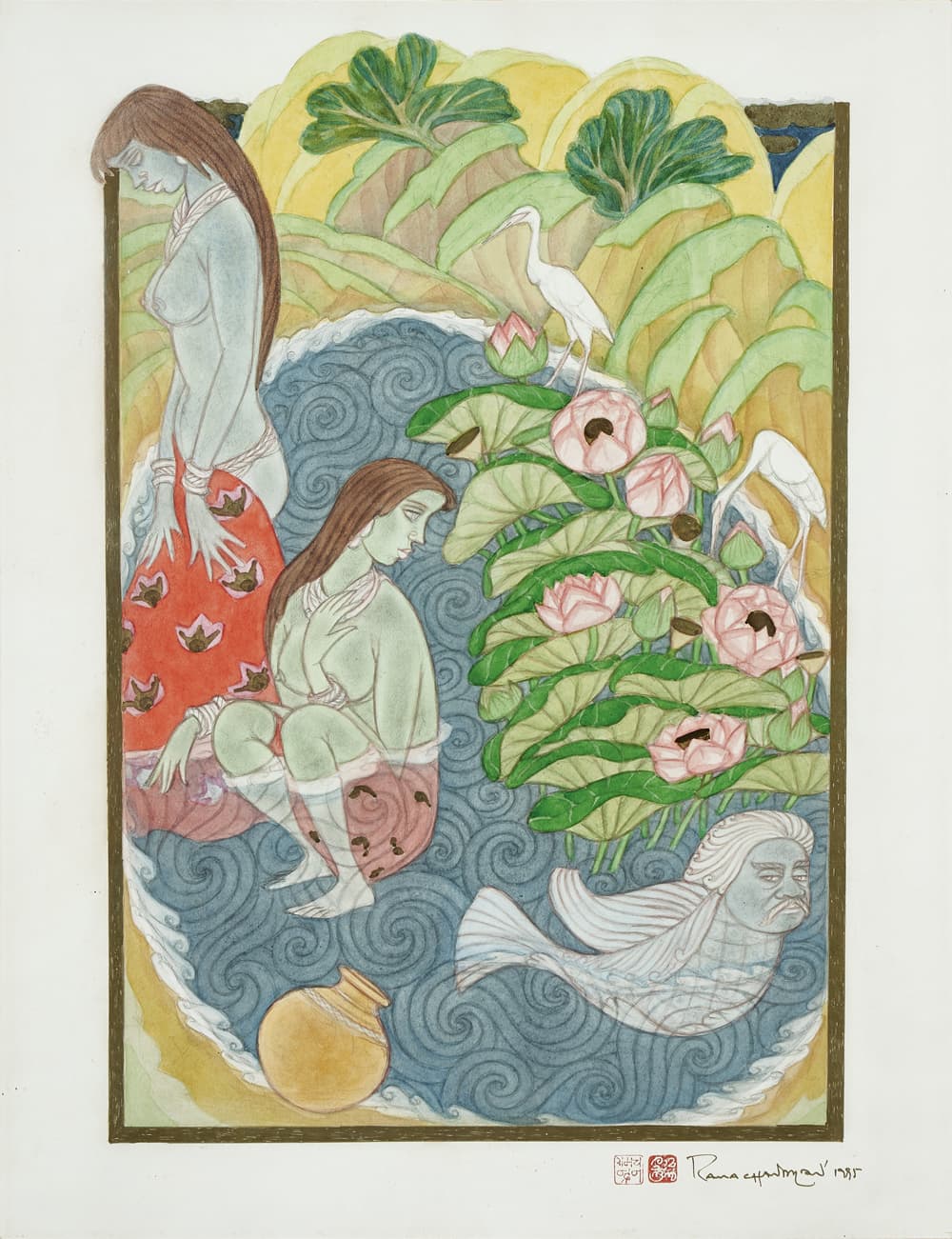
The synthesis of women and the lotus pond also reflects Ramachandran’s engagement with myth and cultural memory. Influenced by Indian temple art, classical poetry and folk narratives, his work situates femininity within a timeless and symbolic framework. The figures in his paintings often convey emotional states such as contemplation, joy or quiet strength, echoing the rhythms of the natural world itself.
Rather than functioning as narrative illustrations, these images evoke mood and philosophical reflection. The lotus pond becomes a space where myth, nature and emotion coexist, offering a vision of harmony between human presence and the environment.
Conclusion
In A. Ramachandran’s lotus pond paintings, nature and femininity are inseparable elements of a unified visual language. The lotus serves as both ecological reality and symbolic anchor, while the female form brings emotional depth and cultural resonance. Together, they create compositions that celebrate life, continuity and the profound relationship between the natural world and feminine energy. These works stand as a testament to Ramachandran’s ability to merge observation with imagination, tradition with personal vision, and beauty with meaning.