nature and art: capturing earth’s beauty in indian paintings
.jpg&w=3840&q=75)
Painting The Nature: How Indian Art Is Obsessed With Earth’s Beauty
Nature, its landscapes, seasons, plants, animals, rivers and skies, has been a perennial muse for Indian artists. Across centuries and regions, Indian painting traditions have translated the rhythms of the natural world into rich visual languages that are both descriptive and symbolic. From the miniature courts of Rajasthan and the Deccan to the murals of Ajanta and the folk paintings of Bengal and Madhya Pradesh, artists have observed, stylized, and reimagined nature, creating works that are aesthetic records, spiritual statements, and cultural documents. This article surveys how Indian painters have captured Earth’s beauty, the meanings they attach to natural forms, and how traditional and contemporary practices continue to dialogue with the environment.
Historical Overview: Nature as Context and Subject
• Ancient and early medieval murals: Ajanta and beyond - The Ajanta cave paintings (circa 2nd century BCE to 6th century CE and later) are among the earliest sustained pictorial engagements with nature in South Asia. Although primarily religious and narrative, Ajanta murals show carefully observed flora, flowing rivers, rock outcrops, and atmospheric effects, used to set scenes, indicate seasons (varsha/monsoon), and heighten emotional tone.
• Miniature traditions: Mughal, Rajput, Pahari, and Deccan - The Mughal atelier introduced natural history realism into Indian painting, with careful botanical studies, birds, and animals rendered with close observation, often for imperial collections and scientific curiosity. Rajput and Pahari miniatures adapted those naturalistic techniques into more stylized landscapes: rock formations, trees, and cloud bands provide settings for courtly love, heroism, and devotion. Deccani paintings, with their lush palettes, depict luxuriant gardens and exotic fauna, evoking climate and courtly taste.
• Folk and tribal art: Living nature in daily life - Folk painting traditions, such as Madhubani (Bihar), Pattachitra (Odisha and West Bengal), Warli (Maharashtra), and Gond (Madhya Pradesh), often fuse utilitarian, ritual, and aesthetic concerns. Nature is not merely backdrop but central: animals are clan totems, plants mark fertility cycles, and the landscape is animated by gods, spirits, and human labor. These works frequently simplify forms for symbolic clarity while preserving deep ecological knowledge.
Modes of Representation: Stylization, Symbolism, and Naturalism
Indian artists use multiple visual strategies to represent nature, each carrying different intentions.
• Stylization and pattern - In many folk and classical idioms, trees, waves, mountains, and foliage are treated as repeatable motifs, trees as palace-like structures, waves as rhythmic scrolls, yielding compositional harmony and symbolic resonance. Pattern reflects cultural order and the ritualized nature of everyday life.
• Symbolic resonance - Natural elements often have layered meanings: the lotus as purity and transcendence, the banyan as shelter and continuity, rivers as life and time (for example, Ganga), and peacocks as beauty and nationalism. Representations are chosen not only for appearance but for associative power within myths and rituals.
• Naturalistic observation - Mughal naturalism and later institutional art (19th to 20th centuries) foregrounded anatomical accuracy and botanical detail. Artists documented species; plants, birds, animals with attention to form, texture, and habitat, producing works valuable to both art and natural history.
Materials and Techniques: How Nature Shapes Making
The materials and methods of Indian painting reflect and revere natural sources.
• Natural pigments and binders - Traditional painters used mineral and vegetable pigments, such as indigo, madder, turmeric, lapis lazuli, and malachite, mixed with natural gums, shellac, or animal glue. The very colors are gifts of the earth, making the medium itself an extension of the subject.
• Paper, cloth, walls - Pattachitras use cloth treated with starch and chalk; murals are painted on lime-plastered walls; miniatures are painted on handmade paper or mica. The surface, texture, and scale influence how nature is articulated: intimate miniatures allow delicate brushwork, while large murals convey sweeping landscapes and atmospheric effects.
• Brushwork and line - Fine squirrel-hair brushes in miniatures create precise detailing for flora and fauna; folk paintings use bolder strokes and schematic lines to emphasize rhythm and communal storytelling. The relationship between line, color, and negative space frames natural elements within compositional balance.
Thematic Roles of Nature in Indian Painting
• Sacred and cosmological landscapes - Nature often serves a sacred function: mountains as abodes of gods, rivers as purifying agents, and groves as liminal spaces for rituals. Paintings situate deities within natural settings that are as much metaphysical maps as earthly scenes.
• Seasonal cycles and human life - Paintings celebrate seasons, such as monsoon, spring, and harvest, marking agricultural rhythms and festivals. The Ragamala (paintings for musical modes) tradition links musical time, poetry, and seasonal moods with visual motifs drawn from nature.
• Courtly gardens and cultivated nature - The charbagh (four-part garden) and landscaped pleasure gardens in Mughal and Deccan courts symbolize power, paradise, and control over nature. Paintings of these spaces convey luxury and a curatorial gaze upon the natural world.
• Animals and human relationships - From hunting scenes to pastoral life and pet birds, animals in Indian painting reveal food, status, devotion, and companionship. The depiction of animals also reflects changing social values, such as royal hunts in older courts versus conservation-minded portrayals in later times.
Nature, Nationalism, and Modernity
• Colonial encounters and changing aesthetics - British colonialism introduced European naturalism, perspective, and academic art training. Indian artists responded in varied ways: some adopted realism and landscape genres, while others retained indigenous modes or synthesized techniques into new idioms.
• Nationalist and revival movements - Early 20th-century movements, for example the Bengal School, sought to reclaim Indian aesthetics, reinterpreting nature through spiritual and lyrical lenses instead of Western realism. Simultaneously, social reformers and nationalists used images of the land, farmer, and native flora and fauna to construct collective identity.
• Contemporary environmental art - Modern and contemporary Indian artists engage with environmental crises, such as deforestation, climate change, and urbanization, using painting and mixed media to critique ecological damage or imagine new relations with nature. Artists like Arpita Singh, Subodh Gupta, and Jitish Kallat, among others, incorporate natural motifs to comment on cultural memory, consumerism, and planetary limits.
Case Studies: Selected Traditions and Works
• Mughal natural history paintings - The imperial atelier produced finely observed studies of birds and animals, for example Ustad Mansur’s works, that combine beauty with scientific curiosity, showing plumage, posture, and habitat in exquisite detail.
• Pattachitra and the sacred tree - Pattachitra panels often depict the cosmic tree, flora entwined with deities, and village life, demonstrating how sacred narratives and ecological knowledge coexist in portable ritual objects.
• Gond painting and animate nature - Gond artists render forests and creatures with decorative patterns and rhythmic lines, animating every element with life. Their works often map ancestral stories and ecological stewardship, connecting community identity to the forest.
• Rajput landscapes and mood - Rajasthani and Pahari paintings use stylized mountains, rivers, and clouds to set mood and season, framing romances and heroic tales within a landscape that is poetic rather than photographic.
Challenges and Opportunities Today
• Conservation of works - Many traditional paintings on fragile paper, cloth, and walls face threats from climate, pollution, and neglect. Conservation efforts must respect traditional materials and techniques while ensuring longevity.
• Market pressures and authenticity - Commercial demand can drive commodification and loss of local context. Supporting artists, fair markets, and documentation helps sustain traditions without diluting meaning.
• Climate change and new subjectivities - As natural environments change, artists confront altered landscapes and species loss. This urgency fosters new creative responses: eco-activist art, community-based projects, and interdisciplinary collaborations between artists and scientists.
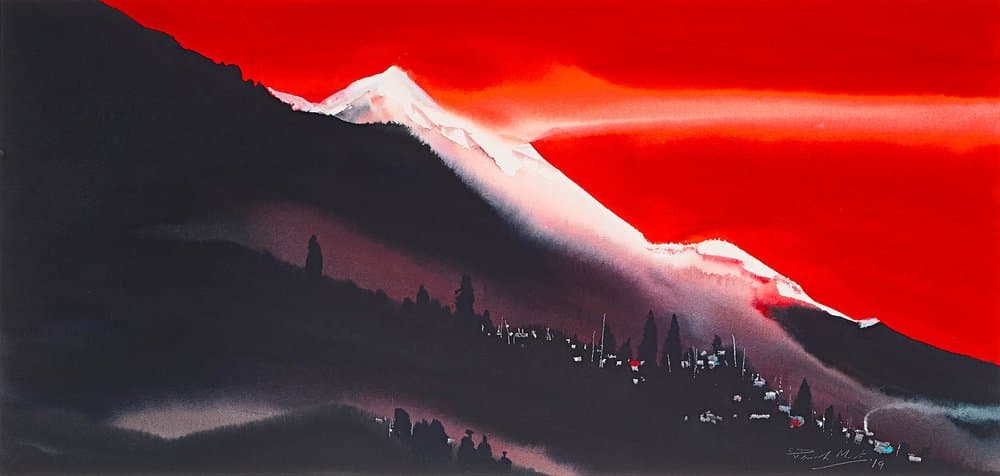 • Revivals and cross-cultural exchange - Contemporary practitioners blend traditional motifs with global languages, creating hybrid forms that keep the dialogue with nature alive while reaching global audiences.
Conclusion
Indian painting has long treated nature as more than a subject to be imitated; it is a collaborator, a symbol, a reservoir of meaning, and a lived reality. Whether through the meticulous studies of Mughal ateliers, the ritualized patterns of folk painters, or the environmentally conscious work of contemporary artists, nature’s presence in Indian art is multifaceted, including scientific, spiritual, political, and aesthetic dimensions. As environmental pressures intensify, these artistic traditions offer both a record of Earth’s beauty and a means to reimagine human relationships with the nonhuman world. In looking closely at how Indian painters capture the earth, we find not only images but a vocabulary for care, reverence, and renewed responsibility.