nilima sheikh: the art of the un-archived history
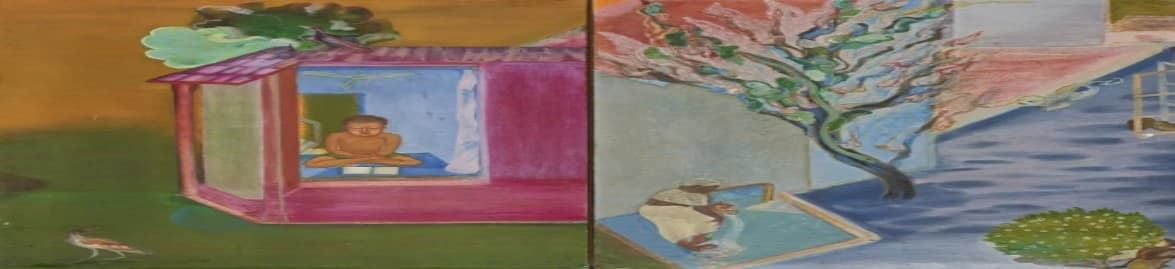
The idea that history is never complete without memory has been a guiding thread in Nilima Sheikh’s practice. Her work, which she has created over the course of fifty years, addresses the fragility of what is remembered as well as the weight of what is forgotten. At its core lies her commitment to the notion of ‘un-archived history,’ a practice of safeguarding the fragments of cultural memory, lived experience, and personal testimony that often slip past the boundaries of official archives.
Who is Nilima Sheikh?
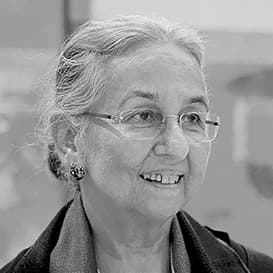 Nilima Sheikh was born in Delhi in 1945. She joined the Faculty of Fine Arts at Maharaja Sayajirao University of Baroda in 1965, having previously studied history at Delhi University. K.G. Subramanyan taught her about the languages of several art-making processes at Baroda. Sheikh, who was inspired by poetry, folk tunes, and Indian miniature traditions, turned to narrative painting as a way to address contemporary issues while reimagining history as part of a generation of painters. However, she has never adopted a sentimental approach; rather, she uses these visual languages to critique historical silences, brutality, and displacement.
Her dedication to social themes has been evident throughout her career, from large-scale installations that consider Kashmir's fragile cultural memory to works like ‘When Champa Grew Up’ (1984), which addressed dowry cruelty through imagery and Gujarati folk song texts.
The Idea of ‘Un-archived History’ in Her Work
Nilima Sheikh's work is sometimes defined as a response to unarchived histories, those that escape institutional documentation but live in shards of memory, oral traditions, and personal witness. For Sheikh, painting turns into a different kind of archive that places equal weight on lived experience and emotional truth as it does on facts.
This concept is best illustrated by her acclaimed series ‘Each Night Put Kashmir in Your Dreams’ (2010–2014). Sheikh portrays Kashmir's trauma and resilience using tempera scrolls covered with maps, poetry, and silhouettes. Instead of illustrating events directly, she creates a space where memory and art converge, making visible what official narratives often erase.
Sheikh’s engagement with Kashmiri-American poet Agha Shahid Ali is especially significant. Her 2003 exhibition, ‘The Country Without a Post Office: Reading Agha Shahid Ali,’ included several paintings that were inspired by his poetry. In these pieces, she turned themes of longing, exile, and absence into a melancholic visual language, revealing how painting can serve as a repository of personal and collective memory.
Style as an Archival Method
Sheikh’s style itself acts as an archival method. She regularly uses gouache and tempera on handmade paper, incorporating formats from folding screens, pichvais, and miniature scrolls. Her intentional return to "pre-modern" forms enables her to incorporate current concerns into visual languages from the past. Text and image layering is crucial. She calls this a "dialogue of voices," where images of people, locations, and patterns often mix with quotations from poets like Lal Ded and Agha Shahid Ali. Sheikh's combination of voices and images produces a visual archive in which history, real-world experience, and possibility coexist.
Her 2017 project, 'Terrain: Carrying Across, Leaving Behind,' that debuted at documenta 14, is an excellent example. Sheikh uses painted scrolls suspended in elliptical screens to tell stories of migration, displacement, and cultural survival. This work positions painting as both archive and testimony, insisting that art itself can preserve what the archive cannot.
Nilima Sheikh Famous Paintings
Over a career spanning more than five decades, her works have explored topics like displacement, communal violence, womanhood, and the history and politics of Kashmir. Below are some of Nilima Sheikh’s most acclaimed paintings and series:
1. Each Night Put Kashmir in Your Dreams (2003–2010)
This seminal series comprises nine large scrolls painted on both sides, measuring 305 x 183 cm each. Created over several years, the works are rendered in casein tempera on canvas and are deeply rooted in the artist's exploration of Kashmir's layered history. The series reflects on the region's tumultuous past and its impact on its people.
2. The Beautiful Village of Pachigam Still Exists (2009)
This painting is part of Sheikh's ongoing engagement with the Kashmir Valley. Through her art, she addresses themes of loss, memory, and the resilience of communities amidst conflict.
3. Dying Dream (2007)
In this work, Sheikh delves into the complexities of dreams and their intersections with reality. The painting serves as a poignant commentary on the fragility of aspirations in the face of adversity.
4. Gathering Threads (2004)
This piece reflects Sheikh's interest in the act of weaving as a metaphor for memory and identity. The intricate patterns and textures in the painting invite viewers to contemplate the interconnectedness of personal and collective histories.
5. Farewell (2004)
"Farewell" captures the emotional intensity of parting and the complexities of migration. Through subtle symbolism and rich color palettes, Sheikh conveys the profound impact of separation on individuals and communities.
6. Going Away (2010)
This painting portrays the theme of departure, focusing on the emotional and psychological dimensions of leaving one's homeland. Sheikh's use of traditional techniques adds depth to the narrative of displacement.
7. Construction Site (2009–2010)
In "Construction Site," Sheikh examines the interplay between development and destruction. The work critiques the rapid urbanization and its implications on cultural and environmental landscapes.
8. Rozgar Series (2011)
This series addresses the theme of employment and its socio-economic ramifications. Through detailed compositions, Sheikh highlights the aspirations and challenges faced by individuals in the workforce.
9. Son et Lumière (2006–2010)
"Son et Lumière" explores the relationship between sound, light, and memory. The painting reflects on how sensory experiences shape our understanding of history and identity.
10. When Champa Grew Up (1984)
A deeply moving narrative work consisting of twelve tempera paintings that tell the tragic story of a young girl named Champa, who was subjected to dowry-related abuse and eventually murdered by her husband’s family. Inspired by a real-life incident of dowry death reported in newspapers, this series addresses the brutal social injustice faced by many women in India at the time. Utilizing traditional techniques of tempera on wasli paper, Sheikh employed a poetic visual language rooted in Indian miniature painting to depict the sequence of events from Champa’s forced marriage to the violence she endured.
Exhibitions & Impact
The practice of Nilima Sheikh is well recognised both in India and abroad, where she has consistently participated in exhibitions that address pressing political, cultural and aesthetic questions. Two notable solo presentations are ‘Lines of Flight’ at Asia Art Archive, Hong Kong (2018), which examined her long-standing engagement with Kashmir through archives, manuscripts and painted scrolls, and ‘Conversations with Traditions’ at Asia Society, New York (2001), where she explored her dialogue with Indian miniature painting traditions.
Her work has been presented in several leading international contexts, from the Dhaka Art Summit and Kochi-Muziris Biennale to the Singapore Biennale, Sharjah Biennial, and the Art Institute of Chicago. Her piece "Each Night Put Kashmir in Your Dreams," which was shown at the Art Institute of Chicago in 2014, was renowned for its beautiful blending of grief and memory in relation to the conflict in Kashmir. Sheikh has also contributed to international conversations on cultural memory and displacement by taking part in the Kochi-Muziris Biennale, particularly in 2018. She was also placed within a global network of artists tackling issues of migration, gender, and cultural inheritance as a result of her participation in the Singapore Biennale and Sharjah Biennial.
Sheikh's work has affected international discussions on feminism in modern Indian art, as well as the portrayal of memory, violence, and exile. Sheikh uses historical allusions, personal anecdotes, and traditional painting techniques to create a powerful example of art as cultural testimony. She is regarded not only as a key figure in modern and contemporary Indian painting, but also as an artist whose work transcends borders, connecting South Asian histories to larger global issues about displacement and identity.
Conclusion
Nilima Sheikh's paintings are as much works of art as they are actions of memory. They give form to voices that would otherwise go unheard by combining poetry, art, and history. She embraces the aesthetics of the scroll, fragment, and palimpsest to transform her canvases into alternate archives, stores of loss, resilience, and cultural continuity. Nilima Sheikh so reaffirms the ability of art to communicate for people who are not represented in official documents. Her art serves as a reminder that without memory, history is incomplete and that painting may preserve what the archive cannot.