pablo picasso paintings – history, style & insights
.jpg&w=3840&q=75)
Pablo Picasso (1881-1973) stands as one of the most influential and revolutionary artists in human history, fundamentally transforming how we understand and create visual art. His prolific career spanning over seven decades produced an estimated 50,000 artworks, including approximately 1,885 paintings that chronicle not only his artistic evolution but also the broader transformation of modern art itself.
Born Pablo Diego José Francisco de Paula Juan Nepomuceno María de los Remedios Cipriano de la Santísima Trinidad Ruiz y Picasso in Málaga, Spain, the artist who would simply become known as Picasso demonstrated extraordinary artistic talent from childhood. His father, José Ruiz Blasco, was an art teacher who recognized his son's exceptional abilities and provided his first formal training.
This article explores Pablo Picasso’s most famous paintings, his evolving styles, historical context and the deeper meanings behind his masterpieces.
Painting's Description
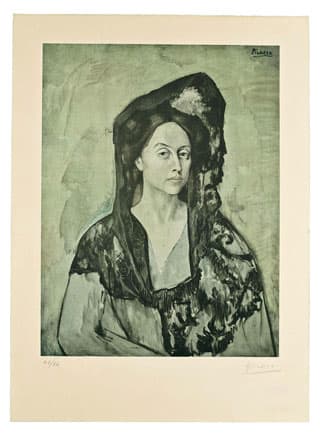 Pablo Picasso’s paintings are renowned for their bold forms, radical compositions, and expressive use of color. He often depicted subjects in fragmented, abstracted ways, especially during his Cubist period, challenging traditional notions of perspective and representation. His works range from the melancholic blue and rose periods to the groundbreaking Cubist and Surrealist canvases, each marked by distinct visual characteristics.
Features of Pablo Picasso’s Paintings
1. Emotional Depth and Symbolism
From melancholy figures in his Blue Period to distorted forms in Cubism, Picasso’s work is emotionally charged, often reflecting his personal life and global events.
2. Innovative Use of Form
Picasso revolutionized the way we perceive form and space. In Cubism, he deconstructed objects into geometric shapes and reassembled them in abstract compositions.
3. Bold Use of Color
While some periods, like the Blue and Rose Periods, are marked by limited palettes, others especially his later works explore vibrant, clashing colors.
4. Diverse Mediums and Techniques
He used oil, charcoal, watercolor, and collage. Picasso also pioneered techniques like papier collé (paper collage) in painting.
Style Evolution
Pablo Picasso’s style was never static. He was a master of reinvention. Each phase reflected his responses to personal experiences, political climates and artistic exploration:
o Blue Period (1901–1904)
• Description: Marked by somber, monochromatic paintings in shades of blue and blue-green, this period reflects themes of poverty, loneliness, and despair.
• Notable Works: "The Old Guitarist" (1903–1904), "La Vie" (1903).
• Context: Influenced by the suicide of his friend Carles Casagemas and Picasso’s own financial struggles.
o Rose Period (1904–1906)
• Description: Characterized by warmer tones of pink and orange, featuring circus performers, acrobats, and harlequins.
• Notable Works: "Garçon à la pipe" (1905), "Au Lapin Agile" (1905).
• Context: Reflects a more optimistic phase in Picasso’s life, influenced by his relationship with Fernande Olivier and his growing success.
o African-Influenced Period and Proto-Cubism (1907–1909)
• Description: Inspired by African art and Iberian sculpture, Picasso began to experiment with abstraction and geometric forms.
• Notable Work: "Les Demoiselles d’Avignon" (1907).
• Context: This period marks a radical break from traditional representation and foreshadows the development of Cubism.
o Cubism (1909–1919)
• Description: Co-founded with Georges Braque, Cubism deconstructed objects into geometric shapes and reassembled them in abstract forms. It is divided into:
• Analytical Cubism: Focused on breaking down objects into basic geometric components, often using a monochromatic palette.
• Synthetic Cubism: Introduced collage elements and brighter colors, incorporating materials like newspaper and fabric.
• Notable Works: "Ma Jolie" (1911–1912), "Still Life with Chair Caning" (1912).
o Neoclassicism and Surrealism (Post-World War I)
• Description: Picasso explored classical themes and forms, often depicting mythological subjects. In the 1920s, he incorporated Surrealist elements, creating works with distorted figures and dream-like qualities.
• Notable Works: "Three Women at the Spring" (1921), "The Dream" (1932).
o Later Years
• Description: Picasso continued to innovate, producing a vast body of work that included paintings, sculptures, ceramics, and prints. His later works often revisited earlier themes with new vigor and experimentation.
Technical Innovations & Materials
Throughout his career, Picasso demonstrated remarkable technical versatility and willingness to experiment with new materials 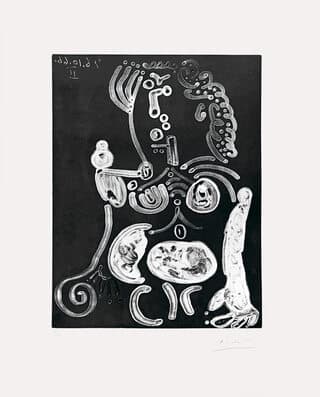 and methods. His paintings show mastery of traditional oil painting techniques combined with innovative approaches that expanded the medium's possibilities.
During the Cubist period, Picasso pioneered the use of collage in fine art, incorporating newspapers, wallpaper, and other materials directly into his paintings. This technique, which he called "papier collé," challenged traditional distinctions between painting and sculpture while creating new possibilities for artistic expression.
Picasso's brushwork evolved dramatically throughout his career, from the careful modeling of his early academic works to the bold, expressive strokes of his later paintings. He demonstrated equal facility with detailed, precise rendering and loose, gestural application of paint, choosing his technique to serve the emotional and conceptual needs of each work.
His use of color also showed constant evolution, from the monochromatic periods of his youth to the vibrant palettes of his later work. Picasso understood color not just as a descriptive tool but as a means of conveying emotion and creating formal relationships within his compositions.
Insights & Analysis
Art historians and critics have extensively analyzed Pablo Picasso’s work:
• Philosophical Explorations: Picasso’s paintings are seen as philosophical inquiries into the nature of reality, perception, and artistic expression.
• Emotional and Intellectual Depth: His ability to convey deep emotion and critique societal issues through art is widely recognized, particularly in works like "Guernica".
• Enduring Impact: Picasso’s legacy extends beyond the art world, influencing popular culture, fashion, design, and literature. His iconic style and persona have left an indelible mark on cultural history.
Analysis of Picasso's Major Paintings
o Les Demoiselles d’Avignon (1907):
• Description: Five nude women depicted with angular, fragmented forms and mask-like faces.
• Analysis: This painting is considered a precursor to Cubism and a radical break from traditional Western art. The influence of African masks is evident, challenging conventional notions of beauty and representation
• Expert Critique: Art historians view this work as a turning point in modern art, emphasizing its role in the development of abstraction and the deconstruction of form.
o Guernica (1937):
• Description: A large, monochromatic mural depicting the suffering caused by the bombing of Guernica during the Spanish Civil War.
• Analysis: "Guernica" is a universal symbol of the tragedies of war and the suffering it inflicts upon individuals, particularly innocent civilians. The use of black, white, and gray intensifies the emotional impact
• Expert Critique: The painting’s symbolism such as the bull and the horse has been interpreted as representing brutality and suffering. Its chaotic composition and anguished figures convey a sense of overwhelming despair.
o The Weeping Woman (1937):
• Description: A portrait of a woman in tears, with distorted features and vivid colors.
• Analysis: This work is a continuation of the themes explored in "Guernica," focusing on the personal anguish caused by war. The model, Dora Maar, was Picasso’s lover and a witness to the creation of "Guernica"
• Expert Critique: The painting’s emotional intensity is heightened by the use of sharp lines and contrasting colors, symbolizing psychological trauma.
o The Old Guitarist (1903–1904):
• Description: An elderly, blind musician painted in monochromatic blue tones.
• Analysis: This painting exemplifies the Blue Period’s focus on poverty and human suffering. The elongated figure and somber palette evoke empathy and introspection
Market Impact & Collecting History
Picasso's paintings have consistently commanded some of the highest prices in the art market, reflecting both their artistic importance and their investment potential. Works from all periods of his career are highly sought after by collectors, museums, and investors worldwide.
The market for Picasso's work has shown remarkable stability and growth over decades, with major paintings regularly setting auction records. This financial success has helped establish the contemporary art market and created a model for how modern masterpieces are valued and traded.
The distribution of Picasso's work across major museums worldwide has made his innovations accessible to global audiences while creating a network of institutions committed to preserving and interpreting his legacy. Major retrospectives continue to draw record crowds and generate scholarly reassessment of his contributions.
Legacy
Pablo Picasso’s relentless experimentation and innovation transformed the art world:
• Pioneering Cubism: By breaking away from traditional perspective and representation, Picasso and Braque’s Cubism laid the foundation for many avant-garde movements, including Futurism, Dada, and Constructivism.
• Collage and Mixed Media: His use of collage in Synthetic Cubism blurred the boundaries between painting and sculpture, inspiring future generations to explore new materials and techniques.
• Influence on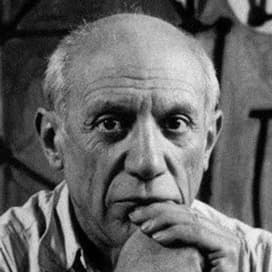 Modern Art: Picasso’s willingness to experiment and break with tradition paved the way for Surrealism, Abstract Expressionism, and Pop Art. His approach encouraged artists to push the boundaries of art and explore new forms of representation.
Conclusion
Pablo Picasso’s paintings are more than artistic achievements. They are cultural milestones that trace the contours of a turbulent and transformative century. Through a complex interplay of style, emotion, and intellect, his work continues to captivate, provoke, and inspire. To study Pablo Picasso is to engage with the very essence of modern art.