


piet mondrian spotlighted in 5 famous paintings
Piet Mondrian (1872–1944) is one of the most celebrated pioneers of modern abstract art. Known for his bold compositions of primary colors, straight black lines, and geometric balance, Mondrian developed a radical style rooted in harmony and universal order. His journey from representational landscapes to pure abstraction made him central to the De Stijl movement, influencing generations of artists, designers, and architects. Here are five of his most famous masterpieces that spotlight his artistic brilliance and lasting legacy.
1. Composition with Red, Blue, and Yellow (1930)
Perhaps his most recognizable painting, this piece epitomizes Mondrian’s mature style. The canvas is reduced to a grid of vertical and horizontal black lines with blocks of primary colors balanced against white spaces. The simplicity hides Mondrian’s intricate sense of proportion, symmetry, and rhythm, creating a timeless harmony that symbolized his pursuit of universal beauty.
2. Broadway Boogie-Woogie (1942–43)
Painted after Mondrian moved to New York, this energetic canvas captures the vibrancy of the city. With small yellow, blue, and red rectangles weaving through a grid of white and gray, the composition evokes the syncopated rhythms of jazz and the pulse of Manhattan streets. It demonstrates Mondrian’s evolution into a more dynamic form of abstraction, blending European modernism with American cultural energy.
3. Composition No. 10 in Black and White (1915)
An early abstract work, this painting strips down Mondrian’s visual vocabulary to black lines and a white background. The linear arrangement suggests waves on a sea, but instead of literal representation, it becomes a rhythm of lines symbolizing order within chaos. This canvas marked a decisive step toward his fully developed style of geometric abstraction.
4. Victory Boogie-Woogie (1942–44)
Left unfinished at the time of his death, this vibrant piece pushes abstraction even further. Unlike the static order of his earlier works, the canvas bursts with colored squares and broken grids, reflecting hope, rhythm, and a celebration of life during a turbulent era shaped by war. Today, it stands as a testament to Mondrian’s continuous experimentation and adaptability.
5. Gray Tree (1911)
Belonging to his early Cubist phase, Gray Tree reveals Mondrian’s transition from naturalism to abstraction. The tree is simplified into interlocking lines and muted tones, showing his search for structure behind natural forms. This work bridges his representational landscapes with the radical geometry that defined his later masterpieces.
Significance of Piet Mondrian’s Masterpieces
Through these five artworks, Piet Mondrian demonstrated a lifelong pursuit of pure abstraction rooted in balance and universal harmony. Moving from nature-inspired works like Gray Tree to the bold geometry of Composition with Red, Blue, and Yellow and the rhythmic energy of Broadway Boogie-Woogie, Mondrian forever altered the trajectory of modern art, influencing movements from minimalism to contemporary design. His masterpieces spotlight not only his artistic vision but also the enduring power of simplicity, order, and rhythm in visual expression.
The Legacy of Piet Mondrian
Piet Mondrian’s influence extends far beyond the canvas. His principles of abstraction and balance have inspired architecture, design, fashion, and even digital media. By reducing art to its most essential elements, he challenged viewers to perceive the world through a lens of harmony and rhythm. Each of these five masterpieces offers a window into his visionary approach, reminding us that simplicity can be profoundly expressive.
Image Credit:
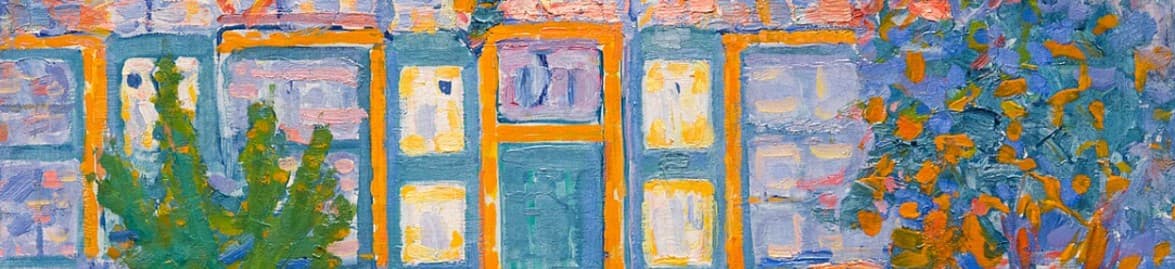
“Barberini August 2023-Piet Mondrian - Kleines Haus in der Sonne, 1909 - Kunstmuseum Den Haag”, GodeNehler, via Wikimedia Commons
– Public Domain.




.jpg)