prabhakar kolte - profile, history, paintings & art style
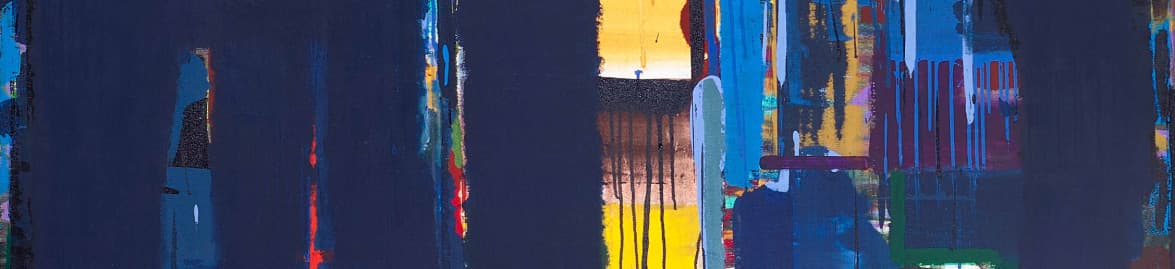
Prabhakar Kolte (b. 1946) is a renowned Indian abstractionist whose works have significantly shaped the modern art landscape in India. Often referred to as the "Indian Paul Klee" due to his early influences, Kolte’s art is celebrated for its poetic abstraction and metaphysical depth. Over a career spanning decades, he has evolved into one of India’s most respected artists, blending intuition, spirituality, and a deep connection to nature in his paintings. His legacy extends beyond his canvases, as he has mentored numerous prominent Indian artists and contributed to the development of contemporary art practices in the country.
Kolte’s philosophy of art is deeply rooted in introspection and emotional resonance. He once said, “When you get involved with your inner feelings, painting becomes a deeply intimate process”—a sentiment that underscores his entire body of work.
Early Life and Education
Prabhakar Kolte was born in 1946 in Nerur Par, Maharashtra, into a modest family. His early artistic journey began with drawing religious figures from calendars during his childhood. This initial fascination with art was nurtured further when he met Murlidhar Sadashiv Joshi, a landscape painter who became his mentor during his school years. Joshi encouraged Kolte to pursue formal training at the prestigious Sir J.J. School of Art in Mumbai.
Kolte joined Sir J.J. School of Art in the mid-1960s and graduated with a diploma in painting in 1968. It was during his time at the institute that he encountered the works of Swiss artist Paul Klee, whose philosophy and style profoundly influenced him. Klee’s emphasis on “following nature” rather than imitating it resonated deeply with Kolte and became a cornerstone of his artistic approach.
Career and Teaching
After graduating, Kolte initially worked as an illustrator and designer for Bombay Dyeing while freelancing as an artist. However, his passion for teaching led him back to Sir J.J. School of Art, where he served as a faculty member from 1972 to 1994. During this period, he mentored several now-prominent artists such as Atul Dodiya, Jitish Kallat, and Sudarshan Shetty. His role as an educator was instrumental in shaping the next generation of Indian contemporary artists.
In 1994, Kolte left teaching to focus entirely on painting. By this time, his reputation as a master abstractionist had been firmly established through numerous exhibitions both in India and abroad.
Artistic Style and Philosophy
Prabhakar Kolte’s artistic journey is marked by his transition from representational art to pure abstraction. Early in his career, he experimented with landscapes and installations but gradually moved towards eliminating identifiable forms from his work. By the mid-1980s, Kolte had fully embraced abstractionism, creating canvases that were meditative explorations of colour, texture, and form.
Key elements of Kolte’s style include:
- Abstraction with Metaphysical Depth: Inspired by Paul Klee’s philosophy, Kolte’s works are not imitations of nature but intuitive responses to it. His paintings often feature layers of dripping paint that create a symphony of colour while hiding and revealing forms beneath.
- Spiritual Undertones: Kolte draws inspiration from the Bhagavad Gita and the commentary by 13th-century Marathi saint Dnyaneshwar. His works reflect themes of introspection and spiritual awakening.
- Childlike Intuition: He often describes his process as painting “like a child,” allowing spontaneity and intuition to guide his creativity.
- Dominance of Colour: Many of his works are dominated by a single hue or tonal palette, creating an immersive visual experience that invites viewers into a meditative state.
Kolte has also dabbled in installation art but remains sceptical about its development in India compared to traditional painting forms.
Exhibitions and Recognition
Prabhakar Kolte’s work has been showcased extensively through solo and group exhibitions across India and internationally. Notable exhibitions include:
Solo Exhibitions
- Pundole Art Gallery (Mumbai) – 2002, 1997
- Muller & Plate Gallery (Munich) – 2001
- Admit One Gallery (New York) – 1998
- Vadehra Art Gallery (New Delhi) – 1997
- Gallery Chemould (Mumbai) – Multiple shows between 1983–1993
Group Exhibitions
- Lalit Kala Akademi (New Delhi) – 1972
- CIMA (Kolkata) – 2005
- Saffronart & Pundole Art Gallery (New York) – 2001
- Contemporary Artists from SAARC Countries (Kolkata) – 1992
His works are part of prestigious collections such as:
- National Gallery of Modern Art (New Delhi)
- Citi India Corporate Collection
In total, Kolte has participated in over 84 group exhibitions and held 27 solo shows throughout his career.
Influence on Indian Art
Kolte’s influence extends far beyond his own body of work. As an educator at Sir J.J. School of Art for over two decades, he played a pivotal role in shaping India’s contemporary art scene by mentoring some of its most celebrated artists today. His emphasis on introspection and emotional engagement has inspired many artists to explore abstraction as a means of self-expression.
Additionally, Kolte has been an advocate for democratising art spaces in India. He believes that art should be accessible to everyone—not just connoisseurs or collectors—and has worked towards creating platforms that bring art closer to the public.
Legacy and Philosophy
Prabhakar Kolte’s legacy lies not only in his paintings but also in his contributions to Indian modernism as an educator and mentor. His philosophy—that painting is an intimate process rooted in one’s inner feelings—has inspired countless artists to look inward for creative expression.
Kolte remains active in the art world today, continuing to paint from his studio in Mumbai. His recent exhibitions include Saga at Vesavar Art Gallery (Pune), which featured 24 large canvases showcasing his visionary style.
In reflecting on his journey as an artist, Kolte once remarked: “My art is called abstract, but that is just a label... A painting is essentially just a painting.” This statement encapsulates his belief that art transcends categories or definitions—it is simply an expression of imagination and emotion.
Conclusion
Prabhakar Kolte stands as one of India’s foremost abstractionists whose meditative approach to painting has left an indelible mark on modern Indian art. From his early influences by Paul Klee to developing a unique style rooted in intuition and spirituality, Kolte’s journey is one of constant evolution and introspection.
His dual role as an artist and educator has enriched India’s cultural landscape by nurturing talent and challenging traditional notions of art-making. Today, Prabhakar Kolte continues to inspire audiences with his timeless works—each canvas a testament to the power of imagination and emotional depth.
Through decades of dedication to abstractionism, Prabhakar Kolte has not only redefined modern Indian art but also reminded us that true creativity lies within our inner selves—a philosophy that resonates universally across cultures and generations.