ramkinkar baij - father & son | overview
.jpg&w=3840&q=75)
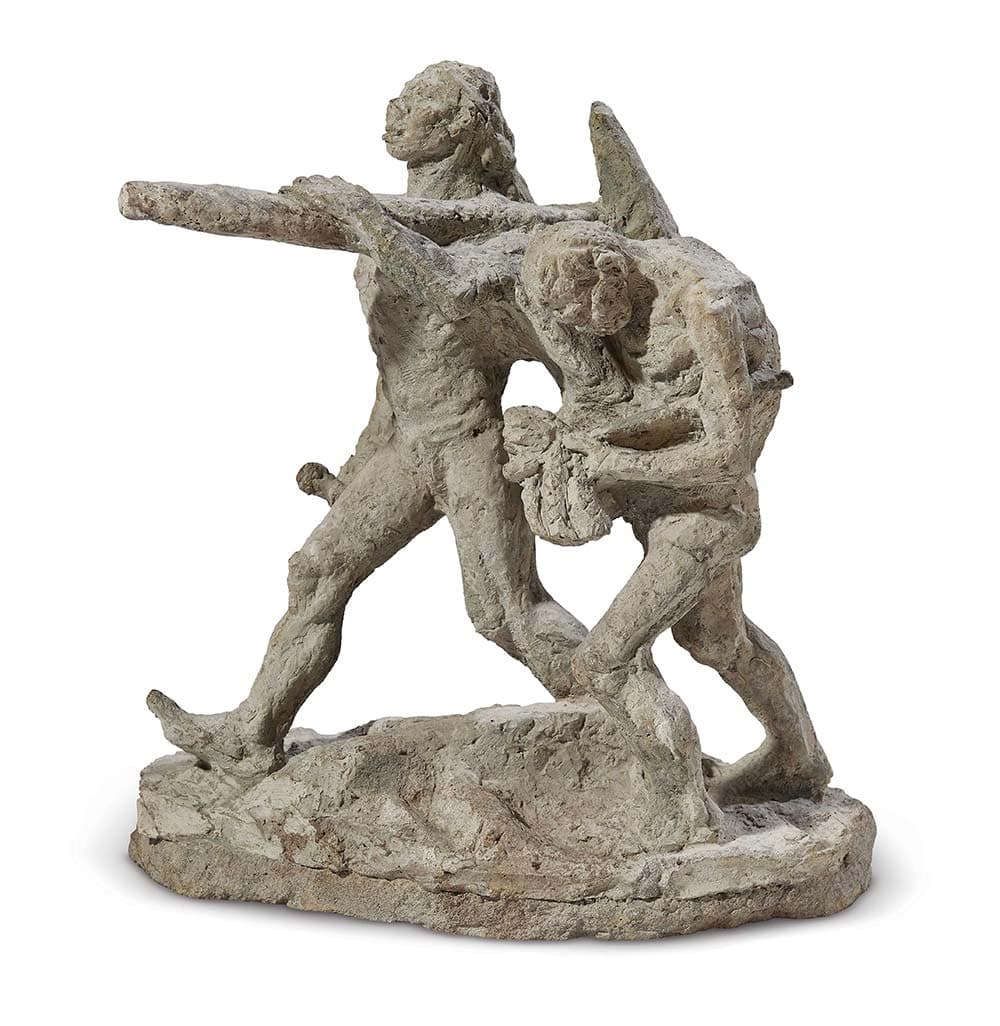
Ramkinkar Baij (1906-1980), India's pioneering modernist sculptor, created Father & Son as a cement cast work measuring 18 x 17 x 14 in (45.7 x 43.2 x 35.6 cm). This intimate piece captures paternal bond through textured, dynamic figures.
Artistic Overview
• Materiality: Ramkinkar Baij was a pioneer in using cement and laterite mortar. In Father & Son, he utilizes the rough, gritty texture of cement to give the figures an "earthy" quality. The unpolished surface suggests that the subjects are literally molded from the soil they live on.
• Form and Silhouette: The figures are not idealized. In true "Progressive" fashion, Baij emphasizes the rhythm of the bodies. The father is often depicted in a protective or guiding stance, while the son's smaller frame creates a visual contrast that highlights the theme of heritage and continuity.
• Movement in Stillness: Despite being a static object, the sculpture carries the "inner movement" Ramkinkar Baij was famous for. The way the limbs are positioned suggests a conversation or a shared gaze, making the air between the two figures feel heavy with unspoken sentiment.
Why It Matters: The "Modernist" Shift
Before Ramkinkar Baij, Indian sculpture was largely dominated by colonial academic realism (smooth, marble statues of dignitaries) or traditional religious iconography. Father & Son represents a radical shift because:
• Ordinary Subjectivity: It elevates the "common man" to the status of high art. The subjects are likely inspired by the Santhal community near Santiniketan, whom Baij lived among and deeply admired.
• Abstract Realism: He doesn't focus on anatomical perfection but on the emotional essence. The features might be blurred or simplified, but the feeling of the father-son relationship is unmistakable.
• Spontaneity: The work feels "sketched" in three dimensions. You can almost see the artist’s hands moving through the wet cement, a technique that mirrored the speed and vitality of modern life.
 Significance
“Father & Son” represents Ramkinkar Baij’s commitment to portraying human relationships in a raw and authentic manner. The sculpture demonstrates how modern Indian artists began exploring new subjects, materials, and artistic expressions during the twentieth century.
Ramkinkar Baij’s work played a major role in shaping modern Indian sculpture, inspiring future generations of artists to experiment with form and content. Today, his sculptures are celebrated in museums, galleries, and academic studies as milestones in Indian art history.
Conclusion
The sculpture “Father & Son” is a meaningful representation of the bond between generations and reflects Ramkinkar Baij’s deep empathy for human life. Through simple yet expressive forms, the artist captures the emotional strength of family relationships and the dignity of ordinary people. This artwork stands as a testament to Ramkinkar Baij’s pioneering vision and his lasting contribution to modern Indian sculpture.