remembering latika katt (1948–2025): a year without a sculptural visionary
.jpg&w=3840&q=75)
Farewell, Latika Katt (20 February 1948 – 25 January 2025): One Year Remembrance of India's Artistic Icon
On 25 January 2025, India lost one of its most distinctive sculptural voices, Latika Katt. A year later, her absence is deeply felt, yet her presence endures powerfully through the forms she carved, cast, and imagined. In studios, galleries, and public spaces across the country, her work continues to speak, quietly and insistently, of life, loss, and the human condition.
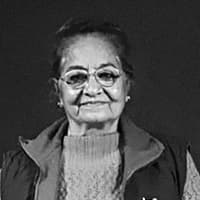 Born in 1948, Latika Katt’s journey into sculpture was marked by both resilience and experimentation. At a time when sculpture in India was largely male dominated, she forged her own path with determination and originality. Trained at institutions such as the Faculty of Fine Arts in Baroda and later the Slade School of Fine Art, she combined academic rigor with an instinctive, almost tactile understanding of materials.
Her early work is often remembered for its ingenuity, using unconventional materials like cow dung when resources were scarce. What began as necessity evolved into a defining feature of her artistic language, a refusal to be limited by convention. Over a career spanning more than five decades, Katt worked across terracotta, papier-mâché, stone, and bronze, constantly expanding the possibilities of sculptural expression.
But it was not just her materials that set her apart, it was her gaze.
Latika Katt’s sculptures were never merely representational. Whether she was creating monumental public works or intimate portraits, she sought to capture something deeper, the inner life of her subjects. Her works often reflected a profound engagement with nature, influenced in part by her father, a botanist, and her own lifelong fascination with organic forms.
This sensitivity is evident in her public commissions, such as the towering bronze of Jawaharlal Nehru in New Delhi, where movement, gesture, and symbolism converge. But equally compelling are her quieter works, heads, torsos, and figures that seem to breathe with psychological intensity.
Latika Katt was also an artist unafraid to confront difficult themes. From responding to social tragedies to reflecting on death and decay, her art often engaged with the fragility of existence. In doing so, she transformed sculpture into a medium of emotional and philosophical inquiry, rather than mere aesthetic form.
Beyond her own practice, Katt’s legacy lives on through her role as a teacher and mentor. At institutions like Jamia Millia Islamia and Banaras Hindu University, she shaped generations of young artists, encouraging them to observe closely, think deeply, and work fearlessly. Her influence therefore extends far beyond her own creations, it is embedded in the evolving language of contemporary Indian art.
Her passing in Jaipur at the age of 76 marked the end of a remarkable life, but not the end of her journey. Art, after all, resists finality.
One year on, Latika Katt’s sculptures remain, weathering time, inviting touch, and provoking thought. They remind us that art is not just about permanence, but about presence, the ability to connect across time, to speak even when the artist no longer can.
In remembering her today, we do not merely look back, we look around. Her vision lives on in bronze and stone, in memory and influence, in every artist who dares to experiment, to observe, and to feel deeply.
And perhaps that is the truest measure of her legacy, not that she is gone, but that her art continues to live.
Lesser Known Facts
Here are some of the lesser-known facts about the "Material Queen" of Indian sculpture:
1. She studied in an all-boys school - Latika Katt attended The Doon School, which was primarily an all-boys institution. Being one of the few girls there helped build her confidence and resilience early on.
2. She started with cow dung as a medium - Due to financial constraints, she initially created sculptures using cow dung. What began as necessity became a defining experimental approach in her art.
3. Indira Gandhi noticed her early work - Her talent was spotted by Indira Gandhi at an exhibition, and this encouragement played a role in shaping her sculpting career.
4. She was deeply influenced by nature through her father - Her father was a botanist, and this exposure nurtured her lifelong fascination with organic forms and natural structures.
5. She admired Auguste Rodin - Latika Katt drew inspiration from Auguste Rodin, especially his emphasis on realism and emotional intensity in sculpture.
6. She often sculpted people she knew - Instead of anonymous models, many of her works were based on friends, family, and students, giving her sculptures a deeply personal quality.
7. She studied human anatomy in an unusual way - She closely observed dead bodies, skin, and bone structures to better understand form and realism in her sculptures.
8. She was fascinated by insects and natural systems - Latika Katt studied termites and bees, intrigued by their structures and collaborative systems, which influenced her artistic thinking.
9. She treated sculpture as a physical act - She believed sculpting required full bodily engagement. For her, working with clay or wood meant “poking, scraping, kneading,” making the body part of the creative process.
10. She meticulously studied sites before creating public works - Before installing large sculptures, she would analyze wind direction, perspective, and even underground conditions, sometimes digging deep to understand the space.
11. She divided her life between Delhi and Varanasi - Her artistic sensibility was shaped by both urban and spiritual environments, especially Varanasi, which influenced many of her works.
12. She preferred sculpture over painting early on - She felt painting was “too simple” and lacked physical engagement, while sculpture demanded a deeper, tactile interaction with materials.