pablo picasso: biography, paintings, & why hes still famous
Few names in the history of art carry as much weight as Pablo Picasso (October 25, 1881 — April 8, 1973). Revered, debated, and endlessly studied, Pablo Picasso was not only a painter but also a sculptor, printmaker, ceramicist, and poet. He transformed 20th-century art, broke conventions, and created a legacy that still feels modern today. To understand why Picasso remains so famous, it’s important to look at his life, his art, and the revolutionary ideas he brought into the world.
"It took me four years to paint like Raphael, but a lifetime to paint like a child." — Pablo Picasso
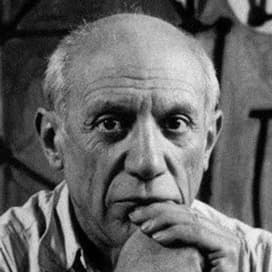 • Full Name: Pablo Diego José Francisco de Paula Juan Nepomuceno Crispín Crispiniano María Remedios de la Santísima Trinidad Ruiz Picasso
 • Born: October 25, 1881 – Málaga, Spain
• Died: April 8, 1973 – Mougins, France
• Works Produced: Over 50,000 (paintings, drawings, ceramics, sculptures, prints)
• Auction Record: $179.4 million (Les Femmes d’Alger, Version O)
Childhood and Early Life
Pablo Ruiz Picasso was born on October 25, 1881, in Málaga, Spain, into a family steeped in art. His father, Don José Ruiz Blasco, was a painter and art teacher who recognized Pablo’s talent at an unusually young age. Legend has it that Picasso’s first word was “piz” (short for lápiz, the Spanish word for pencil).
By the age of 7, he was already receiving formal artistic training from his father, and by 13, Picasso’s skills had surpassed his teacher’s. His family soon moved to Barcelona, a city brimming with artistic energy, where Picasso would find his earliest sources of inspiration.
Education
Though Pablo Picasso enrolled in prestigious institutions such as the School of Fine Arts in Barcelona and later the Royal Academy of San Fernando in Madrid, he found formal education stifling. Instead of adhering to classical traditions, he sought out the cafés, theaters, and bohemian circles where avant-garde artists, writers, and anarchists gathered. This rejection of academic art and embrace of radical new ideas laid the groundwork for his revolutionary career.
Family
Pablo Picasso’s personal life was as colorful and turbulent as his canvases. He never married in his early years but was known for his numerous relationships, many of which influenced his art. His most notable partners included Fernande Olivier, Olga Khokhlova (his first wife, a Russian ballerina), Dora Maar, Françoise Gilot, and Jacqueline Roque.
He fathered four children: Paulo, Maya, Claude, and Paloma. His relationships were often stormy, but they frequently inspired shifts in his artistic style.
World War II and After
The outbreak of World War II marked a pivotal period in Pablo Picasso's artistic journey. During the German occupation of Paris, the Spanish master remained in the city, continuing his work despite the challenging circumstances. The war years saw him create some of his most politically charged pieces, including works that reflected the horror and devastation of the conflict.
Following the war's end in 1945, Pablo Picasso experienced a renaissance of creativity and recognition. His post-war period was characterized by renewed artistic exploration and a shift toward more optimistic themes. The artist, now in his sixties, found himself increasingly celebrated on the international stage, with major exhibitions and retrospectives cementing his status as one of the most influential artists of the modern era.
Career
Pablo Picasso’s career can be divided into several distinct phases:
• Blue Period (1901–1904): Marked by somber tones of blue and green, these paintings reflected themes of poverty, despair, and human suffering, influenced by the suicide of a close friend.
• Rose Period (1904–1906): Warmer hues of pink and orange replaced blues, featuring circus performers, harlequins, and themes of hope and romance.
• African Art & Primitivism (1907): Inspired by African masks and Iberian sculpture, Picasso began experimenting with radical new forms.
• Cubism (1907–1917): Alongside Georges Braque, Picasso co-founded Cubism, one of the most revolutionary art movements of the 20th century, deconstructing objects into geometric forms.
• Neoclassicism and Surrealism (1917–1930s): His style shifted again, drawing inspiration from classical art as well as surrealist imagery.
• Later Years (1940s–1973): Picasso continued experimenting across mediums i.e painting, ceramics, sculpture and remained prolific until his death.
Painting Style
Pablo Picasso was known for constant reinvention. He never confined himself to one style; instead, he disrupted expectations at every turn. His work emphasized distortion, abstraction, bold colors, fragmented forms, and emotional intensity. Above all, his art reflected an unwillingness to settle for tradition.
Famous Paintings
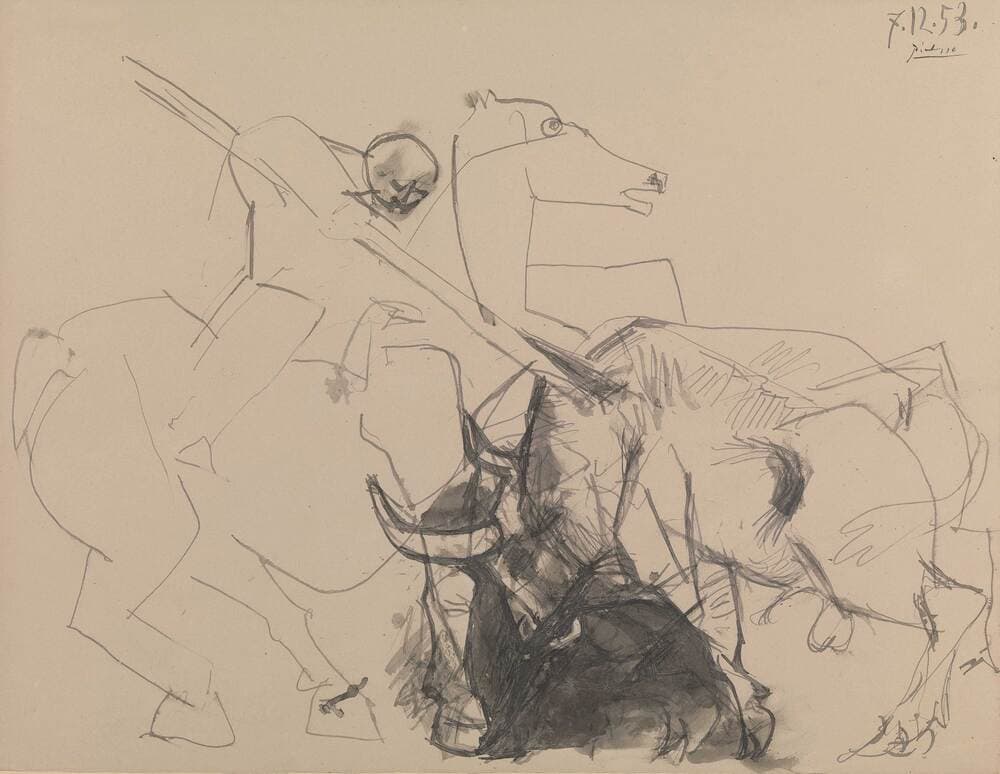 Some of Picasso’s most celebrated works include:
• Les Demoiselles d’Avignon (1907): A groundbreaking proto-Cubist work that shocked the art world with its raw, angular figures.
• Guernica (1937): A monumental anti-war painting created in response to the bombing of Guernica during the Spanish Civil War.
• The Weeping Woman (1937): A haunting portrait symbolizing the tragedies of war.
• The Old Guitarist (1903): A hallmark of the Blue Period, embodying sorrow and fragility.
• Girl Before a Mirror (1932): A colorful, surreal portrait of his muse Marie-Thérèse Walter.
Ceramics
In 1946, Picasso discovered a new passion that would occupy him for decades: ceramics. During a visit to the annual pottery exhibition in Vallauris, a small town on the French Riviera, he met Suzanne and Georges Ramié, owners of the Madoura pottery workshop. This encounter sparked an intense fascination with clay work that would produce over 4,000 ceramic pieces.
Picasso approached ceramics with the same revolutionary spirit he had brought to painting and sculpture. He transformed everyday pottery forms i.e plates, vases, and pitchers into canvases for his artistic vision. His ceramic works displayed playful imagery, mythological themes, and bold experimentation with glazes and forms. The artist's involvement with ceramics also led him to settle in Vallauris, where he worked extensively with the Madoura workshop throughout the 1950s.
Political Views
Pablo Picasso was outspoken about politics, particularly his opposition to fascism. His membership in the French Communist Party reflected his belief in art as a weapon against oppression. Guernica remains the most powerful visual condemnation of war in modern history.
Death
Pablo Picasso died of a heart attack on April 8, 1973, at his villa Notre-Dame-de-Vie in Mougins, France, at the age of 91. His final words were reportedly "Drink to me, drink to my health. You know I can't drink anymore." The artist remained creatively active until the very end of his life, working on paintings and drawings in his final years with undiminished passion.
His death marked the end of an extraordinary artistic career that spanned over seven decades and fundamentally changed the course of modern art. Picasso left behind an immense legacy, an estimated 50,000 artworks including paintings, drawings, sculptures, ceramics, and prints. His influence on subsequent generations of artists remains immeasurable, and his innovations continue to inspire creative expression across multiple disciplines.
The artist was buried in the grounds of his château in Vauvenargues, with a bronze cast of his sculpture "Woman with a Vase" marking his grave, a fitting tribute to a master who revolutionized artistic expression in the 20th century.
Awards and Recognition
Though Pablo Picasso was often more rebellious than ceremonial, he received numerous honors, including:
• Lenin Peace Prize (1962)
• International Lenin Peace Prize (1950)
• Retrospectives at world-renowned institutions like MoMA, Tate, and the Louvre
Auction Records
Pablo Picasso’s works consistently dominate the art market. Notable auction sales include:
• Les Femmes d’Alger (Version O) sold for $179.4 million in 2015.
• Nude, Green Leaves and Bust fetched $106.5 million in 2010.
• Numerous other works have sold for over $50 million, making him one of the most valuable artists in history.
Unknown and Interesting Facts
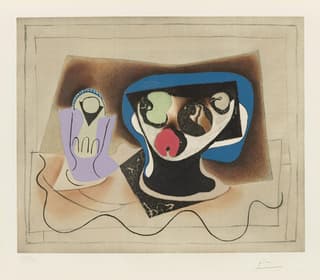 • Pablo Picasso’s full name had 23 words: Pablo Diego José Francisco de Paula Juan Nepomuceno Crispín Crispiniano María Remedios de la Santísima Trinidad Ruiz Picasso.
• He was a prolific writer, producing thousands of poems and two plays.
• He once said, “It took me four years to paint like Raphael, but a lifetime to paint like a child.”
• He kept many of his works rather than selling them, meaning much of his art only emerged publicly after his death.
Why Is Pablo Picasso Famous
Pablo Picasso’s fame endures because he redefined what art could be. He showed the world that beauty could exist in distortion, that painting could express politics, and that reinvention was itself an art form. His works continue to inspire debate, scholarship, and staggering sales, ensuring his name remains synonymous with innovation.