significance of ganpati bappa paintings - ganesha paintings
.jpg&w=3840&q=75)
Ganesha paintings hold a special place in Indian art and culture. They are more than just decorative pieces; they are conduits of spiritual energy, symbols of prosperity, and reflections of deep cultural heritage. This article explores the multifaceted significance of Ganesha paintings, delving into their spiritual, cultural, and artistic dimensions.
o Spiritual Significance
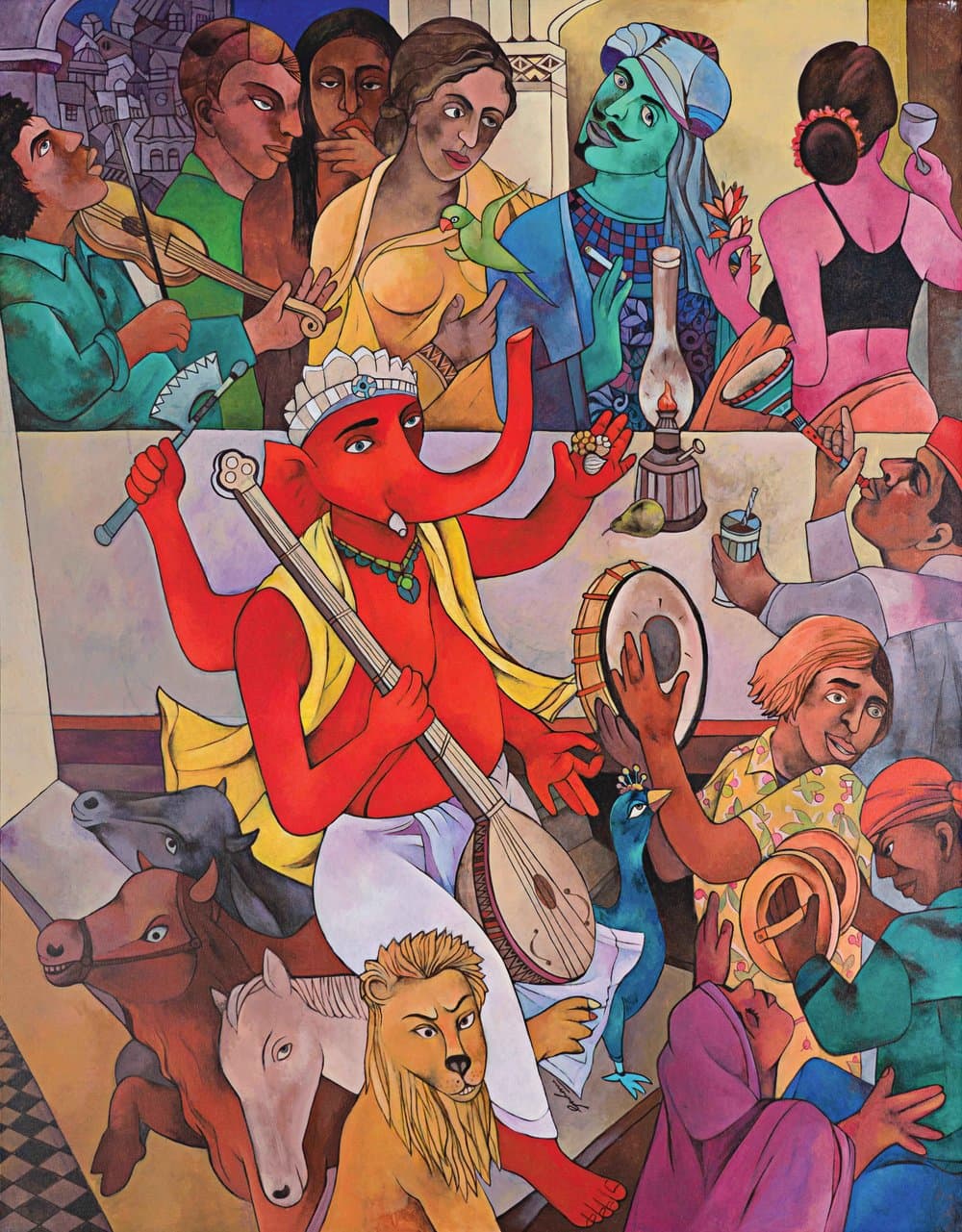 • Ganesha, the Deity of Wisdom and Beginnings:
Lord Ganesha is revered as the remover of obstacles, the god of wisdom, and the patron of new beginnings. Paintings of Ganesha often depict him with symbols that represent these attributes. His elephant head signifies wisdom and discernment, while his large ears symbolize the importance of listening and absorbing knowledge. The modak, a sweet he holds, represents the rewards of spiritual practice and the sweetness of the divine.
• Uses for Meditation and Rituals:
Ganesha paintings are not just visual art; they serve spiritual purposes as well. Many people use these paintings in meditation and rituals, believing that they bring calm, focus, and positive energy. Placing a Ganesha painting in a meditation area is thought to enhance the depth and meaning of spiritual practices.
• Symbolism in Ganesha Art:
Every element of Ganesha's depiction carries symbolic meaning. The mouse at his feet represents the subjugation of ego and desire, while the lotus he often sits on symbolizes purity and enlightenment. The use of vibrant colors, such as yellow for abundance and red for power, further enhances the spiritual significance of these paintings.
o Cultural Significance
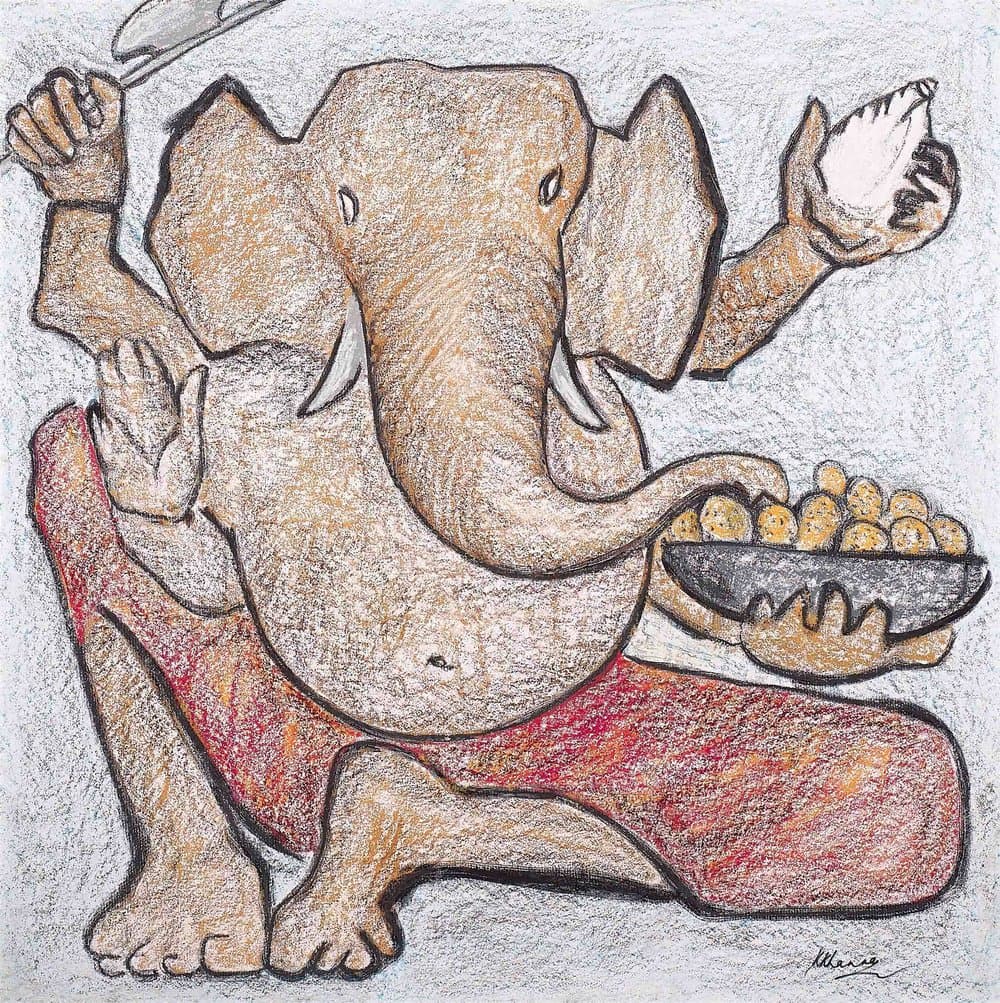 • Cultural Influences on Ganesha Art:
Ganesha's depiction varies across different regions of India and beyond. In Maharashtra, he is often shown with wide eyes and in a seated position, while in South India, the depictions are more intricate, reflecting the region's rich tradition in textile and gold work. In Nepal, Ganesha images are more elaborate, and in Thailand, he is portrayed as a god of literature and the arts.
• Ganesha Paintings during Festivals:
During festivals like Ganesh Chaturthi, Ganpati Bappa paintings and sculptures take center stage. These artworks are not just decorative; they serve as a medium for storytelling, community bonding, and cultural preservation. Elaborately decorated pandals (temporary structures) house Ganesha idols, and each pandal tells a story through its decorations, often reflecting contemporary issues or mythological narratives.
o Artistic Significance
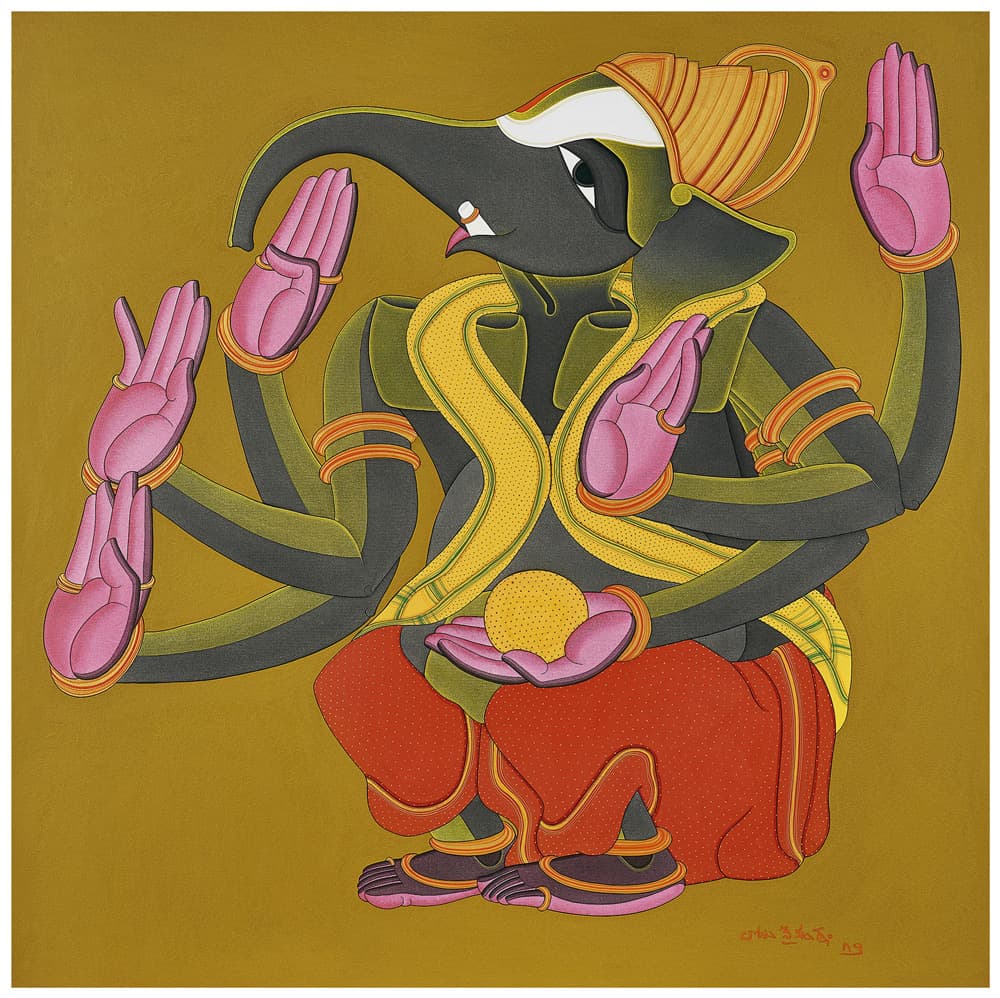 • Ganesha as a Muse:
For generations, Ganesha has inspired artists across various media, from traditional painting to contemporary art. His form offers a rich canvas for artistic expression, allowing artists to explore themes of spirituality, culture, and creativity. Modern interpretations of Ganesha often blend traditional iconography with contemporary styles, reflecting the evolving nature of art.
• Evolution of Ganesha Art:
The depiction of Ganpati Bappa in art has evolved over time. Ancient rock engravings and temple sculptures show him as a protective deity, while medieval and modern art depict him in more elaborate and colorful forms. Contemporary artists continue to innovate, using new mediums and styles to reinterpret Ganesha's image.
o Practical Uses and Benefits
• Enhancing Aesthetic Appeal:
Ganesha paintings add a touch of cultural depth and aesthetic appeal to any space. They can serve as focal points in living rooms, bedrooms, or hallways, reflecting the homeowner's appreciation for Indian art.
• Feng Shui and Vastu Considerations:
According to Feng Shui and Vastu principles, placing a Ganpati Bappa painting in the east or north direction can attract wealth and remove obstacles. These paintings are believed to bring harmony and positive energy to the home.
o Conclusion
Ganesha paintings are a testament to the rich spiritual, cultural, and artistic heritage of India. They serve as more than just decorative pieces; they are symbols of wisdom, prosperity, and spiritual guidance. Whether used in meditation, displayed during festivals, or simply appreciated for their beauty, Ganpati Bappa paintings continue to inspire and uplift. Investing in Ganesha art is not just about owning a piece of art; it is about connecting with a timeless tradition and the divine.