Amarnath Sehgal: Partition Survivor to Modernist Sculpture Icon
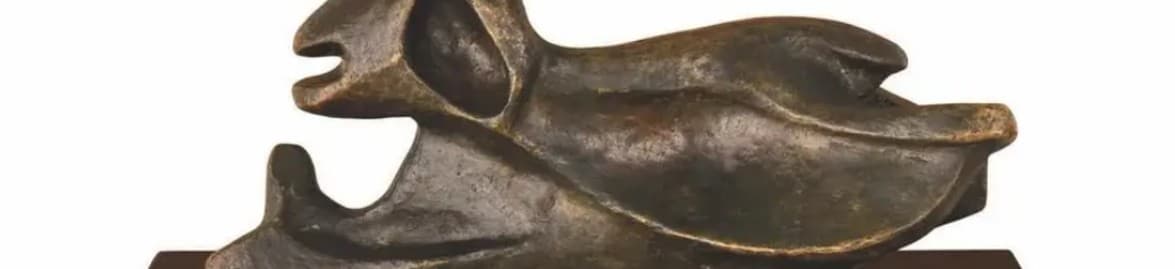
Amarnath Sehgal is one of the artists who has symbolised the chaotic birth of modern India through art. His life and art are characterised by one of the most tragic moments in the history of South Asia, namely the partition of India in 1947. To put it simply, Sehgal was not just a sculptor but also a witness to one of the most tragic moments in the history of South Asia. His works became a voice for all the erased histories during the Partition of India.
The Trauma of Partition: A Defining Beginning
Sehgal was born in 1922 in Campbellpur (currently called Attock, Pakistan). Undivided Punjab was the backdrop of his formative years. For most people of his generation, the Partition of India marked a point of no return. Millions of people had been uprooted and forced to relocate, which led to widespread communal violence.
Such an experience cannot have remained outside Sehgal's personal and artistic development. Sehgal recalled Partition as a ‘holocaust’ during which he saw how his nerves were shattered due to the surrounding violence. The traumatic experience left its imprint on him, who chose to reflect it in his works rather than repress it.
As scholars claim, Sehgal's art can be seen as a "voice for the voiceless". The pain experienced by the victims and their displacement is a recurrent theme in his works. His sculptures evoke feelings of distress, fragmentation, and collective suffering in viewers.
From Engineer to Artist: A Modernist Awakening
Interestingly, Sehgal was not originally a trained artist. He started as an engineer in Lahore, slowly drifting into art, studying on his own, and eventually obtaining formal education in the USA. During his stay in New York, Sehgal became acquainted with global modernist trends and artists like Henri Matisse and Jackson Pollock, whose avant-garde techniques left their imprint on him.
However, Sehgal’s modernism had nothing imitative about it. While Sehgal appropriated cubism, expressionism, and abstraction, he always based his artistic process on personal experience and, especially, the socio-political context of post-colonial India. The sculptor’s works cannot be seen as mere formal experiments; they carry profound ethical import.
The combination of the vocabulary of global modernism with the pressing local concerns made him one of the most distinctive representatives of Indian modern art. In contrast to other modernists, Sehgal was more interested in human reality than in spirituality or aestheticism.
Sculpting Modernism: Themes and Styles
 Human dignity is a central theme in his work. His sculptures show elongated, strained, or even broken figures, which may seem heavy from the load of history. It is important to emphasise that these are not ideal figures but figures representing suffering.
Sculptures such as ‘The Captive’, which was created during the period of political persecution, was placed on Robben Island in South Africa. Thus, it proves that his work went beyond India. The sculpture was related to Nelson Mandela's imprisonment and demonstrates how his art transcended national boundaries to engage with universal themes.
Sehgal is known for using a particular artistic language, which can be described as abstract-figurative with elements characteristic of European modernism. His works have tactile qualities, suggesting their creation by strong emotions and energy. Thus, they seem more vivid, touching the viewer emotionally rather than visually.
Importantly, his sculptures do not provide closure. The incomplete figures of the artist remind us of incomplete history and thus create the basis for dialogue.
Public Art and Nation Building
Sehgal's contribution to the field of public art in India is equally important. During the period after Indian independence, he got commissions from government institutions for creating works that helped define the visual identity of this emerging country. The enormous bronze mural made by him in 1962 at Vigyan Bhavan in New Delhi represents rural and urban aspects of India in its quest for national progress.
His participation in the creation of national identity through art meant that he was working within the political realm as well. It was not merely about beautifying public places; it was much more than that. Through his works, he tried to remind the people of the price that was paid to achieve a young democracy.
The Artist as Activist: A Landmark Legal Battle
Perhaps one of the most remarkable chapters in his life was the legal dispute with the Indian government. The latter ordered his painting at the Vigyan Bhavan to be stripped from its wall without his consent in 1979, after which it was kept unused until further notice. Instead of silently accepting this decision, Sehgal took part in a 13-year legal battle for his artist’s rights.
This lawsuit, Amar Nath Sehgal v. Union of India, turned out to be groundbreaking in terms of Indian copyright law, as it introduced the notion of 'moral rights', meaning that even when an artwork is sold or commissioned, the artist retains some connection with it. Such a legal outcome meant a lot for Indian artists. It made Amar Nath Sehgal a leader in promoting artists’ rights in the country.
International Recognition and Later Years
Sehgal’s work did not limit him to India; in fact, he worked extensively in Europe and America, making him famous around the world. His connections with Luxembourg, where he set up a studio and cultural foundation, are evidence of his worldwide influence.
While he enjoyed recognition internationally, within Indian art circles, he has not received due credit during his lifetime. However, through exhibitions, archives, and research on him, his importance as an artist is now being realised.
Sehgal continued to work till his last days, creating sculptures, paintings, and even poetry. For his invaluable contribution to Indian art, in 2008, he was posthumously awarded the Padma Bhushan.
Legacy: Memory Cast in Metal
Amarnath Sehgal today occupies an important place in the chronicle of modern Indian art, being an artist capable of uniting his personal experiences with the experience of the people and the history of the local community with universal issues. His sculptures force one to think about some unpleasant realities, such as the horrors of Partition, the vulnerability of humanity and the importance of empathy.
However, at a time when historical amnesia threatens to overshadow many traumatic events, Sehgal's sculptures continue to remain a part of history despite attempts to bury them and forget about them. And the power of this art lies in its ability to serve as a witness and moral authority.
Overall, the life and career of Amarnath Sehgal reflect the path taken by modern India in general – a country that has experienced division and continues to struggle to define itself. In remembering Amarnath Sehgal, we inevitably have to recall the history that he did not want anyone to forget. And in doing so, we encounter the enduring power of art to transform suffering into meaning.