


subodh gupta - godfather of contemporary art in india
.jpg&w=3840&q=75)
Subodh Gupta (Born 1964), often referred to as the "Damien Hirst of Delhi" stands as a towering figure in contemporary Indian art who has redefined artistic expression & brought Indian contemporary art to the global forefront. His innovative approach to sculpture and installation art has captivated audiences worldwide, earning him the moniker "Godfather of Contemporary Art in India". Known for transforming everyday objects such as stainless-steel utensils, bicycles and cow dung into striking works of art, Subodh Gupta has redefined how Indian art is perceived on the world stage.
In this article, we discuss Subodh Gupta's career, his artistic development and how his work shows interaction between tradition and modernity finally cementing his place in the contemporary art world as an icon.
Early Life & Artistic Foundations
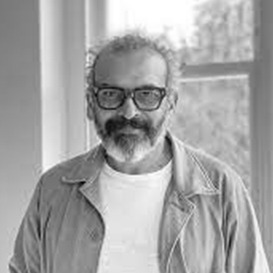 Subodh Gupta was born in 1964 in Khagaul, a small town in Bihar, India. Gupta was a man of modest background but had deep roots in Indian culture and tradition. He was raised in a rural environment that he often reflects upon in his works. However, even though he was raised in a rural environment, Gupta sought formal education in the art world. He earned his Bachelor of Fine Arts at Patna College of Arts and Crafts and later an MA from the College of Art in New Delhi.
From such a historical background, Gupta had much to learn from the very rich heritage of craftsmanship along with long-standing traditions of art and culture in India. Early on, his work was influenced by the classical Indian art forms but as he continued his study and career, his interest gradually shifted towards contemporary and experimental art. It is through this fusion of traditional techniques and new-age media that defines Gupta's later work.
Family Background
Subodh Gupta’s upbringing in Khagaul, Bihar, played a foundational role in shaping his artistic vision. This village, split by a railway line, was home to a community where 99% of the population, including Gupta’s father, brother, and brother-in-law, worked for the railways. Gupta’s father, a railway guard, passed away when Gupta was only 11 years old. In the wake of this tragedy, his mother, who came from a farming family, sent him to live with his brother in a remote village for a few years. Gupta fondly refers to himself as a “railway boy,” a theme that permeates his later works through motifs of railway networks and stainless steel utensils, symbols of modernity and his parents’ lives.
Subodh Gupta’s fascination with the arts began when his mother took him across the railway to watch theater performances. Captivated by the world of acting, he initially aspired to become an actor, which eventually led to his broader engagement with creativity. Today, Gupta resides in Gurgaon, near Delhi, with his wife, celebrated artist Bharti Kher and their two children.
Artistic Style & Influences
Subodh Gupta began with the traditional forms of painting but ended up specialising in sculpture and installation. His success is therefore partly because he can integrate and combine various mediums. Some of his works are built from ordinary materials like stainless steel, glass, bronze, and found objects, which he manipulates to create evocative thought-provoking pieces.
One of the most iconic techniques that Gupta uses is metal objects, especially stainless steel, in creating complex, intricate sculptures and installations. He turns many mundane things, like kitchen utensils, tiffin boxes, motorcycles, and even human skulls, into art that pops out strikingly. By using these familiar objects, Gupta is speaking to the viewer's sense of everyday life, but at the same time, he provokes deeper reflection on industrialisation, consumerism, and commodification of culture.
For instance, using utensils and kitchenware-things quintessentially Indian symbols of domesticity and tradition- speaks to the idea of family, nourishment, and cultural heritage. Nonetheless, these objects are used in a different context by Gupta, stripped of their utility, and acquiring new meanings. In doing this, he points out that there is a tension between tradition and modernity between domesticity and industrialisation, creating art that speaks to both the past and the present.
Signature Style: Everyday Objects As Art
Subodh Gupta is best known for his large-scale installations and sculptures that dramatically reimagine commonplace Indian kitchen utensils. Stainless steel containers, thalis (traditional metal plates) and cooking vessels become powerful metaphors for Indian cultural identity, migration, globalization, and social transformation. His work brilliantly captures the intersection of tradition and modernity, using familiar objects to tell complex stories about Indian society.
One of his most iconic pieces, "Very Hungry God" - a massive skull constructed entirely from kitchen utensils - exemplifies his ability to create monumental art that is simultaneously playful, critical, and deeply symbolic. This sculpture represents not just the material culture of India, but also broader themes of consumption, mortality, and cultural memory.
Themes & Symbolism
Transformation is the central theme of Gupta's work, and it is more than a representation of transformation-it is also a representation of the transforming social, cultural, and political situation in India. Like India itself, his work constantly evolves and changes, and so transforms the mundane, ordinary, and familiar into something unfamiliar, strange, and evocative. In his use of stainless steel-a material most readily associated with modernity and industrialisation-India's rapid urbanisation and technological advancement come across.
He works on the themes of memory and identity and often thinks about India's complex history and its changes in social structure. He, for instance, shows the vulnerability of life and the certainty of death while juxtaposing stark imagery against reflection of the burgeoning industrialisation of modern India, representing the conflict between progress and loss.
Other subjects commonly treated are globalisation and their effects on Indian culture. As globalisation penetrates Indian society and its economy, Gupta's works criticise a change of values, traditional culture disappearance, and consumption of everything from the Western world of consumerism. His statues incorporate elements of global popular culture, for example objects showing the evolution of present consumers and lifestyle of India. This work has now become something more than Indian artistry: it breaks through global recognition.
During the late 1990s and early 2000s, Subodh Gupta's career really picked up because his work began attracting international attention. His first major international shows started with an exhibition in India in 2000, when he participated in the Kochi-Muziris Biennale. Subsequent years followed with international solo exhibitions. It was approximately this time that Gupta began to be known for his prowess in being able to weave together traditional Indian symbolism and global, modern themes into his works. His works attracted a global audience that focused more on the crossroads of local and global issues, which is how globalisation impacts traditional cultures.
By the mid-2000s, Gupta's works were being showcased at most of the world's great galleries and museums, such as the Victoria and Albert Museum in London, the Pompidou Centre in Paris, and the Triennale di Milano in Italy. His works were being displayed at the big art fairs like Art Basel in Switzerland and Venice Biennale, thus his international reputation was further established. Gupta's art was not confined to the Indian scene anymore but had become a part of the global contemporary movement.
It is also indicative of a larger trend in the art world as more and more Indian artists are now being recognised as capable of portraying not only local traditions but global issues as well. Gupta is part of that wave where India is emerging to influence the global sphere in matters of culture and arts.
Famous Paintings / Sculptures
1. “Line of Control” (2008)
• Description: Subodh Gupta Line of Control (2008) is a monumental installation that critiques the use of nuclear weapons and explores the tensions along the India-Pakistan border, particularly in Kashmir. The artwork is shaped like a mushroom cloud, symbolizing the aftermath of a nuclear explosion, and is constructed entirely from stainless steel kitchen utensils, such as tiffin boxes, pots, pans and plates. This massive sculpture—measuring 36 feet (11 meters) in height—creates a striking contrast between objects of domesticity and symbols of destruction, making a powerful statement on war, globalization and socio-political tensions.
• Reason for Creation: Subodh Gupta created Line of Control as a powerful critique of war, destruction, and geopolitical tensions, particularly in relation to nuclear conflict and global militarization. The massive mushroom cloud sculpture, made entirely of stainless steel kitchen utensils, references both the aftermath of nuclear explosions and the everyday lives of ordinary people affected by such conflicts.
• Themes: It symbolizes political and social tensions, particularly the fragility of peace in global and regional conflicts.
• Significance: Displayed at the Tate Triennial, it highlights Gupta's ability to connect personal and national identities with global issues.
2. “Very Hungry God” (2006)
• Description: Subodh Gupta's Very Hungry God (2006) is one of the most iconic contemporary art installations by the renowned Indian artist. This large-scale artwork is crafted from approximately 3,000 stainless steel kitchen utensils, including pots, pans, and other everyday objects commonly found in Indian households. Measuring 390 × 320 × 400 cm (153.9 × 126 × 157.5 inches), the sculpture takes the form of a massive skull & serves as a powerful commentary on contemporary issues in India, particularly the themes of consumption, hunger and mortality. The use of stainless steel utensils, ubiquitous in Indian households, serves as a commentary on consumption, mortality and the transient nature of life. The reflective surface of the skull creates an optical effect that draws viewers in, prompting introspection about the relationship between daily life and deeper existential themes.
• Reason for Creation: Subodh Gupta created Very Hungry God as a powerful commentary on consumerism, globalization, and socio-economic contrasts. The skull, crafted entirely from stainless steel kitchen utensils, reflects themes central to his artistic practice, which often explores the intersection of traditional Indian culture and rapid modernization.
• Themes: Represents hunger, mortality, and consumption, merging the global fascination with death symbolism with everyday Indian domestic objects.
• Significance: This piece solidified Gupta's reputation on the global art stage, showcasing his innovative use of materials.
3. “What Does the Vessel Contain, That the River Does Not” (2012)
• Description: Subodh Gupta's "What Does the Vessel Contain That the River Does Not" is a monumental installation featuring an old wooden boat filled with stainless steel utensils, suitcases, bicycles, chairs, and other everyday objects. This work explores migration, displacement, memory, and identity, themes that frequently appear in Subodh Gupta’s art. The boat, a universal symbol of journey and transition, appears overloaded, evoking the image of people leaving their homes, carrying their belongings in search of a new life, stability or refuge.
• Reason for Creation: Subodh Gupta created What Does the Vessel Contain, That the River Does Not as a thought-provoking exploration of migration, displacement, memory, and identity. The large-scale installation—a wooden boat overflowing with stainless steel utensils, luggage, bicycles, and other everyday objects—symbolizes the journey of people searching for a better life, stability and belonging.
• Themes: Explores displacement, migration, and the emotional weight of belonging.
• Significance: This work engages with the global refugee crisis and personal stories of movement and loss.
4. “My Mother and Me” (1997)
• Description: Subodh Gupta's "My Mother and Me" is a significant cylindrical structure made of cow dung created in 1997 exploring themes of maternal care, memory and domestic life. The piece is centered around kitchen utensils and everyday household objects, which serve as symbols of sustenance, tradition, and the intimate connection between a mother and her child. Subodh Gupta, known for transforming ordinary items into powerful artistic statements, uses stainless steel utensils—a recurring motif in his work—to represent the labor, love, and nourishment provided by mothers in Indian households.
• Reason for Creation: Subodh Gupta created My Mother and Me as a deeply personal and emotional tribute to his mother, familial roots, and the domestic traditions of Indian households. This artwork reflects his ongoing exploration of memory, nostalgia, and the significance of everyday objects—especially kitchen utensils, which are central to his artistic language.
• Themes: Celebrates sustainability and the unpretentious beauty of rural traditions while evoking nostalgia and maternal connection.
• Significance: This piece reflects Gupta's ability to transform organic, everyday materials into profound artistic expressions.
5. “Spill” (2007)
• Description: Subodh Gupta's "Spill" is a monumental installation featuring a large brass pot tipped over, spilling an abundance of stainless steel utensils onto the floor. The piece embodies themes of excess, consumption, waste, and the tension between abundance and loss. Subodh Gupta’s signature use of stainless steel kitchen utensils, commonly found in Indian households, transforms everyday objects into a powerful commentary on modernity, globalization, and domestic life. The dramatic imagery of utensils seemingly frozen in motion creates a sense of chaos, movement and instability.
• Reason for Creation: Subodh Gupta created Spill as a striking commentary on excess, consumption, and the fragility of material abundance. This installation features a large, overturned brass pot spilling an overflowing cascade of stainless steel utensils, a motif central to Gupta’s artistic practice.
• Themes: Explores the intersection of consumption, labor, and cultural symbolism through objects of domesticity.
• Significance: Highlights Gupta's unique artistic style and his ongoing dialogue with themes of modernity and tradition.
Rise To Prominence
Subodh Gupta gained international recognition with his monumental sculptures and installations, often crafted from everyday metal objects such as lunch boxes, tin cans, and cookware. These objects, ubiquitous in Indian households, are transformed into powerful symbols that question the ambivalence of a society caught between tradition and modernity. His work not only represents a cultural history but also translates a spiritual quality through the mundane items from which they are composed.
One of Subodh Gupta's most iconic works is "Very Hungry God" (2006), a gigantic skull sculpture made from kitchen vessels. This piece was displayed outside François Pinault's Palazzo Grassi at the 2007 Venice Biennale and later acquired by Pinault, cementing Gupta's status as one of the most valuable Indian artists. The sculpture's monumental scale and intricate construction from everyday utensils highlight Gupta's ability to imbue familiar objects with new meanings, making him a consummate artist in the contemporary scene.
Global Impact
Gupta's influence extends beyond India's borders. His work has been featured in major exhibitions and biennales around the world, including the Venice Biennale and the Centre Pompidou in Paris. Gupta’s ability to address universal themes through a distinctly Indian perspective has garnered him international acclaim and established him as a leading figure in contemporary art.
In 2007, Subodh Gupta was included in the ArtReview Power 100 list as one of the three most powerful figures in Indian contemporary art. This recognition underscores his significant contributions to the field and his role in shaping the narrative of contemporary Indian art on a global scale. His success story also reflects changing attitudes toward Indian art on the world stage. India has a long and rich history of art, but it is this work of contemporary artists that is now recognised as the representative of the new forward-looking India. Gupta's success paved the way for other Indian artists like Bharti Kher, Anish Kapoor, Jitish Kallat to get international recognition.
Legacy & Influence
Subodh Gupta’s impact extends beyond galleries—he has influenced filmmakers, designers and even Bollywood (his aesthetic appears in movies like "Lunchbox"). His ability to merge the ordinary with the profound has made him a cornerstone of India’s contemporary art movement.
Conclusion
Subodh Gupta is more than an artist; he is a cultural phenomenon who has reshaped how the world perceives contemporary Indian art. His ability to transform everyday objects into powerful works of art that carry deep cultural and social significance has earned him the title of the "Godfather of Contemporary Art in India". Through his innovative use of materials and his profound social commentary, Subodh Gupta continues to inspire and captivate audiences worldwide, leaving an indelible mark on the world of contemporary art.




