sudarshan shetty: from painting to kinetic art

Sudarshan Shetty is celebrated as India's prominent contemporary artist, renowned for having evolved from traditional painting to innovative kinetic art. As an artist trained initially and later famous for his captivating mechanical sculpture and installations, Sudarshan Shetty's work addresses the interaction between the living and the non-living, the lyrical and the mundane, and the visible and the invisible.
Early Beginnings: The Painter's Path
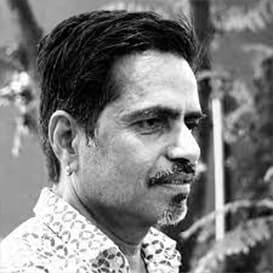 Brought into this world in 1961 in Mangalore, India, Sudarshan Shetty started as a painter at the Sir J.J. School of Art in Mumbai. His early paintings were heavily influenced by traditional Indian art, but even at that point, he showed a concern with movement and change.
Even though Sudarshan Shetty experienced success in his paintings early on, he felt stifled by the immobility of the medium, which led him to sculpt and experiment with kinetic art because they represented more dynamic scope.
Experimentation in Painting
At the very beginning, Sudarshan Shetty worked with his thoughts and feelings as a painter, which provided the foundation for his subsequent works. His early works were expressions of great introspection and keen observation of life. Shetty's paintings included rich detail and luxurious color, reflective of his fascination with the complexity of human life.
This theme of engagement between modernity and tradition in his paintings was the basis on which he pushed himself further by experimenting with sculpture and movement art.. He frequently contrasted traditional Indian imagery with modern images, through a visual dialogue that mocked traditional understandings of art and culture. This exploration of theme provided the groundwork for his subsequent experimentation with sculpture and kinetic art.
Transition to Sculpture
As his vision as an artist grew, Shetty wanted to move beyond the confines of the two-dimensional canvas and push the three-dimensional potential of sculpture. This compelled him to try sculpture, a medium that allowed him greater freedom to play around with space and form in a more dynamic way. Shetty's sculptures are defined by their new materiality and by their ability to evoke movement and transformation.
Among Sudarshan Shetty's most important sculptural works is "Love," a monumental installation composed of a metal and found-object tree. The work is a poignant exploration of the relationship of nature and human intervention, posing a question about the fragility and resilience of the natural world. Shetty furthered concepts of time, memory, and human experience in his sculpture and pushed the boundaries of conventional sculpture.
Going into Kinetic Art
The aesthetic development of Sudarshan Shetty made a radical departure when he began producing work in kinetic art, a medium that uses movement and technology to achieve interactivity and immersion..Kinetic art enabled Shetty to display the dynamic interaction between the work of art and the viewer, creating works of art that react to their surrounding and provoke the viewer into discussion.
Sudarshan Shetty's most popular kinetic installations include "Ship of Theseus," which was exhibited at the 2016 Kochi-Muziris Biennale. The installation is an enormous, rotating wheel made of wood and metal that creates a mesmerizing dance of light and shadow. Inspired by the ancient Greek paradox of the Ship of Theseus, the work addresses issues of identity and change. Through this installation, Sudarshan Shetty urges the viewers to consider the impermanence and dynamism of life.
Major Themes in Sudarshan Shetty's Work
1. Cultural Memory & Mythology
He takes references from Indian folklore, architecture, and household items, reconfiguring them in the context of today's world.
2. Human vs. Machine
His robotic sculptures challenge human agency, work, and the purpose of technology in art.
Prominent Kinetic Art Installations of Sudarshan Shetty
Some of the most prominent kinetic installations by Sudarshan Shetty are:
Paper Moon (1995): Initial solo bridging painting and sculpture with whimsical, fairground-related objects.
Consanguinity (2003): Installation that examined the missing body using anthropomorphized objects and visceral content.
Shift (2004): Foldable building model as kinetic art. Museum while standing, street market when lying down.
Flying Bus (2014): A giant installation of a bus suspended as if in flight.
The Piece of the Earth (2015): A kinetic sculpture which questioned the relationship between the self and the environment.
Shoonya Ghar (2016): A large installation which played with emptiness and the idea of nothingness.
Shrine Empire (2017): A large-scale installation which uses moving components, sound, and light to generate an immersive experience.
Sudarshan Shetty's evolution from painter to kinetic sculptor is a testament to an artist not wanting to reinvent himself. His paintings resist static ideas of art, inviting viewers to engage with movement, memory, and meaning. With each challenge, artist Sudarshan Shetty remains part of modern art, proving that vision and creativity know no limits.