symbolism of pigeons in jamil naqsh’s paintings
.jpg&w=3840&q=75)
Jamil Naqsh was a renowned artist whose imagery of pigeons occupies a central place in his art and creates a bridge between memory, culture, and emotion. The presence of these birds in his work is not incidental. It reflects layers of personal history, South Asian artistic tradition, and a resonant metaphor for love and freedom that recur throughout his career.
Pigeons as Personal Memory
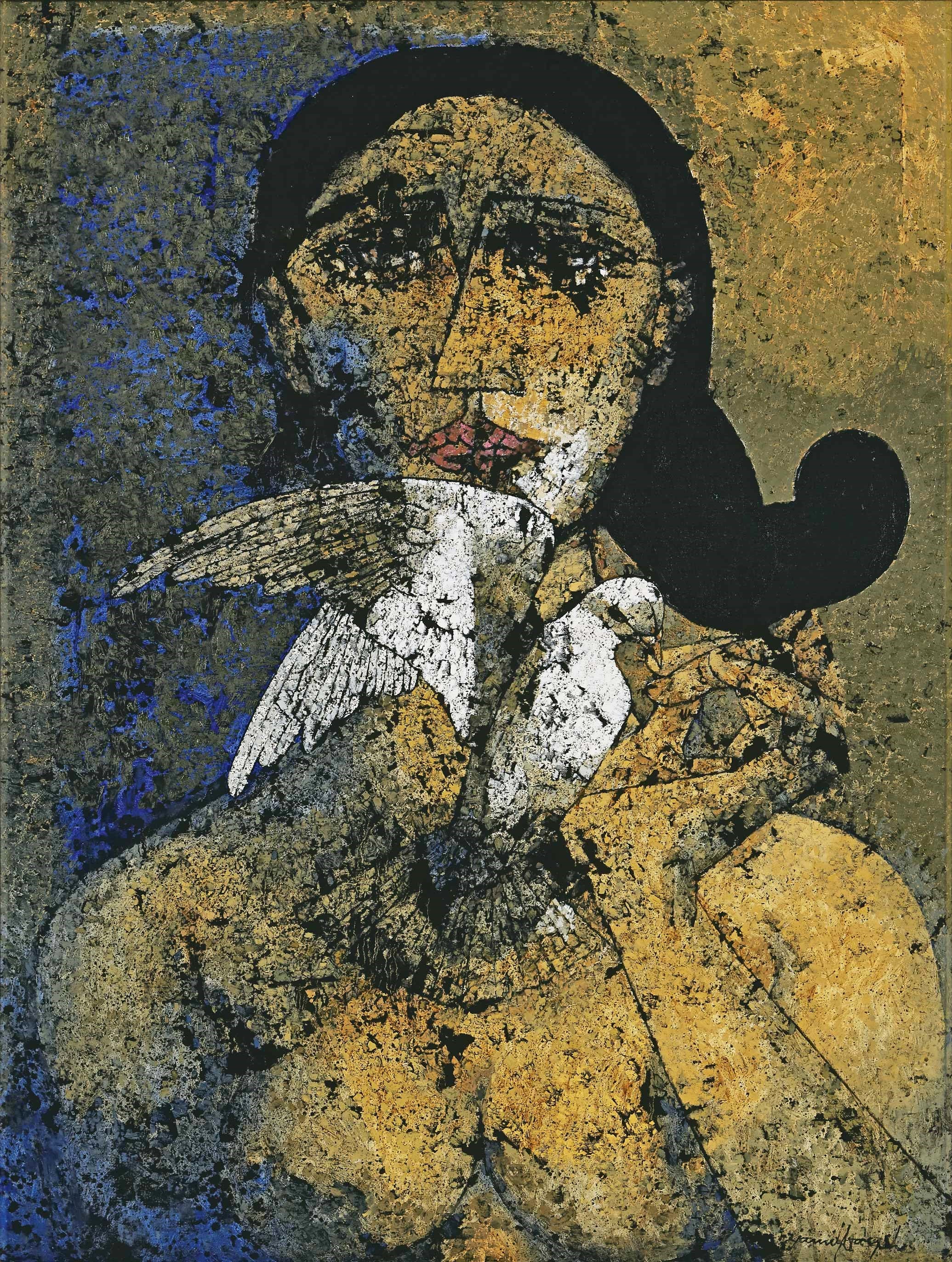 Pigeons appear in Jamil Naqsh’s paintings because they were part of his childhood experience in Kairana, Uttar Pradesh. Birds flew through the open windows and courtyard of his family home, and this everyday presence became embedded in his visual memory. Invoking these birds in his art was a way of recalling a lost domestic world that he could never recover in reality but could evoke through paint.
This personal connection gives his birds an emotional charge that goes beyond decorative inclusion. They function as symbols of a past life, of domestic ease, and of a sense of belonging that was disrupted by the upheavals of Partition and the demands of his adult life as an artist.
Cultural and Artistic Roots
Jamil Naqsh’s training in the tradition of Mughal miniature painting also contributed to the role of pigeons in his work. In South Asian miniature art, birds often accompany human figures, especially women, carrying symbolic meaning. Pigeons and doves traditionally signify love, devotion, and communication in scenes where they act as messengers or companions. This historical imagery resonates in Naqsh’s work, where the birds often sit beside or interact with the human figures.
While Jamil Naqsh adapted his style to modern tastes and techniques, the symbolic legacy of miniature painting remained an influence. His compositions blend the traditional motif with a contemporary sensibility that emphasizes texture, abstraction, and a muted palette.
Pigeons as Symbols of Love and Communication
Across his career, pigeons often embody romantic sentiment. They are frequently portrayed as messengers of love, carrying emotional intent between distant figures. In many cultures pigeons and doves are symbols of love and peace, and in Jamil Naqsh’s paintings they extend that meaning to encompass both longing and connection.
In some works the bird appears alone or slightly detached from the human subject, suggesting a meditation on solitude or yearning rather than simple harmony. Here the pigeon becomes an icon for the condition of love itself, able to move freely while human figures remain still or confined.
Synthesis of Form and Feeling
Jamil Naqsh’s repeated pairing of pigeons with the female form and other subjects reflects his exploration of relationships both visual and emotional. Combining these motifs allows him to articulate complex feelings of desire, nostalgia, and connection without resorting to literal narrative. The birds enrich the composition, providing movement and a silent voice that interacts with the human figures on the canvas.
Thus in Jamil Naqsh’s paintings the pigeon is more than a motif. It is a vehicle for memory, a bearer of cultural meaning, and a silent witness to the emotional landscapes he sought to portray. Whether evoking personal history, romantic longing, or universal themes of communication and freedom, these birds remain one of the most enduring and evocative elements of his artistic expression.