


the fascinating 400-year history of sarpech
.jpg&w=3840&q=75)
In the glittering courts of medieval and early modern India, few ornaments commanded as much attention as the sarpech, a turban ornament that served as both a symbol of power and a masterpiece of jewelry craft. Worn by emperors, nobles, and wealthy merchants, the sarpech transformed the simple act of tying a turban into an opportunity for displaying wealth, taste, and political allegiance.
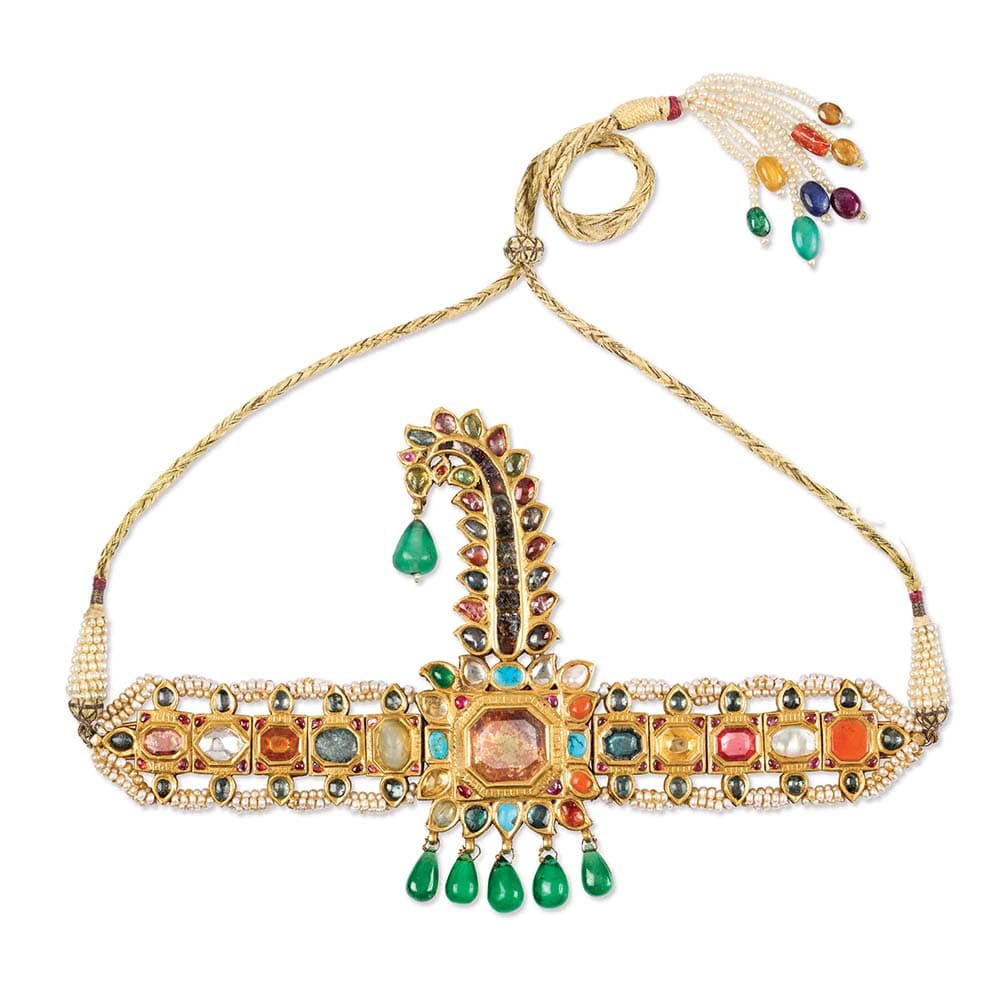 Meaning and Etymology
The word "sarpech" derives from the Persian "sar" (head) and "pech" (screw or twist), referring to the ornament's placement and its method of attachment to the turban. While the terminology suggests Persian influence, the tradition of adorning turbans with jeweled ornaments has deep roots across the Indian subcontinent, evolving over centuries as different dynasties rose and fell.
History
During the Mughal period, which spanned from the early 16th to the mid-18th century, the sarpech reached its zenith as a courtly accessory. Mughal emperors like Akbar, Jahangir, and Shah Jahan wore elaborate sarpechs featuring precious gemstones, pearls, and intricate goldwork. These weren't merely decorative pieces but carried significant political meaning. The size, design, and materials of a sarpech could indicate the wearer's rank, wealth, and proximity to imperial power.
The presentation of a sarpech by a ruler to a courtier was considered a great honor, similar to how European monarchs might bestow medals or titles. Historical records from the Mughal court detail instances where exceptional military service, diplomatic achievements, or artistic contributions were rewarded with the gift of a jeweled turban ornament. To receive such a gift from the emperor's own turban was the highest distinction imaginable.
Craftsmanship and Design
The artistry involved in creating a sarpech represented the pinnacle of Indian jewelry-making techniques. Skilled craftsmen, known as zargar or sunaar, employed several specialized methods to produce these ornaments. The most prestigious sarpechs featured kundan work, a technique where gold is used to set gemstones without the need for claws or prongs, creating a seamless surface of jewels. Meenakari, the art of enameling metal surfaces with vibrant colors, often adorned the reverse side of sarpechs, turning even the hidden surfaces into works of art.
Common motifs included peacocks with spreading tail feathers, stylized floral sprays known as kalgi, aigrette feathers, and geometric patterns. The peacock held special significance in Mughal iconography, representing beauty and pride. Some of the most famous sarpechs featured moving parts feathers that trembled with the wearer's movement or jewels suspended on tiny springs that caught and reflected light with every gesture.
Diamonds, emeralds, rubies, and pearls were the primary stones used, often in combinations that demonstrated both wealth and aesthetic sensibility. The quality and size of the central stone typically indicated the ornament's overall value. Some exceptional pieces featured rare colored diamonds or perfectly matched pearl drops of extraordinary size.
Regional Variations
While the Mughal style dominated much of northern India, different regions developed their own distinctive approaches to turban ornamentation. In Rajasthan, the princely states produced sarpechs with bolder designs and larger gemstones, reflecting the martial culture of the Rajput rulers. These often incorporated religious symbols and clan emblems, serving as portable heraldry.
The Sikh courts of Punjab created their own versions, sometimes called kalgi or turra, which often featured a more vertical orientation and incorporated distinctive religious symbolism. In the Deccan sultanates, Islamic calligraphy and geometric patterns featured more prominently, reflecting the region's unique cultural synthesis.
Southern Indian kingdoms, while less associated with turban ornaments due to different headwear traditions, still produced similar jeweled ornaments for ceremonial occasions, adapting the form to their own aesthetic preferences and incorporating regional design elements.
Decline and Revival
The tradition of wearing sarpechs began to wane during the British colonial period. As European dress codes infiltrated Indian courts and the traditional durbar system declined, opportunities to wear such elaborate ornaments diminished. The turban itself became less common among urban elites, and with it, the sarpech faded from everyday use.
However, these ornaments never entirely disappeared. They remained important in ceremonial contexts, particularly weddings, where grooms from wealthy families might wear ancestral or specially commissioned sarpechs as part of their wedding attire. Royal families and princely houses preserved historical examples as part of their treasuries, recognizing their value both as precious objects and as tangible links to their heritage.
In recent decades, there has been renewed interest in traditional Indian jewelry forms, including the sarpech. Contemporary jewelry designers have begun creating modern interpretations, sometimes adapting the form into brooches or hair ornaments that suit contemporary dress while honoring historical designs. Museums and exhibitions have showcased historical examples, bringing these remarkable objects to wider public attention and appreciation.
Cultural and Symbolic Importance
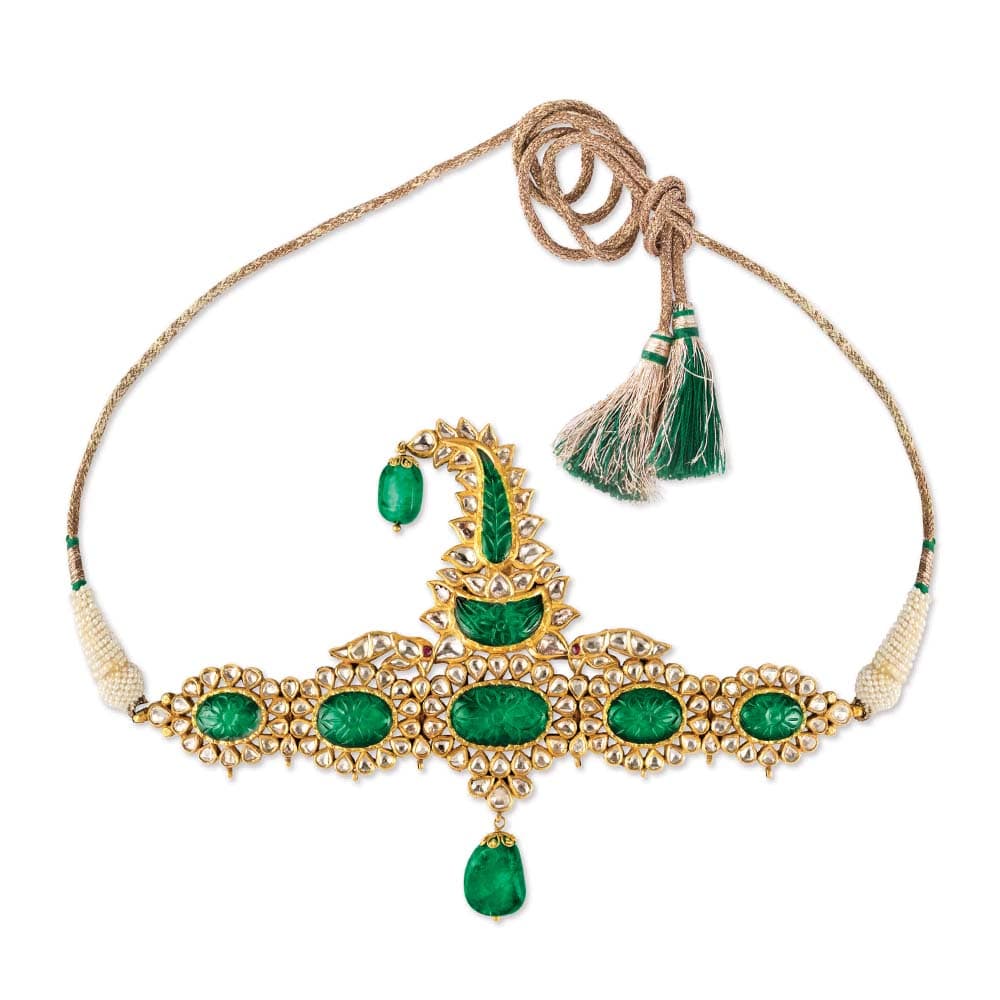 The sarpech symbolizes honor, leadership, and royal dignity. In many historical accounts, the bestowal of a sarpech was considered a great honor and was often given by emperors to loyal courtiers or generals. It also played a role in ceremonial gifting and diplomatic exchanges.
Sarpech in Modern Times
Today, sarpechs are primarily seen in museums, royal collections, and heritage auctions. Modern interpretations are occasionally worn by grooms during traditional weddings or by performers in cultural and historical reenactments. Designers also draw inspiration from sarpech motifs for contemporary jewelry and accessories.
Care and Preservation
Antique sarpechs require careful handling:
•> Store them in padded boxes to prevent damage.
•> Avoid exposure to moisture and direct sunlight.
•> Clean gently using soft cloths only.
•> Seek professional conservation for valuable or antique pieces.
Conclusion
The sarpech stands as a powerful symbol of India’s royal past and artistic excellence. With its rich history, intricate design, and cultural significance, it remains a treasured ornament that reflects the grandeur, authority, and refined taste of bygone eras




