the innovative artistic odyssey of lancelot ribeiro
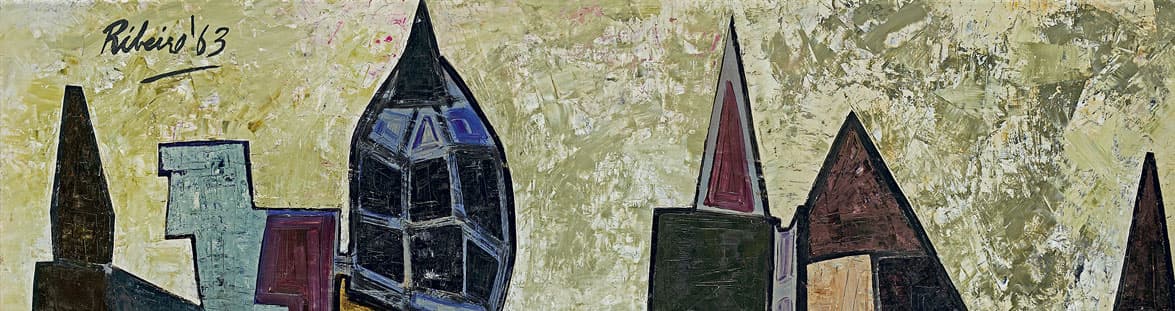
"I twist and turn, curve and straighten often without aim or result. Just an escape, an escapist thing into painting impulsively, compulsively, endlessly, tired, tirelessly, with or without joy."
This profound admission belongs to the private diary of artist Lancelot Ribeiro, who emerged as a ground-breaking figure in the history of Indian modernism and left an indelible mark with his innovative approach and vibrant creations.
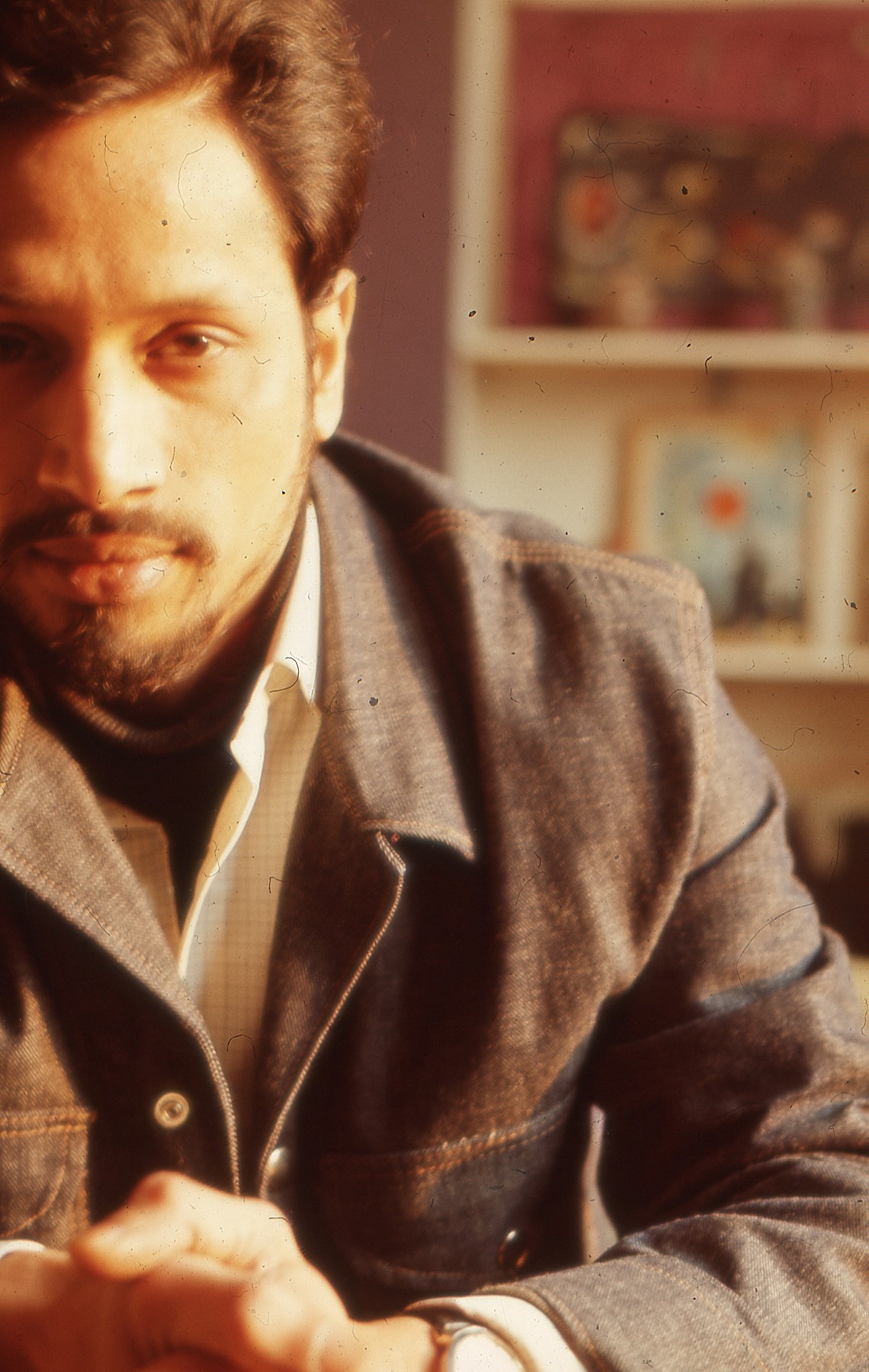
Born in Bombay in 1933 to a Catholic family from Goa, Ribeiro was sent to Britain in 1950 to study accountancy - where he initially lodged with his half-brother, the esteemed artist Francis Newton Souza - before his true passion for both poetry and the arts unfolded during his five-year sojourn in Britain. This transformative period saw him pursue a range of creative interests leading him to abandon accountancy.
It was in 1958 that Ribeiro began painting professionally. In 1961, his artistic journey took a significant turn when he held a one-man exhibition at the Bombay Artists Aid Centre. The exhibition proved to be a triumph, completely selling out and cementing his destiny as a painter. Bolstered by this success, he received a commission to paint a 12-ft mural for Tata Iron and Steel and patronage from the renowned nuclear physicist and painter, Dr Homi Bhabha, marking the beginning of his association with a number of other prominent patrons.
Following the success of his Bombay debut, Ribeiro showcased his work in nine subsequent exhibitions across Bombay, New Delhi, and Calcutta. In 1961, he was featured in the 'Ten Indian Painters' exhibition, leading to an extensive tour through India, Europe, the US, and Canada. The recognition he garnered on this tour solidified his reputation as a noteworthy artist on the global stage.
In 1962, Ribeiro, newly married, made London his permanent residence. He soon began developing his distinctive style, blending elements of traditional oils with influences from popular Indian graphic art and New York Abstract Expressionism.
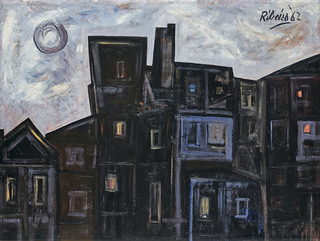
2 Colossi Against a Bright Sky
During the Sixties, Ribeiro's impatience with the constraints of traditional oil paints led him to explore synthetic plastic bases (polyvinyl acetate or PVA) that were just being introduced for commercial paints. Approaching major manufacturing companies, such as ICI, Courtaulds and Geigy, he explored the possibilities offered by their products through “several hundred” experiments, to produce a new medium which achieved both a brilliance in colour and reduced drying time.
Ribeiro's contributions extended beyond his canvas. He played a pivotal role in the formation of multicultural art groups, co-founding the Indian Painters Collective in 1963, the Rainbow Art Group in 1976 and the Indian Artists United Kingdom in 1978. In 1972, he gave a series of lectures on Indian Art and Culture and his own artistic practice for the Commonwealth Institute.
Throughout the decades, Ribeiro continued to exhibit his work widely, participating in mixed and solo exhibitions at prominent venues such as the Towner Art Gallery (1966), Gardner Arts Centre, as part of the Brighton Festival (1973), Abbot Hall and Art Gallery, Kendal (1978). It was in 1986 that he had his first UK retrospective at the Leicestershire Museum and Art Gallery, Leicester, a retrospective spanning 1960 to 1986 which then toured to London. His last solo exhibition was in Delhi in 1998.
In 2013, Asia House honoured Lancelot Ribeiro with a major retrospective, Restless Ribeiro, An Indian Artist in Britain, showcasing works from across his career to widespread critical acclaim. His daughter, reflecting on his life, noted that "Painting was his life and obsession, and if he was ever away from his paints, he would become extremely restless."
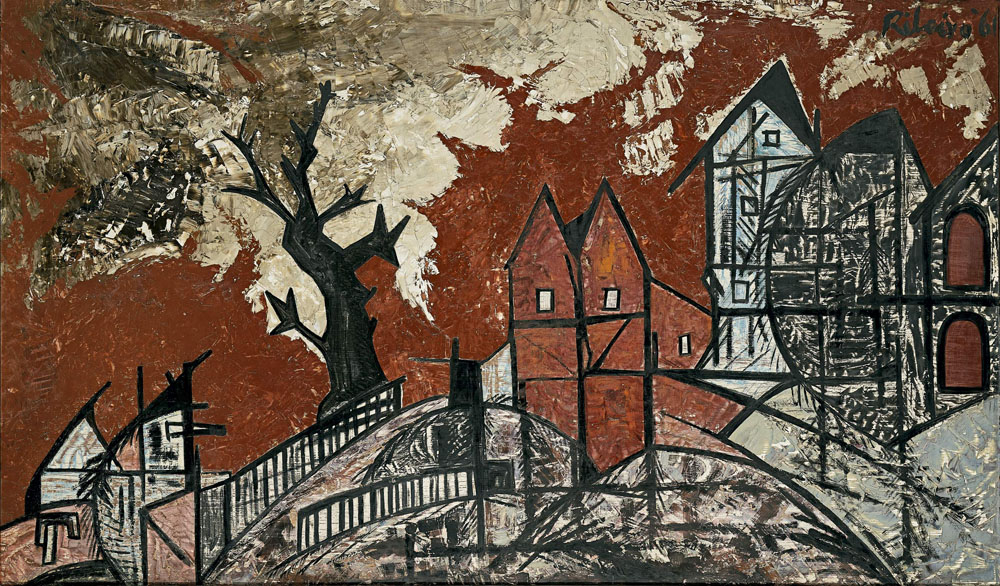
Ribeiro's artistic legacy encompasses a diverse body of work, spanning abstract and figurative pieces featuring surreal landscapes, flying townscapes, skeleton trees, twisted houses, and pointed churches. His use of bold outlines and brilliantly vibrant colour tones set him apart. In a career spanning over five decades, Ribeiro's impact on the art world remains profound.
The Times of London acknowledged him as "an acclaimed Indian artist who pioneered the use of acrylics in the 1960s, producing a brilliancy of colour in his expressionistic works."
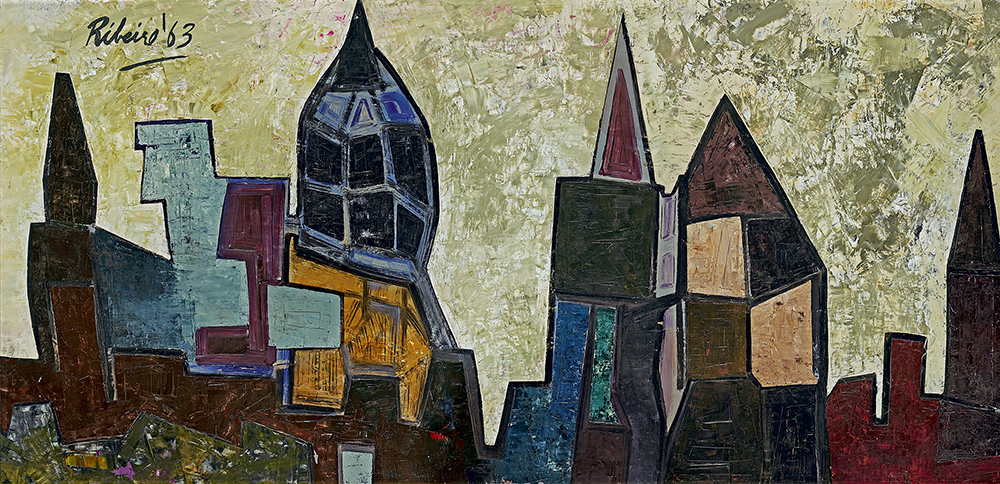
3 Squared Townscape
An artistic icon, Ribeiro left behind a rich tapestry of work that transcends time and continues to resonate with art enthusiasts around the world.