the politics of materiality : stone, wax & pigment in anish kapoor’s art

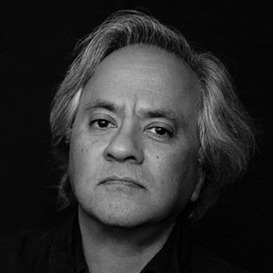 Anish Kapoor (born 12 March 1954) is a celebrated British-Indian artist known for his groundbreaking contributions to contemporary art, particularly through large-scale installation art. He has carved a unique niche in modern sculpture with his mirror sculptures, immersive spaces and powerful exploration of voids and vortices. Kapoor's dynamic creations, from the famous Cloud Gate (also known as "The Bean") in Chicago to the awe-inspiring Leviathan at the Grand Palais in Paris, have captivated audiences worldwide.
Early Life & Background
Born in Mumbai, India, Anish Kapoor grew up in a culturally diverse household. His father was a Punjabi Hindu and his mother was a Baghdadi Jewish woman. This fusion of cultures influenced Kapoor's perspective and gave him a unique identity that he would later explore in his art.
Later Life
In the 1970s, Kapoor moved to London to pursue his art career. He quickly gained recognition for his innovative approach to materials and form, establishing himself as a leading figure in the art world.
Family
He married art historian Susanne Spicale and together they have two children, Ishaan Kapoor and Albanna Kapoor. Kapoor's family has remained largely out of the public eye, allowing him to maintain a private life outside of his very public career.
Education
Anish Kapoor’s formal education in art began in Israel before he moved to study at the Hornsey College of Art and then at the Chelsea School of Art and Design in London. This academic foundation in the arts provided Kapoor with both the technical skill and conceptual foundation to develop his unique approach to art.
Artistic Journey & Development
Kapoor's artistic journey has been a continual exploration of shape, form and color. Early in his career, he experimented with bold pigments and pure geometric shapes. He quickly gained recognition with his 1982 piece "As if to Celebrate, I Discovered a Mountain Blooming with Red Flowers," which combined bold reds and curved forms. Over time, Kapoor expanded his repertoire, exploring complex installation pieces that challenged perceptions and altered the viewer's spatial experience.
Philosophy
Kapoor’s art delves into the themes of emptiness, the void, and the relationship between objects and their surrounding space. His philosophy often revolves around the concept of the sublime, aiming to create works that stir a profound emotional response, inspiring wonder, awe, and sometimes discomfort. Kapoor’s pieces frequently engage viewers in an almost meditative experience, reflecting his belief in art as a medium to question and probe the nature of existence and perception.
Painting Style & Techniques
Although Anish Kapoor is known primarily as a sculptor, his early works showcased a distinct style of abstract painting. He often used monochromatic and primary colors, adding textures to create depth. His painting techniques have evolved over the years, with his art gravitating more toward immersive three-dimensional experiences rather than traditional paintings on canvas.
Controversial Art/ Paintings:
Anish Kapoor sparked significant controversy when he acquired exclusive rights to Vantablack, one of the blackest artificial substances ever created. This material absorbs 99.965% of visible light, creating an intense sense of void in any form it coats. While Kapoor's exclusive use of Vantablack intrigued many, it also drew criticism from other artists who argued it was limiting access to an innovative material that could revolutionize the art world.
Characteristic Features Of His Art & Sculptures:
Kapoor’s work is characterized by its focus on scale, negative space and optical illusions. Mirror sculptures have become a signature element of his portfolio, challenging viewers’ perceptions by warping reflections and distorting surroundings. Additionally, Kapoor often uses deeply saturated colors and pure forms to enhance sensory experiences. His works, like whirlpool installations and Leviathan, transform the spaces they occupy, allowing viewers to experience voids and vastness in a visceral way.
Famous Structures Designed:
One of Anish Kapoor’s most iconic structures is Cloud Gate, affectionately called "The Bean" in Chicago's Millennium Park. Made from polished stainless steel, it reflects the city skyline and sky, creating a unique and interactive experience for viewers. This public artwork has become a beloved symbol of the city and one of the most photographed sculptures worldwide.
Latest Work
Kapoor continues to explore new territories in the art world, including virtual art, augmented reality and digital installations. His recent works further deepen his explorations into optical illusions, creating spaces where viewers can experience his unique perspectives on form and void.
Here’s an overview of some of his latest notable works:
"Sky Mirror" (2020) - A large-scale, concave mirror installed in the grounds of the Palace of Versailles in France.
"Descension" (2020) - A site-specific installation at the Gagosian Gallery in New York, featuring a large, swirling vortex of water and light.
"Nervure" (2020) - A series of sculptures featuring intricate, curved lines and shapes, exhibited at the Gagosian Gallery in London.
"The Anish Kapoor Foundation" (2020) - Kapoor established his own foundation in London, which aims to promote his work and support emerging artists.
"The Void" (2021) - A large-scale, black hole-like sculpture installed in the courtyard of the Gagosian Gallery in Paris.
"The Cloud Gate" (2021) - A new version of Kapoor's iconic "Cloud Gate" sculpture, installed in the grounds of the Museum of Contemporary Art in Chicago.
"The Orbit" (2022) - A large-scale, spherical sculpture installed in the grounds of the Gagosian Gallery in Hong Kong.
"The Luminous Void" (2022) - A site-specific installation at the Gagosian Gallery in Los Angeles, featuring a large, glowing void in the center of the gallery.
"The Infinite Corridor" (2023) - A large-scale, mirrored corridor installed in the grounds of the Gagosian Gallery in Rome.
"The Cosmic Anomaly" (2024) - A new series of sculptures featuring intricate, swirling patterns and shapes, exhibited at the Gagosian Gallery in New York.
Works On Paper
Though renowned for his larger installations, Kapoor has also produced a substantial body of work on paper. These pieces often explore similar themes to his sculptures, examining the relationship between form, color and space.
Films
Artist Anish Kapoor’s work has been featured in various art documentaries and films, where he discusses his approach to art and the philosophy behind his installations. Documentaries provide insights into his creative processes and the technical challenges he faces with his ambitious, large-scale pieces.
- "Into Yourself, Fall" (2018): This was a VR film project where Kapoor created an immersive, surreal experience simulating the feeling of falling into one’s own body. Through virtual reality, viewers were taken on a journey down a virtual esophagus, representing Kapoor’s exploration of the inner and psychological spaces that mimic his fascination with the void in his sculptures.
- "Blood Cinema": This short film also draws from Kapoor’s fascination with the color red and his exploration of organic, visceral spaces. Though less widely circulated than some of his other projects, it continues his exploration of color and form.
Kapoor's films are more of an extension of his artistry than standalone cinematic works. They are generally received as explorations that complement his sculptures, contributing to an expanded understanding of his themes. While not as famous as his large-scale sculptures like Cloud Gate or his reflective mirrors, his films have been appreciated in exhibitions and art spaces as complementary pieces that deepen his exploration of physical and metaphysical spaces.
Quotes
One of Kapoor's well-known quotes reflects his vision for his work: "Art is a space that has to be filled with something that is meaningful and poetic and profound and beautiful." His quotes often echo his philosophy that art should challenge perceptions and inspire awe.
Accomplishments - Awards Won
Artist Anish Kapoor has received numerous awards, including the Turner Prize in 1991 and the prestigious Praemium Imperiale Award in 2011. He was also knighted in 2013 for his contributions to the arts, a recognition of his impact on contemporary art on a global scale.
Contributions & Impact on Art
Kapoor has profoundly influenced modern and contemporary art. His contributions have challenged the boundaries of sculpture, transforming traditional notions of space and viewer interaction. Anish Kapoor's artwork has inspired a generation of artists to explore immersive, large-scale installations. His use of innovative materials, from pigment-dense forms to Vantablack, continues to push the limits of artistic possibilities.
Stone, Wax & Pigment In His Art
Known for his monumental sculptures and immersive installations, Anish Kapoor employs materials such as stone, wax and pigment to explore profound themes of perception, materiality and the void. These materials are integral to his artistic language, not only shaping the physical aspects of his work but also imbuing it with symbolic weight. Stone, for example, serves as a vessel of permanence and solidity; in Kapoor’s hands, it becomes a medium through which he evokes the primal, almost geological forces that shape human existence. Works like Mountain (1994), a towering piece of Carrara marble, bring to life Kapoor’s fascination with raw, elemental form, while challenging viewers to confront both the exterior and the implied interior of the stone, a metaphor for the exploration of inner self and consciousness.
Wax, in contrast, introduces a sense of temporality and transformation. Kapoor’s wax sculptures, such as Svayambh (2007), utilize mechanized movement to shift large masses of red wax through spaces, leaving traces and remnants of the material’s slow passage across surfaces. The wax, symbolic of flesh and blood, highlights Kapoor’s preoccupation with the organic and the visceral. Unlike the enduring qualities of stone, wax suggests a malleable, almost transient, state, questioning the boundaries between creation and decay, form and dissolution. This use of wax captures the viewer in a moment of transformation, inviting reflections on life cycles, mortality, and the mutability of form.
Pigment, particularly Kapoor’s use of ultramarine and vibrant red, is a defining feature of his visual language, bringing both color and texture to his works. Kapoor’s early pigment works, such as 1000 Names (1979-80), involved coating simple geometric forms in pure pigment, creating objects that seemed to emanate color rather than merely display it. These works aimed to dissolve the boundary between object and space, as the intense pigment appears to hover or radiate, inviting viewers to experience color as an almost spiritual presence. By employing stone, wax, and pigment, Kapoor masterfully uses material to blur the lines between surface and depth, permanence and ephemerality, challenging viewers to rethink the relationship between object and experience.
Why Anish Kapoor Reigns As India's Most Successful Contemporary Artist
Anish Kapoor is widely regarded as one of the most successful Indian artists of our time, owing to his unparalleled ability to merge aesthetics, philosophy, and engineering. Kapoor has transcended geographical boundaries to become a global art sensation. His large-scale, site-specific installations and sculptures, often exploring themes of materiality, perception, and spirituality, have captivated audiences worldwide. With numerous international accolades, including the Turner Prize in 1991 and a knighthood in 2017, Kapoor's market value has skyrocketed, with his works fetching millions at auctions. His ability to blend Eastern mysticism with Western modernity, coupled with his innovative use of materials and space, has solidified his position as India's most celebrated and sought-after contemporary artist.
Conclusion
In conclusion, Artist Anish Kapoor has left an indelible mark on contemporary art with his monumental installations and inventive use of materials. Original Anish Kapoor Paintings & Sculptures offer audiences an experience of art that is as immersive as it is thought-provoking. His works, from mirrored sculptures to vivid canvas paintings and Anish Kapoor prints, have shaped the modern art landscape, consistently fetching high prices at auctions and elevating Anish Kapoor artwork to a realm of distinction. His beautiful paintings/artworks in oil, canvas paintings, and installations continue to attract audiences and collectors, embodying the essence of modern artistic innovation. Kapoor’s art is both a challenge and an invitation to view the world from a new perspective, solidifying his legacy as a visionary in contemporary art.
As we conclude our journey through the remarkable world of Anish Kapoor, we invite you to explore his original artworks in greater depth. Click here to discover the stories behind his artworks and the emotions that bring his art to life.
This article only scratches the surface! For a deeper look into Anish Kapoor, take a moment to read our other article on him - here