


the spiritual geometry of s h raza’s panchtatva paintings
.jpg&w=3840&q=75)
Very few artists were able to balance tradition with innovation, as with the depth of S H Raza. His Panchtatva series stood out as one of his most significant bodies of work. These paintings were not simply visual compositions. They functioned as spaces for reflection. Colour, form, and philosophy came together to create a quiet and powerful visual experience.
The Five Elements That Shaped Everything
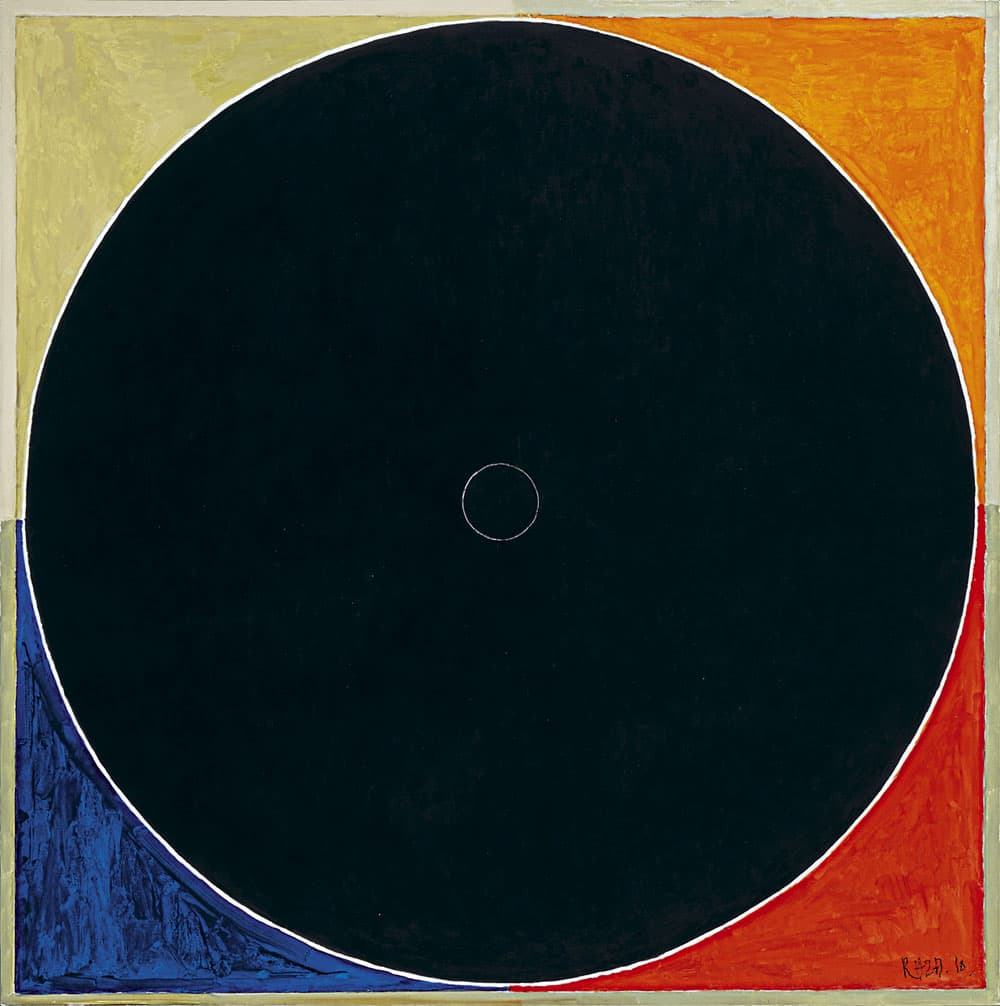 At the heart of the Panchtatva paintings lay an ancient Indian concept: the five elements. That is Prithvi (earth), Jal (water), Agni (fire), Vayu (air), and Akash (space). These elements were believed to constitute both the universe and the human body. They connected the outer world with the inner self. Raza did not approach these ideas in a literal manner. He avoided landscapes and natural imagery. Instead, he distilled each element to its essence through abstraction, using colour, geometry, and spatial balance to translate philosophy into a visual language.
Sacred Order in Line & Shape
Geometry played a central role in the Panchtatva series. Squares, circles, triangles, and concentric forms dominated the canvas. Their placement felt deliberate and ritualistic. In Indian spiritual traditions, geometry was never neutral. It carried symbolic meaning and spiritual intent. Mandalas, yantras, and temple architecture all relied on geometry to express cosmic order. Raza’s use of these forms reflected this tradition.
The Still Point at the Centre
Although the Panchtatva paintings focused on the five elements, the bindu frequently anchored the composition. In Raza’s visual philosophy, the bindu symbolised the point of origin. It was the seed from which creation unfolded. Within the context of Panchtatva, the bindu could be understood as the force that unified the elements. It suggested that diversity emerged from a single source. This idea closely reflected Indian metaphysical thought, where multiplicity was seen as an expression of one cosmic reality.
Colour as Breath & Pulse
In Raza’s Panchtatva paintings, colours carried a spiritual and emotional meaning. Earthy browns and deep greens resembled Prithvi, the earth. Blues and whites suggested Jal and Akash, which were water and space. Intense reds and oranges expressed the energy of Agni, i.e., fire, while lighter and flowing tones hinted at the movement of Vayu, air. Raza applied colour in thick and deliberate layers. The surface appeared alive and pulsating. The interaction of colours created tension and harmony, mirroring the balance of forces in nature and within the human psyche.
A Space for Stillness
One of the most fascinating qualities of the Panchtatva paintings was their meditative nature. Viewers often experienced a sense of stillness when standing before them. This response was intentional. Raza believed that art should function as a space for contemplation. Much like a mandala or a sacred shrine, the painting became a site for inward focus. Geometry offered order, while colour stirred emotion. Together, they guided awareness rather than interpretation.
Modern Form With Ancient Spirit
Rooted in Indian philosophy, the Panchtatva series remained unmistakably modern. Raza absorbed the influence of European abstraction but redirected it towards indigenous thought systems. In doing so, he challenged the idea that modern art must be detached from spiritual or cultural roots. For Raza, tradition and modernity were not opposites. They were complementary forces. His paintings felt ancient in spirit, but also unique and contemporary in form.
Holding The Universe Within
With the use of geometry and colour, Raza transformed his canvases into a cosmos. His work connected the universe with our personal world. Today, the Panchtatva paintings continue to invite the viewer to pause. They encourage reflection and attention to your inner self, your soul, your centre, which is the source of your being. This series reminds us that art can still serve as a bridge between the seen and the unseen, and as a quiet dialogue between the self and the universe.




