the unique fresco technique of lita cabellut in contemporary art
.jpg&w=3840&q=75)
Spanish artist Lita Cabellut is globally well-known for her unique and emotionally charged portraits. Her enthralling works delve into the human condition, focusing on the real life struggles of individuals. She presents them with raw honesty and a sense of dignity. Cabellut has created an instantly recognisable signature technique that reinterprets the ancient fresco method for the 21st-century audience.
The Origins of Lita Cabellut’s Artistic Vision
Born in Spain in 1961, Lita’s early life was shaped by severe hardship and tough circumstances. Her experiences later became a source of artistic inspiration. A turning point came in her life when she visited the Prado Museum, where she encountered works of Dutch artists such as Goya and Rembrandt. Even today, these influences are fairly evident in her work.
Between 1982 to 1984, she studied at Gerrit Rietveld Academy in Amsterdam. During her time at the academy, she explored a range of techniques. This is where she found her artistic voice. Later on, Lita chose to settle in the Netherlands, where she continues to live and work today. It was there that Cabellut truly came into her own, experimenting and refining her unique style. She was developing the technique that would define her career. As time moved on, the artist began to emerge as a global figure, becoming known for pushing the boundaries of figurative art through innovation and storytelling.
Understanding the Fresco Technique: A Classical Foundation
To fully appreciate the uniqueness of Cabellut’s work, it is essential to understand the traditional fresco technique. Historically, fresco painting involves applying pigments onto wet plaster. This process allows the colours to become an integral part of the surface. This particular process was also widely used during the Renaissance, becoming known for its durability and luminous quality. However, Cabellut does not replicate the fresco in its original form. Instead, she transforms it into a contemporary medium.
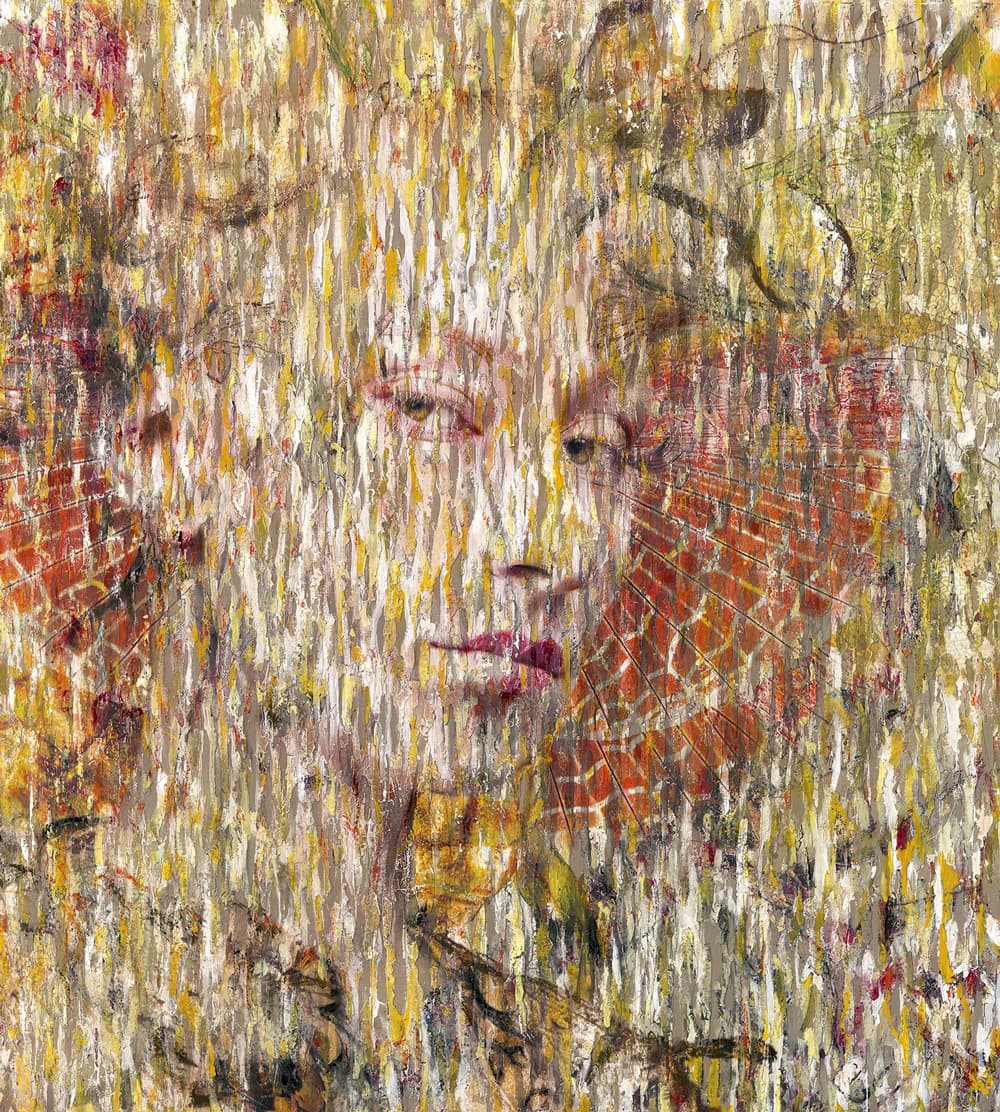 Characteristics Of Lita Cabellut’s Fresco Technique
What sets Lita’s style apart is her highly experimental and layered approach. Rather than working on walls, she applies the fresco technique to large-scale canvases. Thus, presenting and combining traditional methods with modern materials. Let’s take a closer look at five characteristics of her technique:
a) Stunning Layering and Material Innovation
Cabellut’s paintings consist of multiple layers as they are made of different materials and pigments. The very same layers that help create depth and complexity allow her to paint the surface of the canvas.
b) The Almost Skin-like Effect
A defining characteristic in Lita Cabellut's paintings is the lifelike surface texture. The artist has described her goal as giving her subjects a “skin,” in which every crack, wrinkle, and mark reflects the human experience. This particular effect is achieved through a combination of fresco techniques, oils, and experimental mediums.
c) Craquelure and Controlled Decay
One of her most recognisable techniques is the intentional creation of cracks, which are known as craquelure. This mimics the aging process of classical frescoes, giving her works a sense of history and fragility. These cracks are not flaws but deliberate artistic choices that enhance emotional depth.
d) Speed and Precision
Because fresco techniques require working within specific time constraints, Cabellut’s process demands quality, speed, and precision. This immediacy contributes to the raw, expressive quality of her portraits.
e) Depth of Human Emotions
Apart from her technique, her true power shows in her ability to convey human emotion. Her paintings explore themes such as identity, suffering, resilience, and transformation. Her subjects are often anonymous figures or cultural icons who are portrayed with intense psychological presence. She beautifully captures the essence of humanity through her work. The textured surfaces of her fresco-inspired technique serve as metaphors for life itself. These specific surfaces are marked by scars, experiences, and the passage of time. In this way, Lita Cabellut’s art style transcends aesthetics and becomes a philosophical exploration of existence.
The Role of Scale in Lita Cabellut Paintings
A defining feature of Lita Cabellut’s work is the monumental scale of her paintings. Her large canvases create an immersive experience, allowing viewers to confront the subject face to face. This scale enhances the impact of her fresco technique. The cracks, textures, and layers become more visible, drawing the viewer into the intimate details of the work. The result is a powerful emotional encounter that blurs the line between observer and subject.
A Fusion of Tradition and Modernity
The brilliance of Cabellut’s art style lies in its ability to merge past and present. By reinterpreting fresco, a technique rooted in ancient and Renaissance art, Cabellut brings historical methods into contemporary discourse. Her work is a great example, signifying how tradition can evolve through experimentation and innovation. Her contribution has positioned Cabellut as a leading figure in contemporary art, influencing a new generation of artists.
Global Recognition and Impact
Over the years, Lita Cabellut has gained international acclaim, exhibiting her work in major cities around the world. Her unique fresco technique and emotionally resonant portraits have captivated audiences and collectors alike. Critics often highlight her ability to combine technical mastery with profound storytelling. Her work challenges conventional notions of beauty, embracing imperfection and vulnerability as essential aspects of the human experience.
Conclusion
The unique fresco technique of Lita Cabellut represents a remarkable evolution of a classical art form. Through innovation, experimentation, and emotional depth, she has transformed fresco into a powerful tool for contemporary expression. Cabellut continues to redefine portraiture with her distinctive approach. In a world where art constantly evolves, Cabellut’s fresco-inspired creations remind us that the past and present can coexist beautifully.