tree of life in madhubani art - meaning, symbolism & influence
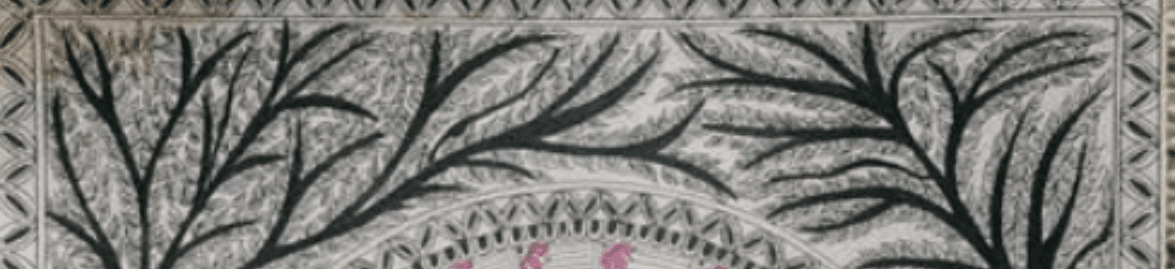
Understanding the Tree of Life motif in Mithila Art
The Tree of Life motif in Madhubani art, often referred to as Kalpavriksha, beautifully captures the essence of nature’s interconnected cycles. Rooted in the folk traditions of the Mithila region in Bihar, this motif combines ancient cultural beliefs with vibrant symbolism. Through intricate patterns and rich visual language, it represents harmony, fertility, and spiritual growth.
Symbolic Significance
In Mithila culture, the Tree of Life represents the axis mundi, the cosmic center that connects three realms. Its roots extend into the underworld, the trunk exists in the earthly realm, and the branches reach toward the heavens. This structure symbolizes balance, continuity, and the cycle of rebirth. In an agrarian society, the tree is revered as both a provider and a protector, embodying longevity, stability, and sustenance.
Cultural Significance
The Tree of Life holds deep cultural and spiritual importance in the Mithila region. It reflects the close relationship between humans and nature, a bond that is central to rural life. Artists use this motif to express reverence for the environment and to celebrate the balance of existence. It is also associated with prosperity and is frequently depicted in festive and ceremonial paintings.
The Inhabitants of the Tree
In Madhubani art, the Tree of Life is rarely depicted in isolation. It is presented as a vibrant ecosystem, filled with life and detail. The composition avoids empty spaces, a concept known as horror vacui, resulting in densely patterned designs.
• Birds such as parrots and peacocks are commonly shown perched on branches, symbolizing love, beauty, and grace.
• Small creatures including squirrels, monkeys, and insects are integrated into the foliage, representing biodiversity and coexistence.
• At the base, animals like fish or tortoises often appear, symbolizing fertility and stability.
Fertility and Abundance
At its core, the Tree of Life in Madhubani art celebrates fertility and abundance. The tree is often illustrated with heavily laden branches, suggesting prosperity and growth. For communities dependent on agriculture, this imagery serves as a visual prayer for good harvests, healthy livestock, and thriving families.
Women artists, who have traditionally been the primary creators of these paintings, often infuse their work with personal aspirations for family well-being. The motif becomes a reflection of nurturing, motherhood, and the generative power of life.
Use of Colors and Patterns
Madhubani artists employ bright and natural colors derived from plants, minerals, and organic materials. Bold outlines define the structure, while intricate patterns fill every space with precision and care. The use of repetitive motifs and fine detailing enhances the visual richness of the composition, making each artwork both vibrant and balanced.
Techniques and Styles
The technique of Madhubani painting relies on strong, confident lines without the use of shading or perspective. The Tree of Life is typically structured around a central vertical axis, with the trunk serving as the focal point. Symmetry is often used to create a sense of order and harmony, although some artists incorporate asymmetry for visual dynamism.
Line variation plays a crucial role in guiding the viewer’s eye across the composition. What may appear spontaneous is, in reality, the result of years of skill and practice.
Color Palette
Traditional Madhubani paintings use natural pigments, each carrying symbolic meaning:
• Red from ochre or vermillion, representing vitality and auspiciousness
• Yellow from turmeric, symbolizing light and positivity
• Blue from indigo, associated with divinity and the cosmic realm
• Green from plant sources, reflecting nature and growth
• Black from charcoal, used for outlines and contrast
• White from chalk or rice paste, used for highlights and backgrounds
Tools and Materials
Historically, artists used simple tools such as twigs, grass, and brushes made from natural fibers. Even today, many artists continue to work with basic materials, sometimes using fingers or sticks to create specific effects. This simplicity contrasts with the complexity and sophistication of the final artwork.
The Tree of Life as Ritual and Prayer
Creating a Tree of Life painting is often a ritualistic practice. It may mark important life events such as a young girl’s coming of age or be created as an offering during festivals. The act of painting becomes meditative, fostering a connection with tradition, community, and spirituality. Each artwork carries a sense of devotion, transforming it into more than just a decorative piece.
Art as Activism: Saving Real Trees
In recent years, the Tree of Life motif has taken on a new role as a tool for environmental conservation. In 2012, artists in the Madhubani district began painting sacred images on tree trunks along highways. These depictions discouraged people from cutting the trees, as they were considered holy. This innovative blend of art and activism helped protect thousands of trees and demonstrated the living relevance of the motif.
Conclusion
The Tree of Life in Madhubani art stands as a powerful symbol of creativity, tradition, and the human connection to nature. These paintings are not merely decorative but serve as carriers of cultural wisdom, spiritual insight, and collective memory.
In an era dominated by mass production and digital imagery, Madhubani paintings offer a rare sense of authenticity and intention. Each piece reflects centuries of artistic heritage and a worldview that values harmony, growth, and renewal.
As the art form continues to evolve, the Tree of Life remains a constant presence. It mirrors its own symbolism by growing, adapting, and reaching new audiences while staying firmly rooted in tradition. Ultimately, it invites viewers to reflect on their connection to nature and to appreciate the intricate web of life that binds all living beings together.
Image Credit:
“Madhubani Tree of life”, Harshalli Shhetty, via Facebook Groups
– Public Domain.