tyeb mehta’s diagonal & the birth of a modern indian masterpiece
.jpg&w=3840&q=75)
Tyeb Mehta, born on 26 July 1925, was a celebrated Indian artist whose profound contributions to modern Indian art have solidified his position as a leading figure in the field. His unique artistic style, often characterised by bold lines, stark contrasts, and a restricted colour palette, delved into the depths of human existence, exploring themes of isolation, suffering, and the human condition.
Tyeb Mehta's oeuvre encompassed a wide range of mediums, including painting, sculpture, and drawing. His most iconic works, such as the "Falling Figure" series and the "Diagonal" series, are renowned for their powerful imagery and evocative symbolism. These works often featured distorted human figures and fragmented forms, reflecting the artist's engagement with the complexities of life and the human experience.
Tyeb Mehta's Diagonal Series
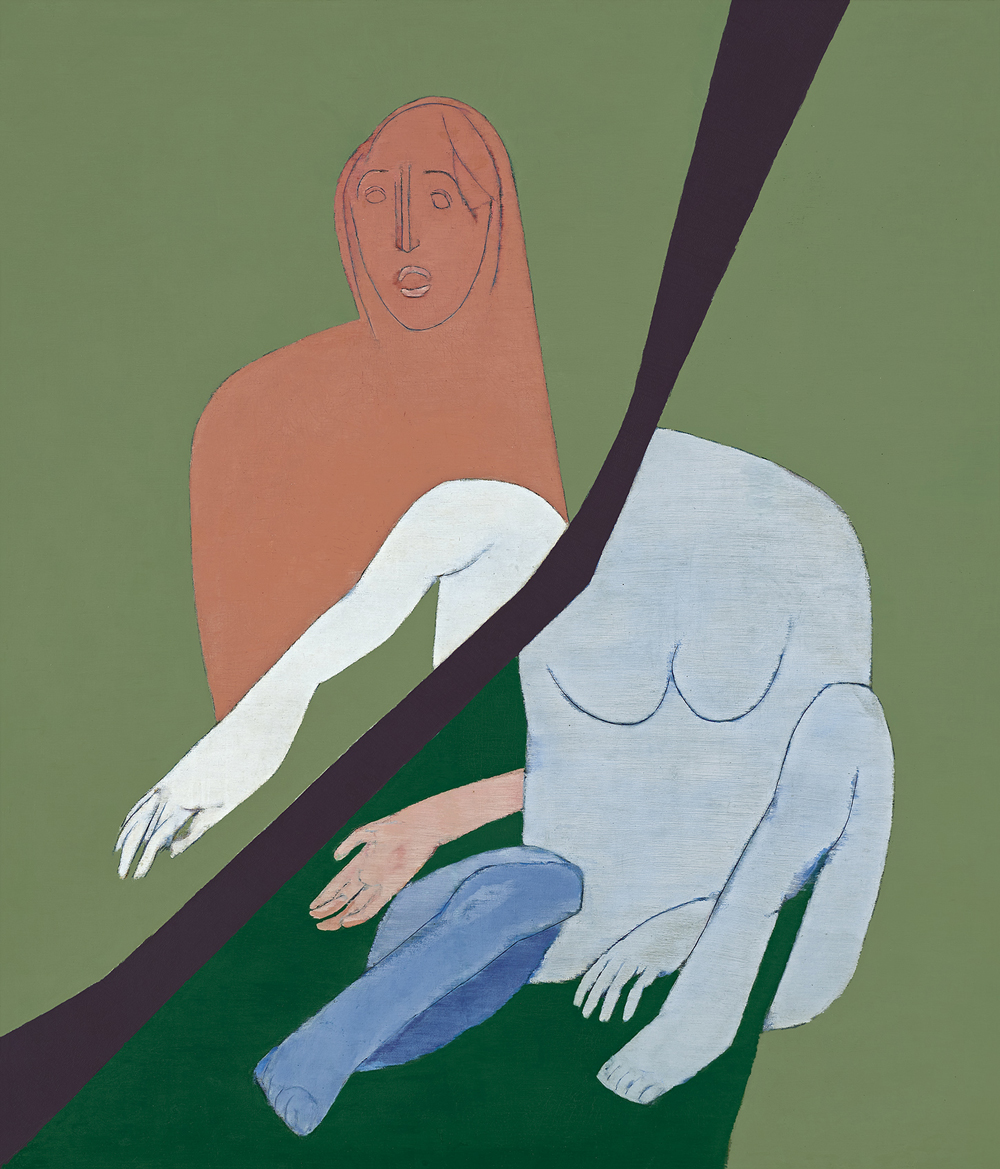 One of the most important bodies of work in modern Indian art, this series marked a turning point not only in Mehta's career but also in the evolution of post-independence Indian painting. Created during the 1970s, the Diagonal Series emerged after a significant artistic crisis that Mehta experienced in the late 1960s, when he found himself disillusioned with the limitations of form and expression in his earlier work. The diagonals, which became the defining feature of this series, arose almost incidentally but evolved into a powerful compositional and conceptual tool.
The series is characterised by a sharp, cutting diagonal line that slices through the canvas, often dividing the space into two or more contrasting sections. This simple yet dynamic element brought a new visual tension to his compositions. For Mehta, the diagonal was not just a formal device; it was symbolic. It introduced an axis of violence, conflict, and psychological division, reflecting both internal turmoil and external chaos. The period in which this work was conceived was rife with political unrest, social change, and personal introspection. The diagonal can thus be seen as both a formal innovation and a metaphor for the fractured human condition.
Another striking element of the series is Mehta’s use of colour. His palette became more restrained and deliberate, with flat planes of colour and bold contrasts adding to the drama of the composition. The clarity and structure of the canvases stood in stark contrast to the emotional complexity of their content. This tension between control and chaos, between beauty and brutality, gave the series its lasting power.
Influence & Legacy
The Diagonal Series had a profound impact on Mehta’s contemporaries and on subsequent generations of artists. It marked a moment when Indian art firmly claimed a place in the global modernist narrative, not through mimicry but through the forging of a unique, deeply personal visual language. With this series, Tyeb Mehta not only redefined his own practice but helped shape the trajectory of Indian modernism. Throughout his illustrious career, Mehta received numerous accolades and recognition for his artistic achievements. His works have been exhibited in prestigious galleries and museums across the globe, and they continue to inspire and captivate audiences with their profound insights into the human condition.