understanding form & space in piraji sagara’s wood sculptures
.jpg&w=3840&q=75)
Sculpture, at its best, is not just the material; it is the relationship of form, space, and how that space becomes a part of sculpture. However, in the wooden sculptures of Piraji Sagara, form and space are not different from each other; instead, these are interwoven forces. It is important to understand these aspects, and it is crucial to grasp these aspects because it is significant to understand how meaning is evoked in the sculptures of Piragi Sagara.
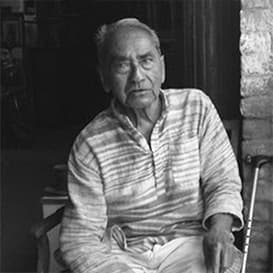 Piraji Sagara (1930-2005) was an Indian sculptor known for his strong commitment to modernist principles. After his training at Sir J. J. School of Art in Mumbai, he developed a sculptural practice that broke away from realist tendencies to embrace a more abstract or simplified style. Rather than focusing on decorative detail, Piraji was more focused on basic forms. Some of his sculptures may represent the human form or human relationships, but they rarely describe them literally. Instead, they communicate through balance, tensions, and the relationship between solid form and the space.
Form in Piraji Sagara’s Sculptures
In Piraji Sagara’s sculptures, the form will never be static or purely decorative. There seems to be a fluidity about his forms in sculpture, which have a sense of movement even when securely fixed to a base. Sagara’s wooden sculptures tend to be built from basic, almost geometric shapes. There can be a suggestion of human forms, but never an exact depiction. His works lack unnecessary detail, which lends a deeper meaning to the very form. This, in turn, situates his work firmly in contemporary sculpture, where the form is used in an expressive rather than a representative manner. There is no real indication of what can be seen, only an invitation to see and interpret what can be observed from the very form. They feel familiar, even if they are abstract.
Material in Piraji Sagara’s Sculptures
Material plays a crucial role in how form is understood. Whether using wood, metal, or other materials, he allows the inherent qualities of the material, through its weight, its grain, its resistance, or its texture, to shape the final form. There’s never a feeling that the work’s form has been superimposed upon the material, but rather that it’s developed in relation to the material. For example, the grain in wood could also subtly influence direction and rhythm, reinforcing a sense of organic growth. More than a material, wood was Piraji's collaborator. Different from stone or metal, wood possesses visible signs of life: grain, knots, growth rings, and natural imperfections. Piraji respected these qualities and allowed them to form part of the surface quality of the finished sculpture. Rather than forcing wood into polished forms, Piraji worked with its natural character. The texture of the surface, the direction of the grain, and even slight irregularities contribute to how the sculpture feels in space. This makes his works feel warm, grounded, and organic, rather than cold or mechanical.
Space in Piraji Sagara’s Sculptures
Space in sculpture is commonly misunderstood as the area around the object. However, space is an active element in sculpture. It is also the space inside and between the forms. The sculptures of Piraji Sagara show a keen understanding of the interaction between space and form. He often creates spaces, openings, or separations between his forms. The negative spaces are very significant in his sculptures. These spaces allow light to pass through them and produce shadows that vary from time to time. These voids are not empty spaces; they are essential components that contribute to the form, just as solid material does. Depending on the amount of light in a given day, the sculpture’s interaction with space changes, thus emphasising its living quality. The sculpture appears to be alive, constantly interacting with its surroundings. Instead of filling the space with solid material, Piraji allows space to breathe. This gives the sculpture a light feel, even if it is heavy.
Dialogue Between Form and Space
One of the most characteristic features of Sagara’s sculpture is the relationship between form and space. Sagara’s sculptures do not occupy space aggressively, nor do they withdraw into themselves. Rather, they maintain a harmonious relationship between form and space, where form and space engage in a dialogue with each other. As one moves around the sculpture, this dialogue changes. What appears as a solid form from one angle may appear as openness from another angle. Such a perception invites physical involvement, and the viewer becomes a participant rather than a mere observer. This is in tune with the contemporary thought in sculpture, where meaning emerges over a period of time and space, rather than from a fixed point.
Key Elements of Piraji Sagara’s Sculptures
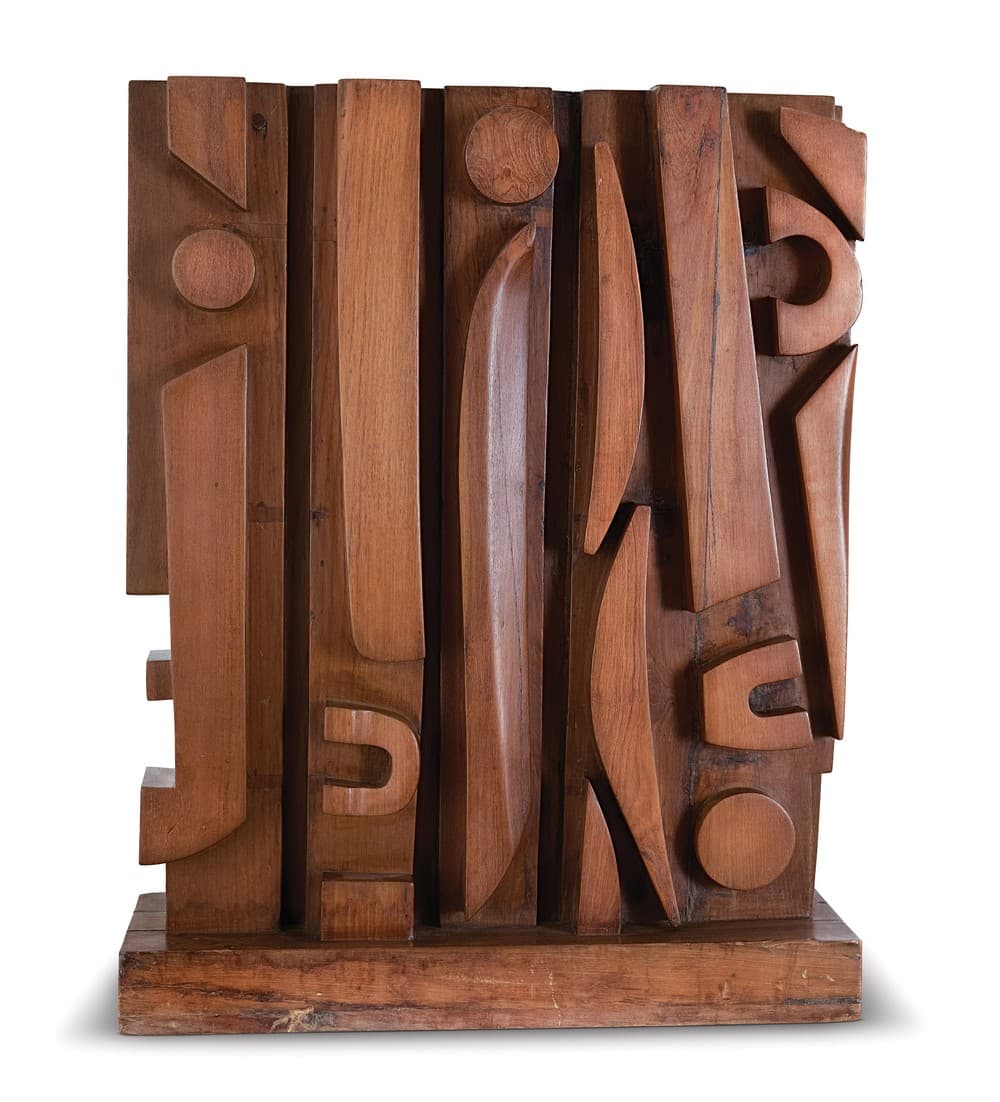 Balance is a dominant element in the sculptural idiom of Piraji Sagara. Many of his sculptures seem to be very carefully balanced, as if suspended in a state of controlled tension. This balance is not merely a matter of technical skill but of emotional and conceptual content as well. Sagara frequently contrasts such opposing forces as solid and void, weight and lightness, stability and instability. These dualities create a state of quiet tension that gives the sculpture its presence. Such a state of balance in them invites reflection. The sculptures do not overwhelm the viewer but provide a calm space for reflection.
Piraji Sagara’s wooden collages are an extension of his sculptural ideas into a more modular form. Made from wooden pieces, these collages examine how individual pieces come together to form rhythm, harmony, and spatial tension. The space between the pieces is as important as the pieces themselves, making the collage a thoughtful exercise in form and space. While mounted on the wall, the collages have a sculptural quality to them, jutting out into space. The fractured form of the collages brings a sense of dynamism and process to the work, furthering Sagara’s fascination with how space is created, interrupted, and redefined.
The surface of Piraji’s wooden sculptures is another key element. Unlike highly polished sculptures that reflect light sharply, his surfaces are usually matte, softly finished, and tactile. This invites touch—at least visually. You can imagine how the surface might feel under your hand. The slight variations in texture remind us that the sculpture was made by human labour, through carving, shaping, and repeated engagement with the material. This tactile quality strengthens the connection between the viewer and the artwork.
Piraji Sagara was part of a generation of Indian artists who were modernists at heart but also deeply rooted in their culture. Piraji Sagara’s sculptures, while being modernist and contemporary in their approach to sculpture, are not far from the cultural ethos. Piraji Sagara’s sculptures are not something to be looked at but experienced. They enable the viewer to go beyond the surface level of the sculpture and explore it further. Form gives structure and presence, while space gives freedom and movement. Together, they create works that are thoughtful, grounded, and quietly powerful. By allowing space to speak as clearly as form, Sagara expands the language of sculpture into something experiential and meditative.