vasudha thozhur’s pedagogical approach to art
.jpg&w=3840&q=75)
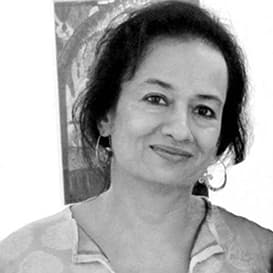 Vasudha Thozhur is a prominent contemporary Indian artist known for her interdisciplinary practice rooted in painting. Her work explores complex themes such as violence, memory, identity, and socio-political realities. Through a combination of visual media, text, and collaborative projects, she has emerged as a significant voice in contemporary Indian art.
Early Life
Vasudha Thozhur was born on 14 October 1956 in Mysore. Growing up in a culturally rich environment, she developed an early interest in visual expression. Her formative years coincided with a period of socio-political change in India, which later became a recurring influence in her artistic work.
Later Life
Vasudha Thozhur lived and worked in Chennai from 1981 to 1997 and later in Vadodara until 2013. She subsequently became associated with Shiv Nadar University, where she serves as a professor. Over the years, her work expanded into installations, video, and collaborative projects, reflecting her evolving artistic vision.
Family
Vasudha Thozhur has largely kept her personal life private. However, it is known that she is connected to the art world through her family; her daughter, Veda Thozhur Kolleri, is also an artist working in installation and multimedia practices.
Education
Vasudha Thozhur received her formal art education at the Government College of Arts and Crafts, Chennai, where she completed a diploma in painting. She later pursued advanced studies at the Croydon School of Art and Design in the United Kingdom. These academic experiences helped shape her technical skills and conceptual approach.
Painting Style
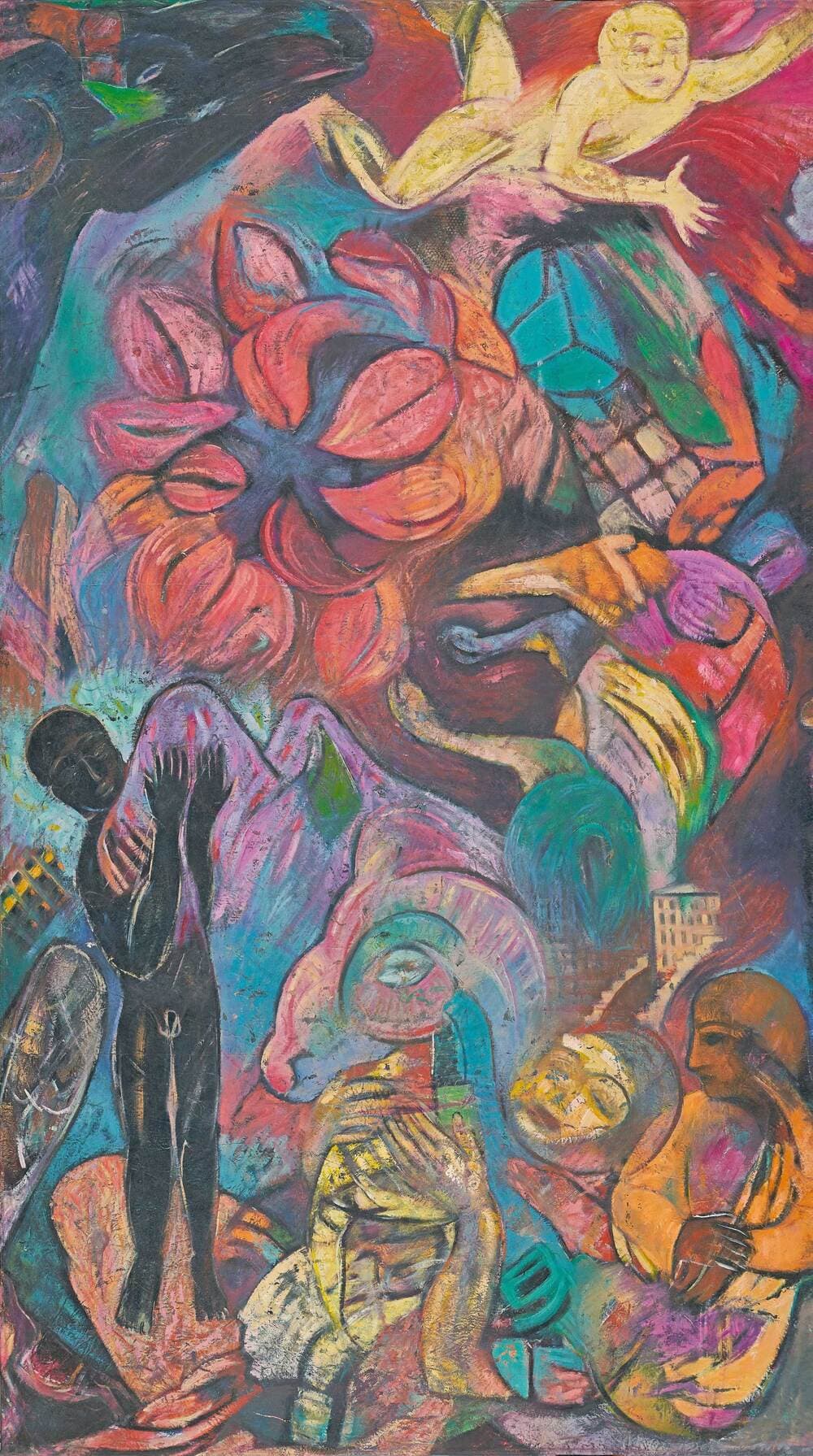 Her painting style is highly experimental and interdisciplinary. She works with oil, watercolour, digital media and text, often combining them within a single project. Her works are characterized by bold colour palettes, detailed drawings, and layered narratives that address historical and contemporary realities.
Famous Paintings
Some of her notable works and projects include:
• Still Life with Cat and Bananas (1991): One of Thozhur's most recognised early works, this painting achieved a record auction price for the artist of USD 10,200 at Sotheby's New York in 2006. It demonstrates her ability to invest an ostensibly domestic subject with an undercurrent of tension and ambiguity.
• Four Ways of Reconstructing Pain (2005-2006): A large-scale, monumental work that emerged from her collaboration with the Himmat organisation and the survivors of the 2002 Gujarat riots. The painting confronts collective trauma directly, asking how pain can be articulated, shared, and perhaps survived. It is considered one of her most important and emotionally searching works.
• Untouchable (2001-2002): A work that takes on caste and social exclusion as its subject, exhibited at Sakshi Gallery Mumbai and Vadehra Art Gallery New Delhi in a solo show in 2007. The title carries both its literal social meaning and a broader sense of that which society refuses to acknowledge.
• Immaculate Consumption or Love in the Time... (2007): A later work that reflects her engagement with consumer culture and the contradictions of desire and deprivation in contemporary India.
• Do Not Swim Without Knowing (Triptych, 2005): A three-panel work that speaks to risk, knowledge, and the dangers of navigating an uncertain social landscape.
• Story (1990): An early work that reflects her preoccupation with narrative and the human condition, demonstrating the long continuity of her central concerns.
Characteristic Features of Her Paintings
Several hallmarks make a Vasudha Thozhur work instantly recognisable:
• Bold, Confrontational Colour: Her palette is never timid. Stark reds juxtaposed against deep blacks, neon yellows, and psychedelic greens create a visual intensity that refuses to let the viewer remain passive.
• Detailed, Assured Drawing: Thozhur is first and foremost a draughtswoman of great skill. Meticulous line and form underpin even her most expressionistically coloured works, giving them structural rigour.
• Narrative Density: Her paintings tell stories sometimes intimate domestic ones, sometimes charged political ones. There is always a sense that the depicted moment is part of a larger, unresolved human drama.
• Psychological Tension: Even her still lifes carry an atmosphere of unease. Objects and figures seem on the verge of something conflict, revelation, rupture rather than in a state of calm equilibrium.
• Social and Political Consciousness: Unlike much decorative or formalist art, Thozhur's work is always answerable to the world outside the studio. Caste, communal violence, gender, and the politics of everyday life are embedded in her imagery.
• Interdisciplinary Range: Though painting is her primary medium, she freely incorporates video, digital prints, and text, understanding the image in relationship to other forms of making meaning.
Contribution in Indian Art
Vasudha Thozhur has contributed significantly to contemporary Indian art by bridging art with activism. Her collaboration with the organization Himmat involved working with survivors of communal violence, particularly women affected by the Gujarat riots. Her projects emphasize the role of art in healing, documentation, and social engagement.
Enduring Legacy & Impact
Her legacy lies in redefining art as a tool for dialogue and social intervention. By combining pedagogy, research, and artistic practice, Vasudha Thozhur has influenced younger generations of artists to engage with real-world issues and adopt interdisciplinary approaches.
Exhibitions
Vasudha Thozhur has exhibited extensively in India and internationally over several decades. Key exhibitions include:
• Secret Life Solo exhibition of paintings and drawings from 1997-2001 (Sakshi Gallery, Mumbai)
• Untouchable Solo show at Sakshi Gallery, Mumbai, and Vadehra Art Gallery, New Delhi (2007)
• Beyond Pain: An Afterlife Group exhibition with Himmat collaborators, Mumbai (2013) and Delhi (2015)
• New Narratives: Contemporary Art from India Curated by Betty Seid, Chicago Cultural Centre (2007)
• Horn Please: Narratives in Contemporary Indian Art Curated by Bernard Fibicher and Suman Gopinath, Kunstmuseum Bern, Switzerland (2007)
• Edge of Desire Curated by Chaitanya Sambrani, NGMA Mumbai (2007)
• Tiger by the Tail Women's Studies Research Centre, Brandeis University, Massachusetts, USA (2007)
• Sub-terrain Curated by Geeta Kapur, House of World Cultures, Berlin (2003)
• World Social Forum Nairobi
• Museo Tamayo Mexico City
• Asia Society and Queens Museum of Art New York
Awards
• Central Lalit Kala Akademi Research Grant (1988)
• Ministry of Culture Fellowship for Artists (1989)
• French Government Scholarship (1996)
• Charles Wallace Grant (1996)
• India Foundation for the Arts Special Projects Grant (2004-2006 and 2008-2009), supporting the Himmat Workshops research project
Conclusion
Vasudha Thozhur stands as a pioneering figure in contemporary Indian art. Her work transcends traditional boundaries, addressing urgent social and political issues through innovative artistic forms. She continues to inspire both audiences and emerging artists with her commitment to meaningful and thought-provoking art.
Lesser-Known Facts
• Thozhur's name "Thozhur" is drawn from her family's village in Tamil Nadu, reflecting a tradition of naming that connects individuals to their geographic and community roots a fitting identity for an artist so deeply invested in place and belonging.
• Vasudha Thozhur was one of the very few Indian women artists of her generation to receive formal training both in India and in the United Kingdom, at a time when international art education was far less accessible than it is today.
• Her collaboration with Himmat was not a commissioned project but grew out of personal conviction she sought out the survivors of the 2002 Gujarat riots and proposed the artistic collaboration herself.
• The landmark group exhibition Beyond Pain: An Afterlife was the result of nearly a decade of sustained engagement with the women of Naroda Patiya not a brief residency, but a long, trust-building relationship.
• Thozhur has described drawing as being at the very centre of her practice, even though her large oil paintings tend to receive the most public attention. For her, drawing is the primary thinking tool.
• Her 2022 book is not a conventional monograph but an unusual assemblage of diary entries, catalogue essays, and pedagogical reflections, revealing a deeply reflexive intellectual life running parallel to her studio practice.
• She has cited the vibrant artist community in Vadodara in the late 1990s and 2000s as a crucial influence describing it as an environment where intellectual rigour, political debate, and artistic camaraderie were inseparable.