what is a diptych? check out 10 famous diptych of all time
.jpg&w=3840&q=75)
Throughout history, artists have experimented with various formats to express complex narratives and visual ideas. One of the most enduring artistic formats is the diptych, a two panel artwork that has appeared in ancient, religious, Renaissance, and contemporary art. Whether painted, carved, or photographed, diptychs allow creators to explore duality, storytelling, symbolism, and balance in uniquely powerful ways.
Diptych Art
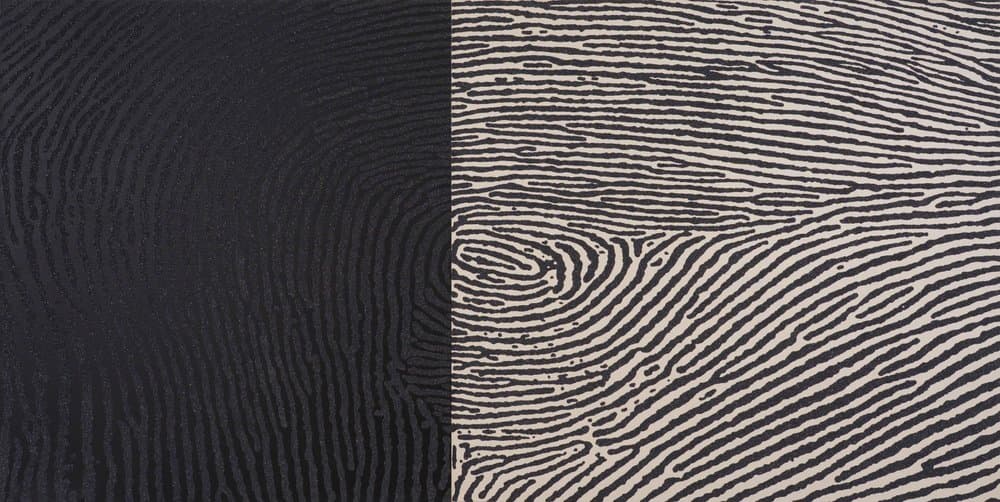 A diptych (from the Greek diptychos, meaning "two fold") is a work of art composed of two hinged or paired panels. Historically, the panels often folded together like a book, serving practical and symbolic purposes. In medieval and early Christian art, diptychs frequently functioned as devotional objects, altarpieces, or ceremonial gifts. Today, the diptych continues to be a favorite format across painting, photography, mixed media, and digital art.
Importance of Diptych
Diptychs hold importance for their portability, allowing protection during travel while enabling veneration upon arrival. They convey narratives across time, personal growth, or contrasting viewpoints, making them ideal for religious and secular tales. This dual structure enhances devotional impact, often showing donors praying to holy figures.
Characteristics of Diptych
Although diptychs vary by style and medium, most share key characteristics:
•> Two Panels: Always exactly two, often of equal size, connected by hinges or conceptually linked.
•> Symmetry and Contrast: Panels may mirror each other or present opposing ideas, creating balance or tension.
•> Narrative Flow: The left panel often leads to the right, guiding the viewer's eye.
•> Materials and Themes: Can be religious, mythological, or contemporary, using paint, wood, or mixed media.
Portability: Many are foldable, enhancing their functional role.
Art Materials
Diptychs are crafted from diverse materials, reflecting their historical and modern versatility:
•> Traditional: Wood panels with tempera, oil, or fresco paints, as seen in medieval altarpieces.
•> Modern: Canvas, acrylics, photography, digital prints, or even metal and glass for contemporary installations.
•> Innovative: Artists like those in conceptual art might use found objects, textiles, or digital projections to form diptychs.
The choice of material often ties to the artwork's theme, with durable wood suiting religious pieces and ephemeral materials fitting experimental works.
Triptych in Other Media
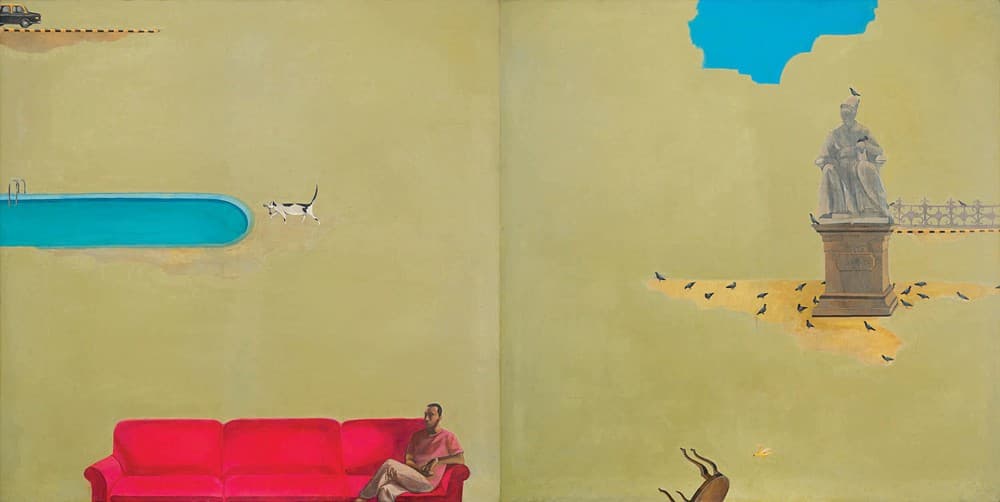 While diptychs expand to photography, drawings, and digital art, triptychs extend this to three panels for broader narratives. Both forms appear in sculptures, carvings, and contemporary installations beyond traditional painting. Modern media like prints or mixed media adapt the hinged or side-by-side format.
Modern Usage of Diptych
Contemporary artists use diptychs to explore contrasts, dual identities, or split perspectives in painting and photography. The format suits gallery displays or home decor, often unhinged as adjacent canvases for dynamic viewing. Digital adaptations allow virtual unfolding, preserving the interactive essence.
Why Do Artists Choose Diptych
Artists opt for diptychs to explore duality, such as before-and-after, self-and-other, or conflict-and-resolution. The format allows for juxtaposition without overwhelming a single canvas, encouraging viewer engagement. Practically, it's portable and versatile, suiting both intimate devotions and grand statements. Psychologically, it mirrors human experiences of contrast, making it a powerful tool for storytelling and reflection.
10 Most Famous Diptychs in Art History
Here are ten iconic diptychs that shaped art history:
•> The Wilton Diptych – Anonymous (c. 1395–1399)
A beautifully detailed medieval diptych of King Richard II with the Virgin and Child.
•> Melun Diptych – Jean Fouquet (c. 1452)
Celebrated for its strikingly modern Madonna and Child and its masterful realism.
•> Dresden Triptych, Left and Right Panels – Jan van Eyck (1437)
Originally a triptych, yet often studied as two harmonious side panels that showcase Northern Renaissance precision.
•> Diptych of Jean Carondelet – Jan Gossaert (c. 1517)
A fine Northern Renaissance example combining portraiture with devotional imagery.
•> Marilyn Diptych – Andy Warhol (1962)
A pop art masterpiece that explores celebrity, repetition, and mortality.
•> The Ghent Altarpiece Exterior Panels – Hubert and Jan van Eyck (1432)
When viewed closed, the paired panels function similarly to a monumental diptych.
•> Two Studies of George Dyer – Francis Bacon (1968)
A powerful two panel portrait filled with psychological and emotional intensity.
•> Thai Buddhist Diptychs – Various contemporary painters
Two balanced spiritual scenes that often represent enlightenment and earthly life.
•> Industrial Diptychs – Bernd and Hilla Becher (20th century)
Minimalist photographic diptychs that document industrial architecture.
•> Untitled (Black and Gray) Diptych – Mark Rothko (1969)
A somber and meditative pair of color fields representing the artist’s late period.
Conclusion
Diptychs have evolved from sacred medieval objects to versatile modern artworks used in painting, photography, and digital media. Their ability to represent duality, narrative complexity, and aesthetic harmony continues to captivate artists and audiences. Whether ancient ivory carvings or bold contemporary portraits, diptychs remain a timeless format that encourages reflection, contrast, and engaging visual storytelling