


what is a tourbillon watch? types of tourbillon watches explained
.jpg&w=3840&q=75)
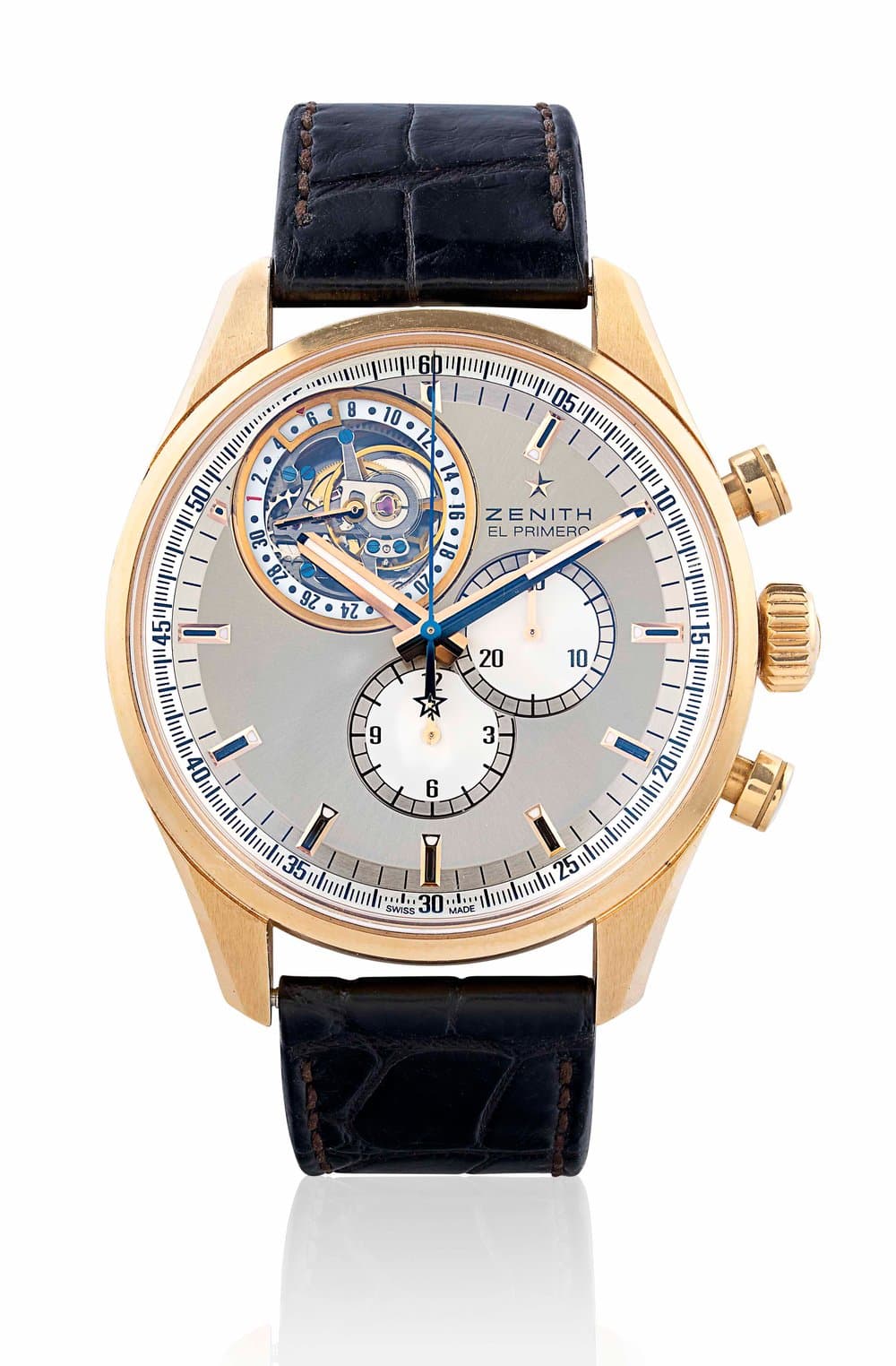
In the world of haute horlogerie, few complications capture the imagination like the tourbillon. Often visible through a watch’s open dial or caseback, this mesmerizing mechanism combines art, precision, and craftsmanship in a way that defines true luxury. But what exactly is a tourbillon, and what types exist today? Let’s explore.
What Is a Tourbillon Watch?
A tourbillon (French for “whirlwind”) is a rotating cage that houses a watch’s balance wheel and escapement. the two components responsible for regulating time. Invented in 1801 by Abraham-Louis Breguet, the tourbillon was designed to counteract the effects of gravity on a watch’s accuracy.
In a traditional mechanical watch, the escapement and balance wheel remain fixed in one position. When a pocket watch was kept upright for long periods, gravity caused slight variations in timekeeping. Breguet’s solution was ingenious: by placing these components inside a rotating cage, the positional errors would effectively “average out” over time, improving precision.
Today, while modern materials and wristwatch movements have largely solved positional accuracy issues, the tourbillon remains a symbol of mechanical mastery and aesthetic beauty; a true hallmark of high-end watchmaking.
How a Tourbillon Works
At its core, the tourbillon mechanism consists of:
• A rotating cage that holds the escapement and balance wheel.
• A fixed gear that transfers energy to the escapement as the cage rotates.
• A rotation cycle, typically once per minute, allowing the mechanism to constantly change orientation.
The result is a hypnotic visual display, the beating heart of the watch in perpetual motion that fascinates collectors and enthusiasts alike.
Types of Tourbillon Watches
Over the centuries, watchmakers have reimagined the tourbillon in countless ways. Here are the main types you’ll encounter:
1. Classic (Single-Axis) Tourbillon
The original design by Breguet rotates on a single axis, usually completing one revolution per minute. It remains the most traditional and commonly used version, featured in timepieces from brands like Breguet, Patek Philippe, and Jaeger-LeCoultre.
2. Flying Tourbillon
Invented by Alfred Helwig in 1920, the flying tourbillon removes the upper bridge supporting the cage, leaving it “floating” in place. This open design enhances visibility and gives the illusion that the mechanism is suspended in mid-air, a favorite among brands like Glashütte Original and Greubel Forsey.
3. Double (or Multi-Axis) Tourbillon
This complex version adds additional axes of rotation. For instance, a double-axis tourbillon rotates around both a horizontal and vertical axis, compensating for more positional variations. Greubel Forsey and Jaeger-LeCoultre Gyrotourbillon models are prime examples.
4. Triple-Axis Tourbillon
Taking complexity even further, the triple-axis tourbillon rotates on three axes, creating a truly dynamic, three-dimensional spectacle. These are exceedingly rare, technically demanding, and often cost hundreds of thousands of dollars.
5. Carrousel (or Karussel) Tourbillon
A mechanical cousin to the traditional tourbillon, the carrousel performs a similar function but uses a different gear train configuration. Brands like Blancpain have revived this design, offering an alternative take on gravitational compensation.
6. Gyrotourbillon
Pioneered by Jaeger-LeCoultre, the gyrotourbillon features a spherical, multi-axis rotation system that delivers both incredible precision and mesmerizing motion. It represents the pinnacle of mechanical watch artistry.
7. Chronometer Tourbillon
Some manufacturers pair the tourbillon with official chronometer certification, combining the aesthetic appeal of the complication with verified precision standards, a balance of beauty and performance.
 Why Are Tourbillon Watches So Expensive?
Tourbillon watches are among the most expensive timepieces in the world for good reason:
• Extreme craftsmanship: Each mechanism can take months to design, assemble, and regulate.
• Hand-finishing: Components are often polished and decorated by hand to perfection.
• Limited production: Many tourbillons are produced in small batches or as unique pieces.
• Prestige factor: Owning one signals a deep appreciation for mechanical art and innovation.
Are Tourbillon Watches More Accurate?
Ironically, not always. Modern wristwatches are far less affected by gravity due to their constant motion on the wrist. In most cases, the tourbillon’s contribution to accuracy is minimal. Instead, it serves as a visual and technical masterpiece, a celebration of traditional watchmaking ingenuity rather than a practical improvement.
Final Thoughts
The tourbillon remains one of horology’s most captivating inventions. While it may not dramatically enhance precision in modern watches, its mesmerizing motion, mechanical complexity, and historical significance continue to inspire awe. Whether single-axis or triple-axis, flying or gyrotourbillon, each variation represents a unique expression of time, art, and engineering excellence.




