what is gouache? check out 10 famous gouache paintings of all time
.jpg&w=3840&q=75)
Gouache Painting: Origin, History, Significance & Famous Gouache Paintings
Gouache is a unique painting medium that blends the best qualities of both watercolor and acrylics, offering a rich and opaque finish with vibrant colors. Its versatility, ease of use, and ability to create a variety of effects have made it a favorite among artists, both beginners and professionals. In this article, we will explore what gouache is, how it differs from other painting mediums, its history, and how to use it to achieve stunning artistic results.
What is Gouache?
Gouache is a type of water-based paint similar to watercolor but with higher opacity. It consists of pigment, water, a binding agent (usually gum arabic), and sometimes chalk or white pigment to enhance opacity. The result is a paint that offers vibrant colors, smooth application and solid coverage, allowing artists to create bold, flat areas of color as well as detailed work.
How To Pronounce Gouache
Gouache is pronounced as "gwash" or "goo-ash," with the stress on the single syllable sound "gwash" commonly used in English-speaking countries.
How Is Gouache Different from Watercolor & Acrylic Paint
Gouache, watercolor, and acrylic are all water-based paints, but they differ significantly in composition, handling and artistic effect. Here’s a comparison:
• Transparency and Opacity: Watercolor is transparent, relying on the white of the paper for highlights. Gouache is opaque, covering underlying layers completely, while acrylic is also opaque but can be thinned for semi-transparency.
• Finish: Watercolor dries to a soft, matte finish; gouache dries to a flat, velvety matte; acrylic dries to a flexible, often glossy or plastic-like finish.
• Reactivation: Both watercolor and traditional gouache can be reactivated with water after drying, allowing for blending and corrections. Acrylic, once dry, is permanent and cannot be reactivated.
• Layering and Corrections: Gouache allows for light-over-dark layering and easy corrections, unlike watercolor, which is best layered from light to dark. Acrylic also allows for corrections but is not reworkable once dry.
• Surface Compatibility: Watercolor and gouache work best on absorbent paper, while acrylic can be used on a wide range of surfaces, including canvas and wood
Origin & History
Gouache has ancient origins, with early forms used in prehistoric cave paintings and by ancient Egyptians, who mixed natural pigments with gum arabic. The medium was further developed in ancient Greece and Rome, and became a staple in illuminated manuscripts and Persian miniatures during the Middle Ages. The term "gouache" derives from the Italian "guazzo," meaning "mud," and was adopted in France in the 18th century to describe opaque watermedia. The 19th century saw the mass production of gouache in tubes, making it accessible to a wider audience. In the 20th century, gouache became popular in commercial art, animation, and fine art, with artists like Henri Matisse and J.M.W. Turner embracing its unique qualities. Today, gouache continues to evolve, with new formulations like acrylic gouache offering additional properties.
Importance of Gouache
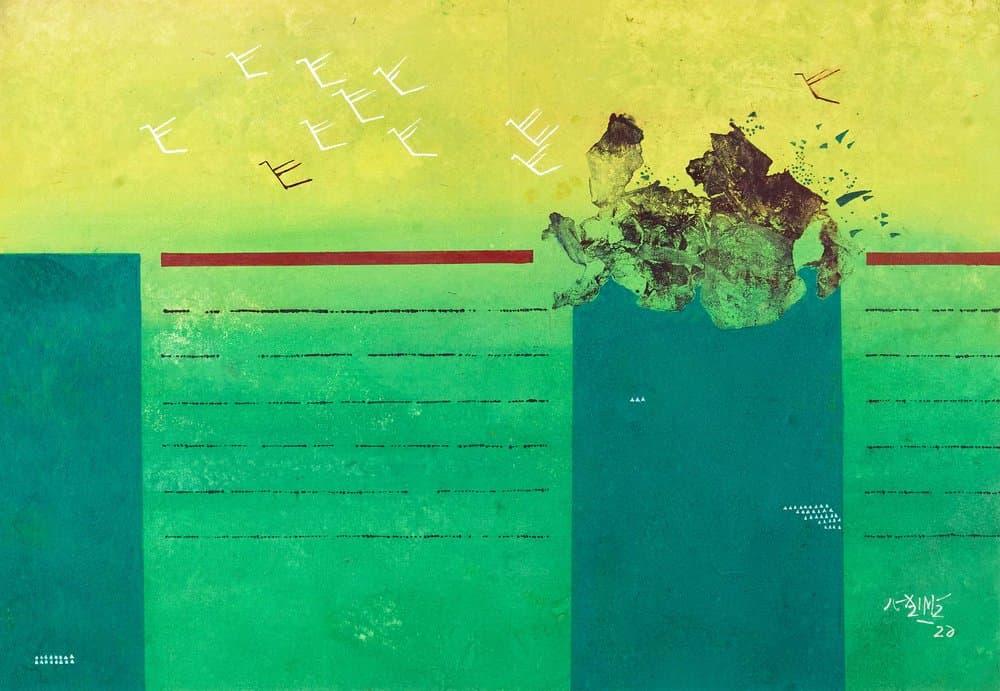 Gouache occupies a unique and influential place in the art world. It serves as a bridge between watercolor and acrylic, combining the reworkability and water solubility of watercolor with the opacity and vibrancy of acrylic or oil. Historically, gouache was essential in illuminated manuscripts, Persian and Mughal miniatures, and preparatory studies for larger works. Its quick drying time, matte finish, and ease of correction made it a favorite for illustrators, designers, and animators, especially before the digital era. Gouache’s versatility and adaptability have ensured its continued relevance in both fine art and commercial applications
Gouache holds a significant place in the art world for several reasons:
• Versatility: It can be used for fine detail or broad color fields.
• Unique Combination: Gouache offers a unique combination of quick drying time, vibrant opacity, and ease of use outdoors
• Matte Finish: Offers a non-reflective surface ideal for photography and reproduction.
• Ease of Use: Easy to rework and correct, making it perfect for beginners and professionals alike.
• Vibrant Colors: Provides solid, intense hues that remain consistent when dry.
Characteristics of Gouache
• Opacity: Unlike watercolor, gouache is opaque, allowing the artist to layer light colors over dark ones.
• Matte Finish: Dries to a smooth, non-glossy surface.
• Reworkable: Can be reactivated with water even after drying.
• Fast-Drying: Dries quickly, which is ideal for illustration work and rapid production.
• Rich Pigments: Offers bright, vibrant colors.
Art Materials Used in Gouache
• Paper and Surfaces: Watercolor paper (hot-pressed for detail, cold-pressed for texture), mixed media paper, illustration board, and primed wood panels.
• Brushes: Synthetic or natural hair brushes in various shapes (round, flat, filbert).
• Drawing Tools: Pencils for sketching, micron pens or fineliners for details.
• Palettes and Mixing Tools: Ceramic, plastic, or glass palettes; palette knives for mixing.
• Other Supplies: Erasers, water cups, paper towels, masking tape, masking fluid, and optional spray fixative for protection
Gouache in Other Media
Gouache is highly compatible with other media, making it a staple in mixed-media art:
• Watercolor: Used together for layering transparent and opaque effects.
• Ink and Pen: Combined for line and wash techniques in illustration.
• Colored Pencils, Markers, Pastels: Applied over dry gouache for details and texture.
• Acrylics: Acrylic gouache offers water-resistance and can be layered with traditional gouache.
• Charcoal and Graphite: Used for under- or over-drawing.
• Collage: Gouache-painted papers are cut and assembled, as in Matisse’s cut-outs.
• Printmaking and Design: Used for hand-coloring prints and creating mockups
Modern Usage of Gouache
Gouache has seen a resurgence in contemporary art, illustration, and design:
• Fine Art: Used for bold, matte color fields, intricate details, and expressive textures.
• Illustration: Favored for editorial, children’s books, and graphic novels due to its vibrant, non-reflective finish and ease of correction.
• Animation and Concept Art: Historically used for backgrounds and concept sketches.
• Design: Employed in surface and textile design, packaging, and branding for its precise, vivid color.
• Mixed Media: Combined with watercolor, ink, colored pencil, and collage for experimental works.
• Social Media: The matte finish photographs well, making gouache popular among artists sharing work online
10 Most Famous Gouache Artists in the World
1. Marc Chagall – Known for dreamlike imagery and vibrant colors.
2. Paul Klee – Master of abstract and expressionist gouache works.
3. Henri Matisse – Used gouache in his famous cut-outs and illustrative works.
4. Edward Hopper – Produced many gouache sketches and studies.
5. Jean Charlot – Illustrator and muralist with a strong gouache practice.
6. Diego Rivera – Used gouache for preparatory sketches and illustrations.
7. Wassily Kandinsky – Early abstract works featured gouache.
8. John Piper – Known for architectural gouache works.
9. Frank Brangwyn – Early 20th-century artist who worked extensively in gouache.
10. David Hockney – In later years, explored gouache for its vibrant qualities.
10 Famous Gouache Paintings Of All Time
Here are 10 of the most famous gouache paintings that showcase the medium’s immense power and artistic value:
1. "The Sleeping Gypsy" by Henri Rousseau (1897)
Henri Rousseau, a self-taught French painter, is renowned for his dreamlike, naïve style. The Sleeping Gypsy is a hauntingly surreal depiction of a solitary gypsy woman asleep in a desert while a lion gazes at her. Rousseau used gouache to achieve the vivid flatness and solid color fields that enhance the mysterious atmosphere of the work, making it one of the most celebrated examples of early modernist painting.
2. "A Bar at the Folies-Bergère" (Preliminary Study) by Édouard Manet (1882)
Before completing his famous oil painting A Bar at the Folies-Bergère, Édouard Manet created a detailed gouache study. These preparatory works allowed Manet to experiment with composition, lighting, and figure placement. His gouache studies reveal his meticulous process and the medium’s ability to offer precise control over tone and texture in the planning stages.
3. "The Large Bathers" Study by Paul Cézanne (1898–1905)
Paul Cézanne, often called the father of modern art, frequently worked in gouache for his studies. His preparatory gouache studies for The Large Bathers capture his revolutionary approach to form and structure. Through layered applications of gouache, Cézanne explored geometry in nature, using the medium’s opacity to define light and shadow clearly.
4. Illustrations of "The Tale of Peter Rabbit" by Beatrix Potter (1901)
Beatrix Potter's iconic illustrations for The Tale of Peter Rabbit are classic examples of gouache’s role in book illustration. Her detailed animal portraits combine delicate brushwork with opaque, vivid colors. Gouache allowed Potter to depict textures and fur with precision, giving the illustrations their timeless charm that continues to captivate generations.
5. "Illustrations for The Rubaiyat of Omar Khayyam" by Edmund Dulac (Early 1900s)
Edmund Dulac, a leading book illustrator of the early 20th century, often used gouache to produce intricate, richly colored illustrations for literary works. His series of illustrations for The Rubaiyat of Omar Khayyam are notable for their exoticism and fine detail, with gouache’s opacity enabling precise layering of color and intricate design elements.
6. "L'Assommoir" Illustrations by Émile Bayard (1877)
Émile Bayard is best known for his detailed gouache illustrations of literary works, particularly L'Assommoir by Émile Zola. His ability to combine realism with dramatic storytelling in gouache provided a vivid portrayal of Parisian working-class life during the late 19th century. Bayard’s fine use of light and shadow in gouache demonstrates the medium’s effectiveness in narrative art.
7. Propaganda Posters of the Soviet Era (1920s–1940s)
Although often anonymous, Soviet-era propaganda posters stand among the most famous applications of gouache. Artists used gouache to create bold, flat color compositions with clear political messaging. The medium’s ability to produce sharp, vivid colors made it ideal for impactful public works that combined art and propaganda.
8. Illustrations by Kay Nielsen (1910s–1920s)
Kay Nielsen, one of the most celebrated illustrators of the Golden Age of Illustration, used gouache extensively in his work. His illustrations for fairy tales like East of the Sun and West of the Moon are renowned for their ethereal color palettes, intricate detail, and delicate line work. The opaque qualities of gouache allowed Nielsen to build layers of subtle tones and textures.
9. "Carnaval" by Joan Miró (1924)
Joan Miró experimented with gouache during his surrealist phase, notably in works like Carnaval. His playful abstraction combined biomorphic shapes and vibrant colors. Gouache’s versatility allowed Miró to explore spontaneity, layering bold shapes with flat color areas, creating a joyful yet enigmatic composition that pushed the boundaries of 20th-century art.
10. Contemporary Gouache Works by Marc-Antoine Coulon
In the modern era, contemporary artists such as Marc-Antoine Coulon have embraced gouache for its immediacy and brightness. Coulon’s landscapes, still lifes, and portraits leverage gouache’s matte finish to evoke a fresh, luminous atmosphere. His mastery of color layering shows that gouache continues to be a vital medium in contemporary fine art.
Why Do Artists Choose Gouache
Artists are drawn to gouache for several compelling reasons:
• Opacity and Coverage: Enables solid, vibrant color fields and easy corrections.
• Matte Finish: Ideal for illustration and design, as it reproduces well in print and digital formats.
• Vibrant, Natural Tones: High pigment load produces rich, natural colors.
• Versatility: Can be used thickly or thinned for transparent washes, accommodating a wide range of techniques.
• Ease of Correction: Can be reactivated and painted over, making it forgiving and flexible.
• Clean-Up and Environmental Benefits: Water-based and easy to clean, with less environmental impact than oil paints.
• Accessibility: Straightforward to use for both beginners and professionals.
• Compatibility: Works well with other media for mixed-media experimentation.
• Historical and Contemporary Relevance: A long history in both fine art and commercial illustration, with continued popularity today
How to Use Gouache
Working with gouache is straightforward, but there are a few tips and techniques that can help you get the most out of this medium:
1. Basic Supplies
• Gouache Paint: Available in tubes or pans, gouache comes in a wide variety of colors. The quality of the paint varies from student-grade to professional-grade, with the latter offering higher pigment concentration and better lightfastness.
• Brushes: Soft, synthetic brushes work well with gouache. Flat and round brushes are commonly used for different strokes and effects.
• Paper: Gouache works best on watercolor paper or mixed media paper that can handle wet applications without buckling.
• Water: Water is essential for adjusting the paint's consistency, and a palette for mixing colors will be helpful.
2. Mixing Gouache
Gouache can be diluted with water for more transparent layers or used straight from the tube for a rich, opaque finish. The more water you add, the more the medium behaves like watercolor, so it’s a good idea to experiment with various water-to-paint ratios to understand the range of effects you can create.
3. Layering Techniques
Gouache dries quickly, so you can build up layers fairly fast. To create depth and texture, start with a thin underpainting, then gradually layer on thicker, more opaque paint. Be sure to allow each layer to dry before applying the next, especially if you want to preserve sharp lines and smooth gradients.
4. Wet-on-Wet vs. Dry Brushing
• Wet-on-Wet: For softer, more blended effects, you can apply gouache over wet paint or paper, allowing colors to mix directly on the surface.
• Dry Brushing: For a more textured, scratchy finish, you can use a dry brush to apply thicker gouache over dry layers, creating sharp, expressive marks.
5. Fixing Mistakes
If you make a mistake, gouache can be reactivated with water, and you can often lift off layers or blend colors back into a clean surface. However, repeated re-wetting can cause the paint to lose its richness, so it's best to work carefully and in layers.
How To P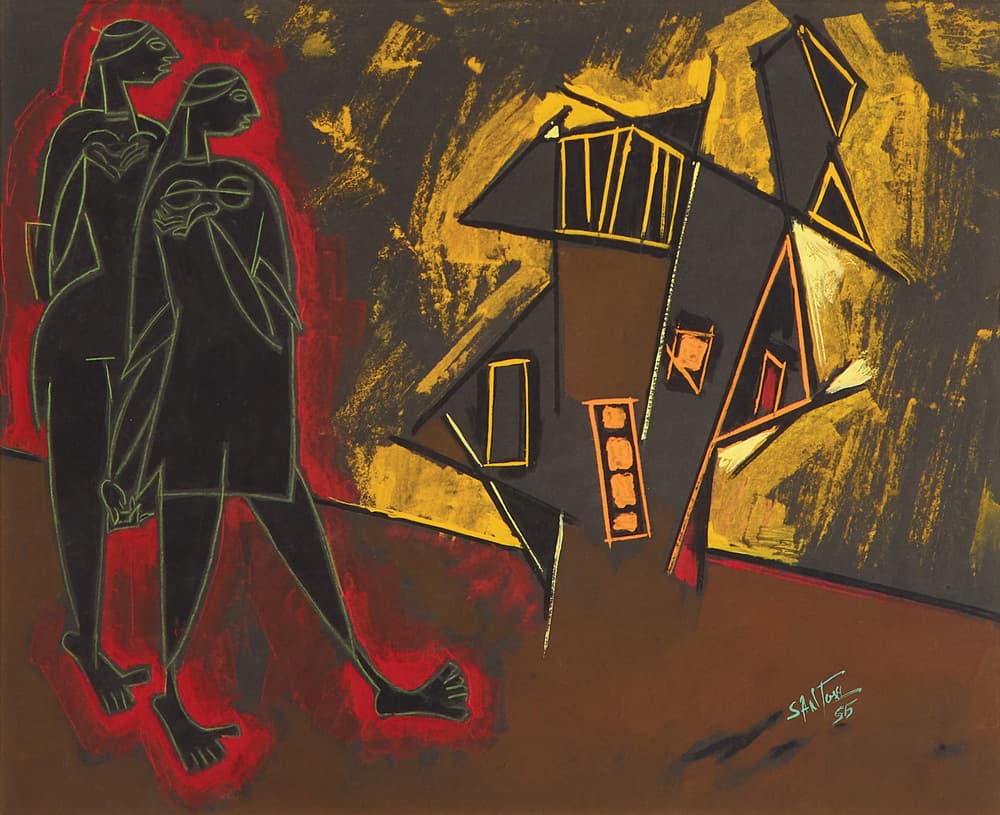 rotect A Gouache Painting
Preserving gouache paintings requires careful handling due to their sensitivity to moisture and abrasion:
• Avoid Direct Sunlight: Display away from windows and strong artificial light to prevent fading.
• Frame Under UV-Protective Glass: Use acid-free mats and spacers to prevent the painting from touching the glass.
• Store in Cool, Dry Conditions: Maintain stable temperature (10–25°C) and humidity (40–55%).
• Handle with Care: Use clean, dry hands or gloves; avoid touching the painted surface.
• Store Flat or Upright: Use archival boxes or portfolios; avoid stacking.
• Surface Protection: Optionally use a fixative or varnish formulated for gouache, but test first as it may alter the finish.
• Transport Safely: Wrap in glassine or acid-free tissue, cushion with bubble wrap, and use rigid supports
Conclusion
Gouache is a time-honored, versatile, and vibrant medium that bridges the gap between watercolor and acrylic. Its unique combination of opacity, matte finish, and reworkability has made it a favorite among artists for centuries, from illuminated manuscripts and Persian miniatures to modern illustration, design, and fine art. Whether used alone or in combination with other media, gouache offers artists unparalleled flexibility, bold color, and the ability to experiment and innovate. With proper care and handling, gouache paintings can remain as vivid and compelling as the day they were created, ensuring the medium’s enduring place in the world of art.