


When It Comes to Tableware, What Is a Salver?

In the world of elegant dining and decorative tableware, few items carry the quiet sophistication of a salver. Often associated with formal tea service, silver collections, and aristocratic entertaining, the salver is both functional and ornamental. Though less commonly discussed today than plates, trays, or serving platters, it remains an enduring symbol of refined hospitality and craftsmanship.
A Brief History
The word salver derives from the Spanish salva, meaning a tasting or sampling, a reference to the practice of a servant tasting food or drink before presenting it to a noble, to guard against poisoning. The salver was the vessel on which this "proved" food was then offered to the lord of the house. By the seventeenth century, the word had passed into English and the object had shed its safety function, becoming purely a matter of ceremony and style.
Silver salvers became a staple of aristocratic and wealthy households across Britain and Europe during the seventeenth and eighteenth centuries. Silversmiths of the Georgian era elevated them to works of art, adorning their borders with elaborate gadrooning, shell motifs, acanthus leaves, and armorial engravings. A family's coat of arms engraved on a salver was a statement of lineage and social standing, and many such pieces survive in museum collections today.
The Victorians continued the tradition enthusiastically, presenting salvers as commemorative gifts at retirements, weddings, and civic ceremonies. These presentation salvers were often inscribed with dedications and the names of subscribers, and they remain common finds at antique fairs and silver auctions.
Defining a Salver
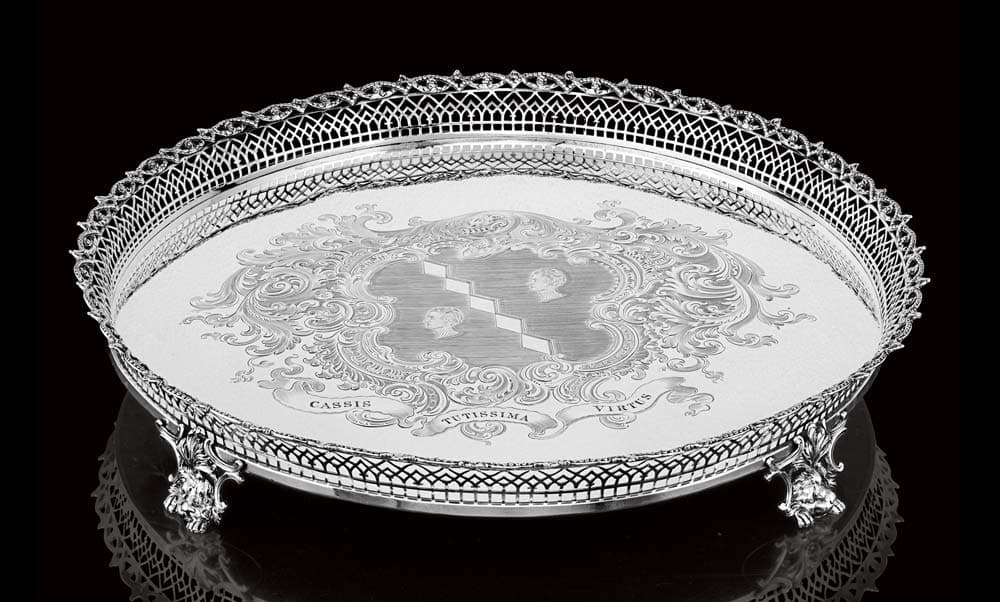 A salver is a flat serving tray, traditionally made of silver or silver-plated metal, used for presenting or carrying food, drinks, letters or ceremonial items. Unlike deeper serving trays with raised sides or handles, a salver is typically shallow and may have only a slight rim or decorative edge.
The word “salver” comes from the Latin salvare, meaning “to save” or “to preserve” which evolved through historical dining customs involving the presentation and safe serving of food and drink.
Historically, salvers were especially popular in Europe during the 17th and 18th centuries, where they became essential pieces in wealthy households. They were often used in formal tea ceremonies, wine service, and social gatherings.
What Does a Salver Look Like?
Salvers vary widely in style and design, but they commonly share several characteristics:
• A flat, circular, oval, or rectangular surface
• Decorative engravings or embossed patterns
• A raised edge or gallery rim
• Small feet or a pedestal base
• Silver, sterling silver, pewter, brass, or plated finishes
Some salvers are highly ornate, featuring floral engravings, scrollwork, or family crests, while others embrace minimalist elegance with smooth polished surfaces.
Materials and Styles
While silver is the quintessential salver material, the form has appeared in a wide range of materials across different periods and cultures:
Sterling silver remains the gold standard, prized for its luster and the fine detail it holds for engraving and embossing.
Silver-plate, a base metal such as copper or nickel coated with a layer of silver, brought the salver within reach of the middle classes during the Victorian era, particularly after the development of electroplating in the 1840s.
Sheffield plate, an earlier form of fused silver and copper developed in the mid-eighteenth century, produced handsome salvers that are now collectibles in their own right.
Pewter salvers appear in more modest historical settings, and contemporary makers have revived the material with modern designs.
Gold and vermeil (gilded silver) salvers exist for the most lavish applications: state banquets, royal households, and ecclesiastical use.
In terms of style, salvers have followed the broader currents of decorative arts: the restrained classicism of the Queen Anne period, the exuberance of Rococo, the symmetry of Neoclassicism, and the dense ornamentation of the Victorian era. Today, contemporary silversmiths produce salvers in clean, minimal forms that honor the function while discarding the historical flourishes.
Traditional Uses of a Salver
Throughout history, salvers served practical and ceremonial purposes. Their role often depended on the setting and social customs of the time.
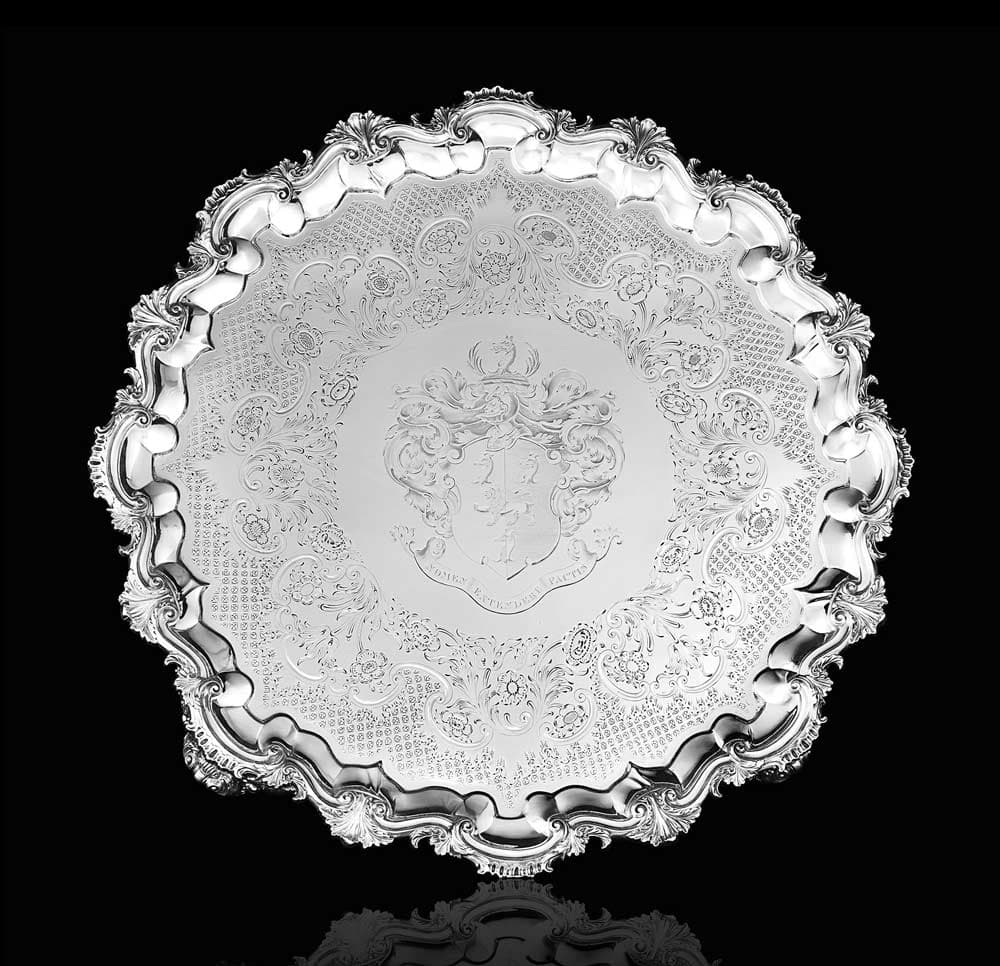 • Tea and Beverage Service - One of the most recognizable uses of a salver is in formal tea service. Teapots, cups, sugar bowls, and creamers were arranged neatly on the tray and presented to guests.
• Serving Drinks - In aristocratic homes and luxury hotels, salvers were used to carry wine glasses, decanters, or after-dinner drinks elegantly from room to room.
• Display and Decoration - Today, many salvers are used more as decorative centerpieces than serving tools. They may hold candles, flowers, perfume bottles, or collectible objects on dining tables and sideboards.
• Ceremonial Functions - In some institutions and religious settings, salvers are still used for formal presentations, awards, or offerings.
How it is used in tableware
Historically, salvers were used to carry glasses, cups, or small dishes from the kitchen or sideboard to the table, protecting tablecloths from spills and keeping items neatly arranged. In more ceremonial or formal contexts, they still appear on silver‑service tables, where waiters present beverages, hors d’oeuvres, or petits‑fours on a salver rather than directly from their hands.
Beyond food, antique salvers were also used as card trays or waiters to hold visiting cards, letters, or small gifts presented by a servant. Some modern glass or metal “cake pedestals” and tiered dessert stands are effectively salvers in disguise, lifting pastries, cakes, or canapés so they become both practical serving pieces and decorative centerpieces.
Salvers in the Modern Home
Formal dining culture has relaxed considerably since the Georgian heyday of the salver, but the object has not disappeared; it has simply shifted roles. Today, salvers appear as:
• Decorative objects displayed on sideboards, mantlepieces, or dressers, often carrying candles, small plants, or decorative items.
• Entertaining essentials for cocktail parties and dinner parties, pressed into service for drinks or canapés with a nod to traditional hospitality.
• Heirloom pieces passed down through families, sometimes engraved with generations of names.
• Collector's items sought by silver enthusiasts for their craftsmanship, maker's marks, and historical provenance.
A well-chosen salver, whether a Georgian antique or a sleek contemporary piece, adds an effortless layer of elegance to a table or a room. It is, in a sense, the distilled form of hospitality: a surface dedicated entirely to the act of offering something to another person.
Why Salvers Remain Popular
Even in modern homes, salvers continue to appeal to collectors, decorators, and hosts who appreciate timeless elegance.
• Antique Value - Antique silver salvers can be highly collectible, especially pieces from the Georgian or Victorian periods. Hallmarks, craftsmanship, and maker signatures often determine their value.
• Interior Design Appeal - A polished salver adds sophistication to dining rooms, coffee tables, and bar carts. Its reflective surface and vintage character complement both classic and contemporary interiors.
• Entertaining with Style - For formal dinners, weddings, or afternoon tea gatherings, a salver creates a sense of ceremony and attention to detail that ordinary serving ware may lack.
Final Thoughts
A salver is far more than a simple serving tray. It represents a tradition of gracious hospitality, artistic metalwork, and timeless table presentation. Whether displayed as an antique centerpiece or used during formal entertaining, the salver continues to embody elegance and refinement in the world of tableware. For collectors, decorators and anyone who appreciates classic dining culture, the salver remains a beautiful reminder that even functional objects can be works of art.




