why m. f. husain horses became a symbol of power & freedom in art
.jpg&w=3840&q=75)
In the vast landscape of Indian paintings, few motifs have captured the imagination quite like M.F. Husain's horses. These dynamic, spirited creatures galloping across his canvases became not just a signature element of his artistic vocabulary but a powerful symbol that resonated deeply with both critics and audiences alike. This article explores how M F Husain’s representation of horses transcends mere aesthetic appeal, embodying deeper meanings related to power, identity and liberation.
• Horse As A Timeless Motif
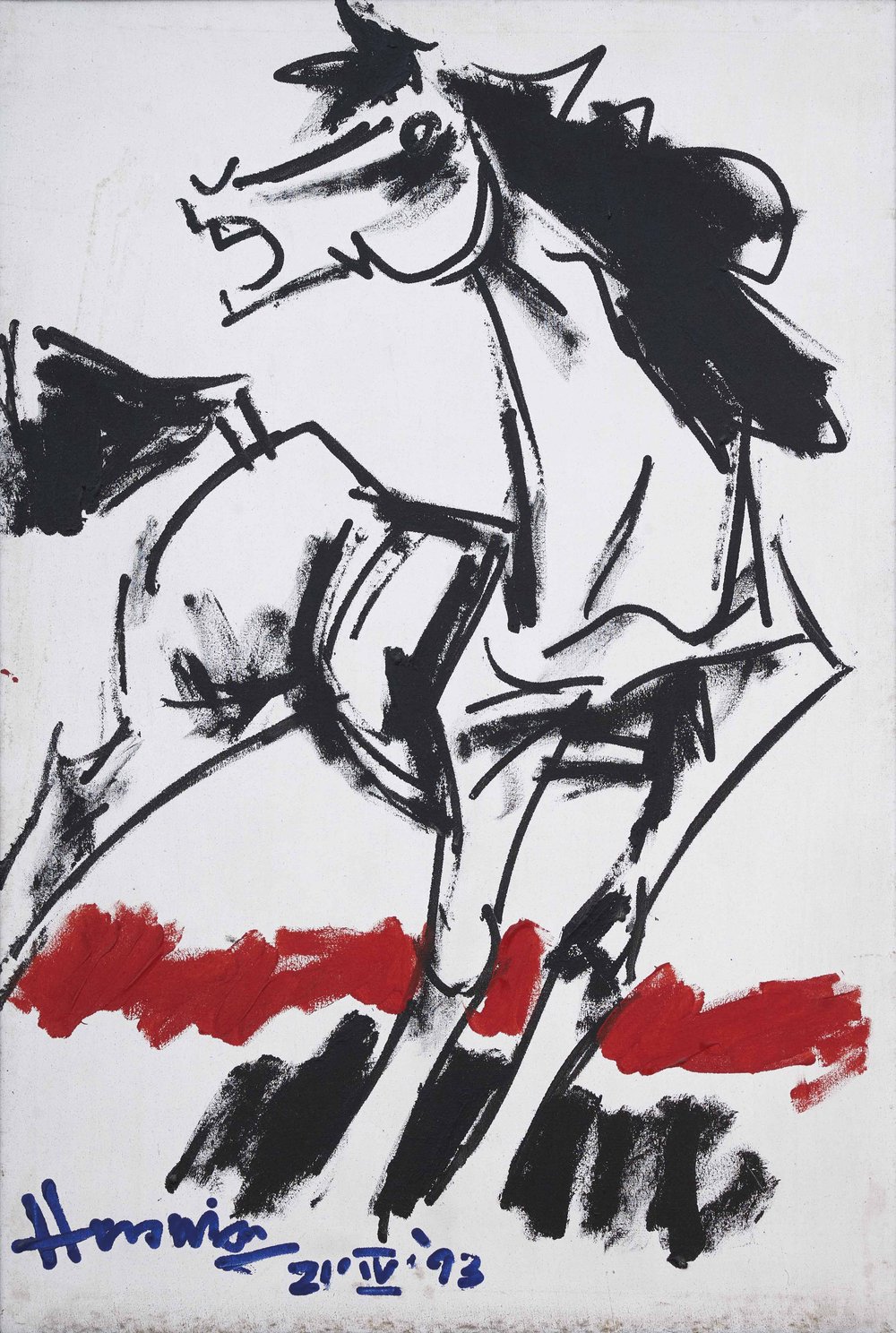 Throughout history, the horse has been a universal symbol of strength, vitality, and liberation. In Indian mythology and history, horses have often been associated with divine power and royalty. Lord Krishna’s chariot in the Mahabharata, the Ashwamedha sacrifice in Vedic rituals, and the galloping steeds of warriors in Mughal miniatures all underscore the animal's significance in Indian culture.
M.F. Husain drew from this rich cultural reservoir while infusing his personal interpretation. His horses were not mere reproductions of the animal; they were larger-than-life metaphors, imbued with movement, energy, and emotion. The sharp lines and fluid strokes he employed captured the essence of the horse as a creature that could embody both grace and ferocity.
• Freedom & The Post-Colonial Indian Psyche
M F Husain began his artistic journey during a time when India was emerging from colonial rule. His horses, often depicted in full gallop, symbolized a nation yearning to break free from the shackles of oppression. The wild, untamed nature of his equine figures reflected the spirit of independence and the aspiration for unbridled growth and progress.
For Husain, freedom was not just political but also deeply personal and artistic. He sought to break away from the rigid structures of traditional art and explore the avant-garde. His horses became an emblem of this rebellion, representing his pursuit of creative liberation.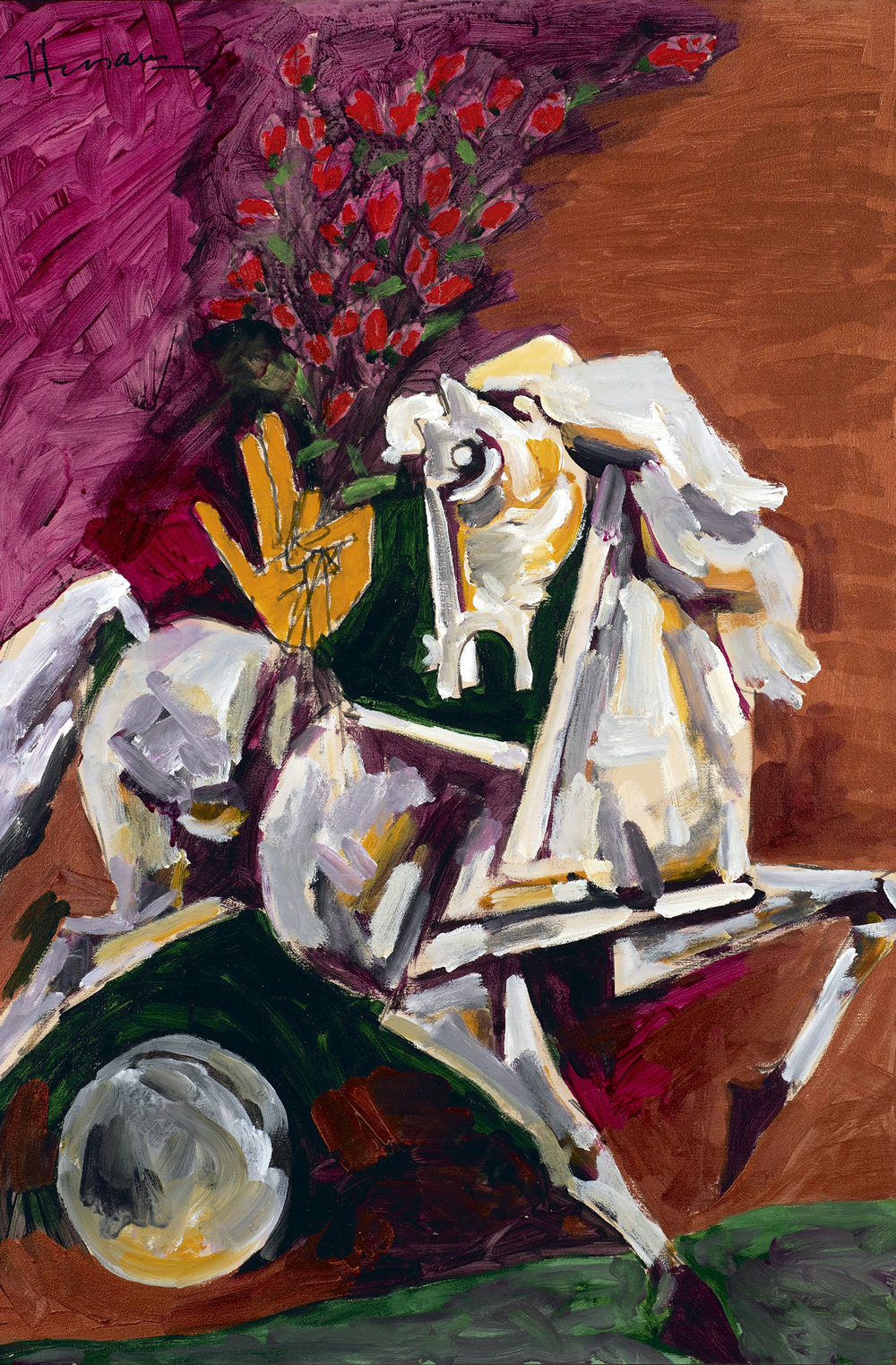
• Power In Motion: M F Husain’s Artistic Technique
One of the most striking aspects of Husain’s horses is their dynamism. His use of bold, sweeping brushstrokes and a limited but vivid color palette created a sense of perpetual motion. The angular forms, exaggerated proportions, and intense expressions of his horses exuded raw power, making them impossible to ignore.
M F Husain’s horses often appeared to leap off the canvas, as if defying the constraints of their two-dimensional medium. This defiance resonated with audiences, evoking a visceral sense of strength and vitality.
• Personal Connection & Universal Appeal
Husain’s fascination with horses was deeply personal. He once revealed that his inspiration stemmed from his childhood memories of watching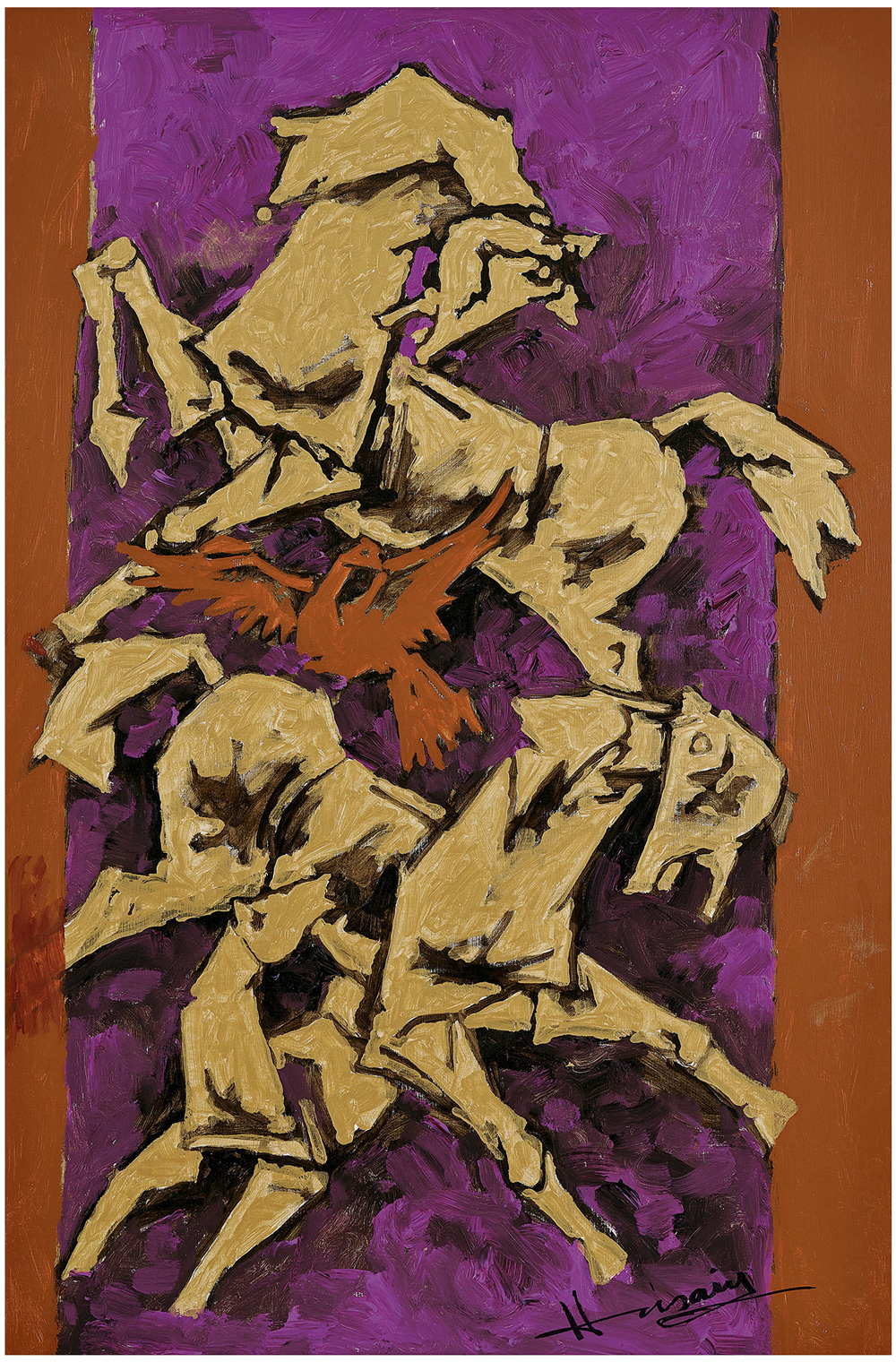 tanga horses in Pandharpur and the horses depicted in Mughal and Rajput miniatures. However, he transformed these influences into a universal symbol.
The universality of his horses lay in their abstraction. Stripped of specific context, they became archetypes of power, struggle, and transcendence. Viewers across cultures and backgrounds could find meaning in their forms, whether as a reflection of personal freedom or a collective yearning for strength.
• Legacy of M F Husain’s Horses
M.F. Husain’s horses continue to captivate art enthusiasts and collectors worldwide. They have become a symbol not only of his artistic genius but also of the enduring power of art to transcend boundaries.
In many ways, M F Husain’s horses mirror his own life—a constant journey of exploration, reinvention, and breaking free from conventions. Just as his horses gallop forward, untamed and unapologetic, Husain’s legacy charges ahead, inspiring new generations of artists to embrace the power and freedom of creative expression.
Conclusion
M.F. Husain’s horse paintings stand as a testament to the enduring significance of these animals within Indian culture and the artist's own journey towards self-expression. Through vibrant colors, dynamic brushwork, and profound symbolism, M F Husain immortalized the horse as a powerful emblem of freedom and strength. His legacy continues to inspire viewers worldwide, inviting them to explore their interpretations of power and liberation through the lens of art.