shantiniketan: history, founder, significance & more
.jpg&w=3840&q=75)
Shantiniketan also spelt Santiniketan, meaning "abode of peace" is a renowned cultural and educational institution located in the Bolpur subdivision of Birbhum district in West Bengal, India. It is situated at a distance of 164 km form Calcutta. This historic institution transformed from a modest experimental school into an internationally recognized center for arts, culture and alternative education that continues to influence pedagogical approaches worldwide. This article delves into the history, founder, significance, and enduring legacy of Shantiniketan.
Historical Background
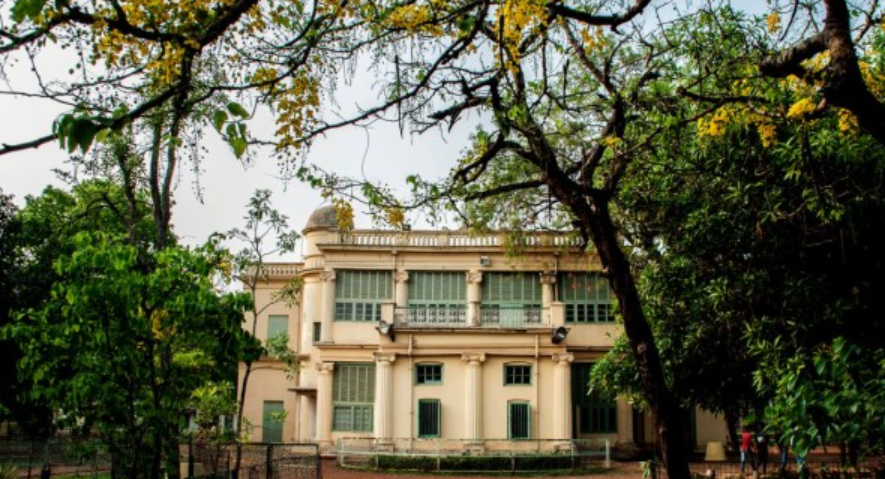 The origins of Shantiniketan can be traced back to 1863 when Maharshi Debendranath Tagore, a prominent leader of the Brahmo Samaj and the father of Rabindranath Tagore, took a permanent lease on 20 acres of barren land in Birbhum, West Bengal from zamindar Bhuban Mohan Sinha. The area, then originally called as Bhubandanga, was notorious for dacoits until Debendranath persuaded them to abandon crime and aid in its development. He envisioned a peaceful retreat, which he named "Shantiniketan" meaning "abode of peace" and established an ashram (spiritual retreat) with a prayer hall named "Santiniketan Griha" on the land. This site was initially intended as a guest house for meditation and spiritual pursuits and was dedicated to the principles of the Brahmo Samaj with a glass-paneled prayer hall inspired by London’s Crystal Palace, surrounded by the serene beauty of nature, particularly two chhatim trees that still stand today.
Founder: Rabindranath Tagore
While Debendranath Tagore laid the spiritual groundwork, Rabindranath Tagore institutionalized its educational ethos. In 1901, Rabindranath Tagore took his father's vision further by establishing the Brahmacharya Ashram, later renamed Patha Bhavana. With just five students, including his own son, Tagore initiated an educational experiment that rejected the confines of conventional classrooms. This marked the formal beginning of Shantiniketan as an educational institution. By 1921, Tagore expanded his educational vision by establishing Visva-Bharati University, an institution dedicated to the study of various cultures with particular emphasis on Asian traditions. The name, meaning "where the world makes a home in a single nest," reflected Tagore's commitment to international understanding and cultural exchange. Visva-Bharati officially became a central university in 1951, four years after India's independence, through an Act of Parliament. The university comprises several institutes including Patha Bhavana (school), Siksha Satra (rural education), Kala Bhavana (visual arts), Sangit Bhavana (music and dance), and Vidya Bhavana (humanities).
After the passing of Rabindranath Tagore, his son, Rathindranath Tagore, assumed the responsibility of carrying forward his father's legacy at Shantiniketan. The core structures of the campus were carefully preserved, and a notable addition was the establishment of Rabindra Bhavan, which now houses a museum dedicated to the life and works of Rabindranath Tagore.
Architectural Heritage
The architecture of Shantiniketan is a blend of traditional Bengali styles and modern influences. The buildings, designed by Tagore and his associates, reflect a harmony with the natural surroundings. Notable structures include the Uttarayan complex, where Tagore lived, and the Kala Bhavana, the art college that has nurtured many renowned artists.
Educational Philosophy
The educational philosophy of Shantiniketan is encapsulated in the concept of "Guru-Shishya Parampara" which emphasizes the importance of the teacher-student relationship. The institution follows a flexible and student-centered approach, allowing individuals to pursue their interests and passions. The curriculum at Shantiniketan is interdisciplinary, combining traditional academic subjects with arts, music, dance and physical education. The open-air classrooms, the emphasis on self-learning and the integration of nature into the educational process were revolutionary concepts at the time.
Cultural Significance
Shantiniketan has played a pivotal role in preserving and promoting Indian art and culture. The institution has produced numerous notable alumni, including artists like Nandalal Bose and Ram Kinker Baij, who have significantly contributed to the development of modern Indian art. Besides, the town is known for its festivals, such as Poush Mela, Basanta Utsav and Rabindra Jayanti, which celebrate the rich cultural heritage of Bengal. These festivals attract visitors from all over the world, showcasing the vibrant traditions of music, dance and art.
Things To Do In Shantiniketan
Shantiniketan offers a variety of activities and attractions. Here are some engaging activities and places to explore during your visit:
1. Visit Visva Bharati University - Founded by Rabindranath Tagore, Visva Bharati University is a central hub of education and culture. The campus is expansive, featuring various departments, museums, and libraries. You can attend cultural events, art exhibitions, and seminars that reflect Tagore's holistic approach to education. Make sure to explore the Kala Bhavana, which focuses on fine arts, and Sangit Bhavana, dedicated to music and dance.
2. Explore Tagore's Ashram - Tagore's Ashram, also known as Rabindra Bhavan, is a heritage site where Rabindranath Tagore spent much of his life. The museum houses a collection of his original works, including paintings, writings, and personal artifacts. It's a profound experience to walk through the spaces that inspired some of his greatest literary contributions.
3. Experience Chattimtala - Chattimtala is a tranquil spot where Maharshi Devendranath Tagore, Rabindranath's father, meditated. The serene environment, marked by the presence of ancient trees, makes it an ideal place for reflection and relaxation.
4. Attend Events at Upasana Ghar - The Upasana Ghar, or Prayer Hall, is a beautiful structure built in 1863. It is known for its stunning stained glass windows and hosts prayer meetings every Wednesday. The ambiance created by candlelight and the soft glow of the glass is enchanting.
5. Discover Amar Kutir - Amar Kutir was once the residence of Rathindranath Tagore and is now a museum showcasing his life and work. The museum provides insights into the Tagore family's contributions to art and literature.
6. Stroll Through the Uttarayana Complex - The Uttarayana Complex includes Rabindranath Tagore's former residence and several other buildings surrounded by lush gardens. The complex is home to various sculptures and offers a glimpse into Tagore's life and philosophy.
7. Visit Deer Park and Ballavpur Wildlife Sanctuary - For nature lovers, the Deer Park and Ballavpur Wildlife Sanctuary are must-visit spots. The sanctuary is home to various species, including deer and numerous birds, making it a great place for wildlife photography and birdwatching.
8. Shop at Shonajhuri Haat - Shonajhuri Haat is a vibrant market where local artisans sell handicrafts, textiles, and traditional Bengali items. The lively atmosphere, complete with folk music and dance performances, makes shopping here a delightful experience.
9. Relax by the Kopai River - The Kopai River flows through Shantiniketan and is a picturesque spot for relaxation. Enjoy a peaceful evening by the riverbank, soaking in the natural beauty and tranquility of the surroundings.
10. Experience Poush Mela - If you visit in December, don’t miss the Poush Mela, a vibrant fair celebrating Bengali culture. The event features traditional crafts, folk performances, and delicious local cuisine, providing a unique cultural immersion.
11. Explore Prakriti Bhavana - Prakriti Bhavana is dedicated to natural history and biodiversity. It showcases collections of fossils, plants, and animals, making it an educational stop for those interested in nature.
12. Visit Sarkar Rajbari - The Sarkar Rajbari, an 18th-century palace, now serves as a museum. It reflects the rich history and architecture of the region, offering insights into the local heritage.
How To Reach Shantiniketan
Reaching Shantiniketan is fairly easy, especially from Kolkata or nearby cities. Here's a guide on how to get there:
1. By Train
Nearest Railway Station: Bolpur Shantiniketan Station, which is about 2 km from the main area.
From Major Cities: Regular trains run from Kolkata, Howrah, and other major cities. The journey from Kolkata takes about 2.5 to 3 hours.
2. By Road
From Kolkata: You can drive or take a bus. The distance is approximately 160 km, and it usually takes around 3-4 hours.
Bus Services: State-run and private buses frequently operate between Kolkata and Shantiniketan.
3. By Air
Nearest Airport: Netaji Subhas Chandra Bose International Airport in Kolkata.
From Airport: You can hire a taxi or take a bus to reach Shantiniketan, which is about 160 km away.
4. Local Transport
Auto-rickshaws and taxis are available for local travel within Shantiniketan.
Key Attractions
• Patha Bhavana (The original school)
• Kala Bhavana & Art Galleries
• Rabindra Bhavan Museum (Tagore’s manuscripts, paintings, and personal items)
• Deer Park & Ballal Dhipi (Archaeological site)
• Amar Kutir (Handicraft cooperative)
Best Time to Visit
The best time to visit Shantiniketan depends on your interests and what you want to experience during your trip. Here is a guide to help you determine the best time to visit Shantiniketan:
1. Winter (November to February)
• Climate: The winter months in Shantiniketan are mild and pleasant, with temperatures ranging from 10°C to 25°C (50°F to 77°F). This is generally considered the best time to visit the town.
• Events: The Poush Mela, a major cultural festival, is held in January. This festival celebrates Bengali culture with music, dance, and traditional crafts.
• Activities: The pleasant weather makes it ideal for exploring the town, visiting historical sites, and attending cultural events. You can enjoy long walks, cycle rides, and visits to the Botanical Garden without the discomfort of extreme heat.
2. Spring (March to April)
• Climate: Spring in Shantiniketan is warm, with temperatures ranging from 15°C to 30°C (59°F to 86°F). The weather is generally pleasant, but it can get quite warm towards the end of April.
• Events: The Baul Festival, which celebrates the Baul tradition of Bengal, is held in January, but the spring season is still a good time to visit if you missed the festival.
• Activities: The warm weather is perfect for outdoor activities and exploring the town. You can visit the Santiniketan Art Institute, attend cultural performances, and enjoy the rural landscape.
3. Summer (May to June)
• Climate: Summer in Shantiniketan can be quite hot, with temperatures often exceeding 35°C (95°F). The heat can be uncomfortable, and the town can be less crowded during this time.
• Events: There are fewer cultural events during the summer months.
• Activities: If you visit during the summer, it's best to plan your activities for the early morning or late afternoon to avoid the midday heat. You can still visit historical sites and enjoy the town's cultural offerings, but be prepared for the warm weather.
4. Monsoon (July to October)
• Climate: The monsoon season in Shantiniketan brings heavy rainfall and cooler temperatures, ranging from 20°C to 30°C (68°F to 86°F). The town can be quite lush and green during this time, but travel can be challenging due to the rain.
• Events: There are fewer cultural events during the monsoon season.
• Activities: The monsoon season is not the best time to visit if you prefer outdoor activities. However, if you enjoy the lush greenery and want to experience the town in a different light, the monsoon can be a unique and beautiful time to visit. Be prepared for occasional rain and potential travel disruptions.
UNESCO World Heritage Site
In 2023, Shantiniketan was inscribed on the UNESCO World Heritage List under the name "Rabindranath Tagore's Santiniketan". This recognition acknowledges its historical, cultural, and educational significance and its close association with Rabindranath Tagore. The site is protected for future generations, ensuring the preservation of its rich cultural and educational legacy.
Legacy
Even after a century, Shantiniketan continues to stand as a beacon of progressive education and cultural inclusivity. While modern challenges—administrative, financial, and political—have occasionally tested its ideals, the foundational spirit of Tagore’s vision remains resilient.
Conclusion
Shantiniketan is more than just a geographical location—it is a living philosophy. It reflects Rabindranath Tagore’s dream of an education that nurtures freedom, creativity, and a global humanist outlook. Today, as India and the world grapple with educational reform and cultural identity, Shantiniketan stands tall as an enduring inspiration for a better, more enlightened society.