a guide to understanding somnath hore sculptures
.jpg&w=3840&q=75)
Somnath Hore was a renowned Bengali sculptor, painter and printmaker, whose works have profoundly impacted the modern art scene in India. Known for his emotionally intense and socially conscious creations, Somnath Hore's sculptures delve deep into human suffering, the intricacies of life, and the complexities of social and political landscapes. His artistic expression, characterized by raw, unembellished depictions of the human form and poignant themes, has made him one of the foremost modern sculptors in India. This guide will explore the significance of Somnath Hore’s sculptures, the "themes" he addressed & the unique "materials and techniques" he employed, providing a comprehensive understanding of his artistic legacy.
# Themes
• Human Suffering and Resilience:
Somnath Hore’s sculptures are deeply rooted in the physical and emotional scars of humanity. The famine-stricken bodies, skeletal figures, and scarred surfaces of his works are a direct reflection of his empathy for those who suffer. The skeletal forms, hollowed-out torsos, and emaciated limbs make his sculptures a visceral experience for the viewer. For example, Hore was particularly interested in the marks left by suffering—what he called "wounds." These were not just physical scars but also metaphorical representations of collective trauma and resilience.
• The Wound Motif:
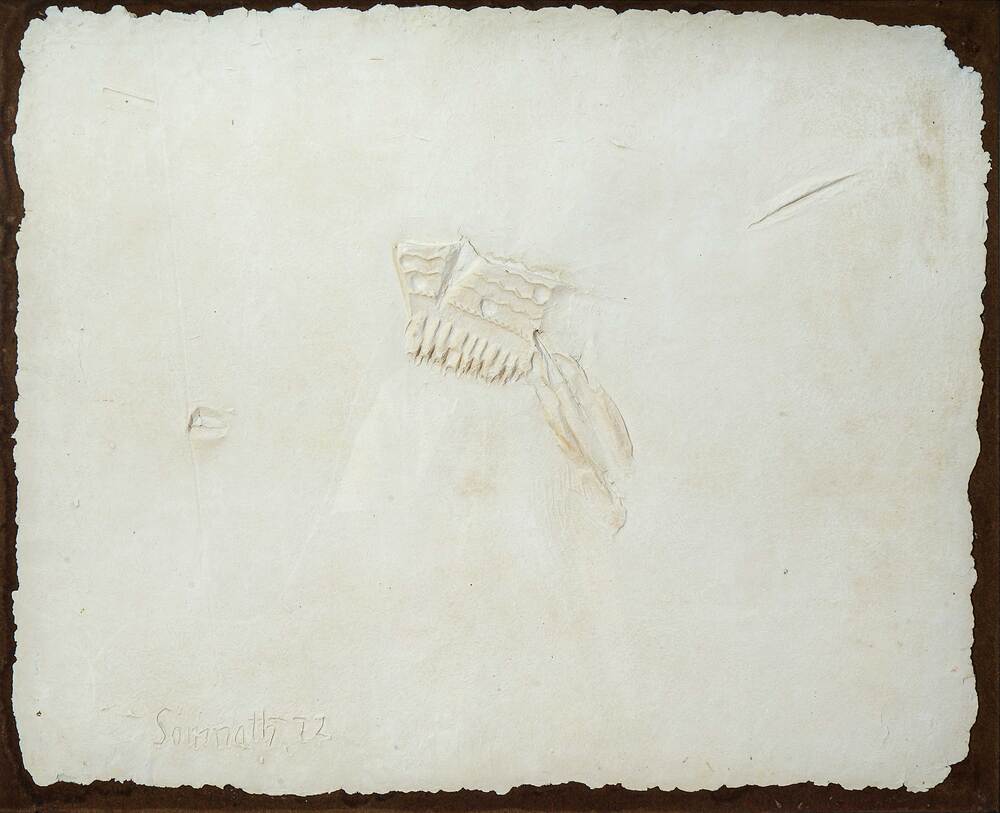
A recurring motif in Hore’s work, both in printmaking and sculpture, is the "wound." The wound symbolizes pain, struggle, and survival. In his sculptures, this is often represented through jagged, textured surfaces and hollow spaces. The wounds are not just personal but collective, representing the struggles of the oppressed. The "Wounds" series, originally developed as prints, found new life in his sculptures, where the raw textures and harsh lines evoke the same emotional intensity.
• Minimalist Aesthetic:
Somnath Hore's sculptures are often minimalist in form, focusing on essential elements rather than ornate details. This reduction of form allows the emotional and symbolic power of the work to take center stage. The skeletal figures, for example, are stripped of excess, leaving behind only the bare essentials to convey suffering and endurance.
• Nature & Organic Forms:
In addition to human forms, Hore was influenced by nature, particularly the textures and forms of organic materials. His sculptures often resemble weathered trees, eroded rocks, or dried riverbeds, reflecting the interconnectedness of human suffering and the natural world.
# Material & Techniques
• Exploration Of Bronze:
Somnath Hore’s later sculptures, particularly in bronze, showcase his mastery of the medium. He used bronze to create textured, organic forms that are both fragile and monumental. His bronze sculptures often appear weathered and scarred, emphasizing the passage of time and the endurance of the human spirit.
• Innovative Texturing:
One of Somnath Hore’s signature techniques was creating rough, scarred textures that evoke wounds. These textures were achieved through a combination of casting techniques and manual manipulation of the material. Hore's surfaces are rich with tactile details, inviting the viewer to not only see but also feel the emotional weight of his work.
• Integration Of Negative Space"
Negative space plays a crucial role in Hore’s sculptures. The hollowed-out forms and empty spaces in his works are as meaningful as the solid areas. These voids symbolize absence, loss, and the silent spaces left by trauma.
# Famous Sculptures
• Mother and Child:
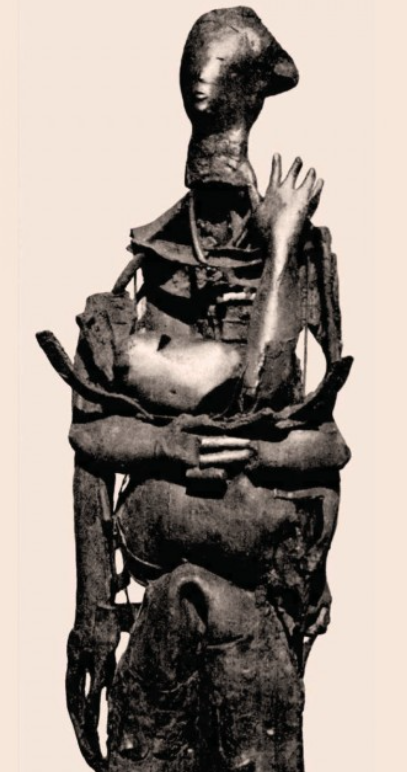
Also known as "Vietnamese Mother", this is one of Somnath Hore's largest sculptures, created as a tribute to the sufferings of the Vietnamese people. This 40-inch bronze sculpture depicts a woman with a damaged chest holding a baby. It symbolizes hope and the undefeated spirit of Vietnam rising from ruins. Somnath Hore started working on it after the fall of Saigon in 1975, completing it around October 19771. The sculpture was stolen shortly after completion and never recovered, deeply affecting Somnath Hore. Some suggest the image was inspired by David Burnett's 1972 photo of a Vietnamese mother with her wounded child and Somnath Hore's own mother who faced immense suffering after his father's death.
• Wounds Series:
The "Wounds" or "Khot" series is one of Somnath Hore's most intense and striking works, which reflects his deep sensitivity to human suffering. This series employs deep cuts and gashes to depict physical, emotional and mental trauma caused by war, starvation, and human suffering. The "Wounds" series is characterized by minimalism and abstraction, using lacerations on handmade paper to portray trauma.
• The Bengal Famine Series:
The Bengal Famine is one of Somnath Hore’s most powerful scuptural artworks, inspired by the devastating Bengal Famine of 1943. The famine, which caused the death of millions, had a profound impact on Hore’s psyche and artistic output. In this series, Hore's sculptures depict the skeletal figures of famine victims, their bodies emaciated and contorted in agony. The works are deeply evocative, conveying the suffering of the hungry and the desperate. The use of raw materials and stark forms further heightens the emotional intensity, making it a harrowing reminder of the human cost of political and economic failures.
• The Hiroshima Series:
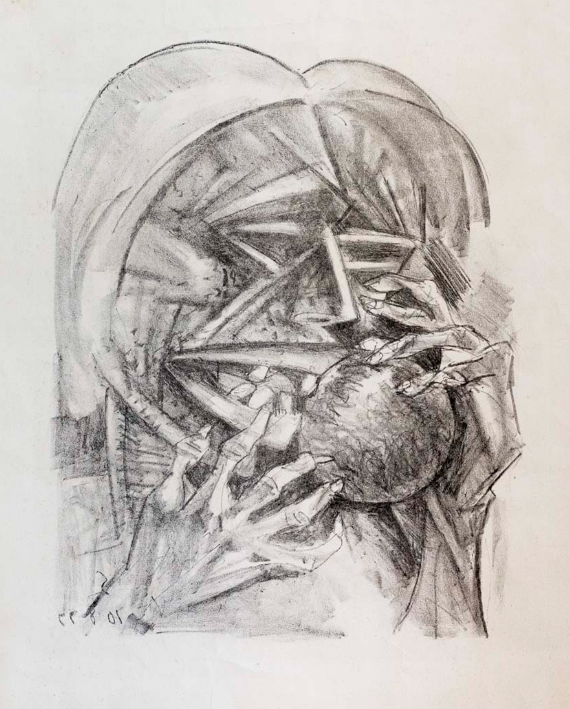
This series was created in response to the atomic bombing of Hiroshima in 1945, an event that left an indelible mark on the world’s collective memory. Somnath Hore’s Hiroshima sculptures express the horror of nuclear destruction and the devastation it causes to human life. The sculptures in this series are often abstract and fragmented, reflecting the disintegration of human bodies and lives due to the bomb's impact. The craggy surfaces and jagged forms in the sculptures evoke a sense of deep trauma and disfigurement. Through this series, Somnath Hore communicated the brutal consequences of war and the lasting scars it leaves on humanity.
• Seated Woman:
The sculpture Seated Woman by Somnath Hore is a poignant representation of femininity and strength. This bronze sculpture portrays a woman seated with her arms crossed, resting on her knees drawn up towards her chest. The posture and minimalist form convey introspection and emotional depth, characteristic of SomnathHore's focus on human anguish and endurance. This piece is part of the British Museum's collection. ?
• The Khajani Player:
Created in 1995, this bronze sculpture measures approximately 125 x 96 cm (49.2 x 37.8 inches). It depicts a musician playing the khajani, a traditional Indian instrument, and showcases Somnath Hore's ability to blend cultural elements with expressive form. The piece reflects Hore's interest in the themes of music and performance, as well as his broader commentary on the human condition and cultural identity. The sculpture is notable for its intricate detailing and the emotional depth it conveys, characteristic of Somnath Hore's artistic style.
• The Standing Figure:
This is one of Somnath Hore's more abstract sculptures, with a focus on human form and posture. This sculpture is typically interpreted as a representation of human resilience and endurance. It features a figure in an upright stance, possibly symbolizing strength in the face of adversity. The abstraction in this work allows viewers to interpret the figure as both universal and personal, evoking a sense of isolation or defiance. The rough, unrefined texture of the sculpture reflects Hore's signature approach, with a deliberate emphasis on raw, unpolished forms that convey emotional depth.
• Abstract Human Forms:
Somnath Hore’s exploration of abstract human forms delves into the essence of human experience, often focusing on basic emotions, struggles, and existential themes. These sculptures are less about realistic representation and more about conveying the raw, often unsettling, emotions of the human condition. His abstract forms are characterized by their rough surfaces, angular lines, and sometimes fragmented shapes. They are dynamic and energetic, revealing a sense of motion and urgency. These pieces reflect Hore's belief in the need to communicate complex emotional and psychological states through art, rather than relying on conventional aesthetics.
• Conclusion
Somnath Hore’s sculptures offer a window into the struggles of the human experience, from the pain of hunger to the dignity of labor, and they provide a critique of the societal and political systems that perpetuate suffering. His ability to balance the raw emotional impact of his work with a refined artistic approach has made him a key figure in modern Indian art. By focusing on the human form in its most vulnerable state, Somnath Hore sculptures have not only documented history but have also raised timeless questions about the nature of human suffering, dignity, and resilience.