celebrating the 111th birth anniversary of k h ara
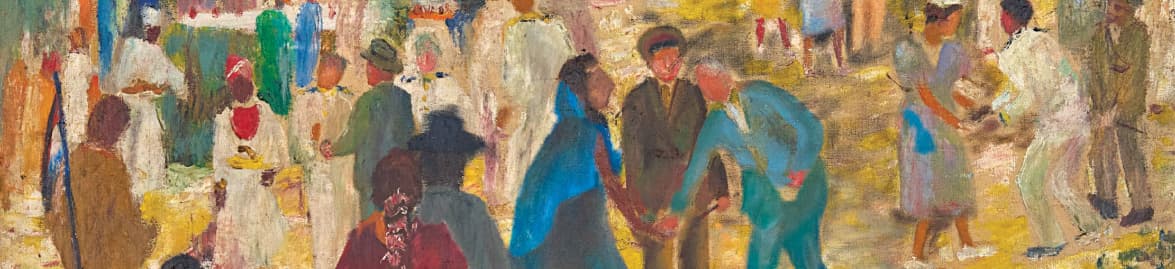
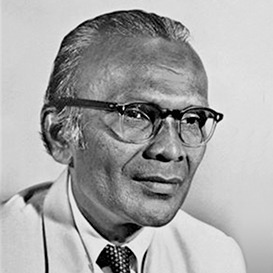
April 16, 2025 marks the 111th birth anniversary of K H Ara, one of the pioneering figures in modern Indian art. Krishnaji Howlaji Ara, widely known as K.H. Ara stands as a pioneering figure in modern Indian art, celebrated for his distinctive contributions that helped shape the country’s artistic landscape in the mid-20th century. Born on 16 April 1914 in Secunderabad, Ara’s journey from humble beginnings to becoming a founding member of the Progressive Artists’ Group in Bombay is a testament to his resilience, talent, and visionary approach to art.
K.H Ara’s early life was marked by hardship; orphaned by his mother at a young age and running away to Bombay at just seven years old, he initially earned a living through menial jobs such as cleaning cars. Despite lacking formal art education initially, his innate artistic talent was recognised by Walter Langhammer, the art director of The Times of India, who encouraged him to pursue painting more seriously. This support led Ara to enrol at the prestigious Sir J. J. School of Art in Mumbai, where he honed his skills further.
 What sets K.H. Ara apart in Indian art history is his pioneering focus on the female nude as a subject. He is widely regarded as the first contemporary Indian painter to explore the female nude with meticulous naturalism, breaking away from traditional Indian artistic norms that often avoided such themes. Unlike his contemporaries who might have used the nude to shock or revisit folk motifs, Ara’s approach was modernist and deeply humanistic. His nudes are intimate, poetic, and imbued with a life-affirming warmth rather than raw eroticism.
Ara’s artistic style evolved through a blend of intuition, spontaneity, and improvisation. Influenced by French modernists like Paul Cézanne and inspired by expressionist works he encountered through Langhammer, Ara developed a robust and vibrant style. His paintings, especially his still lifes featuring bowls, fruits, and flowers, display a rugged buoyancy and compositional balance that brought new vitality to this genre in India. His use of impasto effects in watercolours and gouaches, later transitioning to oil paints, demonstrated his technical versatility and innovative spirit.
His career took off with his first solo exhibition in 1942 at the Chetana Restaurant in Bombay, which was a commercial success and established him as a serious artist. He became an integral part of the Progressive Artists’ Group formed in 1948, alongside luminaries such as M.F. Husain, F.N. Souza, and S.H. Raza. The group aimed to break away from colonial academic art traditions and create a new modern Indian art language that was both contemporary and rooted in Indian realities. Ara’s contributions to this movement were significant, although his style remained uniquely his own, prioritising form and artistic language over political or social commentary.
Throughout his career, Ara received numerous accolades, including awards from the Bombay Art Society, the Governor’s Prize, and a UNESCO award, all before India’s independence. He also played important roles beyond painting, serving as the founder and secretary of the Artists’ Aid Centre, trustee of the Jehangir Art Gallery in Bombay, and as a fellow and council member of the Lalit Kala Akademi in New Delhi. His commitment to nurturing the art community was as strong as his dedication to his craft.
Despite some critical voices who questioned the perfection and life-referencing in his works, Ara’s legacy remains influential. His paintings have been exhibited widely, including solo and group shows across India and internationally in Europe, Japan, and Russia. His works are held in prominent collections such as the National Gallery of Modern Art in New Delhi, the Jehangir Nicholson Art Foundation in Mumbai, and even the Victoria and Albert Museum in London.
K H Ara passed away on 30 June 1985, leaving behind a rich legacy that continues to inspire contemporary Indian artists. His art, characterised by its fusion of realism and modernism, vibrant colour palette, and sensitive portrayal of the human figure, especially the female nude, marked a significant departure from traditional Indian art and helped pave the way for future generations. Ara’s belief that “an artist must never lose his humanity or social goodwill” resonates through his oeuvre, which remains a modest yet profound token of warmth and delight.
In celebrating K.H. Ara’s legacy, we honour a true pioneer who transformed Indian art by embracing modernist ideals while maintaining a deeply humanistic vision. His work stands as a bridge between tradition and modernity, reflecting the complexities and vibrancy of a newly independent India finding its voice in the global art world.