exploring the themes of infinity & void in anish kapoor’s artworks
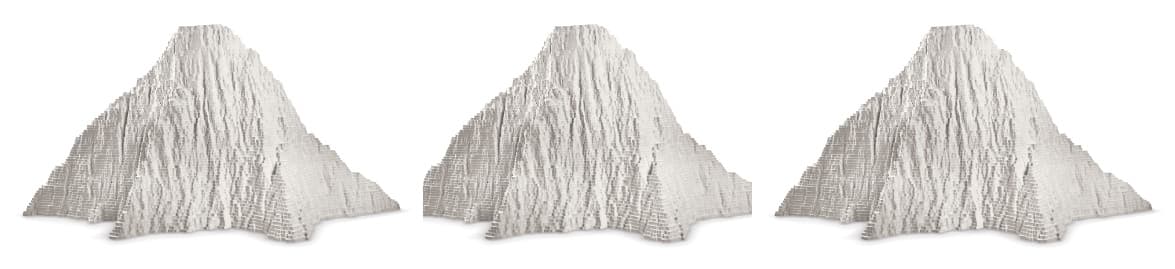
Anish Kapoor (born 12 March 1954), one of the most influential contemporary artists of our time, has consistently pushed the boundaries of artistic exploration. His work is often characterized by monumental forms, striking use of materials & an evocative interplay between presence and absence, which encapsulates themes of infinity and void. These themes are not merely decorative or abstract; they are deeply philosophical and resonate with the primal human fascination with the unknown, the infinite, and the sublime. This article delves into how Anish Kapoor navigates the complex ideas of infinity & void, reflecting on key works, materials and his broader artistic philosophy.
• The Infinite & The Void
Kapoor has often articulated that his art seeks to explore spaces that are both physical and metaphysical. Central to his philosophy is the notion of the void, which he describes as a “pregnant emptiness.” Unlike conventional representations of void as emptiness or nothingness, Kapoor’s voids are generative—they create a sense of potential, inviting the viewer to engage in a meditative contemplation of the unknown.
Infinity, on the other hand, manifests in Kapoor’s works through repetitive geometries, seamless surfaces, and boundless illusions. He often uses reflective materials, such as polished stainless steel or deeply pigmented resin, to create an interplay between the tangible and the infinite. These materials blur the boundaries between object and environment, collapsing spatial limitations and drawing the viewer into an endless loop of visual and intellectual engagement.
• Materials As Metaphors
Kapoor’s mastery of materials is key to his exploration of infinity and void. He has an uncanny ability to transform materials into metaphors that challenge perception. Pigments, polished metals, and Vantablack—a substance that absorbs nearly all visible light—are integral to his lexicon.
• The Use Of Pigment
In his early works, Kapoor used pure pigment to coat geometric and biomorphic forms. Works such as 1000 Names (1979–1980) feature vivid monochromatic hues that appear to transcend their physical boundaries, suggesting a continuum beyond the visible. The powdered pigment creates an aura-like quality, evoking infinite expanses while grounding the forms in a primordial, earthbound materiality.
• Polished Metal & The Infinite Reflection
Kapoor’s polished metal sculptures, such as Cloud Gate (2006) in Chicago, epitomize his engagement with infinity. The seamless, mirror-like surface of Cloud Gate reflects the surrounding environment, creating a dynamic interplay of real and distorted imagery. Viewers are simultaneously drawn into the work and distanced by its shifting, unfixed reflections. This duality reflects Kapoor’s exploration of the infinite—an endless expansion of space that folds back upon itself, echoing notions of the cosmic and the eternal.
• Vantablack & The Abyss
Anish Kapoor’s exclusive rights to Vantablack, a material that absorbs 99.96% of visible light, represents his most radical exploration of the void. When applied to three-dimensional objects, Vantablack eliminates the perception of surface and depth, making the form appear as a two-dimensional void. Kapoor’s use of Vantablack is not just about visual impact but also about confronting the metaphysical implications of a material that resists light, presence, and definition.
Manifestations Of Infinity & Void
1. Descent into Limbo (1992)
One of Anish Kapoor’s most iconic explorations of the void is Descent into Limbo, a deceptively simple installation that houses a dark, cylindrical void at its center. The void is so perfectly black that it defies depth perception, appearing as an infinite abyss. Visitors are lured into its presence, grappling with the dissonance between what their eyes perceive and what their minds comprehend.
The title references the biblical concept of limbo, a space between worlds, amplifying the metaphysical dimension of the work. The void in Descent into Limbo is not merely an absence; it is an active presence that challenges the viewer’s sense of reality and infinity.
2. Sky Mirror (2001)
Sky Mirror is a series of large, concave mirrors that reflect and invert the surrounding environment, including the sky. These installations create a disorienting sense of spatial inversion, where the heavens appear grounded and the ground disappears into the sky. Anish Kapoor’s manipulation of reflection draws viewers into a meditative experience, forcing them to confront the infinite expanse above and their place within it.
3. Leviathan (2011)
Created for Monumenta at the Grand Palais in Paris, Leviathan is a massive inflatable structure that immerses visitors in a blood-red interior. The sheer scale of the work evokes the sublime, a concept linked to infinity and the overwhelming power of nature. Anish Kapoor described the work as a "cathedral of the body," where the void becomes a space of reverence and introspection. The title Leviathan further invokes the biblical sea creature, aligning the work with themes of the unknowable and the infinite.
4. My Red Homeland (2003)
In this work, Anish Kapoor presents a circular pool of red wax that is slowly manipulated by a mechanical arm. The continuous motion of the wax symbolizes an eternal cycle, a visual metaphor for infinite process and transformation. The red pigment, evocative of blood, life, and energy, transforms the void into a dynamic, generative force.
• Cultural & Philosophical Underpinnings
Kapoor’s fascination with infinity and void is deeply rooted in both Western and Eastern philosophical traditions. He often draws inspiration from Hindu cosmology, where the concepts of shunya (emptiness) and ananta (infinity) are central. These ideas challenge the binary between existence and non-existence, resonating with Kapoor’s vision of the void as a space of potential rather than negation.
Similarly, the influence of modern Western philosophy, particularly existentialism and phenomenology, is evident in Kapoor’s works. By engaging viewers in direct, sensory encounters with his works, Kapoor aligns his practice with phenomenological ideas about perception, being, and the infinite. His art becomes a space where philosophical inquiry is not abstract but visceral and immediate.
• Interactivity & The Viewer’s Role
A defining feature of Kapoor’s work is the active engagement it demands from viewers. His sculptures and installations are not complete without the perceptual and emotional responses they evoke. In works like Cloud Gate and Sky Mirror, viewers become part of the artwork through their reflections and movements. This participatory dimension emphasizes the relational nature of infinity and void—concepts that cannot exist in isolation but are defined through interaction and perception.
Kapoor often speaks of creating art that “makes space” for the viewer, both physically and psychologically. This ethos aligns with his broader exploration of the infinite and the void, as these concepts are not confined to the objects themselves but extend into the viewer’s consciousness.
• Criticism & Controversy
Kapoor’s engagement with themes of infinity and void has not been without controversy. His exclusive licensing of Vantablack sparked debates about artistic ethics and accessibility. Critics argue that monopolizing such a groundbreaking material contradicts the spirit of artistic innovation, which thrives on shared exploration. Kapoor, however, defends his position, asserting that his use of Vantablack is integral to his artistic vision and exploration of the void.
• Legacy In Exploring Infinity & Void
Anish Kapoor’s art transcends aesthetic boundaries to delve into profound metaphysical questions about existence, perception, and the cosmos. His exploration of infinity and void challenges viewers to confront the unknown, transforming what might be abstract philosophical concepts into tangible, visceral experiences.
Through his innovative use of materials, monumental forms, and interactive installations, Anish Kapoor has redefined the possibilities of contemporary art. His works do not provide answers but instead open spaces—both literal and metaphorical—for contemplation and wonder. In this way, Kapoor’s art continues to resonate with audiences worldwide, offering a glimpse into the infinite and the enigmatic beauty of the void.
• Further Exploration
For those interested in experiencing Kapoor’s works firsthand, many of his installations are housed in public spaces, such as Cloud Gate in Chicago and Sky Mirror in Nottingham. Retrospective exhibitions often provide an opportunity to engage with the breadth of his artistic journey, where infinity and void remain enduring themes that captivate and inspire.
If this exploration intrigued you, don’t miss the opportunity to dive into another article on Anish kapoor here — Stone, Wax & Pigment in Anish Kapoor’s Art