


gaganendranath tagore | unsung hero of indian cubism
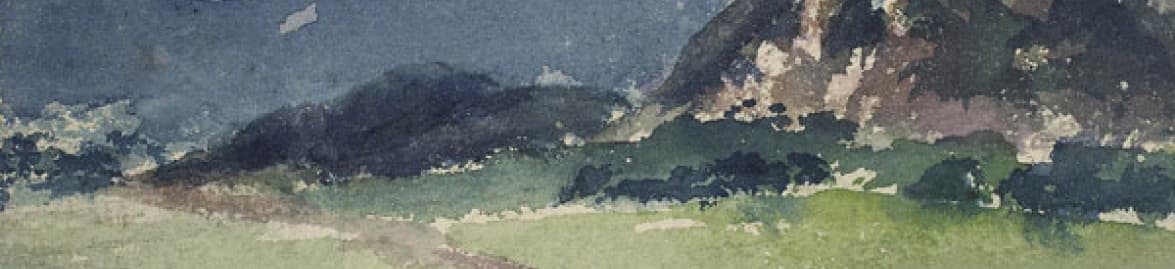
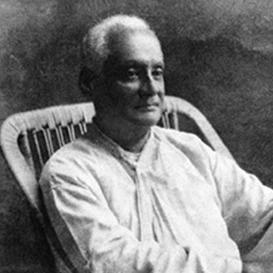 While the name Gaganendranath Tagore (1867–1938) might not spring easily to the pantheon of Indian art, this multi-talented artist played a key role in the growth and development of modern art in India. Having some nobility of his name—the Nobel laureate Rabindranath Tagore from among his forefathers—Gaganendranath actually had to navigate through the whirl of life to carve out a niche in the early 20th century. He remains largely overshadowed by his more famous peers but is significant as a catalyst in the introduction and acclimatisation of Cubism into the Indian artistic periphery.
Early Life & Influences
Born in 1867 in Kolkata, Gaganendranath's artistic and intellectual familial credentials were no doubt impressive; after all, his father belonged to the crème de la crème of the Bengali Renaissance, and his uncle Rabindranath's literary brilliance must have inspired him. Gaganendranath's artistic journey began when he was a student at the Government School of Art in Kolkata, where he first experimented with traditional Indian forms before crossing into the modern art scene.
In the midst of these artistic tides he was swimming in, he was particularly attracted to the Western art movements. Cubism was particularly interesting. Avant-garde style, fragmented forms, and multiple perspectives kept his imagination busy. Gaganendranath saw European styles not as mimicry but to infuse Indian themes into something unique—a hybrid that would be set throughout much of his later work.
First Artwork
His first known artworks emerged around 1905, heavily influenced by Japanese wash techniques introduced by visiting Japanese artists like Yokoyama Taikan. These early works reflect delicate atmospheric effects, muted tones, and a lyrical sensibility, often capturing rural Bengal’s serene landscapes, nature, and daily life. Though closely aligned with the Swadeshi spirit, Gaganendranath’s early style began to deviate from the rigidity of the Bengal School, foreshadowing his later experiments with Cubism and Caricature.
Coming Of Cubism In India
Where the Europeans were interested in seeing Pablo Picasso and Georges Braque as the obsession of the turn of the century, Gaganendranath was one of the first Indian artists to plunge headlong into Cubism. His serious exploration of this style began in the 1910s. He worked with geometric forms and abstraction and merged them with iconography and folk traditions of India.
The ability to infuse this vivacity in ancient themes made works that stunned the viewers. Through the cubistic lens, his rural landscapes, mythological figures, and cultural motifs are reimagined with a new visual language that serves both the ancient as well as the modern.
Indian Cubism History
Indian Cubism emerged in the early 20th century as artists began exploring European modernist styles, particularly Cubism, which deconstructed forms into geometric shapes and fragmented perspectives. Though inspired by Western pioneers like Picasso and Braque, Indian artists adapted Cubism to reflect local themes, spirituality, and socio-cultural narratives. Gaganendranath Tagore is regarded as the first Indian artist to experiment with Cubism in the 1920s, developing a unique approach that blended traditional motifs with abstract, angular forms. His cubist works, such as Pratima Visarjan, portrayed contemporary life and rituals through fractured spaces and sharp lines, giving rise to an Indianized interpretation of the movement.
Following Gaganendranath Tagore, artists in the Progressive Artists' Group (formed in 1947), like M F Husain and F N Souza, further incorporated cubist elements into their post-colonial art, infusing fragmented figures with emotion, mythology, and social commentary. Indian Cubism became a tool for visual storytelling that broke away from Western formalism, instead emphasizing narrative content and indigenous symbolism, making it distinct from its European counterpart.
Painting Style & Techniques
Gaganendranath Tagore's painting style is characterized by a unique synthesis of Japanese techniques, Cubism and personal expression. Initially influenced by Japanese ink wash techniques, particularly sumi-e, he adeptly employed fluid brushwork and minimal color contrasts to evoke depth and atmosphere in his landscapes and portraits. His early works, such as those depicting everyday scenes, showcase a blend of impressionism and Japanese aesthetics, emphasizing light and shadow to create a sense of realism. As he progressed, Tagore embraced Cubism, integrating its fragmented forms and multiple perspectives into his art, which is evident in works like "Temple Cubistic."
His innovative techniques included the use of flat planes and fragmented perspectives, which allowed him to depict subjects in a manner that challenged conventional representation. Tagore was also known for his fluid brushwork and experimentation with different mediums, often incorporating elements of line and form to create a sense of movement and rhythm in his compositions. This unique blend of styles not only distinguished him within the Bengal School of Art but also positioned him as a pioneer in the Indian modern art movement.
Famous Paintings
Gaganendranath Tagore's oeuvre features a variety of works that exemplify his unique blend of Cubism with Indian themes. Below mentioned here are some of his famous paintings:
* The Bridge - A surrealist depiction that combines natural elements with a dreamlike atmosphere.
* The Dance of the Spirits - Captures a dynamic and expressive representation of spiritual beings in motion.
* A Sea of Dreams - This painting reflects a mystical landscape, showcasing Tagore's interest in dreams and imagination.
* A Woman with a Veil - An evocative portrait that showcases the subtleties of feminine beauty and emotion.
* Pratima Visarjan (Durga Puja) - This painting captures the ritual immersion of Maa Durga's idol during Durga Puja, showcasing a blend of tradition and modernity through vibrant colors and dynamic composition.
* Bed of Arrows (Bhishma or Bheeshma) - One of his most famous paintings reflects a powerful scene from the Mahabharata, where the aged warrior Bhishma Pitamaha lies mortally wounded on a bed of arrows after being struck by Arjuna. The image captures the heroic resignation of Bhishma who despite his grievous state refuses to leave the battlefield until the end of the war.
* Morning Star - Renowned for its ethereal beauty, this painting presents a serene landscape illuminated by the soft glow of the morning star, highlighting Tagore's skillful use of light and shadow.
* Temple in the Mountains - This work combines cubist elements with traditional Indian temple architecture, presenting a temple amidst majestic mountains using geometric shapes to challenge conventional perspectives.
* Pagla Jhora (The Mad Stream) - A celebrated landscape painting depicting the waterfalls of Darjeeling, it reflects Tagore's ability to capture the sublime beauty of nature.
* Crow - An example of his early works influenced by Japanese techniques, this piece showcases Tagore's adeptness in ink painting and his exploration of everyday subjects.
* Chaitanya Series - This series illustrates events from the life of Chaitanya, highlighting Tagore's interest in religious themes and his unique approach to storytelling through art.
* House of Mystery - A significant cubist work that marked Tagore's introduction of cubism to India, it features multiple viewpoints and abstract forms.
* Fairy In The Moonlight / Fairy Land - This artwork portrays a dreamlike scene, where a mystical fairy is bathed in soft, luminous moonlight, evoking an ethereal atmosphere. The painting reflects his early fascination with Japanese wash techniques, using delicate colors and subtle tonal variations to convey mood and fantasy.
* Story Teller - This painting captures a village scene where an elderly man narrates tales to an engrossed audience highlighting rural Bengal's oral storytelling tradition. The artwork reflects Tagore’s early interest in realistic depictions of everyday life using soft washes and muted colors, blending influences from the Bengal School and Japanese techniques.
* The Magician - This painting by Gaganendranath Tagore depicts a whimsical figure shrouded in mystery, surrounded by playful elements like birds and fantastical shapes. The painting blends vibrant colors with fluid lines, creating a sense of movement and enchantment, embodying the magician's captivating presence and the illusion of transformation.
* Christ In The Church / Church Piano - This painting reflects Gaganendranath Tagore's fascination with spirituality and human suffering, depicted through the symbolic figure of Christ. The artwork captures the interior of a church, with Christ looming in the background against the flickering light of candles.
These paintings not only reflect Gaganendranath Tagore's artistic evolution but also his role in shaping modern Indian art through innovative techniques and thematic depth.
Contributions To Art Education
While Gaganendranath Tagore was an artist of great talent, he was singularly dedicated to education and an active participant in his cousin Rabindranath Tagore's Santiniketan, Visva-Bharati University project. This was conceived with the idea of holding together art, music, literature, and the pursuit of nature in an integrated framework of education. Gaganendranath taught a new generation of artists within this vision, compelling them to stretch their own creative boundaries.
He also worked towards establishing art education in Bengal, where he insisted that the curriculum must include both European techniques as well as Indian traditions. His message of achieving the art desired by all found considerable reach at the grassroots level as he made tremendous efforts at demystifying creative activities for those aspiring artists. His commitment to education, therefore, ensured that his influence went well beyond his own artistic output in the course of shaping the future of Indian art long after he was gone.
Awards & Recognition
While he may not have received the same level of international recognition as Rabindranath Tagore, Gaganendranath Tagore received several awards and accolades during his lifetime. Here are some of his notable awards and achievements:
- Tagore Family Awards: Gaganendranath Tagore received several awards and honors from the Tagore family, including the "Kala Prakasika" award, which was instituted by his brother Rabindranath Tagore to recognize outstanding contributions to the arts.
- Bengal Academy Awards: Gaganendranath Tagore was a fellow of the Bengal Academy of Fine Arts, and he received several awards and honors from the academy for his outstanding work in the field of art.
- Indian Society of Oriental Art Awards: The Indian Society of Oriental Art, which was established in 1907, awarded Gaganendranath Tagore several prizes for his paintings and illustrations.
- Calcutta Art Society Awards: The Calcutta Art Society, which was established in 1854, awarded Gaganendranath Tagore several prizes for his paintings and illustrations.
- Honorary Doctorates: Gaganendranath Tagore received honorary doctorates from several universities, including the University of Calcutta and the University of Dhaka.
- Recognition from the British Government: Gaganendranath Tagore's work was recognized by the British government, and he was awarded several honors, including the title of "Knight Commander of the Order of the British Empire" (KBE) in 1922.
- Exhibitions and Shows: Gaganendranath Tagore's work was exhibited in several exhibitions and shows in India and abroad, including the Indian Art Society's annual exhibitions, the Bengal Academy's annual exhibitions, and the Paris Salon.
- Publication of his Work: Gaganendranath Tagore's work was published in several books and journals, including the "Bengal Art Journal", "The Indian Art Journal", and "The Calcutta Review".
Some of his notable works include:
"The Story of the Ganges" (1913) - a series of paintings depicting the mythology and history of the Ganges River.
"The Ramayana" (1920) - a series of paintings depicting scenes from the Hindu epic, the Ramayana.
"The Mahabharata" (1925) - a series of paintings depicting scenes from the Hindu epic, the Mahabharata.
"The Bhagavad Gita" (1930) - a series of paintings depicting scenes from the Hindu scripture, the Bhagavad Gita.
Conclusion
The life of Gaganendranath Tagore, who was an artist as well as an educator, can be taken as an example of how innovation and excellence in art can change the course of lives. A great example from his work on Cubism within the Indian world stands testimony to the challenge posed to conventional boundaries of artwork; cultural interchange towards greater creative power. Though an unsung hero, Tagore continues to inspire contemporary artists as well as art enthusiasts.
One might use the life of Gaganendranath Tagore, an artist and educator, as an illustration of how artistic creativity and greatness can transform lives. His work on Cubism in India is a remarkable illustration of how traditional artistic boundaries are being challenged, and how cultural exchange can lead to greater creative potential. Despite not being well recognized, Tagore remains a source of inspiration for both modern artists and art lovers.
We hope you enjoyed this article. For a comprehensive showcase of Gaganendranath Tagore original paintings, click here and explore his vibrant portfolio.




