gogi saroj pal (1945-2024) - artist biography
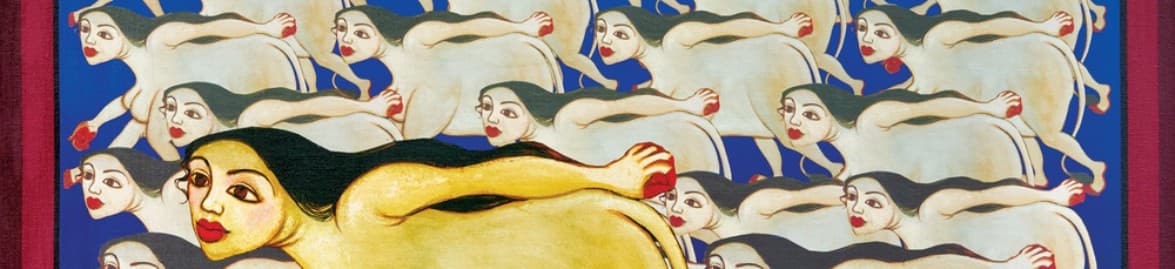
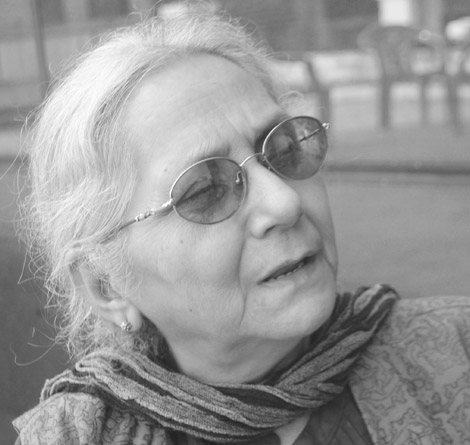 Acclaimed by many as the 'first feminist artist of India', Gogi Saroj Pal was a trailblazing Indian artist whose multifaceted work spanned painting, sculpture, ceramics & installations. Her works, characterized by a blend of realism & fantastical elements, explored the complexities of womanhood and societal roles within a patriarchal framework. This article delves into the life and art of artist Gogi Saroj Pal, exploring her family, education, painting style, themes, inspirations, awards and contributions to Indian modern art.
Early Life
Growing up in post-independence India, Gogi Saroj Pal experienced a period of profound social and cultural transformation. Her formative years were shaped by an acute awareness of gender disparities and social inequalities, themes that would later form the backbone of her artistic expression. From a young age, Gogi was resolute in her aspiration to become an artist. The influence of her uncle, a renowned writer, provided her with early exposure to the literary and artistic worlds, nurturing her creativity and laying the foundation for her future endeavors in art.
Later Life
In her later years, Gogi Saroj Pal remained dedicated to her art, though her pace slowed. She continued to explore new themes and techniques, embodying an unwavering creative spirit despite health challenges, including a hip joint replacement that caused her considerable pain. Living in her East of Kailash residence in New Delhi, Pal stayed closely connected to the artistic community, frequently engaging with fellow artists, journalists, and friends at the nearby Garhi studio complex. The 2000s brought renewed recognition for her work, with several retrospective exhibitions celebrating her significant contributions to Indian modern art.
Family
Gogi Saroj Pal was born on October 3, 1945, in Neoli, Uttar Pradesh, two years before India achieved independence. She belonged to a family of freedom fighters from the Kangra Hills, now part of Himachal Pradesh. Her father, Dharam Pal, was a dedicated freedom fighter who endured torture during India’s struggle for independence, while her uncle, Yash Pal, was a distinguished litterateur. Raised primarily by her grandmother, Prem Devi; a rare salaried woman of her era—Gogi grew up in an environment rich with resilience and progressive values. The stories and wisdom imparted by her grandmother, coupled with her uncle’s literary influence, introduced her to the realms of art and literature at an early age, profoundly shaping her creative vision and worldview.
Gogi later married fellow artist and sculptor Ved Nayar, a close friend and collaborator. Tragically, Gogi faced personal loss when her 18-year-old son, Marish—her only child from her first marriage—died in a road accident while studying in Bengaluru. This devastating event marked a poignant chapter in her life, deeply affecting her personal and artistic journey.
Education
Gogi Saroj Pal’s formal journey into the world of art began at the College of Art in Banasthali, Rajasthan, where she studied from 1961 to 1962. She then pursued a Diploma in Painting at the Government College of Arts and Crafts in Lucknow, completing the program between 1962 and 1967. To further refine her craft, she earned a Postgraduate Diploma in Painting from the College of Art in Delhi in 1968, solidifying her foundation as an artist of exceptional skill and vision.
Painting Style
Over the years, Gogi Saroj Pal’s painting style evolved from realistic representations to more stylized forms that conveyed profound emotional and societal commentary. She explored a variety of media, including gouache, oil, ceramics, and weaving, showcasing her versatility as an artist. Central to her work were depictions of women, portrayed with both grace and vulnerability to reflect their multifaceted nature. Pal’s signature style featured elongated figures with expressive eyes, creating powerful, emotive imagery that resonated deeply with viewers and underscored her unique artistic vision.
Famous Paintings
Gogi Saroj Pal's paintings are renowned for their exploration of femininity, mythology, and societal issues. Below are details about some of her notable works:
1. Kinnari - This painting depicts a Kinnari, a mythical half-woman, half-bird figure from Indian folklore. Gogi captures the essence of femininity through vibrant colors and intricate details, symbolizing the divine feminine and its connection to nature.
2. Kamdhenu - Inspired by the sacred cow in Hindu mythology, Kamdhenu represents abundance and nurturing. Gogi's portrayal emphasizes the relationship between women and nature, showcasing the nurturing aspect of femininity.
3. Nayika - The Nayika series explores the different archetypes of women in Indian art and literature. Gogi portrays various forms of the Nayika, each representing different emotions and circumstances, highlighting the complexity of women's experiences.
4. Hath Yogini - This painting features a female yogini, embodying strength and spirituality. Gogi's depiction emphasizes the empowerment of women through yoga and meditation, showcasing the harmony between body and mind.
Response to the 2012 Delhi Gangrape Case - In response to the tragic Delhi gangrape case, Gogi Saroj Pal created a series of paintings featuring 'Nirbhaya' (the fearless one) with a sickle in her hand. This bold imagery symbolizes resistance, strength, and the fight against violence towards women.
Themes
Gogi Saroj Pal’s art consistently explored the lives, desires, and complexities of women. Drawing inspiration from Indian myths, fables, and folklore, she created powerful new mythical female figures embodying strength and potency. Her works often featured composite beings, blending human and animal forms, reflecting her deep fascination with the miniature tradition and the portrayal of heroines. These innovative representations served as a platform for her to challenge traditional narratives and celebrate the resilience and multifaceted nature of women.
Inspiration
Gogi Saroj Pal’s creative expression was deeply influenced by Indian mythology, folklore, and the everyday lives of women around her. The rich cultural heritage of India, coupled with her personal experiences and keen observations, served as a powerful source of inspiration for her work. Additionally, she found inspiration in the writings of Russian author Leo Tolstoy, whose simplicity and profound narrative style captivated her and further shaped her artistic perspective.
Awards & Achievements
Throughout her career, Gogi Saroj Pal received numerous accolades, including:
• Lalit Kala Akademi Fellowship (1981–82): A prestigious fellowship from India's National Academy of Art.
• National Award from the Lalit Kala Akademi (1990): Honoring her excellence in the field of visual arts.
• Sanskriti Award (1980): Recognizing her outstanding contribution to Indian art.
• Junior Fellowship from the Department of Culture, Government of India (1986–88): Supporting her continued artistic endeavors.
Death
Gogi Saroj Pal passed away on January 27, 2024, at the age of 78 in New Delhi, leaving behind a profound legacy that continues to inspire and influence the art world. Her passing was deeply mourned by the global art community, with tributes pouring in from artists, curators, and art historians, all of whom celebrated her groundbreaking contributions to Indian modern art and her lasting impact on the cultural landscape.
Contribution To Indian Art
Gogi Saroj Pal’s contribution to Indian art is both profound and transformative. She is celebrated for bringing women’s perspectives to the forefront, using her work to challenge traditional norms and explore themes of identity, empowerment, and societal roles. Through her bold and innovative approach, she paved the way for future generations of female artists, inspiring them to break boundaries and express their unique voices in the art world.
Conclusion
Gogi Saroj Pal remains a celebrated figure in the realm of Indian art. Her vibrant paintings, rooted in the exploration of femininity and identity, continue to resonate with audiences. As we reflect on her life and contributions, we honor her legacy as an artist who not only captured the essence of womanhood but also challenged societal norms through her powerful and evocative art.