jatin das – contemporary artist, painter, sculptor & muralist
.jpg&w=3840&q=75)
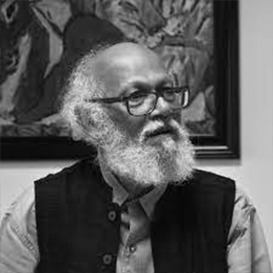 Jatin Das is a distinguished artist whose prolific contributions to Indian art encompass painting, sculpture, printmaking, and murals. His most notable mural is 7 x 68 ft mural at the Parliament of India, titled "The Journey of India: Mohenjodaro to Mahatma", which was inaugurated by then-Prime Minister Atal Bihari Vajpayee. Beyond his artistic endeavors, he has played a pivotal role in shaping India's cultural landscape, serving as an advisor to esteemed art institutions and founding the JD Centre of Art in his home state of Odisha. In recognition of his immense contributions, he was honored with the Padma Bhushan, India’s highest civilian award by the President of India for his contribution to art in 2012. Through his widely celebrated national and international exhibitions and artist camps, Jatin Das continues to inspire and engage art enthusiasts across the globe.
Early Life & Background
Jatin Das was born on December 2, 1941, in Baripada, Mayurbhanj, Odisha. He was raised in a middle-class Bengali family, where art and music played an integral role in daily life. In those days, music was deeply intertwined with religious worship and from an early age, Jatin Das was immersed in this rich cultural environment. His upbringing fostered a profound love for music, which remained a significant influence throughout his life. During his time in Bombay, he often spent his nights attending concerts by legendary maestros such as Bade Ghulam Ali Khan, further deepening his appreciation for the art form.
Later Life
In his later life, Jatin Das emerged as a leading figure in the Indian art world, celebrated for his prolific body of work and his commitment to preserving cultural heritage. Known for his evocative paintings of the human form, Das continued to explore themes of struggle, resilience, and the nuances of human relationships. His paintings, often characterized by bold brushstrokes and dynamic movement, remained highly sought after, solidifying his position as one of India’s most influential contemporary artists. Das also gained recognition for his ability to bring modernist techniques into harmony with traditional Indian art forms.
Beyond his artistic pursuits, Das became an advocate for cultural preservation, dedicating significant efforts to initiatives like the JD Centre of Art in Bhubaneswar, Odisha. This center, founded by him, aims to promote traditional and contemporary art forms while fostering dialogue between artists and the community. His work as a cultural custodian extended to his involvement in documenting and collecting traditional tools and crafts, ensuring their survival in an age of rapid modernization.
Family
Jatin Das's family life is intricately woven into his artistic narrative, highlighting his dedication to both personal and creative realms. Initially married to Varsha Das, a distinguished writer and academic, he shares two children with her: Nandita Das, who has emerged as a notable actress and filmmaker, and Siddhartha Das, a cultural professional. Their shared passion for the arts fostered a nurturing environment that encouraged intellectual and artistic exploration. Although Jatin and Varsha eventually separated, both continued to thrive in their respective fields, contributing significantly to Indian culture. Later, Jatin married Bidisha Roy Das, further enriching his personal journey. Nandita's career in cinema and social activism reflects the values instilled by her father, as her work often resonates with themes of human emotion and social consciousness, underscoring the profound influence of Jatin Das’s artistic philosophy on her upbringing.
Education
Jatin Das’s artistic journey began with his formal education at the renowned Sir J.J. School of Art in Mumbai, where he studied from 1957 to 1962. During his time at the institution, he received rigorous training in drawing, painting and composition, which laid a strong technical foundation for his future works. The J.J. School of Art, known for its emphasis on blending traditional Indian art with modernist influences, played a pivotal role in shaping Das’s artistic sensibilities. Here, he interacted with some of the most influential artists and thinkers of the time, which broadened his perspective on art and culture.
His education was not limited to classroom learning; it extended to engaging with the vibrant cultural milieu of Mumbai. This exposure allowed him to explore diverse artistic practices, including mural work, sculpture, and mixed media, alongside painting. The disciplined training and intellectual environment of the J.J. School of Art gave Jatin Das the tools to refine his creative vision while nurturing his individuality as an artist.
Artistic Journey & Development
Beginning his career in the 1960s after graduating from the Sir J.J. School of Art in Mumbai, Jatin Das quickly distinguished himself with his dynamic and expressive style. His early works were influenced by modernist movements in India, yet he consistently imbued them with a distinct individuality. Over the years, Jatin Das’s art has been defined by an unyielding focus on the human figure, exploring themes such as love, struggle, resilience and the passage of time. His works often depict figures in motion, using bold lines, earthy tones and vibrant hues to convey both physical and emotional intensity. The interplay of abstraction and realism in his paintings has become a signature element of his style. His murals and large-scale works further exhibit his ability to merge artistic disciplines, reflecting his versatility as an artist.
Jatin Das’s artistic development has also been shaped by his extensive travels and exposure to diverse cultures. These experiences enriched his understanding of art and fueled his interest in preserving cultural heritage. Over decades, he expanded his repertoire to include sculpture, drawings, and printmaking, while continuing to participate in solo and group exhibitions both in India and internationally.
Teaching Career
In 2008, Jatin Das served as a professor at the esteemed Jamia Millia Islamia University in New Delhi. From 2009 to 2011, he continued his association with the university as a visiting professor, joining the Faculty of Fine Arts. In addition to his tenure at Jamia Millia Islamia, he has been a visiting professor at several prestigious institutions, including the National School of Drama, the School of Planning and Architecture, the College of Art, and the National Institute of Design.
Pursuit of Pankhas
Jatin Das has dedicated the last 40 years to curating an impressive collection of pankhas, or hand fans, sparked by a gift from a friend that ignited his passion. His pursuit often leads him to antique dealers in search of rare and unique fans, while friends frequently contribute to his collection, well aware of his enthusiasm. The pankhas in his collection are crafted from a diverse range of materials, including intricately woven bamboo, grass, cane, wheat stalks, palm leaves, feathers, silk cotton, leather, beads, and even mica or mirrors. Today, Das proudly boasts over 6,000 distinct fans.
In 2018, Jatin Das showcased a selection of 500 fans from his extensive collection at the Indira Gandhi National Centre for the Arts (IGNCA) in New Delhi. This exhibition highlighted the beauty and craftsmanship of hand fans from around the globe and featured contributions from over 300 artist friends, including renowned figures such as A Ramachandran, Manu Parekh, Arpita Singh, and Gopi Gajwani, who created fan-themed paintings for the event.
Philosophy
Jatin Das’s artistic philosophy is deeply rooted in the exploration of the human form and its emotional essence. He views art as a reflection of life’s myriad experiences, emphasizing the importance of movement, relationships and the passage of time in his work. For Jatin Das, art transcends mere aesthetics; it is a medium to connect with deeper truths about humanity and the world. He believes in drawing inspiration from India’s rich cultural heritage, integrating traditional motifs and techniques into his modernist approach. At the same time, Das champions the universality of human emotions, making his art resonate across cultures.
Painting Style & Techniques
Jatin Das's artistic repertoire spans a wide range of mediums, including oil, watercolor, ink, graphics and conté. His work is deeply rooted in exploring the complexities of human relationships, particularly the dynamic interplay between men and women. Through his paintings, he innovatively depicts human figures and their emotions, often conveying themes of crisis, connection, and emotional tension. His use of rhythmic discontinuities in color planes and rapid brushstrokes gives his work a sense of movement and urgency, allowing viewers to engage with the myriad expressions of human experience.
Jatin Das's technique involves sketching figures in motion with conté, ink, and charcoal, showcasing his keen eye for tonal variations. He often employs watercolors as his preferred medium, utilizing color washes to achieve desired textures. His paintings are characterized by a lack of embellishment; he believes that the figures should stand on their own without adornment. This approach allows the raw energy and emotion to resonate more profoundly with the audience. As Das himself states, "My paintings are not narrative; they are metaphoric, poetic, and suggestive," reflecting a deep engagement with human anguish, affection, and tenderness.
In recent works, Jatin Das has maintained a focus on the human figure while also exploring social themes. For instance, he has created over 150 images depicting manual scavengers, emphasizing their struggles while keeping political commentary subtle. His artistic philosophy embraces spontaneity; he often allows the painting process to guide him rather than adhering to preconceived plans. This freedom results in dynamic compositions that convey a sense of immediacy and emotional depth, making Jatin Das's work a compelling contribution to contemporary art.
Famous Paintings
While Jatin Das has created numerous famous paintings throughout his career, here are some of his most notable works and their meanings:
• Man-Woman: This piece captures the complex relationship dynamics between genders, showcasing Das's signature style of depicting emotional tension through human forms.
• Approaching Woman: A representation that emphasizes the nuances of attraction and connection, reflecting Das's exploration of intimacy.
• Wrapped Woman: An oil painting on Masonite that symbolizes femininity and vulnerability, highlighting the beauty of the female form.
• Ecstatic Woman: This work portrays joy and liberation, often characterized by vibrant colors and dynamic lines that convey movement and emotion.
•Woman in Stance: This artwork features a woman in a poised stance, emphasizing grace and strength through its composition.
• Flight of Steel: A unique piece that may symbolize strength and resilience, possibly using industrial motifs to reflect contemporary themes.
• Shakti: This portrait represents the Indian Goddess Shakti, embodying power and femininity through rich colors and expressive forms.
• Classical Torso: Representing a woman adorned with an unusual headgear, this piece highlights classical beauty through its detailed portrayal.
• Interaction: This painting depicts a conversation between a man and a woman, illustrating the complexities of communication in relationships.
• Sringar: Portraying a woman dressing while gazing into a mirror, this artwork captures themes of self-reflection and beauty rituals.
• Krishna: Utilizing bright blue hues, this painting represents the Hindu deity Krishna, showcasing Das's ability to blend spirituality with artistic expression.
• Radha Krishna: This artwork symbolizes the eternal love between Radha and Krishna, emphasizing their divine connection through harmonious colors and forms.
• Radhika: Similar to Radha Krishna, this piece explores the theme of love and companionship in Hindu mythology.
• Ganpati: A masterful depiction of Lord Ganesha that showcases Das's unique brushwork and vibrant color palette.
• The Presence: A silk screen painting that captures the essence of masculinity, focusing on form and presence.
Characteristics Features Of His Paintings
The paintings of Jatin Das are characterized by their expressive intensity, dynamic use of the human form and deep emotional resonance. One of the defining features of his work is his emphasis on movement, often depicted through bold, sweeping lines and fluid, gestural forms that convey a sense of action and vitality. His figures, whether abstract or figurative, are filled with emotional depth, capturing both physical and psychological states. The use of rich, earthy colors, such as deep reds, oranges, and browns, is another hallmark of his style, evoking warmth, strength and an organic connection to the earth. His ability to blend abstraction with human representation gives his works a powerful, universal appeal, inviting viewers to engage with the deeper emotional and existential themes that underlie the human experience.
Awards & Exhibitions
Jatin Das, throughout his prolific career, has earned numerous accolades and recognition for his contributions to Indian contemporary art. Some of his key accomplishments and awards include:
• Padma Shri (2012) - One of India’s highest civilian honors, awarded by the Government of India for his outstanding contributions to the field of art.
• National Award (1974) - A prestigious award from the Lalit Kala Akademi, recognizing his excellence in the field of visual arts.• Sahitya Akademi Award (2000) - A significant honor for his literary contributions, reflecting his involvement not just in visual art, but also in the literary and cultural domains.
• State Academy Award (1971) - An acknowledgment from the Odisha State Academy for his remarkable impact on the artistic landscape.
• Sangeet Natak Akademi Award (1998) - Awarded by the Sangeet Natak Akademi, it is an honor for his contributions to the visual arts.
• Honorary Doctorate from Utkal University (2017) - Jatin Das received an honorary doctorate for his contributions to the field of art and culture, particularly in promoting contemporary Indian art globally.
• Solo Exhibitions and International Recognition - Das has held numerous solo exhibitions across India and internationally, including in major cities such as New York, London, Paris, and Tokyo, bringing Indian contemporary art to a global audience.
• Lifetime Achievement Award by the Orissa State Government (2005) - Recognizing his exceptional contributions to the art and cultural heritage of Odisha.
• Exhibitions in Renowned Museums - His works have been displayed in prestigious galleries and museums, including the National Gallery of Modern Art (NGMA) in New Delhi, and international spaces such as the British Council in London.
• Founding the JD Centre of Art - His establishment of the JD Centre of Art in Bhubaneswar, Odisha, has contributed significantly to the promotion of art education and the preservation of traditional and contemporary art practices.
Contributions & Impact On Indian Art
Jatin Das has made significant contributions to the landscape of Indian art through his innovative approach to painting, his advocacy for traditional Indian art forms and his role as a mentor and educator. As a contemporary artist, Jatin Das has played a pivotal role in bridging the gap between modernist and traditional Indian art, blending abstraction with deep cultural themes. His work, which often explores the human figure and emotional depth, has influenced generations of artists in India and abroad. Beyond his personal artistry, Das has been instrumental in promoting art education and cultural preservation. Through the establishment of the JD Centre of Art in Bhubaneswar, he has created a platform for young artists to explore both contemporary and traditional art forms. His efforts to document and protect India’s artistic heritage, particularly through the preservation of traditional crafts and tools, have helped foster a deeper appreciation for India's rich cultural legacy. Furthermore, his participation in international exhibitions has brought Indian art to a global stage, elevating the visibility and recognition of Indian contemporary artists worldwide.
Conclusion
In conclusion, Jatin Das stands as a monumental figure in the world of Indian contemporary art, with his paintings capturing the essence of human emotions and the richness of Indian culture. His original paintings, whether in the form of canvas paintings, oil paintings or prints, have become highly sought after by collectors and art enthusiasts alike. Das's ability to blend abstraction with deep cultural themes has made his works timeless, with many of his pieces regularly featured in high-profile art auctions, commanding impressive painting prices. His contributions to the art world extend beyond his personal creations, as his efforts to preserve and promote Indian art have inspired generations of artists. Through his remarkable body of work and his ongoing influence, Jatin Das continues to shape the future of Indian art, leaving an indelible mark on the global art scene.
Now that you’ve gained insight into Jatin Das's work, we encourage you to visit his paintings here and see firsthand how his artistic journey unfolds on each canvas.