m. v. dhurandhar - profile, life history, paintings & facts
.jpg&w=3840&q=75)
M. V. Dhurandhar i.e Mahadev Vishwanath Dhurandhar (1867–1944) also called Rao Bahadur, was a renowned Indian painter and postcard artist during the British colonial era. Widely regarded as the most prominent painter of Western India after Raja Ravi Varma, M V Dhurandhar was an exceptional illustrator, portrait artist and a master of figurative painting. His artistic contributions spanned portraiture, landscapes, posters, book illustrations, genre painting, art literature and black-and-white drawings. His work garnered widespread acclaim and earned commissions from various patrons, including Maharaja Bhawanrao Pantpratinidhi of Aundh State, for creating paintings depicting the life of Shivaji.
Early Life & Background
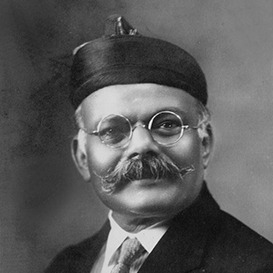 Born on March 18, 1867 at Mumbai in Phanaswadi, at his mother's house and brought up in Kolhapur, Maharashtra, M. V. Dhurandhar came from a Marathi Pathare Prabhu family. His family was well-regarded and known for their loyalty to the Chhatrapati of Kolhapur. Dhurandhar spent his early years in Kolhapur.
Artistic Journey
M V Dhurandhar's artistic journey began in his early years, sparked by a natural inclination for drawing, which led his father to enroll him at the Sir Jamsetjee Jeejbhoy School of Art in Bombay. He joined the Sir J. J. School of Art at the age of 22, where he honed his skills. Upon graduating, M. V. Dhurandhar was offered a teaching position at the school in 1896. His career at the institution progressed rapidly; he was appointed Head Master in 1910, became its first Indian Principal in 1924, and its first Indian Director in 1930. In addition, Dhurandhar served as the Inspector of Drawing and Craft from 1918 to 1931. As Principal, he also held the role of curator for what is now known as the Bhau Daji Lad Museum.
Dhurandhar's artistic journey was also greatly influenced by his meeting with his inspiration, Raja Ravi Varma, at the eighth exhibition of the Bombay Art Society. Varma purchased one of Dhurandhar's paintings, The Music Lesson, which led to a stronger association between the two. Raja Ravi Varma subsequently invited M V Dhurandhar to create works for his printing press.
Later Life
In his later years, Dhurandhar assumed the role of mentor and teacher, guiding and nurturing a new generation of Indian artists. He passed away on June 1, 1944, in Bombay after a prolonged illness.
Family
M. V. Dhurandhar's father served as the head clerk in the Political Agent’s office. Tragically, his father & mother both passed away in quick succession in 1891 when he was just 24. In 1894, he married "Bapubai" in Kolhapur, but she succumbed to the plague just a year and a half later, leaving behind their infant son, "Ganapati". During this period, his painting "She is Dead" emerged as the first known mourning or deathbed portrait by an artist of the Bombay School. Dhurandhar remarried in 1899, this time to "Gangubai". His second wife Gangubai Mahadev Dhurandhar remained with him until his passing and played a pivotal role in managing their household, allowing M V Dhurandhar to focus on his artistic endeavors without concern.
Education
M V Dhurandhar’s formal art education began at Rajaram High School in Kolhapur, where he excelled in drawing and won several prizes at school exhibitions. He was inspired by his fellow townsman, the renowned painter "Abalal Rahiman", who had studied at Bombay’s Sir J. J. School of Art. Following in Rahiman’s footsteps, Dhurandhar joined the J. J. School of Art in 1890. Under Rahiman’s guidance, he learned essential drawing and watercolor techniques, which greatly influenced his development as an artist. Dhurandhar’s exceptional skills soon caught the attention of the school’s principal, John Griffiths, who recognized his talent and selected him for a project to capture panoramic views of the Ajanta Caves.
Painting Style & Techniques
M. V. Dhurandhar, much like Raja Ravi Varma, was profoundly influenced by the eurocentric, naturalistic perspective in art. A master of the academic realist style, he skillfully balanced this influence while staying deeply rooted in tradition, particularly through his mythological works. His oeuvre included a diverse array of paintings depicting fables, historical scenes, and mythological characters, drawn from the rich tapestry of Indian history and mythology. Dhurandhar’s works also documented the vibrant life of Bombay and its people, capturing scenes from Hindu mythology as well as his celebrated Omar Khayyam series.
Characteristics Features Of His Paintings
M. V. Dhurandhar's paintings are renowned for their meticulous detail and vibrant portrayals of Indian life. His works frequently featured women in their daily routines, historical figures and scenes from Hindu mythology. In addition to his paintings, M V Dhurandhar contributed illustrations for books and designed postcards, further showcasing his versatility and skill as an artist.
Famous Paintings
M. V. Dhurandhar created a diverse array of paintings that highlighted Indian culture, mythology, everyday life and historical themes. Below are top 10 famous paintings by M. V. Dhurandhar:
1. A Pathare Prabhu - This painting depicts a member of the Pathare Prabhu community, one of the earliest settlers in Mumbai. Dhurandhar portrays the subject in traditional attire, highlighting the community’s unique identity and cultural heritage. The dignified posture and intricate detailing of the clothing reflect his ability to celebrate regional diversity while maintaining artistic realism.
2. Radha and Krishna - Dhurandhar’s depiction of Radha and Krishna is a masterpiece of Indian mythology. This painting captures the divine love between Lord Krishna and Radha, often set in lush, idyllic landscapes. His use of vibrant colors and delicate brushwork brings out the romantic and spiritual essence of their relationship, creating an aura of divinity and devotion.
3. Marriage Ceremony - This painting showcases a traditional Indian wedding scene with vivid details and cultural richness. Dhurandhar meticulously illustrates the rituals, attire, and emotions associated with Indian marriage ceremonies. The use of warm colors and nuanced expressions of the subjects convey the celebratory yet sacred atmosphere of the occasion.
4. Women At Work - In this artwork, Dhurandhar pays homage to the labor and determination of Indian women. The painting depicts women engaged in various forms of work, from household chores to agricultural activities. Through this piece, he highlights the strength, dedication, and grace of women in their everyday lives, making it both a tribute and a social commentary.
5. Playing Dilruba - This painting portrays a woman seated gracefully, playing the Dilruba, a traditional Indian string instrument. Dhurandhar captures her serene expression and elegant pose, emphasizing her connection with music. The intricate detailing of her attire and the instrument showcases his mastery in portraying textures and patterns.
6. Mussulman Lady of Northern India - This artwork features a Muslim woman from Northern India, dressed in traditional attire. Dhurandhar’s attention to detail in the folds of her clothing, her jewelry, and her poised demeanor reflects his fascination with the diverse cultural and religious identities of India. The painting stands as an example of his ability to celebrate the beauty and individuality of Indian women.
7. Yadavas Killing Themselves - Inspired by the Mahabharata, this painting illustrates the tragic end of the Yadava dynasty. Dhurandhar’s dramatic composition captures the chaos and despair as the Yadavas turn on one another in a fit of rage, fulfilling the curse that leads to their downfall. The intense emotions and dynamic use of light and shadow heighten the drama of the scene.
8. Draupadi Vastraharan - One of Dhurandhar’s most powerful mythological depictions, this painting portrays Draupadi’s humiliation in the Kaurava court, where her sari is miraculously extended by Lord Krishna to protect her dignity. The artwork is rich in emotional intensity, capturing the tension and divine intervention of the moment. Dhurandhar’s use of expressions and body language makes this piece particularly striking.
9. Mother and Child - This tender painting celebrates the universal theme of maternal love. Dhurandhar portrays a mother cradling her child, enveloped in a warm and comforting atmosphere. The painting is notable for its emotional depth, simplicity, and the artist’s ability to capture the nurturing bond between mother and child.
10. Omar Khayyam Series - This series of paintings is inspired by the Rubaiyat of Omar Khayyam, a collection of poems by the Persian poet. Dhurandhar illustrates themes of love, beauty, and existential musings, often featuring romantic and sensual imagery. The series reflects his fascination with Persian culture and showcases his ability to adapt his style to different narrative themes. The use of rich, moody colors and poetic symbolism makes this series stand out in his oeuvre.
Accomplishments - Awards Won
M. V. Dhurandhar achieved early success, winning the British Government Award in 1892 while still a student for his renowned painting "Women At Work". In 1895, he received a gold medal from the Bombay Art Society for his oil painting "Have You Come, Laxmi". In 1907, his painting "Naivedyam" earned him another gold medal, and it was subsequently purchased by Bombay industrialist Narottam Morarji. His black-and-white illustration "Marriage Ceremony" also garnered a gold medal in 1908. In 1910, his painting "Bride’s Maids" won a gold medal at the Industrial Exhibition in Jalgaon. In recognition of his significant contributions to the art world, Dhurandhar was elected a Fellow of the Royal Society of Arts in 1938.
Contributions & Impact on Indian Art
M. V. Dhurandhar played a pivotal role in shaping the direction of Indian art through his realistic depictions of everyday life. His paintings and popular postcards served as a visual chronicle of contemporary society, offering a lasting record of the era. As the first Indian director of the Sir J. J. School of Art, Dhurandhar's contributions to art education further cemented his profound impact on the development of Indian art.
Conclusion
In conclusion, M V Dhurandhar stands as a monumental figure in Indian art, whose life and works continue to inspire and resonate with art enthusiasts today. His ability to intertwine traditional themes with modern techniques reflects a deep appreciation for cultural heritage while pushing the boundaries of artistic expression. Through his diverse range of paintings, M. V. Dhurandhar not only captured the essence of Indian society but also addressed universal themes of love, struggle, and resilience. As we celebrate his contributions, we recognize M. V. Dhurandhar not just as an artist, but as a vital custodian of India's rich cultural tapestry.