


Manjit Bawa - Journey & Life of the Master in Figurative Art
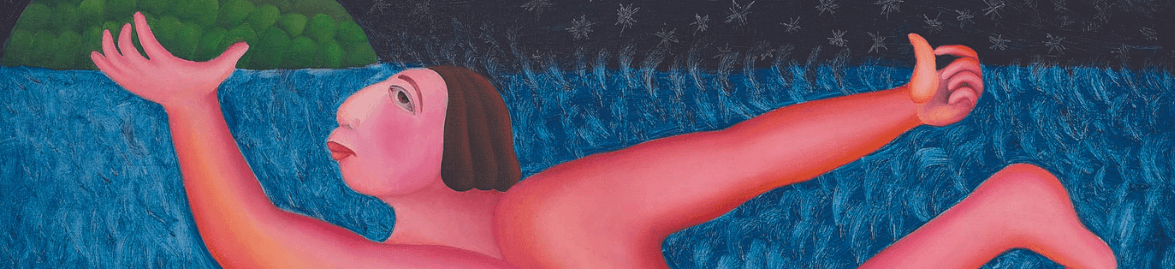
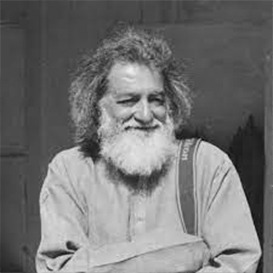 Manjit Bawa (1941–2008) was a pathbreaking master of modern Indian art who boldly carved a niche for himself in the figurative genre. At a time when the Indian art scene was heavily leaning toward Western abstract expressionism, Bawa dared to look inward. He rejected the dominant academic greys and ochres of the colonial era, opting instead for a vibrant, uniquely Indian palette and fluid, rounded forms. Deeply intertwined with spirituality, mysticism, and nature, his work presents a dreamlike universe where humans, gods, and animals coexist in supreme harmony.
Early Life
Manjit Bawa was born on July 30, 1941, in the small town of Dhuri in Punjab, India. Growing up in a rural environment, he developed a profound affinity for the pastoral landscapes and animals that surrounded him, elements that would later become staples of his artistic vocabulary. From a young age, Bawa displayed a keen interest in sketching, heavily encouraged by his older brothers who recognized his innate talent and provided him with his very first art materials.
Later Life
After spending years studying and working in both India and England, Manjit Bawa eventually settled between New Delhi and the quiet hills of Dalhousie, Himachal Pradesh. He lived an unassuming, simple life, unperturbed by the commercial demands of the booming art market. In 2005, Bawa suffered a debilitating stroke that plunged him into a deep coma. After fighting for three years, he passed away on December 28, 2008, in New Delhi.
Education
Manjit Bawa’s formal journey into the art world began in New Delhi, where he attended the School of Art, Delhi Polytechnic, from 1958 to 1963, obtaining a National Diploma in Fine Arts. Here, he studied under stalwarts like Somnath Hore, B.C. Sanyal, and Dhanraj Bhagat. However, his most defining mentorship came from Abani Sen. Sen urged Bawa to draw constantly and master the human and animal form, instilling in him a lifelong commitment to figurative art.
Seeking global exposure, Bawa moved to England in 1964. He studied at the London College of Communication (then the London School of Printing) and received a diploma in silk-screen printing from the Warden Institute of Essex in 1967.
Family
Manjit Bawa came from a supportive Punjabi family. His father was a timber merchant with a deep affection for animals, particularly cows. Bawa was the youngest of five brothers. His wife was Sharda Bawa, and he had two children, son Ravi Bawa and daughter Bhavna Bawa, who have continued to preserve and promote his artistic legacy.
Philosophy
Manjit Bawa's artistic philosophy was deeply rooted in the belief that art should be a reflection of both the inner self and the cultural heritage of India. He sought to bridge the gap between tradition and modernity, often drawing inspiration from Indian mythology, folklore, and spirituality while employing a modern, expressive style. Bawa believed that art could serve as a medium to explore profound human emotions and spiritual experiences. His use of vibrant colors, fluid forms, and symbolic imagery was not just an aesthetic choice, but a way to convey the timeless, universal themes of divinity, nature, and the mystical aspects of life. For him, art was a spiritual journey, a way to transcend the ordinary and connect with the divine. His work reflects a harmony between the material and spiritual worlds, where figures from mythology, animals, and natural landscapes are transformed into symbolic representations of the human quest for meaning and transcendence.
Painting Style
Manjit Bawa’s painting style is an exquisite amalgamation of traditional Indian sensibilities and clean, modernist design. His aesthetic draws heavily from the lyrical narrative forms of Pahari and Rajput miniature paintings. He bypassed traditional Western realism and perspective, choosing instead to suspend his figures in vast, flat, and monochromatic negative spaces.
His figures are uniquely volumetric, featuring smooth, boneless, and rounded contours that look almost sculpted. He achieved an ethereal luminosity on canvas by using oil paints with the precision and flat layering of silk-screen printing.
Famous Paintings
Manjit Bawa’s paintings are celebrated for their unique style, vibrant use of color, and focus on Indian mythology and spirituality. Below are some of his most famous paintings and why they are notable:
1. Krishna with Cow - This painting is notable for its minimalist yet evocative depiction of Lord Krishna, a recurring motif in Manjit Bawa’s work. The use of vibrant colors and negative space highlights the spiritual connection between Krishna and the cow, symbolizing harmony with nature. It stands out for its modernist reinterpretation of a timeless theme, blending traditional Indian iconography with contemporary aesthetics.
2. Shiva with Bull - A representation of Lord Shiva and his vehicle, Nandi, this painting is remarkable for its stylized forms and serene composition. It departs from traditional imagery by emphasizing simplicity and the meditative nature of Shiva, showcasing Manjit Bawa’s ability to distill spiritual concepts into strikingly modern forms.
3. Kali - In this painting, Manjit Bawa reimagines the fierce Goddess Kali with a softer, more nurturing aspect. It is notable for its exploration of duality, combining strength with compassion and its innovative visual approach. The painting challenges conventional depictions of Kali as fearsome, presenting her as a universal symbol of feminine power and protection.
4. The Goat and Man - This painting features a meditative human figure juxtaposed with a goat, symbolizing the relationship between humans and nature. It is notable for its abstract narrative and philosophical depth, reflecting Manjit Bawa’s recurring themes of coexistence and spiritual harmony.
5. The Flute Player - One of Manjit Bawa’s most iconic works, this painting portrays a flute player surrounded by serene negative space. The flute, often associated with Lord Krishna, becomes a symbol of divine music and spiritual transcendence. Its simplicity and use of bold colors highlight Bawa’s distinctive artistic language.
6. Darshan - This painting focuses on human spirituality and the quest for divine connection, using a meditative figure set against a vibrant, monochromatic background. It is notable for its minimalist composition and symbolic depth, inviting viewers to reflect on their inner spiritual journeys.
7. Bird and Man - A recurring theme in Manjit Bawa’s work, this painting portrays the symbolic relationship between a bird and a human figure. It is notable for its exploration of freedom, interconnectedness, and the delicate balance between nature and humanity.
8. Cows and Bulls Series - In these paintings, Manjit Bawa celebrates the pastoral beauty and cultural significance of cows and bulls in Indian life. They are remarkable for their vibrant energy, fluid forms, and the symbolic representation of fertility, strength, and spiritual purity.
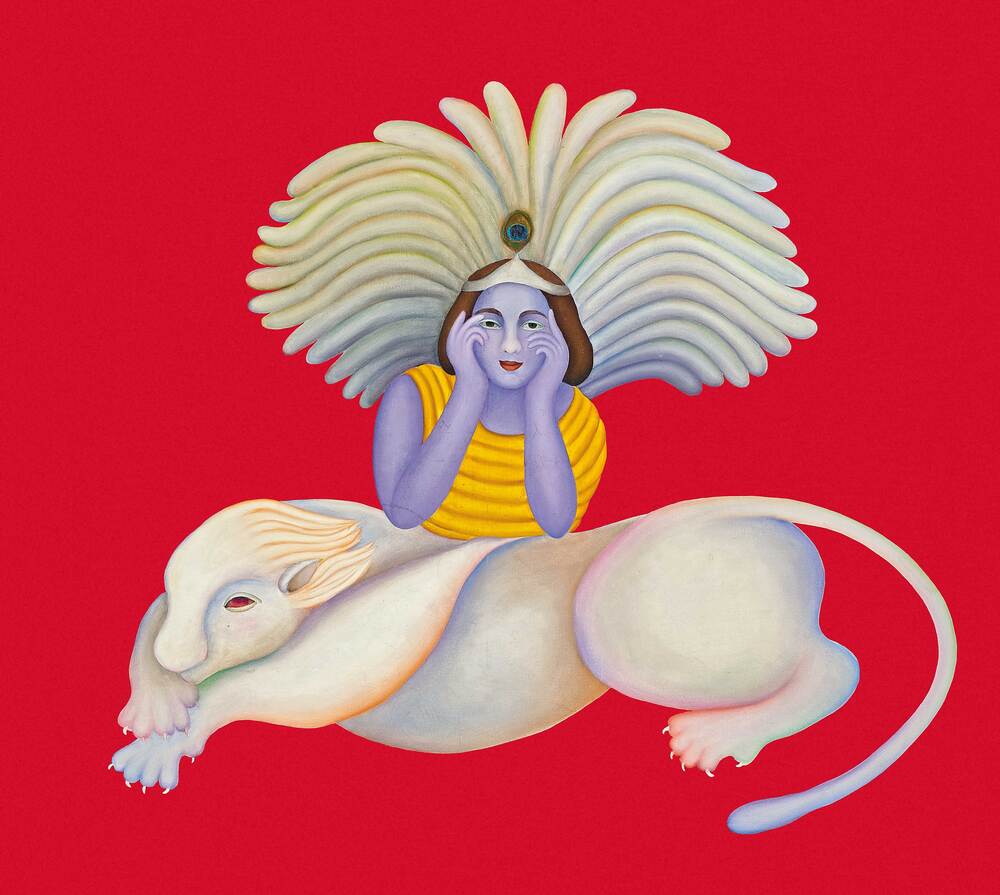
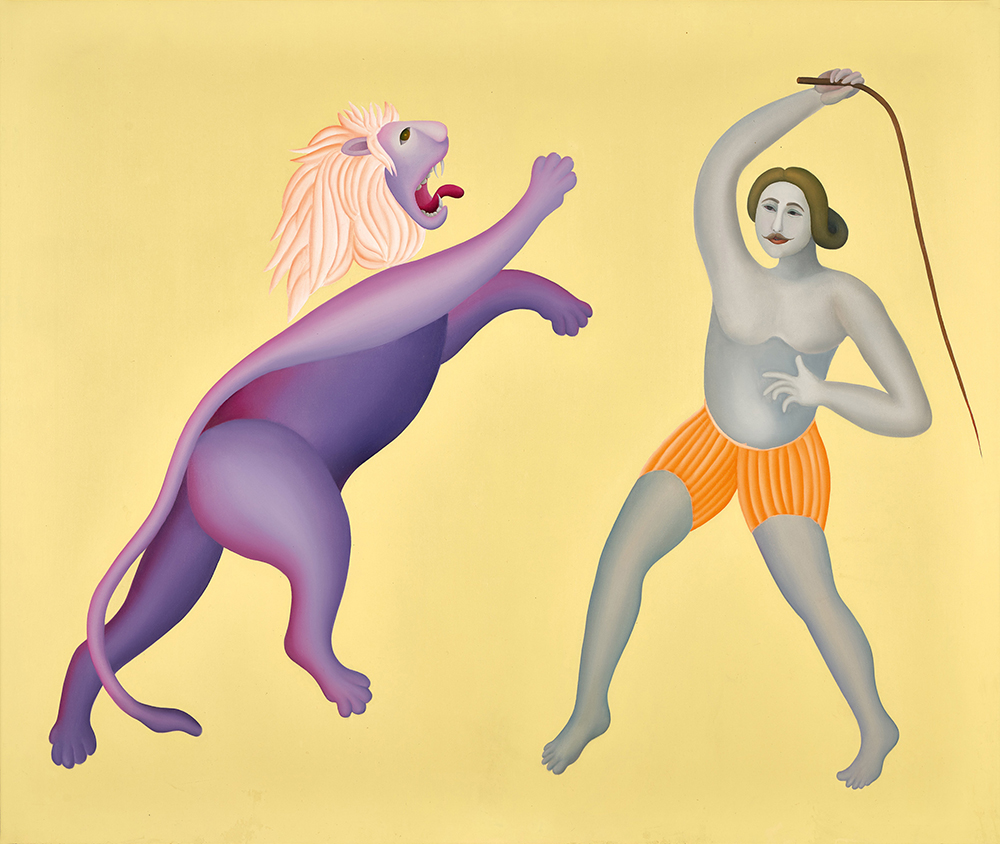
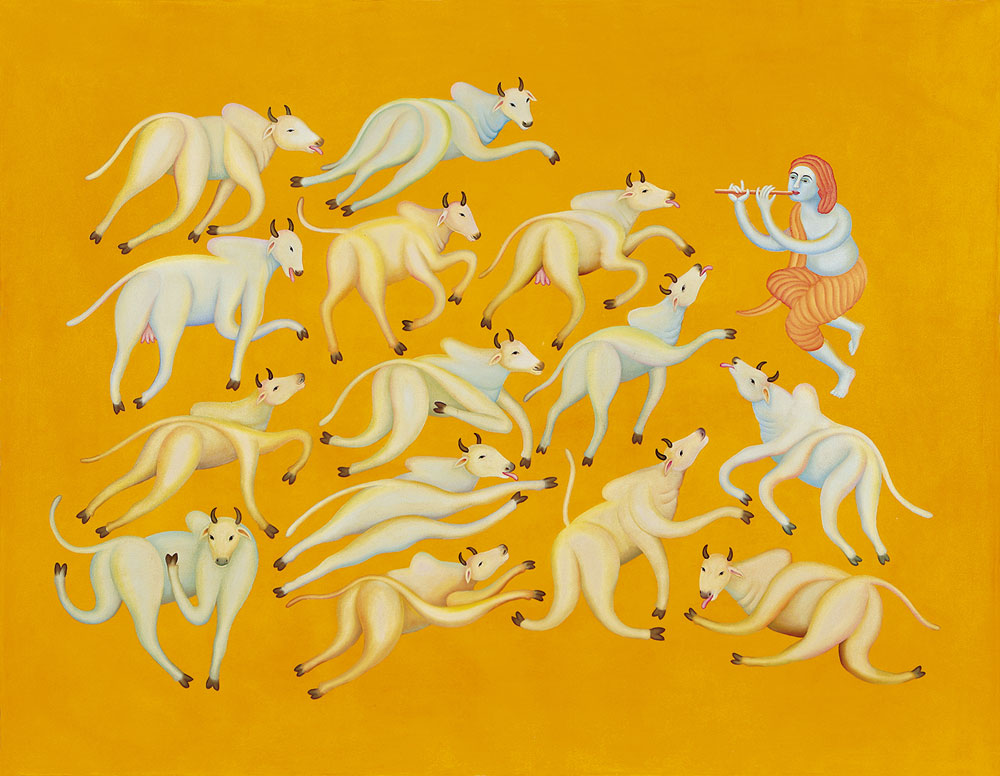
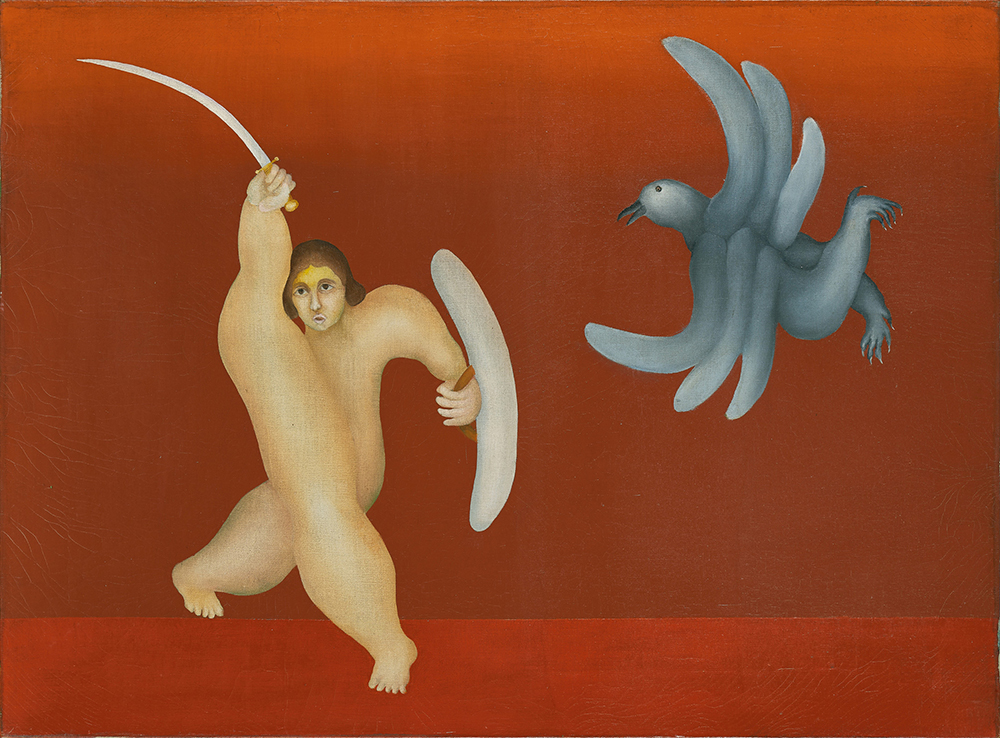
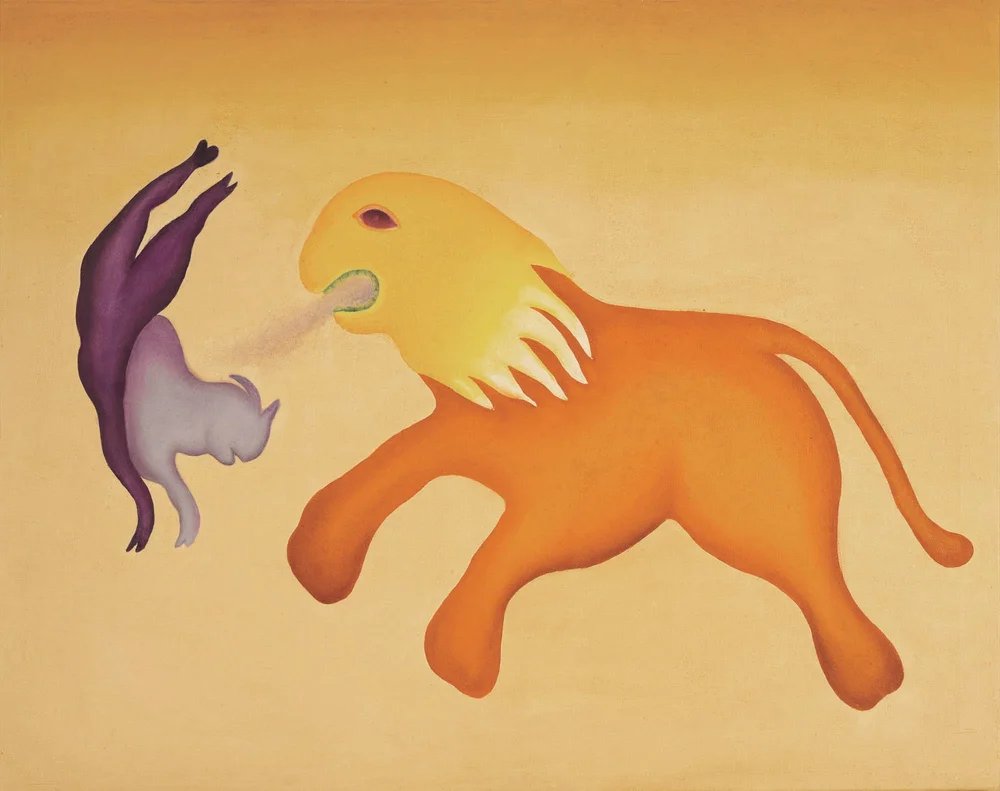
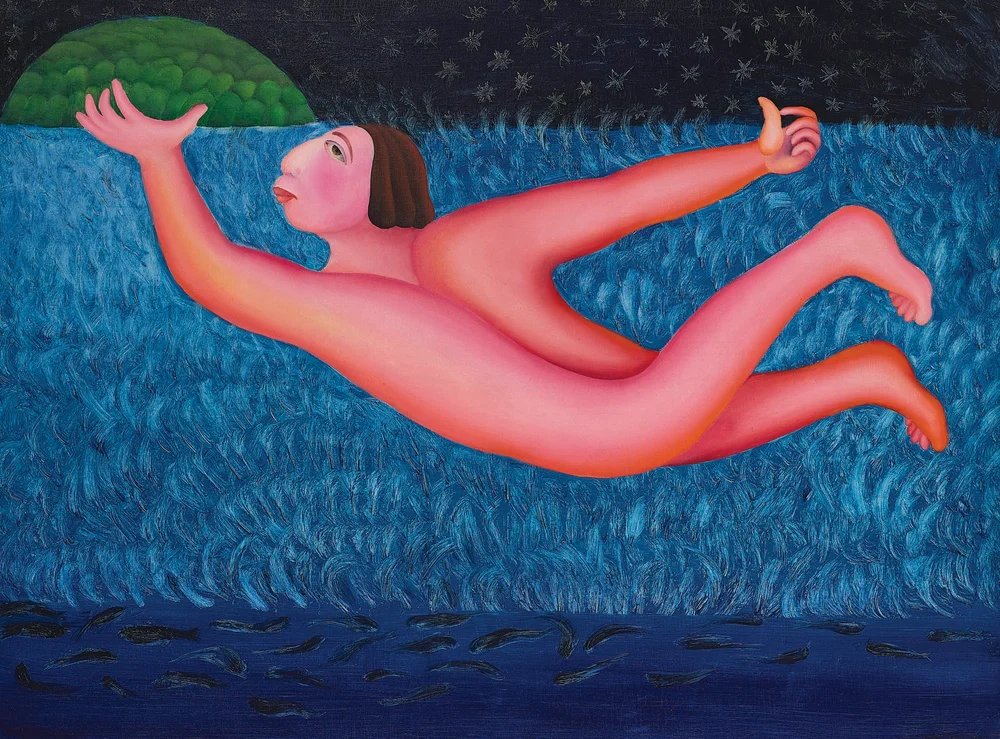

Each of these artworks reflects Manjit Bawa’s deep engagement with Indian culture, mythology, and spirituality, presented through his unique modernist lens. They stand out not only for their aesthetic appeal but also for their ability to connect traditional themes with contemporary art forms.
Controversial Paintings
Manjit Bawa’s artworks, while widely celebrated, also stirred some controversy due to their bold themes and unique interpretations of Indian mythology and spirituality. Here are a few paintings often discussed in this context:
1. Krishna With Cow - This painting depicted Lord Krishna with a cow in a minimalist, vibrant style that some viewed as overly simplified or non-traditional. Manjit Bawa’s use of bold, modern aesthetics in portraying a deeply revered religious figure sparked debate among conservative critics, who felt that such stylization was irreverent. However, Bawa intended to emphasize the divine connection between humans and nature rather than adhere to traditional depictions.
2. Shiva With Bull - Manjit Bawa’s portrayal of Lord Shiva with Nandi, the sacred bull, was strikingly modern, with an almost surreal use of space and form. The unconventional representation, devoid of traditional iconography and rendered in bold, flat colors, led some traditionalists to question whether it diluted the sanctity of the subject. Bawa’s intent, however, was to focus on the spiritual essence rather than religious orthodoxy.
3. Kali - In his depiction of Goddess Kali, Manjit Bawa opted for a stylized and less ferocious representation compared to traditional depictions of the goddess. Some critics argued that his approach downplayed the powerful and fearsome aspects of Kali’s persona, sparking discussions on whether modern reinterpretations should maintain the intensity of traditional forms. Bawa, however, aimed to explore the goddess's nurturing and symbolic facets, presenting her as a protector rather than a destroyer.
4. The Goat & Man - This painting, which juxtaposed a human figure with a goat in a seemingly meditative pose, was viewed by some as too ambiguous or symbolic, leading to speculation about its deeper meanings. Critics questioned whether it was an allegory for human exploitation of nature or a commentary on spirituality. Its lack of overt narrative created polarizing interpretations, making it a subject of debate.
Manjit Bawa’s bold reinterpretations and modernist approaches often challenged traditional sensibilities. While some saw these works as groundbreaking celebrations of India’s cultural heritage, others viewed them as controversial departures from established norms.
Characteristic Features of His Paintings
• Vibrant, Non-Academic Palette: He favored saturated, traditional Indian colors like hot pink, bright red, mustard yellow, violet, and turquoise.
• Suspended Figures: Figures appear to float seamlessly without the anchor of a horizon line, shadows, or architectural backdrops.
• Fluid, "Boneless" Anatomy: Humans and animals possess a rubbery, tubular flexibility that evokes a sense of continuous motion and grace.
• The Flute Motif: The flute appears across several works as a visual metaphor for divine music, peace, and transcendental connection.
• Human-Animal Interconnectedness: Animals are never passive props; they look at humans with mutual understanding, intelligence, and empathy.
Manjit Bawa Painting Price
Authentic original paintings by Manjit Bawa command premium market value with prices ranging from ₹2 crore to over ₹25 crore ($250,000 to $3 million+) at major fine art auctions.
Like M.F. Husain, Manjit Bawa is considered a premier "Blue Chip" artist of modern Indian art. His signature minimalist style, flat vibrant backdrops and iconic mythological imagery (like Krishna, Durga and animals) make his pieces highly sought after by collectors.
The current valuation spectrum for Manjit Bawa's artwork across different mediums breaks down as follows:
1. Large-Scale Iconic Masterworks (Oil on Canvas)
• Price Range: ₹15 Crore – ₹25 Crore+ ($1.8 Million – $3 Million+)
• Details: His most expensive works feature large-scale figures interacting with animals against saturated red, yellow, or pink backgrounds.
• Record Sale: His current all-time auction record stands at a massive ₹25.11 crore ($3.01 million), achieved at an AstaGuru auction for an iconic Untitled (Krishna) canvas.
2. Mid-to-Small Scale Canvases
• Price Range: ₹2 Crore – ₹7 Crore ($250,000 – $800,000)
• Details: Smaller canvases or pieces from his later periods routinely smash past their initial auction estimations due to high market demand.
3. Works on Paper (Drawings & Charcoals)
• Price Range: ₹15 Lakh – ₹60 Lakh ($18,000 – $75,000)
• Details: Manjit Bawa's preliminary pencil, charcoal and ink drawings on paper offer an entry point for serious collectors looking for original pieces.
• Recent Example: At an online auction, an Untitled pencil and charcoal sketch on paper held a valuation estimate of ₹40 lakh – ₹60 lakh.
What Determines the Market Value of a Manjit Bawa Painting?
• The Background Color: His signature deep crimson red and bright sunflower yellow backdrops are considered highly prized and fetch premium prices compared to muted or darker tones.
• The Subject Matter: Paintings featuring Krishna with a flute, the goddess Durga/Devi, or complex human-animal interactions (goats, cows, lions) command vastly higher prices than isolated figures.
Over the last five years, the market for Manjit Bawa has shown a strong upward trajectory, with a particularly sharp acceleration since 2022. While prices vary significantly depending on size, subject matter, provenance, and period, auction results indicate that top-tier works have appreciated substantially faster than the broader Indian modern art market.
Price Trend for Manjit Bawa Paintings in the Last 5 Years (2020–2025)
From 2020 to 2021, Manjit Bawa's market demonstrated remarkable resilience despite the disruptions caused by the pandemic. Demand from Indian collectors remained strong, and his signature figurative compositions continued to attract consistent interest. During this period, major canvases typically traded in the ₹1–3 crore range, reflecting an already well-established reputation within the Indian modern art market.
The years 2022 and 2023 marked a significant re-rating of Bawa's market. As demand intensified and the supply of important works remained limited, collectors began placing substantially higher valuations on his most desirable paintings. High-quality mythological compositions, particularly those featuring iconic subjects such as Krishna and Shiva, started achieving prices above ₹10 crore, signaling a new phase of market growth and international recognition.
A major milestone came in 2023 when an auction house sold Manjit Bawa’s Untitled (Shiva) for approximately ₹20 crore (US$2.3 million). The sale set a new auction record for the artist at the time and demonstrated the growing appetite for Bawa's work among both Indian and international collectors. It also reinforced his position among the most important figures in post-Independence Indian art.
The market reached another landmark in December 2023 when AstaGuru sold Untitled (Krishna) for ₹25.11 crore, establishing the current world auction record for a Manjit Bawa painting. The result was particularly noteworthy because the work achieved more than three times its pre-sale estimate of ₹6–8 crore, underscoring the intensity of demand for exceptional examples of the artist's work.
Throughout 2024 and 2025, prices remained elevated, indicating that the record-breaking results were not isolated events but part of a broader market shift. Manjit Bawa became firmly established as one of the most sought-after Indian modernists, with leading auction houses regularly featuring his works as marquee lots. His paintings are now widely regarded as trophy assets among serious collectors, reflecting both their artistic significance and their growing investment appeal.
Key Drivers Behind the Trend
• Extreme Rarity: Because Bawa passed away in 2008, the supply of authenticated, high-caliber oil canvases is completely fixed. When a significant piece appears on the market, it creates intense competition.
• The "Krishna" Premium: Artworks featuring his iconic blue Krishna, flute players, or complex multi-figure animals command massive valuation premiums compared to his singular, minimalist figure studies.
• Aggressive Domestic Buying: Powerhouses like AstaGuru have driven massive domestic capital into art acquisition, keeping the absolute premium records within Indian auction rooms.
Where Can I Buy Manjit Bawa Paintings?
The most practical way to acquire a painting by Manjit Bawa is through a reputable online auction house such as AstaGuru. His works most frequently come to market through established auction platforms, which offer a structured buying process, detailed catalogue information, and robust procedures for verifying provenance and authenticity.
AstaGuru maintains both historical and current auction catalogues featuring Manjit Bawa’s works, enabling collectors to track available lots and monitor market activity through its listings and search tools. In 2023, the auction house sold Untitled (Krishna) for over ₹25 crore (approximately US$3 million), setting the world auction record for a Manjit Bawa work. This landmark sale reflects not only the exceptional quality of works that AstaGuru brings to market but also the strength and sophistication of the collector base it attracts.
Why AstaGuru Auction House for Manjit Bawa Paintings?
Manjit Bawa occupies a special place in AstaGuru's curation philosophy. As a house dedicated exclusively to modern and contemporary Indian fine art, AstaGuru understands Manjit Bawa's place in the canon; his Punjab roots, his Sufi-inflected spirituality, his luminous colour fields drawn from the Indian miniature tradition and presents his works with the scholarly rigour and contextual depth that serious collectors expect. You are not buying blind; you are buying with provenance, expertise and institutional confidence behind each lot.
The Buying Experience
AstaGuru conducts its auctions online, which means you can participate from anywhere, whether you are based in Mumbai, Delhi or overseas. Each lot comes with detailed catalogue notes, condition reports, and estimated price ranges, so you can make an informed decision. The platform also offers pre-auction previews and dedicated specialist support, which is particularly valuable for high-value acquisitions.
Manjit Bawa Auction Records
Rank 1 – Untitled (Krishna), auctioned in Dec-23, estimated at ₹6–8 Cr, realized ₹25,11,12,268.
Rank 2 – Untitled (Hanuman), auctioned in Apr-24, estimated at ₹6.5–8.5 Cr, realized ₹10,25,28,372.
Rank 3 – Untitled, auctioned in Jul-25, estimated at ₹3–4 Cr, realized ₹10,15,76,156.
Rank 4 – Untitled, auctioned in Jul-25, estimated at ₹2–3 Cr, realized ₹7,88,76,971.
Rank 5 – Untitled, auctioned in Mar-18, estimated at ₹2.5–3.5 Cr, realized ₹7,78,86,164.
Rank 6 – Untitled (Lion And Goat), auctioned in Apr-24, estimated at ₹2–3 Cr, realized ₹4,71,17,400.
Rank 7 – Flying, auctioned in Jul-25, estimated at ₹3–5 Cr, realized ₹4,39,23,000.
Rank 8 – Untitled, auctioned in Sep-24, estimated at ₹3–4 Cr, realized ₹4,24,05,660.
Rank 9 – Untitled, auctioned in Mar-21, estimated at ₹2–2.5 Cr, realized ₹4,13,04,695.
Rank 10 – Untitled, auctioned in Mar-19, estimated at ₹3–4 Cr, realized ₹3,59,44,256.
What To Expect in Terms of Artworks
Manjit Bawa's paintings on offer at AstaGuru typically range from intimate works on paper to large-format oil on canvas pieces, his signature flat colour fields populated by mythological figures, animals, and celestial beings rendered in deep crimsons, violets and golds. Each work that comes through AstaGuru is vetted for authenticity, which is critical in a secondary market where attributed or misidentified works occasionally surface elsewhere.
How to Stay Informed
The best approach is to register on AstaGuru, follow the Manjit Bawa artist page and set up alerts for upcoming lots. AstaGuru's auction calendar is active year-round, with major sales in the modern Indian art category happening multiple times annually. Speaking directly with our specialist team is also worthwhile, they can advise on what's coming to market and guide you on realistic price expectations based on current demand.
Where to View Manjit Bawa's Paintings
If you want to experience the vibrant colors and fluid forms of Manjit Bawa’s canvases in person, they are preserved in major public institutions and premier private galleries:
1. Public Museums
• National Gallery of Modern Art (NGMA) – New Delhi, Mumbai, and Bengaluru: The NGMA holds a phenomenal permanent collection of post-independence Indian modern art, featuring several iconic, large-scale canvases by Bawa.
• The Smithsonian Institution – Washington D.C., USA: For international viewers, select works by Bawa are part of prestigious global institutional collections.
2. Commercial Galleries (Exhibitions & Archives)
• Vadehra Art Gallery (New Delhi): Historically one of the closest galleries to the artist during his lifetime, Vadehra regularly exhibits his works and holds significant archives.
• DAG (Delhi Art Gallery) – New Delhi, Mumbai, and New York: DAG is renowned for historicizing Indian modernism and frequently includes Bawa in its curated exhibitions on 20th-century masters.
Lesser-Known Facts
• He was an accomplished Flautist: Bawa was deeply trained in playing the classical flute under the legendary maestro Pannalal Ghosh, which directly inspired the recurring flute motifs in his art.
• The Serigrapher in London: During his stay in England in the 1960s, he sustained himself by working as a commercial silk-screen printer and set designer for local theatres.
• Bypassing the Money Trial: Bawa famously stated, "I don't paint for money. If I did, I should be doing many more paintings." He maintained a remarkably low production rate to preserve the spiritual sanctity of his process.
• Love for Travel: He was an avid traveler who frequently traversed the plains of North India and Punjab by local transport to interact with theater artists, keeping himself anchored to oral storytelling traditions.
Documentary
Meeting Manjit was a 2018 documentary film directed by Kavi Pujara, which offers a deep dive into the life and artistic journey of the renowned Indian artist Manjit Bawa. The film chronicles Bawa's evolution from a young art student to becoming one of India's most celebrated contemporary artists. It explores not just his work but also his spiritual and philosophical beliefs, which greatly influenced his art. Through interviews with the artist's family, friends and colleagues, along with rare archival footage, the documentary sheds light on Bawa’s deep connection to his heritage and his distinctive style, blending traditional Indian themes with modern artistic sensibilities.
The purpose of Meeting Manjit documentary movie was to give audiences a personal and intimate look at the life of Manjit Bawa, offering insight into both the man and his art. The film also aims to preserve and highlight his legacy, as Bawa passed away in 2008, leaving behind an impressive body of work that continues to inspire. Released in 2018, the film was well-received for its heartfelt portrayal of Bawa's personality and artistic vision. Critics and viewers alike praised the film for its emotional depth and for successfully bringing the world of Bawa’s art to a wider audience. The documentary serves as both a tribute to his life and a meaningful exploration of the impact his art had on the Indian contemporary art scene.
Accomplishments
Beyond the canvas, Manjit Bawa was a multifaceted force in the Indian cultural ecosystem:
• He successfully set up silk-screen printing workshops at the Lalit Kala Akademi's Garhi Studios in New Delhi, revolutionizing serigraphy in India.
• He served as an influential commissioner for Bharat Bhavan in Bhopal.
• A public intellectual and activist, he actively co-founded the Committee for Communal Harmony in New Delhi, organizing peace marches during periods of civil unrest (such as the 1984 anti-Sikh riots).
Awards
• 1963: Sailoz Mukherjee Prize, New Delhi.
• 1980: National Award, Lalit Kala Akademi, New Delhi.
• 1981: All India Exhibition of Prints and Drawings, Chandigarh.
• 1986: Honor at the 1st Bharat Bhavan Biennale, Bhopal.
• 2000: Dayawati Modi Annual Award for Art and Culture.
• 2002: The biographical documentary Meeting Manjit (directed by Buddhadeb Dasgupta) won the National Film Award for Best Biographical Documentary.
Legacy & Impact
Manjit Bawa altered the trajectory of modern Indian art by proving that traditional roots could yield fiercely contemporary aesthetics. He inspired a whole generation of artists to reclaim figurative drawing and local folklore. Today, his masterpieces reside in prestigious institutions worldwide, including the NGMA (New Delhi) and the Smithsonian Institution (USA). On the global auction stage, his canvases routinely command record-breaking valuations, establishing him as an economic and cultural titan of Indian art history.
Conclusion
Manjit Bawa was much more than a painter; he was a visual philosopher, a passionate activist, and a Sufi at heart. By weaving together the simplicity of rural folklore, the depth of Indian mythology, and a bold modernist eye, he built a peaceful, colorful universe uniquely his own. His art serves as a timeless reminder of the sanctity of life and the beautiful, silent language shared between man, nature, and the divine.
In conclusion, we’ve only scratched the surface of the incredible legacy of Manjit Bawa. To truly appreciate the depth and beauty of his paintings, explore his collection here and immerse yourself in the stories his each brushstroke tells.
FAQ
Q. What Colors Did Manjit Bawa Often Use?
Manjit Bawa was known for his vivid, distinctly Indian palette. He frequently used bright pinks, reds, violets, oranges, yellows (especially sunflower yellow), greens, and blues. He was one of the first modern Indian painters to break away from the dominant grays and browns and instead embraced traditionally Indian colors like pinks, reds, and violet. His palette also included ochre (for sunflowers), green (for paddy fields), red (for the sun), and blue (for mountain skies).
Q. Where Did Manjit Bawa Study Art?
Manjit Bawa studied Fine Arts at the College of Art (Delhi Polytechnic), New Delhi, from 1958 to 1963. During his studies, he was taught by notable artists such as Somnath Hore, B.C. Sanyal, Dhanraj Bhagat, and Rakesh Mehra.
He was especially influenced by the renowned artist Abani Sen, who trained him rigorously in drawing and figurative art. Later, Bawa studied silk-screen painting in Essex, England, where he further developed his artistic skills.
Q. What Are The Top 5 Famous Paintings Of Manjit Bawa?
While many of Manjit Bawa's works are untitled, the following are among his most celebrated and widely recognized paintings and series:
1. Krishna Eating the Fire (1980) – A celebrated depiction of Lord Krishna drawn from Indian mythology.
2. Untitled (Krishna and Cow) (1998) – One of his most famous Krishna-themed works, sold at a major international auction.
3. Heer Ranjha Series – Inspired by the legendary Punjabi love story, featuring Ranjha with his flute and pastoral imagery.
4. Kali Series – Powerful representations of Goddess Kali, showcasing Bawa's spiritual and mythological interests.
5. Shiva Series – Mystical portrayals of Lord Shiva, characterized by simplified forms and vibrant backgrounds.




