nandalal bose - artist who illustrated the constitution of india
.jpg&w=3840&q=75)
Nandalal Bose holds a revered place in Indian art history, not only for his contributions to the Bengal School of Art but also for his monumental achievement in illustrating the original manuscript of the Constitution of India. This artistic endeavor connected India's rich cultural heritage with its modern democratic identity, creating a document that was both legally significant and artistically magnificent.
Illustrating The Constitution: A Historic Commission
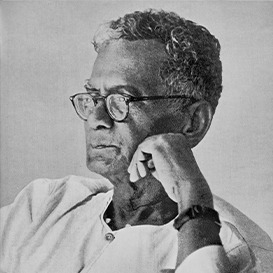 When India gained independence in 1947, the task of drafting a constitution began in earnest. Recognizing the historical significance of this document, the Constituent Assembly sought to ensure that it reflected India’s rich cultural heritage. To achieve this, Prime Minister Jawaharlal Nehru entrusted renowned artist Nandalal Bose with the responsibility of illustrating the original handwritten manuscript of the Constitution, which was officially adopted on January 26, 1950.
Bose collaborated with a team of distinguished artists, including his student Benode Behari Mukherjee, Kripal Singh Shekhawat, A. Perumal, and others, to create a series of 22 exquisite illustrations that adorned the Constitution’s pages. Each artwork depicted a facet of India's vast historical and cultural legacy. The illustrations were crafted using traditional Indian techniques, such as the application of gold leaf and stone colors, reflecting the artistic diversity of the subcontinent.
This commission was both a profound honor and a formidable challenge. The Constitution needed to embody the identity of a newly independent nation while honoring its 5,000-year-old heritage. At the age of 65, Nandalal Bose brought a lifetime of artistic mastery to this endeavor, creating a series of illuminated manuscripts enriched with intricate designs and symbolic motifs. His work seamlessly blended traditional Indian art forms, such as Madhubani painting and miniature art, with contemporary aesthetics to develop a distinct visual language.
Among the motifs featured were the Peacock, India’s national bird, symbolizing grace and beauty, and the Lotus, representing purity and enlightenment. The illustrations traced India’s historical journey from ancient civilizations to the national freedom movement. The Preamble page was adorned with intricate patterns by Beohar Rammanohar Sinha, while the National Emblem was meticulously designed by Dinanath Bhargava. The borders and embellishments drew inspiration from classical Indian art styles, including the Ajanta cave paintings and Bagh murals, creating a masterpiece that remains a testament to India’s artistic and cultural heritage.
Key Artworks In The Constitution:
• Preamble Page: Features a lotus, peacock, and Ashoka Chakra, symbolizing India’s heritage.
• Historical Scenes: Depictions of Mohenjo-Daro, the Vedic era, Buddha, Mahavira, and Akbar.
• Freedom Struggle: Images of Gandhi’s Dandi March, Subhas Chandra Bose, and Bhagat Singh.
Why It’s Historic:
• The only handcrafted, illustrated constitution in the world.
• Blends Indus Valley, Mauryan, Gupta, Mughal and folk-art styles.
Significance and Legacy
Nandalal Bose's illustrations for the Constitution transformed what could have been merely a legal document into a work of art that embodied the nation's soul. This artistic approach to constitution-making was unprecedented globally and reflected India's unique approach to nation-building—one that embraced cultural heritage while looking forward to a democratic future.
The illustrated Constitution represents several important aspects of the Indian national project:
• Cultural Continuity - By depicting scenes from ancient to modern times, it established continuity between India's ancient civilizations and its modern democratic avatar.
• Unity in Diversity - The integration of artistic styles from across regions and religions visualized the concept of "unity in diversity" that became central to Indian national identity.
• Indigenous Modernity - The Constitution's visual language rejected colonial aesthetics in favor of indigenous artistic traditions, asserting cultural independence alongside political sovereignty.
Today, the original illustrated Constitution is preserved in a helium-filled case in the Parliament Library in New Delhi, while reproductions are displayed in museums and government buildings throughout India.
Conclusion
Nandalal Bose's illustrations for the Constitution of India represent a remarkable fusion of art and politics, tradition and modernity. In entrusting this sacred national document to an artist rather than merely a scribe, India's founding leaders demonstrated their understanding that nation-building requires not just legal frameworks but cultural foundations. Through his brush, Nandalal Bose did not simply decorate a legal document—he created a visual manifesto for a newly independent nation, connecting its ancient past with its democratic aspirations. The illustrated Constitution stands as testimony to Bose's artistic genius and to India's unique approach to expressing nationhood through cultural heritage.
As India continues to evolve as a democracy, Nandalal Bose's artistic contribution remains an enduring reminder that the country's strength lies in embracing its diverse cultural traditions while moving forward as a unified nation.