rabindranath tagore - artist profile, biography, art style & paintings
.jpg&w=3840&q=75)
The polymath, Rabindranath Tagore, started the painting journey at age 60. Even though he started late, the great amount of work that he created during his artistic journey showcases the prowess of his creativity. Although he was a self-taught artist, he allowed his unique vision to shape his artistic voice.
Early Life
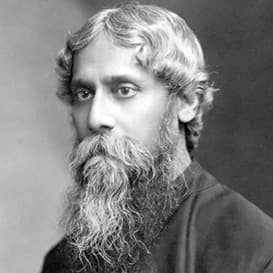 Born in one of Calcutta’s (now Kolkata) most prominent and influential aristocratic landowner families on May 7, 1981, Rabindranath Tagore was the youngest of thirteen children. He lost his mother at a young age, Sarada Devi, whose presence was not always constant in his life. This is reflected in his longing for her in his early poems and short stories. He was mostly brought up by the servants as his father, Debendranath Tagore, would frequently go on travels for work. This detachment from his loved ones instilled a remarkable sense of independence in Rabindranath.
Artistic Journey
The Jorasanko Mansion was a creative hub, often visited by intellectuals and artists of various backgrounds. Since it was Rabindranath Tagore’s home, it naturally gave him exposure to diverse perspectives; he also attended discussions and gatherings on philosophy, classical music, and Bengali folk songs. His poetic and musical talents were nurtured because of this very exposure. He began publishing several of his poems, encouraged by his family. These formative years were very crucial in leading him to become a literary giant in the future.
Philosophy
Rabindranath Tagore was always of the thought that humanity, with its different colours and shades, can prosper universally. He gave importance to love and creativity. A nationalist at heart, Rabindranath Tagore gave emphasis to a global perspective and highlighted the importance of shared brotherhood between nations. His exposure to a variety of schools of thought and perspectives made him a good listener and empathetic leader.
Painting Style & Techniques
• Ink and Wash: Rabindranath Tagore primarily worked with ink, often using a wash technique that allowed for subtle gradations and ethereal effects. He experimented with various types of ink to achieve different tones and transparencies. This technique lent itself well to his spontaneous and fluid approach.
• Use of Colour: While ink formed the backbone of many of his works, Rabindranath Tagore also utilised a limited palette of colours, often watercolours or pastels, to enhance the mood and impact of his paintings. His use of colour was mostly symbolic rather than descriptive, adding emotional weight to his forms. He favoured earthy tones, deep blues, and somber greens, contributing to the often melancholic atmosphere of his art.
• Repetitive Motifs and Forms: Certain motifs reappear in his paintings, such as dark, brooding figures, mysterious landscapes, and abstract forms resembling masks or faces. These repeated elements suggest a personal iconography that he explored throughout his artistic journey.
Important Characteristics of Tagore's Paintings
• Emotional Depth: Rabindranath Tagore's paintings are deeply personal and often reflect the inner state of his emotions in reference to the world around him.
• Intuitive Creation: His approach to painting was largely intuitive. He often began without a preconceived idea, allowing the lines, forms, and colours to emerge organically from his subconscious.
Influence of Calligraphy and Writing: The fluid, rhythmic lines in his early works resemble the intertwined transition from the written word to visual art.
• Spiritual Undertones: Though not explicitly religious, Rabindranath Tagore's paintings often carry a spiritual resonance, echoing his broader philosophical outlook. He emphasised the interconnectedness of all existence.
• Absence of Traditional Perspective: Rabindranath Tagore largely didn’t follow the traditional rules of perspective and realism. His compositions focused on the interplay of shapes, lines, and colours to create a sense of depth and emotion, rather than a realistic portrayal of three-dimensional space.
Mrinali Devi: Wife & Muse
Rabindranath Tagore married Mrinali Devi (originally Bhabatarini) in 1883 as per his father’s wishes; the age difference between the two was 10 years at the time of their wedding. Soon after, Debendranath Tagore sent her to Loreto House to complete her education. The couple had five children: Madhurilata, Rathindranath, Renuka, Mira, and Samindranath between 1886 to 1896. Mrinali Devi was a huge supporter of Rabindranath, a figure of quiet grace and unwavering determination behind Tagore’s legacy. She had an untimely death at a very young age of 29 years. This had a huge impact on Tagore’s psyche, and she naturally became a subject of many of his literary works.
Famous Motifs in Paintings
 • Self-Portrait: Rabindranath Tagore created numerous self-portraits, reflecting his introspection and evolving artistic vision. These works often featured strong, expressive lines and a sense of profound contemplation.
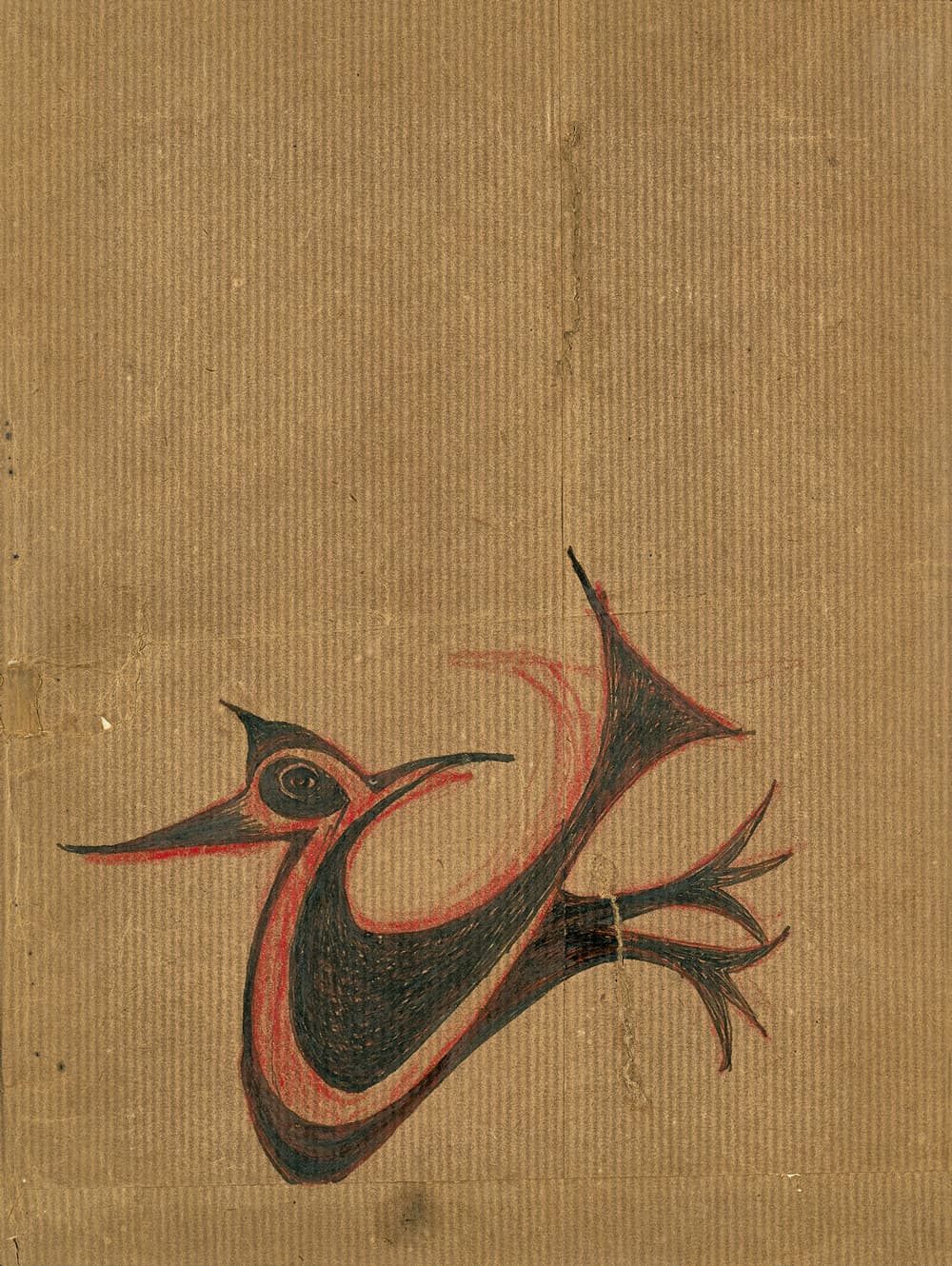
• Bird: Birds were a recurring motif in Rabindranath Tagore's artwork, symbolising freedom, grace, and sometimes a sense of loneliness. His bird paintings often possess a whimsical yet poignant quality.
• Head: Many of Tagore's works focused on human faces, exploring a range of emotions and psychological states. These studies often reveal a deep understanding of human character.
• Mask: Masks appear in several of Rabindranath Tagore's art, often suggesting hidden identities, psychological complexities, or a theatrical element.
The Heart Sculpture
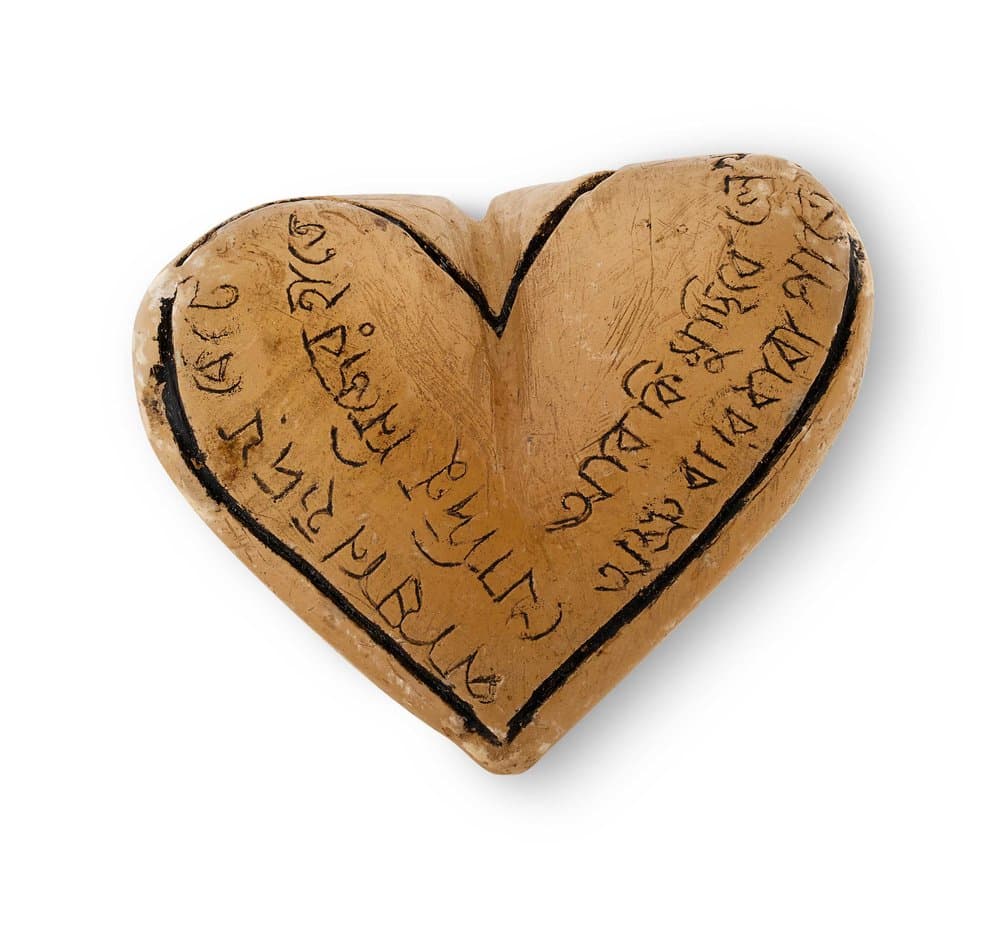 This is the only sculpture known to be made by Rabindranath Tagore. The sculpture is reflective of his sense of introspective melancholy, created utilising Quartzite stone in circa 1883. The words written, “Having cut my heart of stone, I have engraved (the words) with my own hand. Will it (the writing) be ever effaced by the flow of tears?”
In His Later Years
Even though he was suffering from various medical conditions, his creative spark endured, and he continued to publish several prose and poetry works. On August 7, 1941, the artist passed away at the Jorasanko Mansion. He actively spoke about various social and political issues in India at that time and advocated for peace.
Awards
Rabindranath Tagore won the Nobel Prize in Literature in 1913 for his work "Gitanjali." In 1915, he was awarded a knighthood by King George V. He later renounced the same to protest against the Jallianwala Bagh massacre. His contributions extended beyond poetry to include songs, plays, novels, essays, and paintings, significantly shaping modern Indian culture. His works travelled to exhibitions worldwide at notable locations such as New York, London, Paris, Russia, and more.
Impact on Indian Art
Rabindranath Tagore challenged the traditional academic styles and advocated for a more modern yet individualistic approach. He also encouraged artists to abandon imitative Western art and reconnect with local aesthetics and spiritual roots. Through his school, Kala Bhavana at Santiniketan, he fostered an environment of artistic experimentation and cultural synthesis. Even though, Tagore himself was a late bloomer as a painter, his unique artistic vision, inspired many to explore new forms of expression.