the artistic journey of thota vaikuntam - from rural roots to international recognition
.jpg&w=3840&q=75)
Thota Vaikuntam is a celebrated Indian contemporary artist known for his vibrant depictions of rural life, especially the rural wo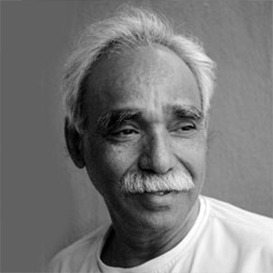 men of Telangana & Andhra Pradesh. His work draws heavily from the folk traditions and culture of his native region, while also incorporating modern elements. The artist is considered one of the most significant figures in Indian art, especially in the field of contemporary folk art.
Early Life
Thota Vaikuntam was born in 1942 in Burugupalli, a culturally rich village in the Karimnagar district of Telangana. From an early age, Vaikuntam was captivated by the local theatre performances in his village, where male actors portrayed female characters from mythological tales. These dramatic interpretations left a profound impression on him, inspiring his earliest sketches of mythological figures such as Rama, Hanuman, Krishna and Ravana. This early fascination with theatrical portrayals and village life would later become the hallmark of his artistic style, particularly his iconic depictions of strong, sensuous Telangana women. As a child, Vaikuntam demonstrated a keen interest in drawing, often sketching figures inspired by temple sculptures and creating posters for local shops. His artistic talent was recognized early when, at the age of nine, he won an art competition in his village and was awarded a pen by the district collector.
Education
Thota Vaikuntam began his formal education in Shatarajpalli, later moving to Vemulavada and Siricilla for schooling. He pursued art at the College of Fine Arts and Architecture in Hyderabad in 1960, completing his studies in 1970. In 1971, he was awarded a fellowship by the Andhra Pradesh Lalit Kala Akademi to study painting and printmaking at the Maharaja Sayajirao University in Baroda. There, under the mentorship of K.G. Subramanyan, he refined his techniques and embraced a deeper conceptual approach to art.
Family
Thota Vaikuntam hails from a Bania (trader) community. His father, Venkaiah, operated a small grocery shop in the village of Burugupalli in what is now Telangana (formerly part of Andhra Pradesh), while his mother, Satyamma, played a pivotal role in his upbringing and served as a profound source of artistic inspiration throughout his life. In 1966, Thota Vaikuntam married Suguna. The couple has since raised a family together and are parents to two sons and a daughter.
Later Life
In his later years, Thota Vaikuntam emerged as one of the most prominent and recognizable figures in contemporary Indian art. Following his formal training and mentorship under the esteemed K.G. Subramanyan, he returned to Telangana, where he began to refine and fully realize his distinctive artistic voice—a bold, vibrant, and deeply rooted visual language that celebrates the rural life and resilient women of his native region.
This period marked a profound reconnection with his cultural and artistic roots. Vaikuntam produced several noteworthy works, including a series of evocative charcoal drawings such as The Doors, which reflect his introspective engagement with memory, space, and tradition. His enduring focus on Telangana women—deeply inspired by his mother and the strong, graceful women of his community—became the hallmark of his oeuvre, earning him critical acclaim and a devoted following.
In addition to his contributions to the visual arts, Vaikuntam extended his creative vision to cinema and theatre. He played an influential role in the visual development of films and stage productions, translating his painterly sensibilities into compelling visual narratives for broader audiences.
Artistic Philosophy
Thota Vaikuntam's artistic philosophy is deeply rooted in his connection to his rural roots. He draws inspiration from the people and rituals of Telangana, especially the women, whom he sees as embodiments of resilience and grace. His work is a celebration of life, love and the resilience of the human spirit, offering a refreshing reminder of the beauty and simplicity of rural life.
Painting Style
Thota Vaikuntam’s painting style is immediately distinguishable by its vibrant use of primary colors-particularly reds, yellows, and oranges-which he deliberately chooses over composite hues to capture the true essence of the Indian landscape. His works prominently feature the men and, more notably, the women of rural Telangana, depicted as strong, sensuous and dignified figures adorned in traditional saris, jewelry, and vermilion bindis. Thota Vaikuntam’s compositions often showcase bold, fluid lines combined with intricate detailing, especially in textiles and ornamentation, creating a flat, illustrative, and decorative aesthetic. While his early works tended to focus on single figures, his later paintings incorporate groups and more complex scenes that reflect the communal spirit of village life. His subjects are portrayed with earthy realism rather than idealization, emphasizing the resilience and beauty of Telangana’s people.
Thota Vaikuntam’s artwork is also often compared to that of American painter Andrew Wyeth, particularly for their shared focus on rural subjects and nuanced use of light and shadow. However, Vaikuntam’s work stands apart for its unique ability to capture the richness and diversity of Indian culture. Through his bold use of vibrant colors, expressive brushwork, and depiction of everyday life in Telangana, Vaikuntam offers a visual narrative that is deeply rooted in the traditions and spirit of rural India, setting his art apart as a singular contribution to contemporary painting.
Art Themes: Women, Rural Life & Culture
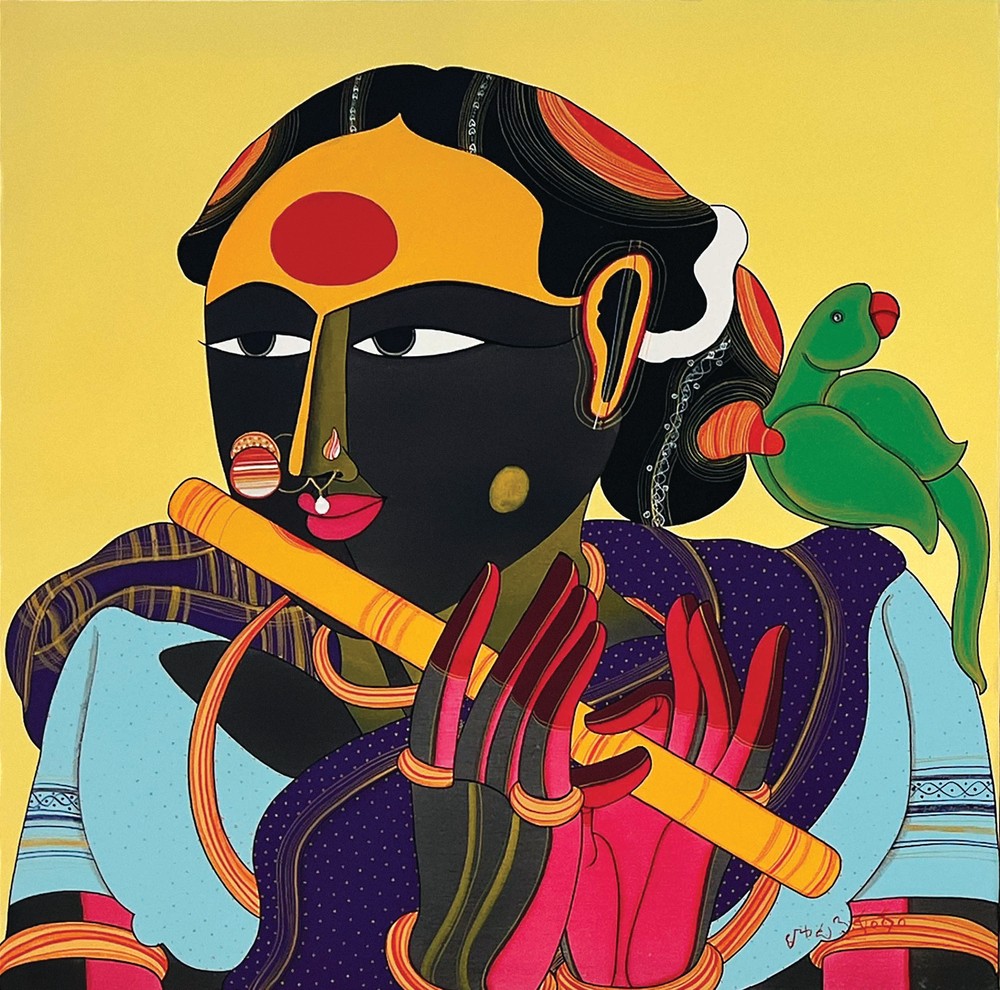 Thota Vaikuntam’s work is characterised by the use of bold, earthy tones and geometric patterns. His depictions of women, often shown as monumental and central to his compositions, reflect both strength and vulnerability. Vaikuntam's work primarily focuses on the lives of rural women, who are mostly depicted as the central figures in his paintings. These women, portrayed in bold and vibrant colours are shown in traditional attire, such as sarees with distinctive patterns and jewellery, engaged in daily tasks like farming, gathering water, or socialising within their communities. Their large eyes, prominent noses, and full lips convey a sense of confidence and pride. The powerful presence of these women in his paintings transcends their everyday roles, elevating them to iconic figures. Through these depictions, Vaikuntam celebrates the beauty and strength of rural women, highlighting their central role in sustaining village life.
While women are central to his works, Vaikuntam’s paintings also explore themes of cultural identity, tradition, and social life, offering a glimpse into the world of rural India with a modern sensibility. His art is a reflection of the deep cultural influences from his native Telangana and the people he grew up with. His depictions of rural life are a celebration of his heritage. His paintings bring to life the everyday experiences of rural life in India. They showcase scenes of farming, festivals, and social interactions, often within vibrant rural landscapes. His work reflects a deep connection to the land, with themes of agriculture, nature, and community life being central to his compositions.
Celebration of Theatre Performances
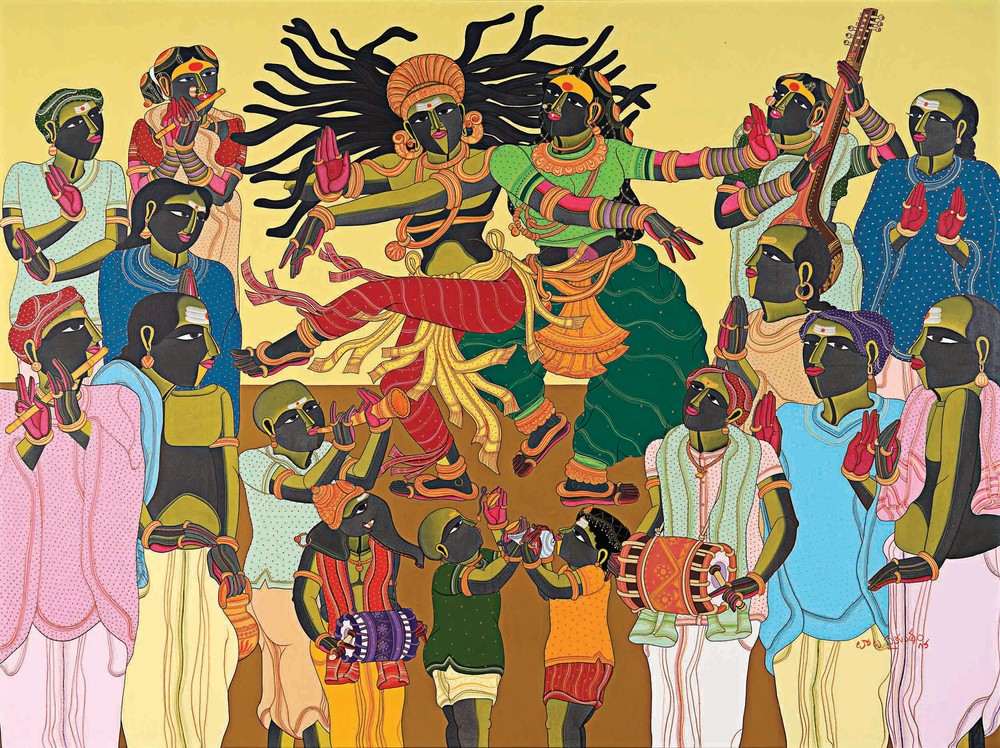 As a child, Thota was fond of watching theater shows and folk dances. He grew up in an environment where art was naturally a part of daily life. He would watch the impersonation of women characters by male theater artists in his village and observe the pardas (a painted screen or backdrop). The impact of these performances and the folk culture surrounding him in his everyday life is evident in his paintings. Once he grew up he himself began performing live, which made him realise the value of art more. The realisation of the impact art can have on people who are watching it inspired him deeply and he would quite frequently draw from memory once he was home.
Significance of Colour & Nature
Colour plays an essential role in his art, not just for aesthetic appeal but also to convey symbolic meanings. For instance, red is a dominant colour in many of his works, symbolising strength, vitality, and the energy of life. The rich, bold use of colours, such as yellow, orange, and green, also emphasises the brightness and vibrancy of traditional life.
His vibrant palette captures the warmth and spirit of village life, making his paintings feel alive with emotion. Vaikuntam’s artwork also incorporates elements of nature, such as landscapes, trees, animals, and rural settings, which reflect the intimate relationship between the people and the environment. Nature is a backdrop, contributing to the serenity and cultural essence of his depictions of village life.
Recurring Motifs In Thota Vaikuntam Art
Thota Vaikuntam’s art reflects the simplicity, beauty, and vibrancy of rural India, offering a window into the daily lives, traditions, and culture of village communities. Some of his notable motifs include;
1. Parrot: The parrot is a recurring motif in his work, acting as a messenger, storyteller, and in some works a teacher as well.
2. Musicians: In his works, Thota has depicted men and women playing bugles, trumpet, and flute. Percussion and other instruments are also part of many of his canvases.
3. Telangana: The capital of Hyderabad, had a huge role to play in Vaikuntam’s life and on his artistic psyche, as he grew up in a rural area, surrounded by the vibrant and colourful natural beauty of trees, monuments, forts, and temples. He captured the daily life of the people in detail.
4. Mythological Figures: Krishna, Shiva, Ganesh, and several other Gods and Goddesses have been depicted by the artist in his works.
5. Rural Women- The women in his paintings are typically engaged in everyday activities, but their larger-than-life portrayals lend them a heroic presence with strong features and expressive faces. Vaikuntam’s women are often portrayed with strong features and expressive faces.
6. Traditional Attire and Rituals: His depictions of sarees, bindi, jewelry, and traditional hairstyles tie into the cultural identity of the rural women he portrays.
Contribution To Indian Art
Thota Vaikuntam redefined Indian modern art by bringing rural Telangana to the global stage. His works challenge urban-centric narratives, celebrating the beauty and resilience of village life.
Exhibitions & Awards
Thota Vaikuntam’s art has been widely exhibited, both in India and internationally. Some of his works are part of collections at the National Gallery of Modern Art in New Delhi, and other prestigious institutions. His depictions of village life have been featured in solo and group exhibitions, earning recognition for their emotional depth and striking use of colour. The artist has received numerous awards and gained recognition for his works, these include the Biennale Award at Bharat Bhavan, Bhopal and the National Award for Painting from the Government of India.
Notable Artworks by Thota Vaikuntam
Musician (1979); Untitled (1992); Untitled (1985); Telangana Woman (1993); Untitled (1993); Mallamma Pochamma (1993); Untitled (1994); Untitled (Shiva) (2008); Untitled (Ganesha) (2012); Krishna (2011); Untitled (2015); Untitled (Bal Gopal) (2015); Mother & Child (2000); Radha and Krishna (2006).
Legacy & Influence
Vaikuntam’s art has become a powerful expression of Indian village life, offering a rich tapestry of colour, tradition, and emotion. His work is not just about depicting rural scenes; it is about giving voice and identity to the people, especially women, who are often overlooked in mainstream representations. Through his art, Vaikuntam has brought forward the stories of rural India to life, celebrating its beauty, culture, and strength.
His art has gained immense respect for its ability to capture the essence of rural India, especially through the powerful portrayal of women. With his unique blend of folk traditions and contemporary sensibilities, Thota Vaikuntam has carved out a distinct space in the world of Indian contemporary art. The artist is considered one of the most important contemporary Indian artists, particularly known for reviving traditional Indian folk art and giving it a modern interpretation. His works have made significant contributions to the art world, and he has inspired a new generation of artists to blend traditional and contemporary styles. He continues to paint and exhibit his work, making an impact both in India and internationally.
Conclusion
Thota Vaikuntam is more than an artist—he is a storyteller of rural India. Through his vivid canvases, he immortalizes the spirit of Telangana’s villages, ensuring that their traditions and people are never forgotten. His legacy as a master of Indian art remains unmatched, a testament to the power of authenticity in creativity.